







Executive Overview
The landscape of interactive entertainment has undergone a monumental shift over the past two decades, transitioning from simplistic bleeps and synthesized 8-bit loops to fully realized, dynamic orchestral arrangements that rival the finest cinematic productions in Hollywood. At the vanguard of this artistic revolution stands Grammy-nominated composer Austin Wintory. From his delicate, ambient opening notes in ThatGamecompany’s breakout indie masterpiece flOw to the thundering, pulse-pounding brass and driving rhythms of Aliens: Fireteam Elite 2, Wintory has consistently redefined what interactive audio can achieve.
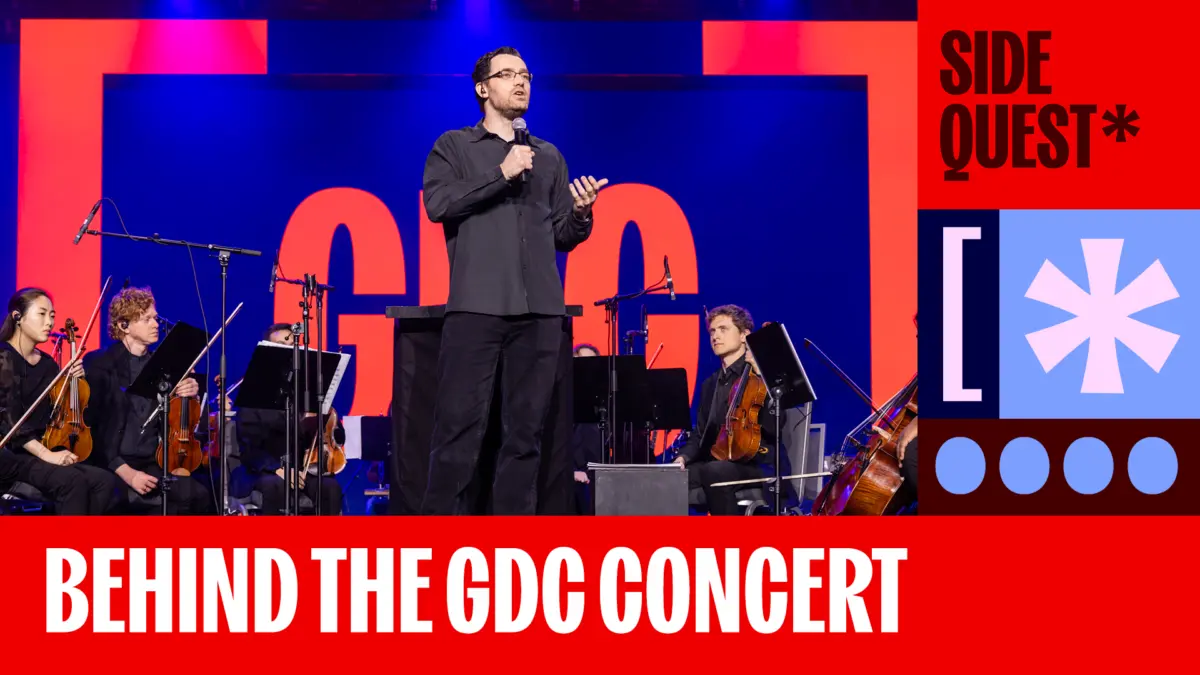
Beyond his prolific output as a composer, Wintory has carved out a vital role as an industry advocate. He has spent years championing deeper, more integrated collaborations between the artists who craft emotional soundscapes and the engineers whose technical wizardry brings virtual worlds to life. This philosophy of unity between code and composition reaches a glittering crescendo at the annual Game Developers Conference (GDC) Festival of Gaming. There, Wintory hosts what has rapidly become the marquee musical event of the week: the Developer’s Concert.
This year, the GDC Side Quest podcast—hosted by GDC Festival of Gaming Content Marketing Manager Beth Elderkin—sat down with Wintory for an extensive, revealing conversation. The resulting dialogue explores the intricate curation behind the Developer’s Concert, traces the arc of Wintory’s legendary career, and examines the delicate intersection where the art of audio meets the cold, hard business of video game development.
As the lines between interactive entertainment and traditional storytelling continue to blur, insights from industry luminaries like Wintory offer an invaluable roadmap for the future of digital art. This report examines Wintory’s trajectory, unpacks the mechanics of the Developer’s Concert, and analyzes the broader cultural and economic implications of video game music in the modern era.
Detailed Chronology: From Indie Origins to Orchestral Titans
To understand the weight of Austin Wintory’s current advocacy and his stewardship of the Developer’s Concert, one must examine the chronological progression of his career—a journey that mirrors the maturation of the video game industry itself.
The Experimental Era and flOw (Mid-2000s)
Long before "indie games" became a multi-billion-dollar market dominating digital storefronts, a small collective known as ThatGamecompany was experimenting with ambient, interactive design. Founded by Jenova Chen and Kellee Santiago, the studio released flOw in 2006 as a Flash game before adapting it for the PlayStation Network in 2007.
Austin Wintory, then an emerging composer, stepped into this nascent creative space. The assignment was deceptively simple yet technically demanding: craft a score that responded organically to the player’s movements in a primordial, aquatic ecosystem. Wintory’s work on flOw established his signature methodology—treating music not merely as a static background layer, but as an elastic, responsive character within the game world. The minimalist, soothing, yet occasionally tense soundscapes proved that independent games could punch far above their weight classes emotionally through sophisticated audio design.
The Critical Breakthrough: Journey (2012)
If flOw introduced Wintory to the industry, his subsequent collaboration with ThatGamecompany on 2012’s Journey catapulted him into global renown. Journey became a watershed moment for interactive entertainment, lauded for its wordless emotional resonance, stunning art direction, and seamless multiplayer design.
At the heart of that emotional architecture was Wintory’s score. Building a deeply integrated musical tapestry centered around a solo cello, Wintory designed the music to dynamically swell, morph, and recede based on the player’s traversal across vast, sun-bleached dunes. The score was a masterclass in thematic economy, utilizing recurring motifs that evolved alongside the player’s pilgrimage.
The industry’s reaction was historic: Journey became the first-ever video game soundtrack to be nominated for a Grammy Award in the category of Best Score Soundtrack for Visual Media. This milestone cracked open the fortress doors of traditional musical establishments, signaling to the wider entertainment world that video game scores possessed artistic merit equal to, or exceeding, conventional cinematic compositions.
Expanding Horizons: From AAA Blockbusters to Interactive Concerts
Following the monumental success of Journey, Wintory’s career diversified exponentially. He refused to be typecast as a purveyor of solely ambient or indie-centric soundscapes. His portfolio swelled to encompass a staggering array of genres and scales:
- Narrative Adventures: Crafting poignant, character-driven scores for titles like The Banner Saga trilogy, where traditional orchestral elements blended seamlessly with the haunting folk vocals of the band Malukah.
- High-Octane Action: Pushing technical and compositional boundaries with intense, militaristic, and atmospheric compositions for games like Assassin’s Creed Syndicate, Abzû, and the thundering orchestration of Aliens: Fireteam Elite 2.
- VR and Experimental Projects: Venturing into virtual reality and transmedia storytelling, consistently exploring how spatial audio can manipulate human psychology in real-time.
As his portfolio expanded, so too did his platform. Wintory realized that the insular nature of game development often isolated artists from programmers, and programmers from the business executives holding the purse strings. He began utilizing public speaking engagements, panels, and live performances to break down these institutional silos. This mission ultimately birthed his involvement with high-profile live showcases, culminating in his role as the master curator and host of GDC’s Developer’s Concert.
Supporting Context & Metrics: The Intersection of Art and Engineering
The modern video game industry is a behemoth of global commerce, generating revenues that routinely eclipse both the global film and music industries combined. Yet, within this high-stakes corporate machine, audio departments frequently face unique systemic hurdles.
The Technical Divide: Code Meets Composition
Historically, game development suffered from a communication gap. Composers would write magnificent suites of music in isolated studios, delivering static audio files to audio implementers who then had to figure out how to shoehorn those files into a dynamic game engine (such as Unreal or Unity). If a player lingered in a room longer than anticipated, or if combat triggered unexpectedly, the music could stutter, loop awkwardly, or jarringly mismatch the on-screen action.
Wintory has long been a vocal proponent of bridging this technical divide. Modern game audio requires composers to understand middleware tools like Wwise or FMOD, and conversely, requires technical sound designers to appreciate the emotional arc of a musical composition. When artists and engineers collaborate early in the development pipeline, music stops being an afterthought applied during "crunch time" and instead becomes an integral structural pillar of the gameplay loop.
The Rise of Live Performance as Cultural Validation
Live video game concerts have evolved from niche college campus recitals into massive, sold-out global phenomena—tours like The Legend of Zelda: Symphony of the Goddesses, NieR:Automata Fan Festival Concerts, and Final Fantasy Distant Worlds regularly fill prestigious venues like the Sydney Opera House, the Hollywood Bowl, and the Royal Albert Hall.
However, the Developer’s Concert at the GDC Festival of Gaming occupies a completely distinct, specialized niche. Rather than catering solely to consumer fans, it serves as an industry-internal celebration. It brings together the very developers, coders, writers, artists, and executives who spent years sweating over bug reports and crunch schedules, allowing them to experience the emotional payout of their collective labor translated into live performance.
By blending intimate monologues from Wintory and surprise special guests with genre-spanning musical suites, the Developer’s Concert acts as a cultural mirror for the games industry. It validates the immense psychological and artistic toll required to ship modern interactive software, offering a rare moment of communal catharsis for professionals who spend their working lives staring at monitors.
Official Insights: The GDC Side Quest Conversation
In her recent sit-down on the GDC Side Quest podcast, Beth Elderkin unpacked the philosophy driving Austin Wintory’s work, focusing heavily on the mechanics of curating the Developer’s Concert and navigating the tumultuous waters of the games industry.
Curating the Developer’s Concert
When asked about the curation process for an event that must simultaneously entertain, educate, and emotionally resonate with seasoned game developers, Wintory emphasized the importance of variety and vulnerability.
"You aren’t just putting on a playlist of popular tunes," Wintory discussed during the podcast. "You are telling the collective story of an entire industry—its triumphs, its absurdities, its heartbreak, and its moments of transcendent beauty. The music has to reflect that broad spectrum. It ranges from the quietest, most introspective indie melancholy to the bombastic, wall-of-sound orchestration required by massive multi-player shooters."
Wintory noted that designing the concert involves carefully balancing established hits with lesser-known gems, ensuring that the diverse creative disciplines represented at GDC—from programmers to UI designers—see their hard work honored through sonic storytelling. The incorporation of live monologues and special guests transforms the evening from a standard musical recital into a living, breathing dialogue about the nature of creative collaboration.
The Art and Business Intersection
Beyond the concert hall, Elderkin and Wintory dove deep into the eternal tension between creative vision and corporate budgeting. In an economic climate marked by industry-wide restructuring, studio closures, and shifting publishing models, maintaining artistic integrity is more challenging—and more vital—than ever.
Wintory argued that music is often the secret weapon that can save a struggling project or elevate a good game into an unforgettable classic. However, securing the necessary budget and time for high-end audio production requires composers and audio directors to speak the language of business. They must demonstrate to producers that investing in dynamic, adaptive audio directly correlates with player retention, emotional engagement, and critical acclaim.
"Art doesn’t exist in a vacuum," Wintory noted. "You can write the greatest score ever recorded on a master tape, but if it doesn’t integrate smoothly with the engine, or if the studio ran out of money three months before ship date to pay the live orchestra, you’ve failed the project. We have to be as fluent in production pipelines as we are in music theory."
Future Outlook: Where Sound and Interaction Converge
As we look toward the horizon of interactive entertainment, several technological and cultural trends are poised to reshape the landscape of video game audio, many of which align directly with Austin Wintory’s forward-thinking advocacy.
Generative and Procedural Audio Systems
The rapid advancement of artificial intelligence and procedural audio generation tools presents both a thrilling frontier and a complex ethical challenge for composers. While some fear automation, forward-thinking creators view procedural systems as an extension of the dynamic audio techniques pioneered over the last two decades.
Future games will likely feature increasingly sophisticated generative music systems capable of composing entirely unique, emotionally coherent counterpoints in real-time based on player biometric data, choice history, and psychological profiling. Wintory’s emphasis on foundational collaboration between engineers and composers will be paramount here; ensuring that human artistic intent guides these algorithmic tools will determine whether future soundtracks possess soul or simply sound like statistical noise.
The Maturation of Industry Culture
Events like the GDC Developer’s Concert play an indispensable role in fostering a healthier, more cohesive industry culture. By breaking down the barriers between different development disciplines and celebrating artistic risk-taking, these gatherings remind creators why they entered the field in the first place.
As the games industry continues to weather economic headwinds and structural evolution, the demand for authentic emotional connection will only intensify. Players do not just remember mechanics; they remember how a game made them feel. And more often than not, that feeling was written on a staff, played by a live ensemble, and woven directly into the code by a dedicated team of artists and engineers working in unison.
Austin Wintory’s ongoing mission—championing the marriage of code and composition, advocating for artists within corporate structures, and celebrating the collective labor of game development through events like the Developer’s Concert—ensures that the soul of video games will continue to thrive, no matter how complex the technology becomes.