








Executive Overview
In a significant shift regarding smart TV security and platform governance, LG Electronics USA has announced a comprehensive crackdown on software applications within its webOS store that secretly convert televisions into active, always-on residential proxy nodes. The decision follows alarming revelations by cybersecurity research firm Spur, which discovered that over 42 percent of downloadable applications available on LG’s smart TV platform contain integrated residential proxy Software Development Kits (SDKs).
These embedded SDKs allow third-party entities—ranging from commercial data scrapers to unvetted external clients—to route their internet traffic directly through home television sets. By utilizing the residential IP addresses assigned to unsuspecting households, these networks create persistent proxy nodes inside consumers’ living rooms.
Following inquiries regarding the findings, LG leadership confirmed that the use of smart TVs as bandwidth-sharing proxy infrastructure directly violates the intended purpose of their devices. The consumer electronics titan has issued an ultimatum to app developers: remove residential proxy capabilities immediately or face permanent suspension from the webOS platform.
This move highlights a growing, systemic issue across the Internet of Things (IoT) landscape, where app developers monetize low-cost software by bundling proxy SDKs, often compromising consumer privacy, local network security, and bandwidth without meaningful, informed consent.
Detailed Chronology
+-----------------------------------------------------------------------------------+
|                               TIMELINE OF EVENTS                                  |
+-----------------------------------------------------------------------------------+
|  Early July    | Security firm Spur releases research detailing proxy SDKs in     |
|                | smart TV platforms (webOS & Tizen OS).                           |
+----------------+------------------------------------------------------------------+
|  July 2        | KrebsOnSecurity features Spur's findings; inquiry sent to LG.    |
+----------------+------------------------------------------------------------------+
|  Mid-July      | LG SVP John Taylor announces mandatory removal of proxy SDKs     |
|                | and platform-wide audit of webOS apps.                           |
+----------------+------------------------------------------------------------------+
|  July 22       | Bright Data issues official response defending opt-in model      |
|                | and highlighting independent PwC audit.                           |
+----------------+------------------------------------------------------------------+
|  Late July     | Broader scrutiny mounts over LG software practices following     |
|                | Gamers Nexus report on monitor drivers auto-installing McAfee.   |
+-----------------------------------------------------------------------------------+
The convergence of smart TV utility software and residential proxy networks has developed rapidly over recent years, driven primarily by developer monetization demands and proxy providers seeking distributed IP addresses.
- Early July Research Disclosure: Cybersecurity intelligence firm Spur released a sweeping investigation into the mechanics of residential proxy network growth. The study specifically targeted smart TV operating systems, exposing that a huge portion of smart TV software—spanning utilities, screensavers, and basic arcade games—was quietly bundled with commercial proxy SDKs.
- July 2 Report: KrebsOnSecurity published an initial breakdown of Spur’s data, highlighting that smart TVs had become a primary target for proxy operators. This report linked the architectural risk to wider cybersecurity threats, including high-profile law enforcement actions such as the FBI seizure of the NetNut proxy platform and the dismantling of the POPA botnet.
- LG Corporate Intervention: Confronted with Spur’s findings, LG Electronics USA initiated an immediate review of its webOS app catalog. LG Senior Vice President John Taylor confirmed that an internal evaluation was actively underway to identify, warn, and remove non-compliant applications.
- July 22 Industry Rebuttal: Bright Data, identified by Spur as the primary proxy provider operating within the smart TV app ecosystem, issued a statement defending its business model, pointing to user consent screens and third-party compliance audits.
Supporting Context & Metrics
The Scale of the Smart TV Proxy Problem
Spur’s empirical analysis revealed a widespread reliance on proxy SDK monetization across the two dominant smart TV operating systems: LG’s webOS and Samsung’s Tizen OS.
  SMART TV APP ECOSYSTEM PROXY SDK PREVALENCE
  ===========================================

  LG webOS Apps:        [####################--------]  >42% Contain Proxy SDKs
  Samsung Tizen OS:     [############----------------]  >25% Contain Proxy SDKs

  Primary SDK Provider: Bright Data (Majority Market Share)
The data demonstrates that smart TVs are uniquely vulnerable to this form of silent exploitation. Unlike mobile phones or laptops, which frequently change locations, disconnect from networks, or enter deep sleep cycles, smart TVs remain plugged into home power outlets and connected to high-speed residential Wi-Fi or Ethernet networks 24 hours a day.
The Mechanics of Proxy SDK Monetization
For independent app developers, integrating a residential proxy SDK offers an attractive alternative to traditional banner ads or subscription paywalls. Proxy providers pay developers based on the volume of bandwidth routed through the devices that install their applications.
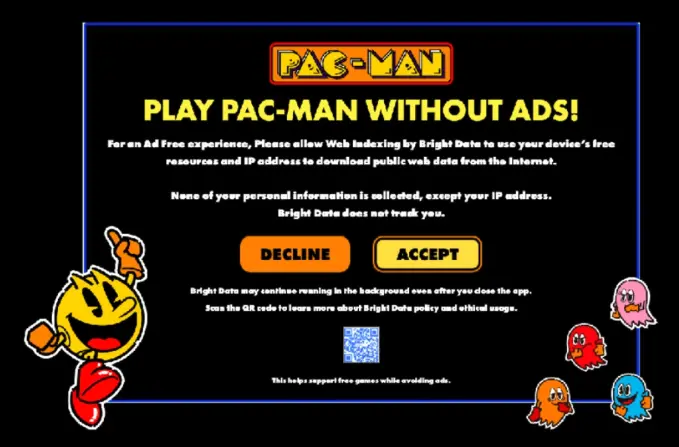
A prominent example highlighted in Spur’s research involves a popular smart TV adaptation of the classic game Pac-Man, distributed via the Bright Data SDK network:
- Installation: The user downloads a simple game, screensaver, or system utility from the smart TV app store.
- Monetization Prompt: Upon launch, the user is presented with a choice: view forced video advertisements, pay a fee, or accept "free" access by sharing their unused device bandwidth and internet connection.
- Node Activation: If the user accepts, the TV is enrolled into a global residential proxy network.
- Traffic Routing: External clients purchase access from the proxy provider to route their web requests through the user’s home IP address, completely unbeknownst to the user during daily operation.
+------------------+         +-------------------+         +-----------------------+
|  App Developer   |  -----> |   Proxy Provider  |  -----> |    External Client    |
| Integrates SDK   |         |  (e.g., Bright)   |         | Routes Web Requests   |
+------------------+         +-------------------+         +-----------------------+
         |                             |                               |
         v                             v                               v
+------------------+         +-------------------+         +-----------------------+
| User Downloads   |  -----> | TV Enrolled as    |  -----> | Home IP Address Used  |
| Free Smart TV App|         | Always-On Node    |         | For External Traffic  |
+------------------+         +-------------------+         +-----------------------+
The Illusion of Informed Consent in the Living Room
A central critique raised by security analysts focuses on the concept of "informed consent" within a shared household environment. Traditional computing platforms rely on technical users managing permissions, but smart TVs are routinely operated by non-technical family members, including children.
Trevor Sutter, a researcher at Spur, emphasized that a one-time setup screen on a television fails to meet security standards for meaningful consent:
"A one-time consent prompt buried in a TV app is not a substitute for meaningful transparency, ongoing control, and platform oversight," Sutter noted. "The risk is amplified when consent comes from individuals within the household who use the device but shouldn’t give consent, such as minors."
Security and Network Risks
While proxy providers claim that these networks are primarily used by legitimate corporate clients for market research and web scraping, residential proxy networks present severe operational risks to consumers:
- IP Blacklisting: If a proxy client utilizes the residential IP address for aggressive web scraping, credential stuffing, or spamming, security systems may blacklist the household’s IP address. This can lead to persistent CAPTCHA challenges, blocked websites, or interrupted streaming services for everyone in the home.
- Local Network Vulnerabilities: Routing unvetted traffic into a local area network (LAN) raises fears of lateral movement. Threat actors historically seek ways to exploit proxy channels to scan or interact with other vulnerable connected devices on the home network, similar to lateral movement patterns seen in botnets like Kimwolf.
- Bandwidth Degradation: Always-on proxy nodes consume uplink and downlink bandwidth, potentially causing network latency during online gaming, video calls, or high-definition streaming.
Official Statements
LG Electronics USA
Speaking on behalf of LG Electronics, John Taylor, Senior Vice President, delivered a clear statement defining the company’s position and strategic response:

"A residential proxy network is not an intended use for LG smart TVs, and LG Electronics is working with developers to remove the residential proxy option from their apps on the webOS platform. If this option is not removed, these apps will be suspended."
Taylor reiterated that LG’s internal app governance teams have already launched a systematic review of the entire webOS software library:
"As part of our ongoing efforts to enhance platform quality and the user experience, LG will continue to strengthen our evaluation process for developer-submitted apps, including those that incorporate residential proxy SDKs."
Bright Data
Bright Data, identified as the primary operator of the residential proxy SDKs found across the webOS and Tizen OS platforms, defended the legitimacy and compliance of its network architecture:
"Every peer opts in through a dedicated screen and receives value in return; every customer is vetted, and our practices have now undergone a second independent audit by PwC," the company stated.
"We remain committed to an open, transparent internet where legitimate businesses, researchers, and institutions can responsibly access data that lives in the public domain."
Bright Data and similar providers maintain that strict Know Your Customer (KYC) protocols prevent illicit actors from buying access to their proxy network, while built-in software controls block proxy clients from discovering or interacting with other devices on the consumer’s local network.
Future Outlook & Platform Governance Trends
LG’s decision to remove residential proxy SDKs sets an important precedent for smart TV ecosystems, highlighting a broader shift toward stricter hardware and platform oversight.
+-----------------------------------------------------------------------------------+
|                        SMART TV SECURITY: CHALLENGES & RISKS                      |
+-----------------------------------------------------------------------------------+
|  1. Shared Household Usage  | Minors or guests can accept bandwidth-sharing terms.|
+-----------------------------+-----------------------------------------------------+
|  2. Always-On Infrastructure| TVs remain connected 24/7, making them ideal nodes. |
+-----------------------------+-----------------------------------------------------+
|  3. Hardware Monetization   | Vendors pushing aggressive ads/monetization strategies.|
+-----------------------------+-----------------------------------------------------+
|  4. Low Visibility          | Smart TVs lack consumer-facing traffic auditing tools.|
+-----------------------------------------------------------------------------------+
The Conflict Between Monetization and Security
The exposure of proxy SDKs on smart TVs comes at a time when hardware manufacturers are increasingly seeking recurring post-purchase revenue streams. Software ecosystems are frequently leveraged for digital advertising, data telemetry, and sponsored software pre-installs.
LG itself has faced scrutiny regarding aggressive software integration practices outside its smart TV division. An investigation by hardware testing outlet Gamers Nexus revealed that certain LG high-end LCD monitors were automatically prompting the installation of paid McAfee antivirus software through official driver packages distributed via Microsoft’s Windows Update. The utility was pushed silently to user machines without an explicit opt-in prompt.
This dual dynamic highlights the tension within modern consumer electronics design:
- Platform Hygiene vs. Monetization: While LG is actively cleaning up its webOS TV store to protect its core ecosystem, hardware vendors remain under constant pressure to generate recurring revenue through software partnerships.
- App Store Oversight: The fact that over 40% of webOS apps were able to integrate background proxy SDKs reveals severe blind spots in initial application review pipelines.
What Lies Ahead
LG’s pledge to audit and suspend non-compliant apps will force application developers to rethink their business models on webOS. However, the broader IoT landscape remains vulnerable. With Samsung’s Tizen OS hosting similar proxy SDK rates (exceeding 25%), pressure is mounting on other major manufacturers to follow LG’s lead.
As smart home devices become increasingly capable, regulatory bodies and platform owners will need to enforce stricter standards regarding what constitutes valid consent, ensuring that everyday household electronics do not double as commercial proxy infrastructure.