








Executive Overview
The internet is facing an unprecedented credibility crisis. What began as a novelty—generative artificial intelligence churning out quirky poems and stylized images—has swiftly metastasized into a systemic flood of synthetic media. Today, digital feeds are inundated with what critics colloquially term "AI slop": an endless stream of algorithmically generated text, imagery, and video designed to mimic human expression at scale.
However, the implications of this technological shift extend far beyond annoying social media clutter. The proliferation of synthetic content has quietly infiltrated the foundational pillars of digital interaction and commerce. AI-generated text and deepfake imagery now routinely appear in high-stakes environments, including job applications, product review sections, and even complex insurance fraud claims. Platforms, enterprises, and everyday users are left scrambling to answer a fundamental question: How do we verify what is real?
Enter the "trust layer" startups—a new wave of tech enterprises attempting to build the infrastructural verification systems that the modern web desperately requires. Among them, Pangram has emerged as a prominent player. The startup recently secured a notable $9 million in funding to scale its proprietary AI detection systems. Further validating its market position, Pangram has inked a high-profile partnership with publishing titan Substack, enabling readers to identify which authors utilize artificial intelligence to draft their newsletters. Coupled with the recent launch of a cutting-edge AI image detection tool, Pangram’s trajectory highlights the urgent commercial demand for digital authenticity.
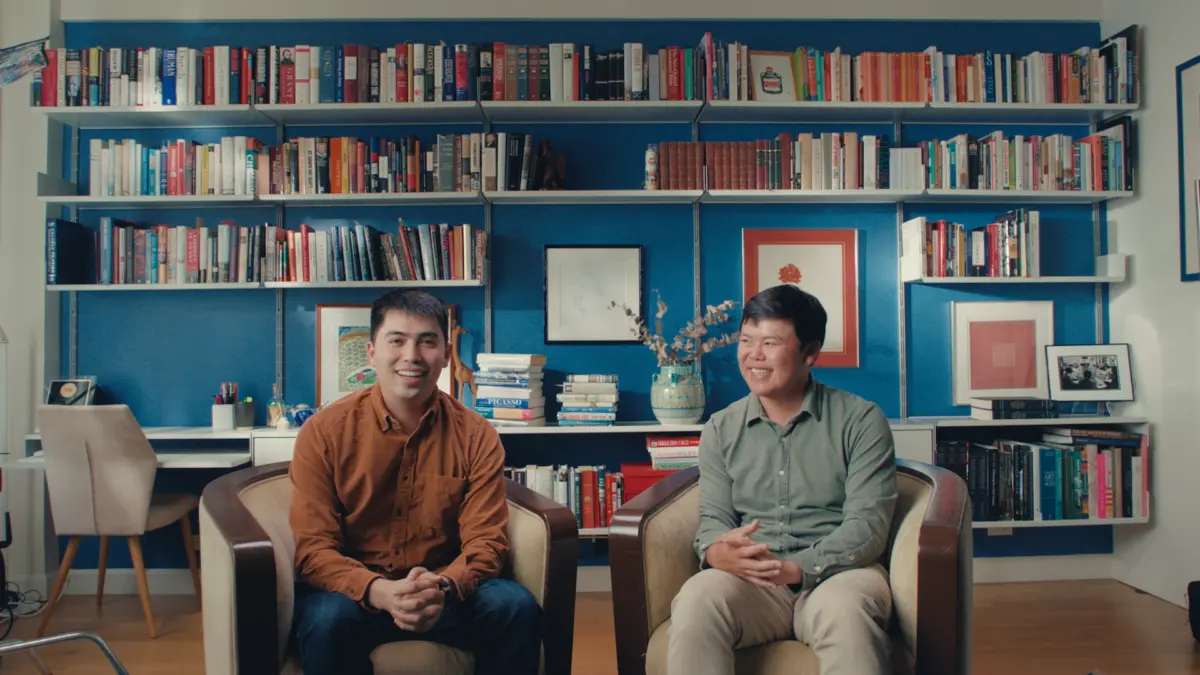
To unpack the promise, challenges, and philosophical grey areas of AI detection, TechCrunch’s flagship podcast, Equity, recently sat down with Pangram co-founder and CEO Max Spero. Hosted by audio producer Theresa Loconsolo, the conversation delves deep into the technological arms race of distinguishing between "AI-assisted" and "AI-generated" content, offering a rare glimpse into the future of digital provenance.
Detailed Chronology of a Crisis: From Novelty to Systemic Saturation
To understand why companies like Pangram are finding immediate market traction, one must trace the rapid acceleration of generative AI over the past half-decade.
Phase 1: The Novelty Era (2020–2022)
When large language models (LLMs) and advanced diffusion models for image generation first broke into the mainstream public consciousness, the primary reaction was awe. Tools like OpenAI’s GPT-3 and early iterations of Midjourney showcased an uncanny ability to synthesize human-like text and art. At this stage, the internet treated these outputs as parlor tricks. Users could easily spot the artifacts: extra fingers on hands, bizarre grammatical anomalies, and nonsensical code snippets. The boundary between human and machine creation felt wide and easily discernible.
Phase 2: The Proliferation and Industrialization (2023–2024)
As underlying neural networks scaled exponentially, the quality of synthetic media improved dramatically. Generative tools were integrated directly into ubiquitous software suites, web browsers, and productivity applications. Writing an essay, designing a marketing graphic, or drafting a cold sales email became a one-click affair.
Concurrently, bad actors realized the economic potential of automated scale. Content mills began flooding search engine results pages (SERPs) with thousands of programmatic, AI-generated articles designed solely to capture ad revenue. E-commerce platforms were overwhelmed with fake product reviews written by bots, while recruitment portals faced an avalanche of AI-generated cover letters and resumes.
Phase 3: The Trust Deficit and Infrastructure Response (2025–Present)
By 2026, the cumulative effect of this synthetic deluge reached a boiling point. Trust in digital media plummeted to historic lows. Consumers could no longer assume that a glowing product review, a viral photo, or an informative newsletter was authored by a living, breathing human.
This environment created a vacuum for cryptographic verification and detection technologies. Startups positioning themselves as the internet’s "trust layer" stepped forward. Pangram’s recent $9 million funding round reflects this shift, moving AI detection from an academic curiosity to a mission-critical enterprise software category. The subsequent integration of Pangram’s detection engine into Substack marked a watershed moment, proving that mainstream publishing platforms are willing to enforce transparency around AI authorship to protect reader trust.
Supporting Context & Metrics: The Anatomy of the AI Flood
The economic and psychological toll of unchecked synthetic content is difficult to overstate. Recent industry data underscores why platforms and enterprises are investing heavily in verification tools:
- The Review Pollution Epidemic: According to recent e-commerce analytics, over 30% of user reviews on major retail platforms display strong statistical markers of algorithmic generation. This synthetic astroturfing has eroded consumer confidence, making traditional star ratings increasingly unreliable.
- The Recruitment Bottleneck: Human resources departments report a staggering 200% year-over-year increase in AI-generated application materials. Recruiters are forced to deploy automated screening software simply to manage the volume, ironically creating an ecosystem where machines evaluate machine-written text.
- The Enterprise Risk Vector: Beyond marketing and HR, the integration of AI into insurance claims processing has introduced unprecedented fraud vectors. Synthetic imagery—such as AI-generated photos of car accidents or property damage—now accounts for a growing percentage of fraudulent claims investigated by carriers.
The Technical Challenge of Detection
Building an effective AI detector is not simply a matter of running a spell-check or looking for common keywords. Modern generative models are probabilistic; they predict the next most likely token in a sequence based on vast training datasets.
Detectors must analyze subtle statistical patterns—such as "perplexity" (how predictable a word choice is to the model) and "burstiness" (the variation in sentence structure and length). Human writing tends to feature high burstiness, alternating between complex, winding sentences and punchy statements. AI models, conversely, lean toward a uniform statistical distribution that, while grammatically flawless, carries a distinct mathematical fingerprint.
However, this is an ongoing game of cat-and-mouse. As model developers train LLMs to mimic human burstiness and stylistic imperfections, detection startups must continuously evolve their neural net architectures to stay ahead.
Official Statements and Industry Insights
The recent conversation between Equity host Theresa Loconsolo and Pangram CEO Max Spero shed vital light on the philosophical and practical challenges facing the verification industry.
Drawing the Line: Assisted vs. Generated
One of the most pressing debates explored on the podcast is the semantic and technical boundary separating AI-assisted work from AI-generated content.
As Max Spero noted during his appearance, the modern knowledge worker rarely writes in a vacuum anymore. Writers use AI to brainstorm outlines, check grammar, or rephrase clunky sentences. Software engineers rely on Copilots to autocomplete boilerplate code. Total prohibition of AI tools is neither practical nor desirable for the modern digital economy.
Consequently, the challenge for companies like Pangram is not to act as a blunt instrument that bans all technological aid, but rather to provide nuanced transparency. As demonstrated by Pangram’s partnership with Substack, the goal is informed consent for the consumer. Readers may not inherently object to an author using AI to organize research, but they deserve the right to know whether the emotional narrative or analytical prose before them was synthesized by a server farm or crafted by human experience.
The Substack Integration: A Case Study in Transparency
Substack’s decision to integrate Pangram’s detection technology represents a bellwether for the creator economy. Newsletters have long thrived on the intimate, parasocial bond between author and reader. The introduction of silent AI ghostwriting threatens to commodify and hollow out that relationship.
By surfacing indicators of AI usage, Substack is betting that authenticity will remain a premium product. Creators who rely entirely on synthetic generation risk losing audience trust, while those who rely on genuine human voice will find their brand equity enhanced by verified authenticity markers.
Future Outlook: Building a Resilient Web
As we look toward the latter half of the decade, the trajectory of digital trust will depend heavily on the maturation of verification infrastructure. The internet cannot function sustainably as a closed loop where algorithms write content for other algorithms to consume—a phenomenon researchers warn could lead to model collapse and a total degradation of digital information quality.
Key Trends Shaping the Future of Digital Trust:
- Cryptographic Provenance Standards: Beyond statistical detection, technologies like the Coalition for Content Provenance and Authenticity (C2PA) standards are embedding cryptographic watermarks directly into hardware (cameras and microphones) and software suites. This ensures that media carries an immutable ledger of its origin and editing history.
- Regulatory Interventions: Governments globally are beginning to eye unlabelled synthetic media with regulatory scrutiny, particularly regarding political deepfakes, financial fraud, and consumer protection. Platforms may soon face legal mandates to disclose synthetic generation.
- The Premium on Human-Centric Verification: Just as organic food commands a market premium in the agricultural sector, "human-verified" content is poised to become a high-value category across journalism, literature, art, and professional services.
The $9 million injection into Pangram and its integration into major platforms like Substack are likely just the opening salvos in a massive, multi-billion-dollar effort to re-engineer the web’s trust architecture. As Max Spero emphasized on Equity, the ultimate promise of AI detection tools is not to stifle technological progress, but to preserve the irreplaceable value of human expression in an increasingly synthetic world.
To hear the full conversation with Pangram CEO Max Spero, listen to the latest episode of TechCrunch’s Equity podcast, hosted by Theresa Loconsolo. Subscribe on YouTube, Apple Podcasts, Spotify, Overcast, or your preferred podcast app, and follow the show on X and Threads at @EquityPod.