







Executive Overview
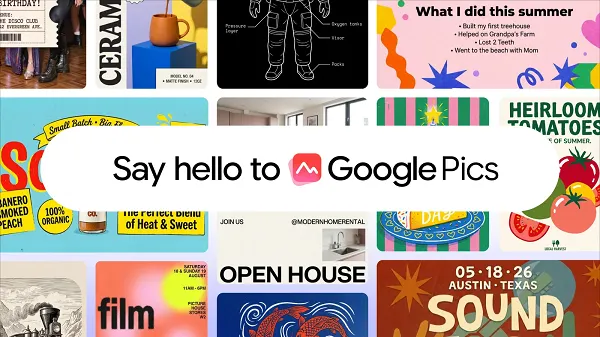
In a significant escalation of the generative artificial intelligence arms race, Google has officially integrated two groundbreaking creation and analytics tools into its elite AI Pro subscription tier. The tech giant is rolling out Google Pics, an advanced image-generation and editing platform powered by its proprietary Nano Banana model, alongside a sophisticated agentic video understanding system driven by the Gemini model family.
These additions arrive at a critical juncture for the digital media, marketing, and content creation industries. As enterprises and independent creators alike grapple with the saturation of standardized, often generic-looking synthetic media, Google’s latest offerings are engineered to bridge the gap between automation and high-fidelity customization. Google Pics introduces granular editing controls, native language translation features, and context-aware element manipulation designed to eliminate the telltale aesthetic of early-generation AI art.
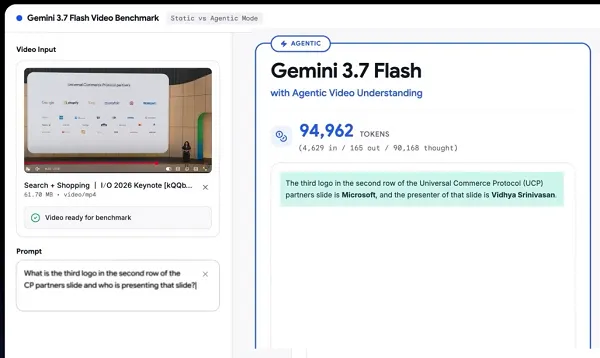
Simultaneously, the new agentic video processing feature transitions artificial intelligence from passive viewers to active analysts. Capable of dissecting video inputs with unprecedented speed, accuracy, and efficiency—demonstrated by significantly lower token consumption—the tool identifies speakers, catalogs granular visual elements, and extracts deep contextual insights.
Beyond individual utility within the AI Pro ecosystem, these technologies are primed for rapid enterprise deployment. Google has confirmed that the agentic video model will soon launch across the Gemini app within its Flash and Flash-Lite frameworks. Furthermore, the foundational intelligence of Google Pics is slated to power YouTube’s desktop “Ask YouTube” feature, directly embedding Gemini-driven visual grounding into the world’s largest video-sharing platform. This comprehensive rollout underscores Google’s strategic push to weave agentic workflows and multimodal comprehension into the daily fabric of professional and consumer digital environments.
Detailed Chronology: The Evolution of Google’s Multimodal AI Suite
To understand the weight of Google’s latest product drops, it is essential to trace the deliberate, step-by-step evolution of the company’s multimodal architecture. The journey from rudimentary text-to-image models to today’s agentic frameworks reflects a broader industry shift toward systems that do not merely generate content, but actively reason, edit, and understand complex media streams.
Phase 1: Foundations of Multimodal Integration
The groundwork for these developments was laid during successive iterations of Google’s Gemini model family. Initially conceived to unify text, code, audio, image, and video processing under a single native architecture, Gemini proved that large language models could natively comprehend visual data rather than relying solely on transcribed metadata.
However, translating this native understanding into creative output and deep video analytics required specialized tooling. While early image generators dazzled audiences with surreal landscapes and novelty art, professional adoption stalled due to a lack of precise editing controls. Creators could prompt an image into existence, but altering specific elements—a shadow, an object placement, or a localized textual layer—often demanded starting over from scratch.
Phase 2: The Arrival of Nano Banana and Google Pics
Recognizing the bottleneck in professional graphic design and promotional content creation, Google turned its focus toward structural editability. The development of the Nano Banana image generation model served as the technological breakthrough behind Google Pics.
By prioritizing structural consistency and granular control, Nano Banana enabled Google Pics to move past the limitations of legacy generation models. The platform was engineered from the ground up to support advanced customization, allowing users to execute complex multi-step edits within a single generated canvas. Features such as integrated language translation directly onto image assets addressed a massive pain point for global marketing teams, who previously had to localize graphic assets through external, manual design pipelines.
Phase 3: The Shift Toward Agentic Video Workflows
Concurrently, Google’s research teams tackled the computational bottlenecks of video processing. Historically, analyzing long-form video via artificial intelligence required prohibitive amounts of computing power and token usage, often resulting in superficial summaries or hallucinations regarding on-screen actions.
The introduction of agentic video understanding marks a departure from static frame-sampling techniques. By employing an agentic framework—where the model can autonomously determine how to parse, query, and synthesize video data—Google achieved a breakthrough in response accuracy and processing speed. By drastically lowering token usage, the system made real-time video analytics economically and computationally viable for broader application programming interface (API) integration and everyday consumer use.
Phase 4: Integration into the AI Pro Ecosystem and YouTube
The culmination of this developmental timeline is the current integration phase. By anchoring Google Pics and agentic video tools within the AI Pro subscription tier, Google is positioning its proprietary hardware-software ecosystem as a comprehensive digital studio.
Furthermore, the immediate cross-pollination of these technologies—such as utilizing Pics-powered engines to underpin YouTube’s "Ask YouTube" desktop feature—signals that these tools are not merely standalone software toys, but foundational infrastructure for Google’s entire digital empire.
Supporting Context & Metrics: Redefining Efficiency and Creative Control
The introduction of Google Pics and agentic video understanding is underpinned by significant technical shifts in how artificial intelligence handles visual and computational loads. Examining the metrics and operational use cases reveals why these updates represent a major leap forward for digital workflows.
Eliminating the "Tacky AI Aesthetic"
For years, the Achilles’ heel of generative imagery has been its uniformity. Audiences have grown adept at spotting the hyper-smoothed textures, unnatural lighting, and anatomical errors characteristic of early-generation models. Google Pics combats this phenomenon—often referred to in the design community as the "tacky AI look"—by introducing advanced customization layers.
- Granular Element Editing: Users can add, remove, or modify specific components within an existing generation without altering the overarching composition.
- Contextual Language Integration: The ability to translate and embed localized text directly into image assets streamlines the creation of multi-market advertising campaigns.
- Promotional Asset Scalability: Marketing teams can rapidly iterate on brand-safe visual concepts, maintaining stylistic consistency across hundreds of distinct variations.
Computational Efficiency in Video Analytics
In the realm of video understanding, raw processing power has traditionally been a barrier to enterprise adoption. Traditional multimodal models ingest video by breaking streams into exhaustive frame-by-frame sequences, leading to token bloat, high latency, and expensive API costs.
Google’s agentic video understanding tool disrupts this paradigm through intelligent scoping and dynamic token management.
| Metric / Feature | Traditional Video AI Models | Google Agentic Video Model |
|---|---|---|
| Token Consumption | High (Exhaustive frame processing) | Significantly Lower (Dynamic, agent-guided parsing) |
| Response Accuracy | Moderate (Prone to visual hallucination) | High (Contextually grounded in spatial-temporal data) |
| Processing Speed | Slow (High computational latency) | Optimized for rapid insight extraction |
| Speaker Identification | Often requires external transcription pairing | Native, cross-modal speaker and visual element recognition |
These efficiency gains translate to tangible enterprise use cases. For educational platforms, the model can automatically index lengthy lectures, linking specific visual demonstrations to timestamps with pinpoint accuracy. For media monitoring agencies, the tool can scan hours of broadcast footage to catalog brand placements, speaker sentiment, and visual transitions in a fraction of the time previously required.
Official Statements and Industry Implications
Google’s announcement has sent ripples through the tech and media sectors, prompting discussions about the future of creative labor, platform interoperability, and the democratization of advanced computing tools.
Speaking on the launch of the agentic video capabilities, Google engineering representatives emphasized the transition from passive media consumption to active, context-aware analysis:

"Our goal with agentic video understanding is to give AI the capacity to truly watch, comprehend, and reason alongside human users. By optimizing token efficiency and deployment across our Flash and Flash-Lite models, we are making deep video analytics accessible at a scale never before possible."
Regarding the integration of Google Pics into YouTube’s upcoming desktop updates, company product leads noted that the synergy between generative creation and video discovery will redefine user interaction:
"Leveraging Gemini to deliver higher-quality answers grounded in the visuals marks a new chapter for content discovery. Viewers will no longer just search for what is said in a video—they will be able to query the exact visual moments that matter most to them, powered by state-of-the-art generation and grounding engines."
Industry Reception and Ethical Considerations
Digital marketers and content creators have largely welcomed the news, particularly praising the focus on non-destructive image editing and localized translation. However, industry analysts also point out the growing responsibility platform operators hold as synthetic media becomes indistinguishable from reality.
The inclusion of advanced editing tools in a widely accessible consumer subscription tier raises questions regarding provenance, digital watermarking, and copyright integrity. While Google has implemented safety guardrails within its Nano Banana and Gemini frameworks, the ease with which users can manipulate high-fidelity visual assets underscores the urgent need for robust industry standards in digital content verification.
Future Outlook: The Road Ahead for AI-Driven Creation
As Google continues to roll out these features across its ecosystem, the boundaries between creation, analysis, and platform navigation are poised to dissolve entirely.
1. Ubiquitous Agentic Workflows
The immediate deployment of agentic video models within the Gemini app’s Flash and Flash-Lite tiers signals that Google views agentic AI as the baseline for all future interactions. Rather than operating as specialized plug-ins, agentic reasoning engines will likely become the underlying operating system for how users manage digital media libraries, corporate video archives, and educational repositories.
2. The Next Frontier of Search and Discovery
The integration of Google Pics technology into YouTube’s "Ask YouTube" feature hints at a broader convergence of generative AI and search engines. As video platforms evolve into interactive, conversational spaces where users can interrogate visual content in real time, traditional keyword-based indexing will feel increasingly archaic. We are entering an era of visual grounding, where AI models act as intelligent intermediaries between vast oceans of multimedia data and human curiosity.
3. Economic and Creative Empowerment
For independent creators and small-to-medium enterprises (SMEs), these tools level the playing field. High-end promotional asset generation, once restricted to well-funded creative agencies with expansive software budgets, is now available natively within a standard subscription package. As Google refines and expands these capabilities, the democratization of professional-grade media creation will continue to accelerate, permanently altering the landscape of digital communication.