









Executive Overview
In a significant operational milestone for military directed-energy applications, the United States Army has successfully deployed a high-energy multipurpose laser system to shoot down three unmanned aerial vehicles (UAVs) near the US-Mexico border. The operation, executed between the night of August 25 and the early morning of August 26, targeted drones that official reports characterized as posing an imminent physical threat to US military personnel and Customs and Border Protection (CBP) partners operating in the volatile Rio Grande Valley sector of Texas.
The engagement marks a watershed moment for domestic military operations, transitioning high-energy laser (HEL) technology from experimental testing ranges directly into active, real-world defense scenarios on home soil. Commanded by the Joint Task Force Southern Border (JTF-SB) under the operational umbrella of US Northern Command (USNORTHCOM), the deployment underscores a rapidly evolving security paradigm. As transnational criminal organizations, cartels, and illicit smuggling networks increasingly incorporate commercial-off-the-shelf (COTS) drone technology into their tactical operations, federal authorities are finding traditional kinetic interception methods—such as small arms fire or expensive surface-to-air missiles—increasingly impractical, economically unsustainable, and collateral-risk heavy.
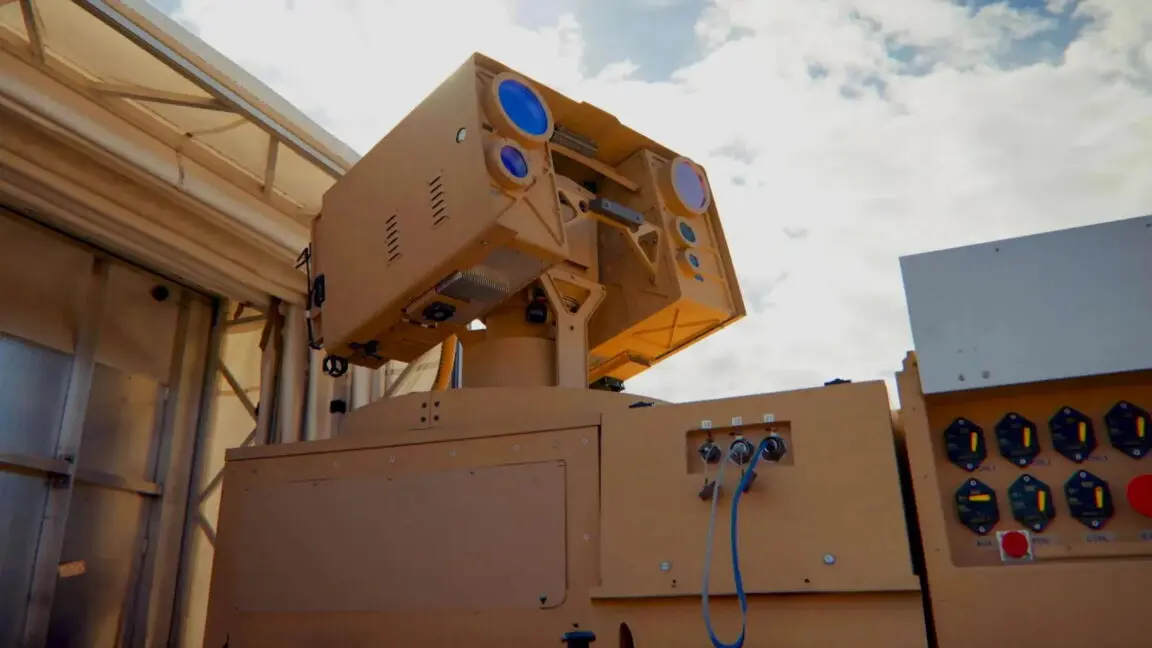
The system utilized in this historic engagement is derived from the Army’s High-Energy Multipurpose Laser (AMP-HEL) initiative, specifically incorporating technology from the vehicle-mounted Locust Laser Weapon System developed by defense contractor AeroVironment. Operating at a formidable 20 kilowatts, the Locust system represents the vanguard of directed-energy defense, offering a silent, precise, and virtually limitless magazine capacity compared to conventional munitions.
This comprehensive report examines the tactical details of the Rio Grande Valley engagement, the technological mechanics of the Locust platform, the broader implications of escalating drone warfare along the southern border, and the future trajectory of directed-energy integration within the United States armed forces.
Detailed Chronology: The Rio Grande Valley Engagement
Prelude to the Operation
The operational environment along the Rio Grande Valley in Texas has long been a focal point for federal law enforcement and military interdiction efforts. In recent years, however, the airspace above the border has transformed into a contested domain. Transnational criminal organizations have increasingly relied on advanced commercial reconnaissance and delivery drones to monitor Border Patrol movements, track law enforcement blind spots, and coordinate illicit cross-border smuggling operations involving narcotics and undocumented migrants.
Recognizing the escalating aerial vulnerability of personnel on the ground, JTF-SB—tasked with supporting Department of Homeland Security (DHS) components—has steadily enhanced its counter-unmanned aircraft systems (C-UAS) architecture. The deployment of advanced directed-energy assets to the region was not merely a random test, but the culmination of months of strategic positioning, capability integration, and threat-response protocol development.
The Midnight Interception
Between the late evening hours of August 25 and the predawn hours of August 26, integrated surveillance grids operated by JTF-SB and CBP personnel detected multiple unauthorized aerial tracks approaching restricted airspace near the Texas border. According to preliminary operational debriefs, the incoming drones exhibited flight profiles consistent with illicit reconnaissance or payload delivery, actively maneuvering in proximity to deployed tactical units.
As the UAVs closed distance and were assessed to be presenting a direct, physical threat to the safety of military personnel and CBP agents on the ground, the tactical commander authorized defensive action. Rather than employing traditional kinetic countermeasures—which carry inherent risks of stray projectiles falling into populated border communities—operators engaged the targets using a vehicle-mounted high-energy laser system.
The engagement sequence unfolded with silent precision:
- Detection and Identification: Integrated radar and electro-optical/infrared (EO/IR) sensors aboard the defense platform acquired the incoming drones, verifying their hostile or threatening trajectory.
- Target Illumination and Tracking: The system’s tracking algorithms locked onto the moving targets, maintaining a continuous, invisible beam of light on vulnerable structural components despite evasive maneuvers by the UAVs.
- Thermal Neutralization: An escalating charge of electrical energy concentrated the laser beam’s intensity, rapidly superheating the carbon-fiber frames, control surfaces, or internal battery compartments of the drones.
- Structural Failure and Crash: Within seconds of sustained exposure, the structural integrity of the first drone failed, causing it to plummet from the sky. The process was rapidly repeated for the remaining two UAVs, neutralizing the multi-drone threat before any personnel could be harmed or equipment compromised.
The entire sequence demonstrated the profound tactical advantage of speed-of-light engagement, effectively neutralizing three distinct airborne threats with surgical precision and zero collateral acoustic or kinetic signature.
Supporting Context & Metrics: The Evolution of the Locust Laser Weapon System
Programmatic Origins and Development Timeline
The deployment of the laser system on the southern border is the direct result of an accelerated acquisition and prototyping pipeline designed to place asymmetric counter-drone capabilities into the hands of warfighters as rapidly as possible.
- September 2025: Defense technology firm AeroVironment reached a pivotal milestone by delivering the first two functional prototypes of advanced laser-based weapon systems to the US Armed Forces, initiating formal operational evaluations.
- December 2025: Building upon initial feedback and the urgent operational demand for robust mobile C-UAS solutions, the program underwent a rapid expansion. AeroVironment announced the delivery of two new, improved systems configured specifically for integration onto tactical wheeled vehicles.
- Mid-2026: The systems, officially designated as the Locust Laser Weapon System and integrated into the broader framework of the Army’s AMP-HEL initiatives, transitioned from testing grounds to active operational theaters, culminating in the historic border deployment in August 2026.
Technical Specifications and Operational Mechanics
The Locust platform represents a marvel of modern engineering, bridging the gap between theoretical physics and ruggedized battlefield utility. Designed to be mounted on military vehicles—such as the Joint Light Tactical Vehicle (JLTV) platform utilized by the Army—the system offers high mobility, allowing it to reposition rapidly in response to shifting tactical threats.
[Target Acquisition: Radar & EO/IR Sensors]
                   ↓
[Precision Tracking & Beam Alignment]
                   ↓
[Energy Amplification: 20kW Laser Emission]
                   ↓
[Thermal Concentration & Material Degradation]
                   ↓
[Target Neutralization: Structural Failure]
At its core, the Locust system operates at a power output of 20 kilowatts. While large strategic defense lasers designed to destroy incoming ballistic missiles or heavy artillery shells operate in the megawatt or hundred-kilowatt range, a 20kW class laser is ideally optimized for tactical C-UAS missions. It strikes a balance between destructive capability, power consumption, and physical footprint, making it perfectly suited for tactical vehicle integration.
The operational cycle of the Locust system relies on a sophisticated multi-stage architecture:
- Sensor Integration: The system does not operate in a vacuum. It integrates data from a suite of sensors, including high-definition cameras, thermal imagers, and tactical radars, to create a comprehensive 360-degree local airspace picture.
- Precision Beam Directing: Once an object is classified as a threat, the beam director utilizes fast-steering mirrors to focus the 20kW laser beam onto a pinpoint spot on the target. This tracking system is capable of compensating for the vibrations of a moving vehicle and the rapid evasive maneuvers of a drone.
- Thermal Degradation: The laser does not "explode" a target in the traditional cinematic sense. Instead, it delivers continuous photon energy onto a localized area. This energy is absorbed and converted into intense thermal heat. When directed at critical stress points—such as the plastic housing of a rotor, the composite skin of a wing, or the lithium-ion battery pack—the heat rapidly melts, deforms, or ignites the material, leading to catastrophic aerodynamic failure.
- Economic and Logistical Efficiency: The primary advantage of the Locust system lies in its logistics chain. Unlike a missile defense battery that carries a strictly limited number of expensive interceptors (often costing hundreds of thousands or millions of dollars per unit), a laser weapon’s "magazine" is virtually inexhaustible as long as the vehicle’s engine and generator can supply electrical power. Each engagement costs mere dollars in fuel and electricity, fundamentally altering the cost-exchange ratio of modern asymmetric warfare.
Official Statements and Institutional Reactions
The successful deployment of the AMP-HEL-derived system has generated substantial discussion across defense, law enforcement, and geopolitical circles.
A spokesperson for US Northern Command emphasized the evolving nature of border security threats, noting that transnational criminal organizations are no longer constrained to ground-based smuggling techniques. "The airspace above our borders is increasingly contested by non-state actors utilizing advanced commercial technologies," the command stated in an official post-operation briefing. "Our forces must possess the technological overmatch necessary to protect both our personnel and our law enforcement partners from emerging airborne hazards. The successful neutralization of these threats underscores our commitment to leveraging cutting-edge defense capabilities in defense of the homeland."
Defense analysts and industry experts have similarly lauded the deployment as a critical milestone. Dr. Aris Thorne, a senior fellow at the Center for Strategic and International Research specializing in directed-energy warfare, pointed out the significance of deploying these systems domestically before widespread overseas implementation.
"For years, laser weapons have been viewed as perpetual technology of the future—always five years away," Dr. Thorne remarked. "By successfully utilizing a 20kW vehicle-mounted laser system in an active, high-pressure operational environment like the southern border, the US military has crossed a psychological and technical Rubicon. This proves that directed energy is no longer confined to white-sands testing facilities; it is a reliable, deployable tool of immediate tactical necessity."
Simultaneously, civil liberties and border communities have raised questions regarding the transparency and escalation of military involvement in domestic law enforcement domains. While JTF-SB operates in a strictly supportive role to civilian agencies like Customs and Border Protection under the Posse Comitatus framework exceptions governing military support to civilian law enforcement, the visual of high-energy laser weapons operating along American borders highlights the increasing militarization of domestic border infrastructure.
Future Outlook: The Dawn of Directed-Energy Defense
Expanding the Laser Arsenal
The successful August 2026 engagement is expected to serve as a powerful catalyst for the rapid expansion of directed-energy programs within the United States military. With the proof-of-concept established in a real-world, high-stakes environment, funding, procurement, and doctrinal integration for high-energy lasers are projected to accelerate dramatically over the remainder of the decade.
The Army and Department of Defense are already looking toward the next evolutionary steps for systems like the Locust and the broader AMP-HEL portfolio:
- Power Scaling: Future iterations of mobile tactical lasers are anticipated to scale upward from 20 kilowatts to 50kW and 100kW classes. This increased output will enable engagement against larger, faster, and more heavily armored threats, including loitering munitions, group 3 and 4 unmanned aircraft, and potentially incoming mortar or artillery rounds.
- Multi-Domain Integration: Plans are underway to integrate directed-energy effectors not only into tactical wheeled vehicles like the JLTV, but also into Stryker armored fighting vehicles, maritime patrol craft, and fixed base-defense architectures.
- Swarm Defense Capabilities: As drone warfare increasingly shifts toward autonomous drone swarms—where dozens or hundreds of cheap UAVs are deployed simultaneously to overwhelm traditional defense systems—lasers offer the only mathematically viable solution. Unlike kinetic missiles, which are limited by magazine depth, a laser can cycle rapidly from target to target, slicing through a swarm at the speed of light until the electrical power source is exhausted.
Strategic and Geopolitical Implications
Beyond the immediate tactical success in the Rio Grande Valley, the deployment signals a broader strategic reality to global adversaries and non-state actors alike: the United States is successfully solving the notoriously difficult engineering hurdles associated with tactical laser deployment—namely atmospheric interference, power generation, and beam cooling.
As adversaries in Eastern Europe, the Middle East, and the Indo-Pacific watch the rapid maturation of US directed-energy capabilities, the calculus of asymmetric drone warfare is forced to adapt. The era in which cheap commercial drones could harass military personnel or critical infrastructure with relative impunity is rapidly drawing to a close.
Ultimately, the events of late August 2026 will be recorded in military history as the moment directed-energy weapons stepped out of science fiction and into the harsh light of operational reality. As the US military continues to refine and deploy systems like the Locust Laser Weapon System, the battlefield—both abroad and at home—will be permanently transformed by the silent, invisible power of light.