








Executive Overview
In the modern marketplace, a brand is no longer defined merely by what an organization promises in its marketing campaigns, but by the tangible reality of what customers encounter when they attempt to complete a purchase, seek support, or utilize a product. Traditional corporate branding has long relied on visual design, narrative positioning, and carefully curated public relations. However, contemporary consumers judge businesses through a much more rigorous lens: the sum total of their everyday interactions.
The financial stakes of this shift are exceptionally high. According to PwC’s 2025 customer experience survey, 29% of consumers have permanently stopped buying from a brand simply because of a poor customer experience. When promises made in a boardroom clash with the friction experienced on a website or through a support line, trust erodes rapidly.
To prevent these disconnects, forward-thinking organizations are turning to customer experience (CX) analytics. By synthesizing customer feedback, behavioral metrics, and internal operational data into cohesive business intelligence (BI) frameworks, leadership teams can finally see where their brand promises break down. This investigative report explores how data-driven customer experience analytics transforms brand reputation from a creative marketing exercise into an empirical, enterprise-wide discipline.
Detailed Chronology: The Evolution of Brand Perception Management
The methodology of safeguarding brand reputation has undergone a profound structural transformation over the last few decades, shifting from reactive damage control to proactive, telemetry-driven operational intelligence.
Phase One: The Era of Superficial Brand Management (Late 20th Century to Early 2010s)
For decades, brand stewardship was the exclusive domain of marketing departments and creative agencies. Success was measured primarily through reach, frequency, brand recall surveys, and visual consistency. If a company launched a compelling television advertisement or a sleek print campaign, leadership considered the brand healthy—often remaining entirely oblivious to systemic failures unfolding in customer service call centers or physical storefronts. Feedback loops were slow, relying heavily on lagging indicators like annual customer satisfaction (CSAT) scores or lagging focus groups.
Phase Two: The Siloed Digital Awakening (Mid-2010s to 2020)
As commerce migrated online, businesses rushed to deploy digital touchpoints, including e-commerce platforms, mobile apps, and social media channels. During this era, companies began collecting unprecedented volumes of data. However, this information remained severely siloed. Marketing tracked click-through rates, customer support logged ticket volumes, and operations monitored supply chains—rarely sharing insights across departments. Consequently, internal assumptions continued to distort decision-making. A sudden drop in sales was frequently blamed on marketing fatigue, when it was actually the symptom of a broken checkout gateway or deteriorating product reliability.
Phase Three: The Convergence of CX and Business Intelligence (Present Day)
Today, leading enterprises recognize that brand equity is inextricably linked to end-to-end operational execution. Driven by modern advancements in cloud computing, real-time data integration, and advanced business intelligence platforms, organizations are systematically breaking down departmental silos.
Modern customer experience analytics now combines quantitative behavioral tracking with qualitative feedback analysis. Companies no longer wait for annual reviews; instead, they monitor real-time telemetry, live support interactions, and micro-behavioral shifts on digital platforms. This evolutionary leap allows executives to trace the exact root cause of a customer grievance—whether it originates in software design, logistics, or human interaction—and empower the precise team responsible for remediation.
Supporting Context & Metrics: Unmasking the Blind Spots
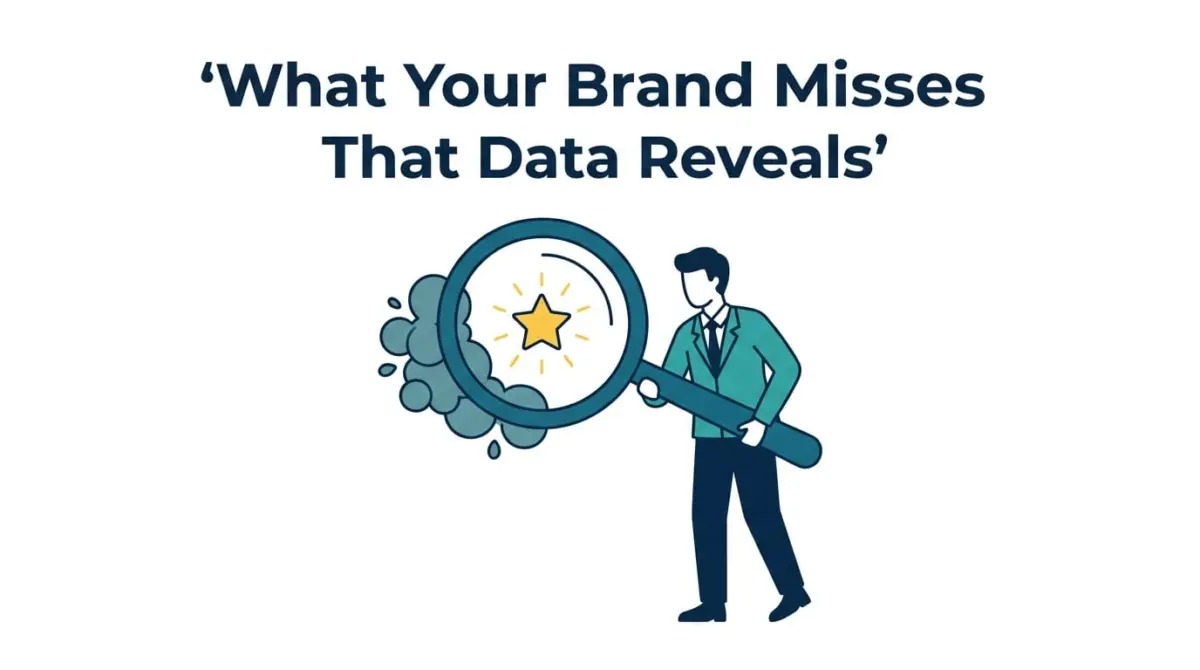
Internal employees and leadership teams are inherently biased by their deep familiarity with company processes. A complex checkout path, a delayed customer service response, or inconsistent cross-channel messaging may appear minor or easily navigable to an insider who designed the workflow. Yet, to an end consumer, each instance of friction acts as a micro-betrayal of the brand’s value proposition.
The Power of Multi-Source Data Integration
True customer experience analytics does not rely on a single dashboard or metric. Instead, it aggregates a diverse ecosystem of data points to paint an accurate picture of the customer journey:
- Direct Feedback: Traditional surveys (Net Promoter Score and CSAT), post-purchase feedback forms, and direct customer service interactions.
- Indirect Feedback: Online reviews, social media sentiment analysis, and community forum discussions.
- Behavioral Data: Website clickstream analytics, session recordings, page-exit rates, and app navigation patterns.
- Operational Metrics: Support ticket volumes, resolution times, supply chain delivery delays, and product error logs.
When analyzed collectively, these sources reveal hidden patterns that single-metric dashboards miss. For instance, an unexpected spike in cart abandonment rates paired with a concurrent increase in support tickets regarding payment gateway errors immediately signals a technical roadblock rather than a lack of consumer intent.
Real-World Application: Operational Telemetry in Action
Consider how modern mobility leaders apply these principles. GetGo, a prominent Singapore-based car-sharing enterprise, faced the complex challenge of maintaining vehicle reliability and customer satisfaction across a massive, decentralized fleet. By integrating vehicle telemetry, real-time operational events, and direct customer feedback into a unified analytical framework, GetGo empowered its teams to make near-real-time operational decisions. Rather than waiting for a customer to formally complain about a mechanical issue or a dirty vehicle, proactive maintenance and service triggers were initiated based on automated data signals. The operational lesson for any modern enterprise is clear: tie the customer complaint directly to the exact moment and mechanism in the journey where it originated.
Official Perspectives and Industry Insights
Bridging the gap between brand promise and customer reality requires a fundamental cultural shift within the corporate hierarchy. Industry experts emphasize that actionable insights must transcend vanity metrics to drive true operational change.
Defining Actionable Insights
Leadership teams frequently ask: What are actionable insights, and how do they differ from general data collection?
Data accumulation alone—such as noting that website traffic is down or bounce rates are up—does nothing to improve customer perception. An actionable insight, by contrast, explicitly identifies:
- The specific problem experienced by the user.
- The underlying cause of the friction (e.g., confusing copy, slow load times, or broken authorization APIs).
- The designated team or department responsible for implementing the fix.
Without this level of clarity, organizations risk falling into the trap of "chasing every signal," deploying scattered resources across minor symptoms while ignoring systemic structural failures.
Breaking Down Departmental Silos
Achieving cross-channel consistency requires centralized data management. Customers expect the exact same pricing, product specifications, and brand voice whether they interact with a mobile app, browse a desktop website, read an email campaign, or speak with a live support representative.
When marketing, sales, operations, and customer service teams operate from a single source of truth—powered by shared business intelligence reporting—brand perception ceases to be a siloed marketing responsibility. It becomes an enterprise-wide mandate. Shared accountability ensures that operational decisions are evaluated not just for cost-efficiency, but for their ultimate impact on the customer experience.
Future Outlook: Continuous Analysis and Predictive Loyalty
As customer expectations continually evolve, customer experience analytics can no longer function as a periodic quarterly reporting exercise. The brands that will dominate their respective markets over the coming decade are those that treat analytics as a continuous, real-time operating rhythm.
Moving from Reactive Fixes to Predictive Retention
The future of brand equity lies in predictive analytics. By continuously monitoring behavioral trends, engagement metrics, and operational performance, organizations can identify emerging customer dissatisfaction before it manifests in plummeting revenue figures or public churn.
For example, subtle changes in how a user interacts with a software dashboard—such as declining feature utilization paired with increased navigation loops—can serve as an early warning indicator of impending defection. Armed with these predictive insights, customer success teams can intervene proactively, offering targeted support, training, or workflow optimizations before the customer ever considers canceling their subscription.
Compounding Micro-Improvements
Reputation is rarely built or destroyed overnight; it is the cumulative result of thousands of micro-interactions. When an organization establishes a continuous feedback loop where support tickets inform website improvements, and website telemetry optimizes customer service workflows, small, repeated improvements begin to compound.
Ultimately, business intelligence transforms branding from an abstract creative exercise into an evidence-based operational discipline. By connecting customer signals directly to the teams empowered to act on them—and rigorously measuring whether those interventions successfully reduce friction—enterprises can ensure that their brand promise and customer reality are permanently aligned. Those that embrace this disciplined approach will secure resilient customer loyalty, protecting their market share and sustaining long-term competitive advantage.