








Executive Overview
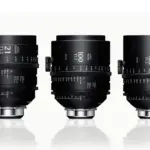
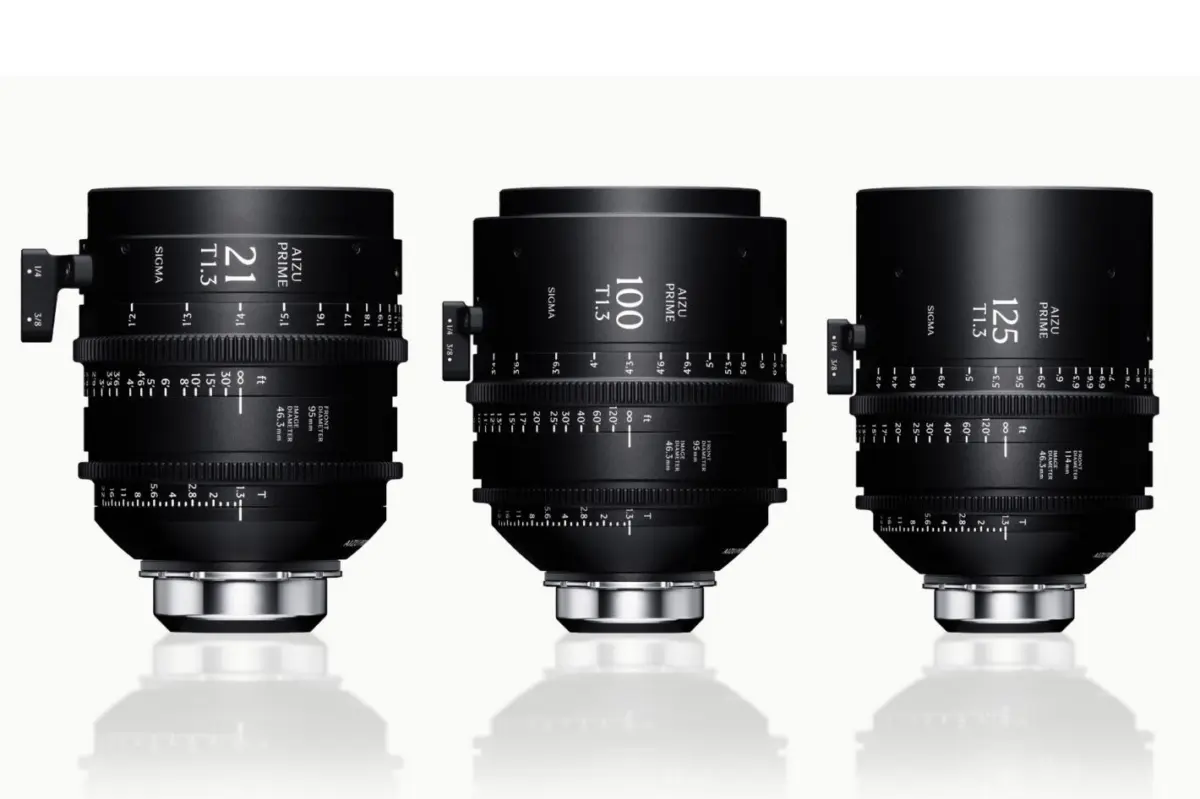
In a strategic move designed to solidify its presence in the premium cinematography market, Sigma has officially announced the expansion of its prestigious Aizu Prime lineup. The Japanese optics manufacturer is introducing three new focal lengths to the family: the 21mm T1.3 LF, the 100mm T1.3 LF, and the 125mm T1.3 LF. Scheduled for release in November 2026, these high-speed, large-format prime lenses are engineered to meet the stringent demands of modern high-end motion picture production.
Priced at $9,799 USD each, these additions bring the Aizu Prime ecosystem to a total of 11 focal lengths, spanning an ultra-wide 18mm to a tight 125mm telephoto. By maintaining a uniform, ultra-fast maximum aperture of T1.3 across the entire family, Sigma provides cinematographers with unprecedented optical consistency, permitting seamless lens swaps on set without requiring adjustments to lighting packages or exposure values.
Equipped with a massive 46.3mm image circle, the new lenses offer complete coverage for large-format cinema sensors, including the ARRI ALEXA LF Open Gate and RED VistaVision formats. Furthermore, by integrating advanced metadata technologies—specifically Cooke /i Technology and ZEISS eXtended Data—Sigma is directly targeting the visual effects (VFX) and virtual production pipelines, offering real-time lens parameter tracking to streamline post-production workflows.
Detailed Chronology: The Evolution of the Aizu Prime System
To understand the positioning of these three new lenses, it is essential to examine the developmental timeline of Sigma’s cinema glass division. Historically known for its high-quality, cost-effective Art series photo lenses—which were later housed in cinema-style housings for the original Sigma Cine Prime line—Sigma has spent the last decade pivoting toward bespoke, ground-up cinema designs.
+-----------------------------------------------------------------+
|                    AIZU PRIME LINEUP TIMELINE                   |
+-----------------------------------------------------------------+
|                                                                 |
|  [Early 2025]                                                   |
|  Launch of the initial 8 Aizu Prime Lenses                      |
|  (Establishing the core focal range from 18mm to 85mm)          |
|                                                                 |
|                                |                                |
|                                v                                |
|                                                                 |
|  [November 2026]                                                |
|  Release of 3 New Focal Lengths:                                |
|  - 21mm T1.3 LF (Wide-angle expansion)                          |
|  - 100mm T1.3 LF (Medium telephoto / portrait)                  |
|  - 125mm T1.3 LF (Telephoto reach)                              |
|                                                                 |
|                                |                                |
|                                v                                |
|                                                                 |
|  [Future Target]                                                |
|  Complete 11-lens unified system covering 18mm to 125mm         |
|  with identical T1.3 speeds and matching color profiles         |
|                                                                 |
+-----------------------------------------------------------------+
The Aizu Prime system represents the pinnacle of this evolution. Rather than rehousing existing photographic optics, Sigma designed the Aizu Prime series specifically for cinematic imaging.
- The 2025 Foundation: Sigma launched the first eight lenses in the Aizu Prime family. This initial wave established the baseline optical characteristics of the series: high resolution, controlled contrast, minimal chromatic aberration, and a uniform T1.3 speed.
- The November 2026 Expansion: The introduction of the 21mm, 100mm, and 125mm primes addresses critical focal gaps. The 21mm T1.3 LF fills the space between ultra-wide and standard-wide perspectives, offering a dramatic field of view without the barrel distortion common in wider lenses. On the longer end, the 100mm and 125mm T1.3 LF lenses provide much-needed telephoto compression, allowing for intimate close-ups and shallow depth-of-field separation from a distance.
By finalizing this 11-lens array, Sigma offers a complete, self-contained optical ecosystem. Directing DP choice away from legacy cinema brands, the fully realized Aizu Prime series is designed to handle entire feature films, episodic television series, and high-budget commercial productions from a single, unified lens package.
Technical Analysis & Performance Metrics
The architectural design of the Aizu Prime lenses balances modern digital sensor requirements with classic, organic rendering. Below is an analytical breakdown of the key optical and mechanical metrics that define these new lenses.
Optical Characteristics and the T1.3 Aperture
At the heart of the Aizu Prime series is the T1.3 light transmission rating. Achieving a T1.3 aperture on large-format sensors requires highly sophisticated optical engineering, utilizing anomalous dispersion and high-refractive-index glass elements to combat spherical and chromatic aberrations.
- Shallow Depth of Field: The T1.3 aperture produces an incredibly thin plane of focus, allowing cinematographers to isolate subjects cleanly from busy backgrounds.
- Organic Bokeh and Roll-off: Rather than exhibiting the harsh, clinical sharpness found in some modern high-resolution optics, the Aizu Primes are engineered with a gentle focus fall-off. The transition from sharp, in-focus areas to out-of-focus backgrounds (bokeh) is smooth, characterized by soft edges and a circular shape maintained across the frame by multi-blade iris assemblies.
- Suppressed Focus Breathing: For narrative filmmaking, focus breathing—the shifting of focal length when racking focus—can be highly distracting. Sigma has implemented a floating inner-focus system in the 21mm, 100mm, and 125mm models, keeping focus breathing to a negligible level.
Sensor Coverage and the 46.3mm Image Circle
The transition from Super 35 to large-format sensors (often referred to as Full Frame or VistaVision) has rewritten the rules of cinema optics. Lenses must project a much larger image circle to avoid vignetting or severe corner degradation.
| Lens Model | Focal Length | Max Aperture | Image Circle | Minimum Focus Distance | Target Sensor Formats |
|---|---|---|---|---|---|
| 21mm T1.3 LF | 21mm | T1.3 | 46.3mm | Highly Optimized Close-Focus | VistaVision, RED V-Raptor, ARRI LF, S35 |
| 100mm T1.3 LF | 100mm | T1.3 | 46.3mm | Optimized Portrait Distance | VistaVision, RED V-Raptor, ARRI LF, S35 |
| 125mm T1.3 LF | 125mm | T1.3 | 46.3mm | Telephoto Close-Focus | VistaVision, RED V-Raptor, ARRI LF, S35 |
With an image circle of 46.3mm, these lenses comfortably cover:
- ARRI ALEXA Mini LF & ALEXA 35 (in various crop and open-gate modes).
- RED V-Raptor / Monstro 8K VV sensors.
- Sony Venice 2 (8K and 6K) formats.
This generous image circle ensures that light transmission and resolution remain consistent from the center of the frame to the extreme corners, preventing the dramatic fall-off in brightness and sharpness that often plagues adapted photo lenses.
   [46.3mm Large Format Image Circle]
  +-------------------------------------+
  |      . - ~ ~ ~ - .                  |
  |    /                  <-- Complete illumination
  |  /   +-----------+        without corner shading
  | /    |           |                 |
  | |    |  Sensor   |    |             |
  | |    |  (e.g.,   |    |             |
  | |    |  ALEXA LF)|    |             |
  |     |           |    /             v
  |     +-----------+   /     Covers VistaVision &
  |                   /       ARRI Open Gate formats
  |      ' - _ _ _ - '                  |
  +-------------------------------------+
Advanced Metadata Integration
The inclusion of dual-protocol metadata support is a significant benefit for modern production environments. The Aizu Prime lenses natively support both Cooke /i Technology and ZEISS eXtended Data protocols.
When mounted on compatible cameras, the lenses communicate real-time positional data, including:
- Precise focus distance.
- Selected T-stop value.
- Focal length.
- Dynamic lens distortion profiles.
- Shading (vignetting) characteristics.
In virtual production environments utilizing LED volumes (such as Unreal Engine-driven stages), this metadata allows the rendering engine to match the virtual background’s perspective, focus, and distortion to the physical lens in real time. In traditional VFX post-production pipelines, having frame-accurate distortion and shading data eliminates the need for manual lens grid shooting, saving hours of digital correction work.
Official Perspectives and the "Made in Aizu" Philosophy
The naming of the "Aizu Prime" lineup is a deliberate nod to Sigma’s sole manufacturing facility in the Fukushima Prefecture of Japan. Unlike many technology conglomerates that outsource component manufacturing across global supply chains, Sigma maintains a vertically integrated production model at its Aizu factory.
According to technical documentation and corporate statements from Sigma, the "Made in Aizu" moniker represents more than just a geographic origin; it is an assurance of strict quality control. The manufacturing of T1.3 cinema optics requires sub-micron tolerances. Every glass element is ground, polished, coated, and tested in-house using proprietary MTF (Modular Transfer Function) measuring systems.
Sigma emphasizes that the Aizu Prime family is designed to offer a distinct aesthetic:
"While maintaining modern sharpness, the lenses avoid rigid or harsh depictions—delivering a natural, organic look. They provide quiet elegance and depth to the image, with distortion and focus breathing carefully minimized to ensure visual consistency, even in dynamic scenes."
This design philosophy positions the Aizu Primes as a bridge between two eras of cinematography: they provide the extreme resolving power demanded by modern 8K and 12K digital sensors, while retaining the gentle contrast and smooth skin tones traditionally associated with vintage analog glass.
Market Positioning & Competitive Landscape
Priced at $9,799 USD per lens, the Aizu Primes sit in a highly competitive mid-to-high-tier cinema lens market. To understand their market viability, we must compare them to other notable large-format cinema prime offerings:
+---------------------------------------------------------------------------------+
|                         HIGH-SPEED CINE PRIME COMPARISON                        |
+---------------------------------------------------------------------------------+
|  Brand/Series          | Speed  | Image Circle | Metadata Support | Price (USD) |
+---------------------------------------------------------------------------------+
|  Sigma Aizu Prime      | T1.3   | 46.3mm       | Cooke /i & ZEISS | ~$9,799     |
|  ZEISS Supreme Prime   | T1.5   | 46.3mm       | ZEISS eD         | ~$20k - $30k|
|  Cooke S8/i FF         | T1.4   | 46.3mm       | Cooke /i         | ~$35k - $40k|
|  ARRI Signature Prime  | T1.8   | 46.0mm       | ARRI LDS-2       | ~$30k - $40k|
+---------------------------------------------------------------------------------+
Strategic Advantage: The T1.3 Speed and Price Disruption
At under $10,000 USD per lens, the Sigma Aizu Primes offer a compelling value proposition for rental houses, boutique production companies, and owner-operators.
While tier-one options like the Cooke S8/i and ARRI Signature Primes remain industry standards for major studio features, their high cost puts them out of reach for independent productions. Conversely, lower-cost cinema lenses often compromise on maximum aperture, optical consistency, or metadata integration.
Sigma’s ability to deliver a consistent T1.3 speed across an entire 11-lens lineup at this price point represents a disruptive shift, offering elite-tier performance to a broader segment of the filmmaking community.
Future Outlook: Implications for the Industry
The release of the 21mm, 100mm, and 125mm Aizu Prime lenses in late 2026 points to several emerging trends in the cinematography landscape:
- The Normalization of Large-Format Production: As large-format sensors become standard in cameras ranging from entry-level cinema bodies to flagship A-cameras, the demand for dedicated, high-quality full-frame glass will continue to grow. Sigma’s expansion ensures they are positioned to capture this market.
- Post-Production Convergence: The integration of Cooke /i and ZEISS eXtended Data in mid-priced lenses highlights how critical metadata has become. As virtual production and VFX-heavy workflows trickle down from tentpole studio films to independent productions, metadata-enabled lenses will transition from a luxury to a baseline requirement.
- The Rise of "Clean-Organic" Aesthetics: The industry-wide shift away from sterile, ultra-sharp digital images has led DP’s to seek lenses that offer character without sacrificing optical performance. The Aizu Prime’s blend of high resolution and gentle roll-off aligns directly with this aesthetic demand.
With the shipping date set for November 2026, the industry will soon see how these three new focal lengths perform in the field. If they match the optical standards of their predecessors, the Aizu Prime lineup may well become a staple of modern rental inventories, reshaping expectations for high-speed, large-format cinema glass.