







Executive Overview
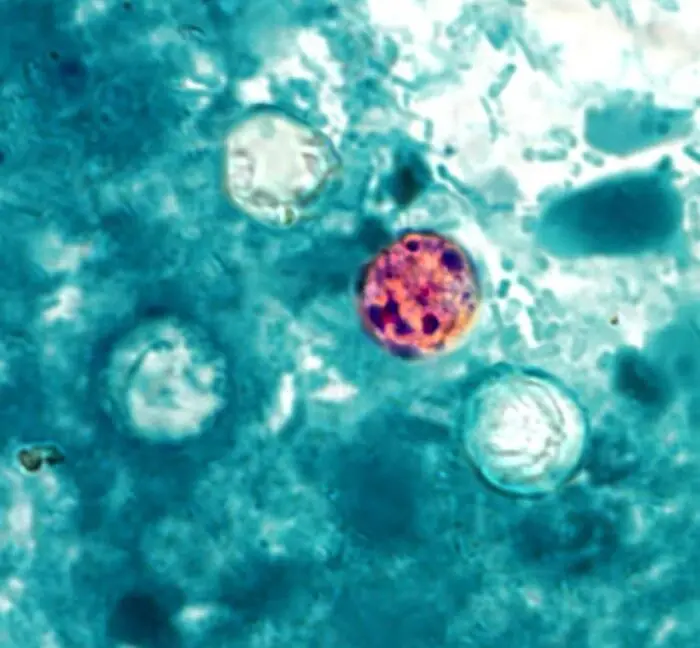
In the midst of the largest and most destructive nationwide outbreak of the foodborne parasite Cyclospora in United States history, the federal government is effectively dismantling its primary infrastructure for studying the pathogen. According to investigative reporting by Politico, the Trump administration has moved to halt vital federal research projects concerning Cyclospora cayetanensis, a debilitating diarrheal parasite that has sickened tens of thousands of Americans this season.
The dismantling of this specialized research apparatus is occurring through a combination of direct funding cuts and an abrupt geographic relocation mandate. Of the three core research programs that constitute nearly the entirety of federal Cyclospora investigation at the United States Department of Agriculture (USDA), two have been entirely defunded. The third and final program is slated to lose every active scientist and parasitologist dedicated to the work.
This disruption stems from the administration’s decision to shutter the historic Beltsville Agricultural Research Center near Washington, D.C., and relocate its operational mandate to a facility in Iowa. While agency officials maintain that the remaining Cyclospora project technically retains its budgetary allocation, institutional reality paints a far more perilous picture. According to internal whistleblowers and USDA insiders, not a single scientist or researcher attached to the project plans to make the cross-country relocation from Maryland to the Midwest. Instead, these leading experts are opting for early retirement, accepting internal reassignments to unrelated agricultural portfolios, or departing the federal research service entirely.
The timing of this brain drain could not be worse. The Centers for Disease Control and Prevention (CDC) has tracked nearly 30,000 confirmed and probable cases of cyclosporiasis during the summer season alone, resulting in nearly a thousand hospitalizations and multiple fatalities. Historically, annual case loads hovered between 2,000 and 5,000 infections. The sudden evaporation of institutional knowledge, combined with the extreme biological complexities of the parasite itself, leaves the United States profoundly vulnerable to future food safety crises. Public health advocates and scientific organizations warn that the loss of specialized parasitologists will create a dangerous blind spot in the nation’s food supply defense system, just as the pathogen appears to be gaining unprecedented epidemiological momentum.
Detailed Chronology
To understand the current crisis at the USDA, it is necessary to trace the sequence of events that led to the gutting of federal parasitology expertise and the simultaneous explosion of foodborne illness.
The Buildup: Years of Rising Infection Rates (2018–2025)
For years, public health officials noted a gradual, concerning uptick in Cyclospora infections across the United States.
- 2018–2024: The U.S. routinely recorded between 2,000 and 5,000 cases of cyclosporiasis annually, typically linked to imported fresh produce such as basil, cilantro, raspberries, and salad mixes. Despite these recurring outbreaks, federal research capacity remained relatively stable, centered primarily at the Beltsville Agricultural Research Center in Maryland, where specialized parasitologists worked quietly to unravel the lifecycle of the elusive pathogen.
- 2025: The epidemiological baseline shifted subtly. The U.S. reported 1,180 cases during a year that saw shifting weather patterns and complex global supply chain adjustments. While lower than peak historical years, public health surveillance systems noted that the pathogen was becoming increasingly resilient and widespread, prompting calls within the scientific community for expanded—not restricted—research funding.
The Summer of 2026: The Record-Breaking Outbreak and Administrative Disruption
As the spring of 2026 transitioned into summer, the United States was struck by an unprecedented surge in Cyclospora infections. Simultaneously, structural changes within the federal agricultural bureaucracy were set into motion.
- Early Summer 2026: State health departments began reporting explosive clusters of gastrointestinal illness. The CDC’s national surveillance network quickly realized this was not a localized event; it was a nationwide public health emergency of historic proportions, eventually tallying nearly 30,000 confirmed and probable cases.
- Mid-Summer 2026: While epidemiologists tracked the spread of the disease through contaminated food vectors, administrative wheels turned quietly within the USDA. A directive was issued to shutter the Beltsville Agricultural Research Center near Washington, D.C.—a sprawling, world-renowned facility that had served as the epicenter of federal agricultural and parasitological research for over a century. Operations, staff, and equipment were ordered to be transferred to a new facility in Iowa.
- Late August 2026: Public reporting by Politico revealed the devastating collateral damage of the Beltsville relocation. Of the three foundational Cyclospora research initiatives at the USDA, two were stripped of their funding entirely. The third program, while technically funded on paper, was rendered functionally extinct. Internal USDA personnel confirmed that zero researchers from the Beltsville Cyclospora team agreed to relocate to Iowa, choosing instead to retire, transfer, or leave government service entirely.
Supporting Context & Metrics
The dismantling of federal Cyclospora research cannot be viewed in a vacuum. It is colliding directly with an epidemiological crisis of historic scale, compounded by the uniquely frustrating biological hurdles associated with studying the parasite.
The 2026 Epidemiological Toll
The numbers emerging from federal and state health agencies paint a grim picture of the current outbreak’s severity:
- Total Cases: Nearly 30,000 confirmed and probable cases reported nationwide during the active surveillance window. This shatters all previous historical records by an order of magnitude.
- Hospitalization Rate: At least 922 individuals have suffered illness severe enough to require inpatient hospital care. Cyclosporiasis causes explosive, watery diarrhea, severe cramping, nausea, bloating, extreme fatigue, and weight loss that can persist for weeks or months if left untreated with specific antibiotic regimens (such as trimethoprim-sulfamethoxazole).
- Mortality: Tragically, at least two deaths have been officially attributed to the outbreak, underscoring that Cyclospora is not merely an uncomfortable foodborne nuisance, but a serious systemic threat—particularly to the elderly, immunocompromised, and individuals with underlying health conditions.
The Biological Nightmares of Cyclospora Research
To appreciate why the loss of the USDA’s Beltsville parasitology team is catastrophic, one must understand why Cyclospora cayetanensis is notoriously difficult to study in a laboratory setting. Unlike more familiar foodborne pathogens like E. coli or Salmonella, Cyclospora defies standard microbiological experimentation.
Comparison of Foodborne Pathogens in Laboratory Settings:

Pathogen Type      | Reproduction in Lab | Genome Size | Genetic Tracking Difficulty
------------------ | ------------------- | ----------- | ---------------------------
E. coli / Bacteria | Clonal (Easy)       | Small       | Low (Asexual clones)
Salmonella         | Clonal (Easy)       | Small       | Low (Asexual clones)
Cyclospora | Human Gut Only | Very Large | Extreme (Sexual reproduction)- Obligate Human Host Dependency: Cyclospora cannot be cultured on agar plates or grown in standard nutrient broth. It requires a human host gut to complete its lifecycle and reproduce. Researchers cannot simply "grow up" a batch of the parasite in an incubator to run experiments.
- Isolation and Shedding Challenges: Extracting the parasite from clinical fecal samples is laborious and inefficient. Infected individuals often shed the oocysts intermittently or at very low concentrations, necessitating multiple, repeated stool samples from patients just to isolate enough material for basic analysis.
- Genomic Complexity: Genetic sequencing of Cyclospora is vastly more expensive and technically demanding than sequencing bacterial pathogens. The parasite possesses a much larger and more complex genome than bacteria, making whole-genome sequencing cost-prohibitive and computationally burdensome.
- Sexual Reproduction and Lineage Tracking: Bacteria reproduce asexually, meaning they create genetic clones that are nearly identical and easy to trace back to a single contamination source. Cyclospora, by contrast, reproduces sexually. Every single generation introduces a new mix of genes, scrambling genetic markers and making it immensely difficult for scientists to trace the lineage of a parasite back to a specific farm, irrigation water source, or contaminated food vector.
Official Statements and Institutional Fallout
The abrupt halting of research has triggered sharp warnings from government insiders, scientific societies, and public health advocates who fear the U.S. is blinding itself to an evolving biological threat.
Whistleblower Warnings and the "Knowledge Gap"
The human cost of the USDA’s relocation plan is measured not just in administrative disruption, but in the permanent severance of generational scientific expertise.
"They will have no parasitologists," one anonymous USDA employee told Politico, highlighting the total vacuum left by the exodus of the Beltsville team. "There will be a big knowledge gap."
In federal scientific research, expertise is deeply specialized. A parasitologist who has spent decades learning the nuances of Cyclospora oocyst sporulation, environmental survival mechanisms, and host-pathogen interactions cannot be easily replaced by a generalist or a newly hired technician. By forcing the retirement or departure of these seasoned specialists, the USDA has effectively reset its institutional clock to zero. Years, and potentially decades, of accumulated operational intuition and specialized technical skill have been permanently lost.
Silence and Bureaucratic Justification
Thus far, official messaging from leadership within the USDA has sought to downplay the crisis, emphasizing that budgetary allocations for the overarching project remain technically intact on agency balance sheets. Officials have framed the shift as part of a broader, long-term administrative reorganization aimed at modernizing facilities and consolidating agricultural research footprints in the Midwest.
However, independent public health experts and congressional oversight staff have heavily criticized this bureaucratic defense. Critics argue that funding is meaningless without the human capital required to execute the science. A laboratory building in Iowa with state-of-the-art equipment is entirely useless if there are zero trained parasitologists willing or able to staff it.
Furthermore, agricultural watchdogs have questioned the logic of uprooting critical food safety research during a record-breaking national outbreak. Rather than surging resources to meet an unprecedented public health challenge, the administration’s actions have effectively paralyzed the federal government’s primary research arm dedicated to understanding how the parasite contaminates the food supply and how outbreaks can be intercepted before they reach grocery store shelves.
Future Outlook
As the United States looks toward the future of food safety regulation and agricultural defense, the decision to halt Cyclospora research casts a long and worrisome shadow. Several critical implications emerge for public health, regulatory enforcement, and scientific preparedness.
1. Impaired Outbreak Investigation and Traceability
Without dedicated federal parasitologists, tracking future Cyclospora outbreaks will become significantly slower and less reliable. When a contaminated batch of imported berries or leafy greens sickens hundreds of consumers, rapid traceback is essential to pull the product from shelves and prevent further illness. Because Cyclospora undergoes sexual reproduction—creating genetic diversity that confounds standard tracking—advanced genomic and epidemiological tools are desperately needed. The loss of USDA research capability means federal agencies will be operating largely in the dark, relying on outdated methods to trace complex contamination pathways.
2. Heightened Vulnerability in Globalized Food Supply Chains
The American food supply is more globalized than ever, with fresh produce imported year-round from regions with varying water quality, sanitation standards, and agricultural climates. Cyclospora is notoriously resilient in the environment; its oocysts can survive for weeks or months in soil and water, resisting conventional chemical disinfectants like chlorine. As climate change alters weather patterns, water scarcity forces the use of marginal irrigation sources, and global trade expands, waterborne and foodborne parasites are expected to become more prevalent. Dismantling research into how these pathogens survive, spread, and contaminate crops leaves the nation dangerously exposed.
3. The Need for Congressional Intervention and Reinvestment
Public health coalitions, food safety advocates, and scientific societies are increasingly calling for urgent congressional oversight. Lawmakers are being urged to compel the USDA to account for the loss of its parasitology workforce and to establish emergency grant programs that can redirect funds to academic institutions and independent laboratories capable of picking up the abandoned research.
Without targeted legislative intervention to rebuild federal parasitology capacity, the United States risks remaining defenseless against Cyclospora cayetanensis. As the record-breaking outbreak of 2026 painfully demonstrates, this resilient pathogen is no longer a minor agricultural footnote—it is a major national health crisis that demands rigorous, uninterrupted scientific inquiry.