










Executive Overview
As the artificial intelligence boom and hyper-scale cloud computing reshape the global economy, a new kind of industrial titan is emerging: the gigawatt-scale data center campus. Developments that once required a modest 25 megawatts of power now routinely demand hundreds of megawatts—or upwards of a full gigawatt—straining regional power grids, accelerating utility investments, and forcing a fundamental rethinking of how electrical infrastructure is financed.
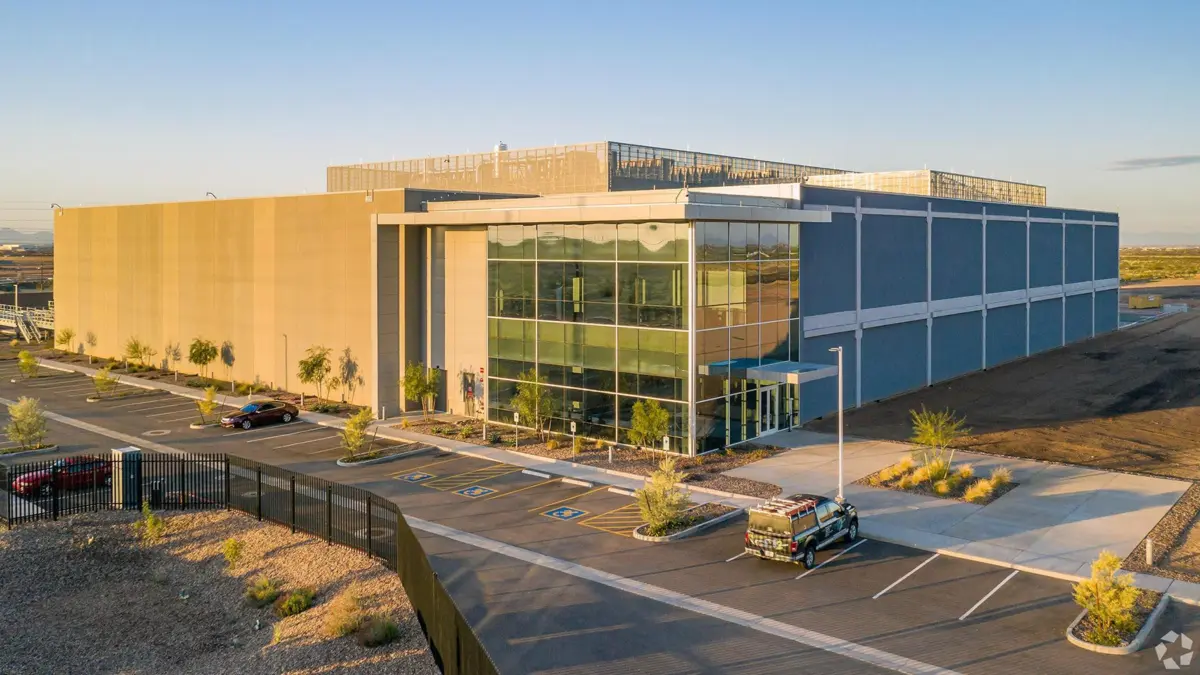
At the center of this structural shift is EdgeCore Digital Infrastructure, a major developer-operator expanding massive campuses across the United States. With massive footprints planned or underway, including a 1.1-gigawatt-plus campus in Louisa County, Virginia, a 496-megawatt facility in Mesa, Arizona, and a 216-megawatt footprint in Reno, Nevada, EdgeCore is riding the crest of the AI wave. Backed by substantial financial firepower—including $1.5 billion in construction financing secured this year alone for two fully leased hyperscale facilities in Northern Virginia—the company is facing the ultimate test of grid economics.
The core tension in the modern data center landscape is no longer simply whether developers can secure power, but who pays for the staggering cost of delivering it. Amid heightened political scrutiny over rising residential electricity bills, the White House introduced the Ratepayer Protection Pledge, demanding that data center operators fully fund the generation, transmission, and delivery infrastructure their facilities require.
While EdgeCore asserts that its business model has long aligned with this ethos—committing to bear 100% of customer-specific infrastructure costs—the broader energy market remains mired in a complex regulatory grey area. Where do project-specific costs end, and where do broader grid upgrades begin? As utilities implement rigorous new integration frameworks to safeguard everyday ratepayers, the boundary between private corporate responsibility and public utility investment is becoming one of the most contentious battlegrounds in modern energy policy.
Detailed Chronology: The Evolution of EdgeCore’s Infrastructure Strategy
To understand how EdgeCore navigates the modern power crisis, one must trace the convergence of its historical development model with the explosive demands of next-generation AI architecture.
From Megawatts to Gigawatts
Five years ago, the data center industry operated on a vastly different scale. A standard hyperscale build might have drawn roughly 25 megawatts, a load easily absorbed by most regional distribution networks with minimal localized upgrades. However, the generative AI revolution has shattered those baselines. EdgeCore’s current pipeline is defined by massive campuses exceeding 300 megawatts, with flagships like the Louisa County development representing a staggering $17 billion planned investment.
This hyper-scaling fundamentally changes the calculus of capital expenditure. Bringing power to a multi-hundred-megawatt campus routinely costs tens or hundreds of millions of dollars. According to company executives, power-related infrastructure now accounts for roughly 5% to 10% of a project’s upfront capital costs.
The White House Pledge and Policy Realities
The regulatory pressure cooker intensified in March when the White House launched the Ratepayer Protection Pledge. Designed to protect everyday consumers from absorbing the infrastructure costs of energy-intensive AI factories, the pledge calls on data center operators to build, bring, or buy the power necessary for their operations, while fully paying for new delivery systems and network upgrades. In July, the administration expanded the initiative to encompass utilities, rural electric cooperatives, state regulators, and developers alike.
When asked whether signing the pledge altered EdgeCore’s operational philosophy, Julie Brewer, the company’s executive vice president of finance, offered a definitive response: "Signing this pledge is a natural extension of the way we’ve done business historically."
Brewer emphasized that EdgeCore has always expected to shoulder the financial burden of the infrastructure required to feed its facilities. "We expect to bear 100% of the costs," she stated, noting that while the dollar values have exploded due to the sheer size of modern campuses, the core principle remains untouched.
The Arizona Blueprint: Salt River Project in Action
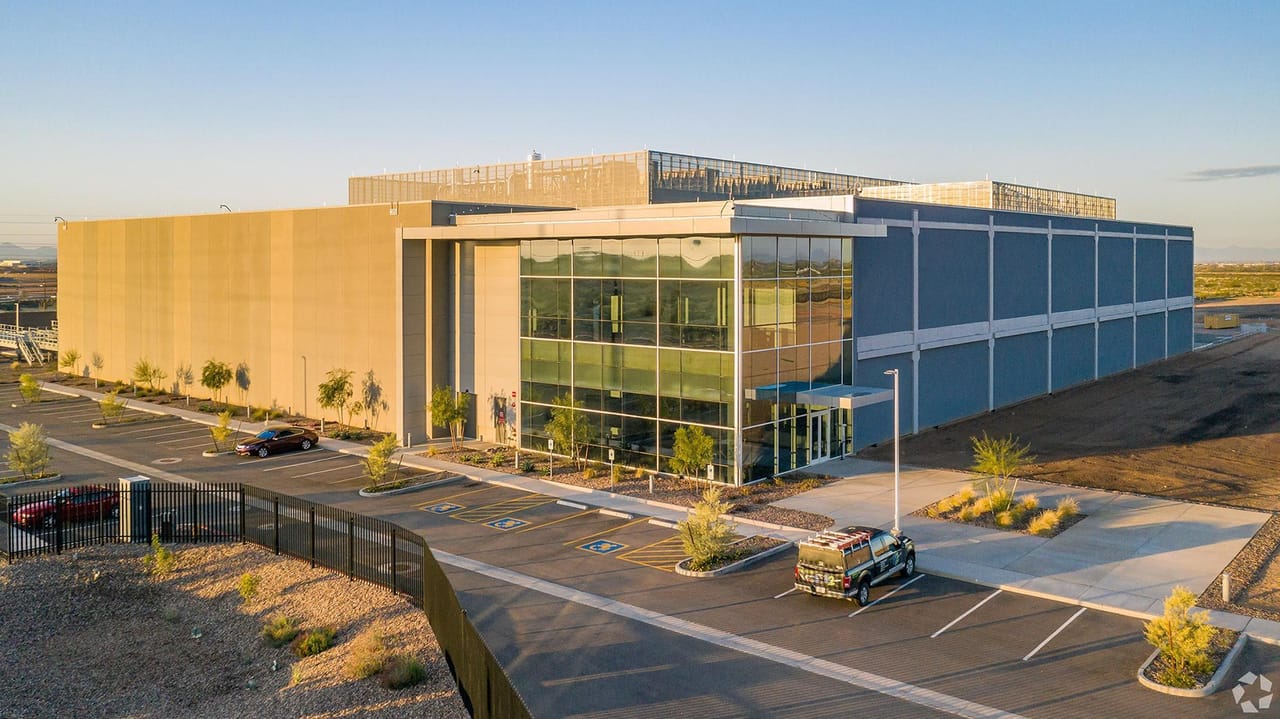
EdgeCore’s operational model is vividly demonstrated in its Mesa, Arizona campus, situated within the region’s bustling Elliot Road Technology Corridor. Powering this facility required close collaboration with the Salt River Project (SRP), a major regional utility known for establishing rigorous frameworks to protect residential rate stability.
SRP records and utility confirmations illustrate how modern data center infrastructure is financed on the ground. For EdgeCore’s initial 26-megawatt building in Mesa, the company made upfront capital deposits and directly covered SRP’s construction costs for a customer-dedicated facility: the Hartman Substation, paired with a specialized 69-kilovolt line extension.
As the Mesa campus expanded toward its ultimate 496-megawatt capacity, EdgeCore scaled its financial commitments accordingly. Brewer noted that the company expanded its capital agreements with SRP to encompass the totality of upstream requirements—spanning overhead and underground transmission lines, substation assets, and generation costs—ensuring that the local community was entirely shielded from the financial impact.
Supporting Context and Metrics: The Mechanics of Cost Allocation
While corporate pledges establish a developer’s intent, the real-world execution of financing grid upgrades is a labyrinthine regulatory exercise. Neil Osnato, founder of Persistence Analytics Group, points out that while EdgeCore’s position is commendable, achieving true "full cost responsibility" is far more complicated than simply paying for a substation directly wired to a data center.
The Cost-Allocation Dilemma
The central challenge facing utilities, regulators, and developers lies in drawing the line between private consumption and public grid enhancement. Osnato frames the dilemma around three fundamental questions:
- Which costs would not exist but for the data center?
- Which investments produce broader regional benefits for the entire grid?
- Which system upgrades were already required for baseline network reliability regardless of the new load?
When a data center directly triggers the construction of a dedicated transformer bank or transmission line, assigning those costs is relatively straightforward. However, farther upstream, a massive multi-hundred-megawatt load alters power flows, introduces congestion, increases regional reserve margins, and forces complex long-term transmission planning.
"It is realistic for a data center to commit to paying all identifiable customer-specific incremental costs," Osnato explains. "It is much harder to prove prospectively that every system cost attributable to the load has been captured."
The Evolving Regulatory Shield: SRP’s Framework
To manage these variables, utilities are proactively hardening their tariffs. Salt River Project serves as a national model for this defensive regulatory posture. In 2025, SRP rolled out its Large Customer Integration Process, a structured mechanism designed to map out every infrastructure upgrade required to support prospective mega-loads before a single shovel hits the dirt. Under this process, utilities provide cost estimates that developers must pay upfront.
Furthermore, SRP updated its E-67 price plan targeting customers with a forecast demand of 20 megawatts or more. Taking effect for service agreements after November 2025, these clients must meet stringent minimum billing requirements—based on actual usage or 80% of forecast demand—on top of funding dedicated transmission services. This safeguards the utility and its residential ratepayers from speculative builds where a data center might scale back operations or consume significantly less electricity than initially projected.
Official Statements and Industry Perspectives
The high-stakes nature of power procurement has forced developers to adopt a remarkably disciplined approach to project viability.
-
Julie Brewer, EVP of Finance, EdgeCore:
Emphasizing the firm’s non-negotiable financial boundaries, Brewer made it clear that corporate growth will not compromise fiscal prudence. When asked directly whether EdgeCore would walk away from a project if power economics proved unfavorable, she answered without hesitation: "Put bluntly, yes."While Brewer noted that EdgeCore has yet to experience a complete project cancellation after sinking significant capital into infrastructure—absorbing project delays and localized grid friction instead—her comments underscore the reality that power constraints are the ultimate ceiling on the AI expansion boom.
-
Salt River Project (SRP) Spokesperson:
Reiterating the utility’s absolute commitment to public interest protection, an SRP representative stated to industry media: "We are committed to helping ensure new data centers in our service territory do not raise electric rates for residential customers." The utility’s insistence on upfront funding for upgraded transmission lines and substations has set a high compliance bar for all incoming hyperscalers. -
Neil Osnato, Founder, Persistence Analytics Group:
Highlighting the ongoing friction between corporate promises and regulatory reality, Osnato warned that legal obligations are ultimately dictated by tariffs and state public utility commissions, not marketing pledges. "A pledge can establish a developer’s intent. A tariff establishes its legal obligation. The cost-allocation process determines whether those obligations capture the infrastructure and system costs caused by the load."
Future Outlook: The Next Frontier of Gigawatt-Scale Development
As the data center industry transitions from the megawatt era to the multi-gigawatt frontier, the questions surrounding power procurement, generation, and cost allocation will only intensify.
Unresolved questions remain particularly acute regarding generation capacity. While EdgeCore affirms that it expects to pay for the generation required to serve its campuses, the specific mechanisms—whether through direct ownership, long-term power purchase agreements (PPAs), dedicated zero-carbon procurement, or project-specific utility tariffs—remain flexible and proprietary. The White House pledge pushes operators to bring new or additional generation online, a mandate that will require innovative partnerships between tech giants, infrastructure developers, and nuclear, geothermal, or advanced renewable energy providers.
Ultimately, the friction between skyrocketing digital demand and physical grid limitations is forging a new era of infrastructure accountability. For developers like EdgeCore, survival in the hyperscale arena requires more than just capital and architectural ingenuity; it demands a seamless, transparent partnership with utilities and regulators to ensure that the digital revolution does not outpace the electrical foundations upon which it stands. As the boundary between private corporate commitment and public grid investment is continuously tested, the solutions forged today will dictate the stability of national energy grids for decades to come.