








Executive Overview
In the modern enterprise, digital certificates form the cryptographic bedrock of trust, securing everything from customer-facing web applications to internal microservices. Yet, the operational reality of managing these certificates remains remarkably brittle. For decades, organizations have treated certificate lifecycle management (CLM) as a peripheral, administrative chore—a simple cron job invoking an Automated Certificate Management Environment (ACME) client, quietly ticking along in the background until an unexpected outage jolts engineering teams back to reality.
This narrow, file-centric view of certificate management is fundamentally broken. A cryptographic certificate is not merely a file residing on a storage volume; it is a live operational asset whose utility is entirely dependent on the correct service presenting it to the end user. Between the moment a Certificate Authority (CA) signs a new credential and the millisecond a TLS handshake successfully terminates on a client device, a complex chain of operational handoffs must occur. When any single link in that chain fails, a system can experience a catastrophic outage even while automation scripts report pristine, unblemished execution metrics.
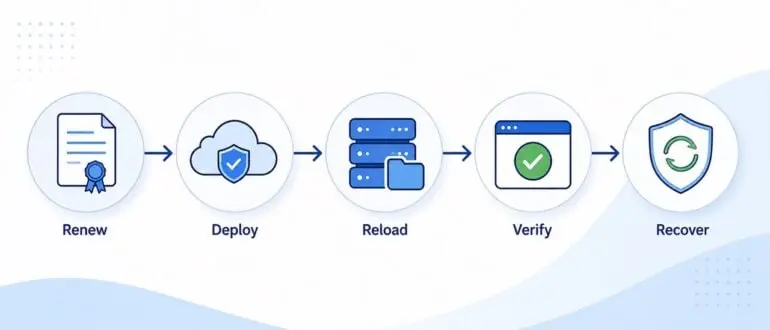
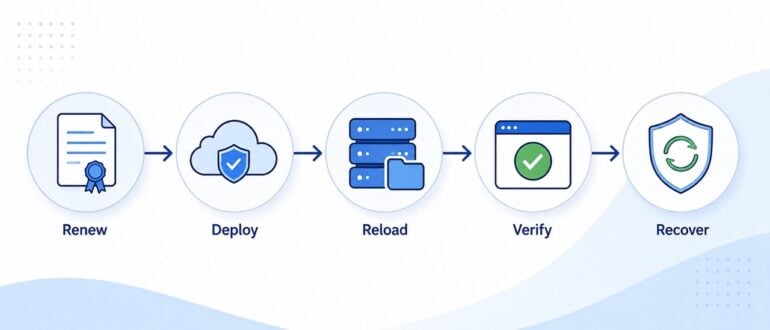
Industry insights—stemming from deep operational challenges observed in platforms like TokenTimer—reveal a paradigm shift: certificate renewal must be re-architected not as a scheduled file-drop, but as a rigorous, end-to-end deployment workflow. This comprehensive lifecycle model encompasses continuous inventory tracking, strategic renewal, precise deployment, runtime service reloading, active verification, and automated recovery.
As infrastructure grows more distributed, containerized, and ephemeral, treating certificate management with the same engineering rigor applied to continuous integration and continuous deployment (CI/CD) pipelines is no longer a best practice—it is an absolute operational necessity.
Detailed Chronology of a Cryptographic Failure
To understand why traditional certificate automation frequently fails in production environments, one must trace the lifecycle of a certificate from its genesis at the CA to its active termination at the edge. Far too many automation frameworks measure success prematurely, conflating the acquisition of a certificate with its operational delivery.
[ CA Issuance ] ---> [ File Sync / Mount ] ---> [ Process Reload ] ---> [ Live Verification ]
(ACME Success)        (Configuration Drift?)      (Stale Memory?)        (External Probe)
Phase 1: Issuance vs. Production State
The first and most pervasive failure mode in certificate automation is the disconnect between issuance and application state. An ACME client executes successfully, returning an exit code of 0 and depositing a freshly minted PEM-encoded file into a local directory. To the monitoring script, the job is an unmitigated success.
However, the production workload remains entirely oblivious to this event. In containerized environments, monolithic virtual machines, or distributed multi-tier clusters, the certificate may require complex synchronization:
- Copying across isolated bastion hosts.
- Mounting dynamic volumes into Kubernetes pods via secrets.
- Distributing secrets across geographically dispersed API gateways.
- Synchronizing with external load balancers or content delivery network (CDN) edge nodes.
A successful transaction with Let’s Encrypt or a private enterprise CA proves only that cryptographic keys were exchanged and a certificate was signed. It provides zero guarantee that the service endpoint reachable by users has actually ingested the new material. Consequently, the renewal job is marked "green," yet the incident clock for an impending expiration outage is still actively running.
Phase 2: The Memory and Configuration Trap
Even when automated deployment mechanisms successfully deliver certificate files to the target host, the running service process frequently fails to incorporate them. Web servers and reverse proxies such as NGINX, Apache, HAProxy, and Microsoft IIS—as well as custom application runtimes and databases—load configuration files and cryptographic keys into memory upon startup or explicit reload.
If an automation script writes the new certificate files to disk but neglects to execute a graceful process reload (e.g., nginx -s reload), the service continues serving the expired or soon-to-expire certificate residing in its active memory. File-level integrity checks report that the filesystem is up to date, while live external probes confirm that the outdated certificate is still being presented to clients.
This issue is frequently compounded by configuration drift. Over months of migrations, infrastructure refactoring, and emergency patches, the paths from which a service reads its TLS credentials can diverge from the paths where deployment scripts write them. A deployment script can execute successfully, writing files to a legacy directory that no longer serves traffic, while the active production service quietly reads from a newly introduced path. The script exits cleanly, leaving administrators with a false sense of security while production edges closer to failure.
Phase 3: The Imperative of Runtime Verification
Because silent failures at the deployment and reload stages are common, modern certificate automation cannot safely terminate with a successful shell command. It must culminate in rigorous runtime verification.
The ultimate arbiter of certificate health is not the exit code of a cron job, nor the timestamp of a file on a disk. It is the cryptographic material actively presented by the live service endpoint to an independent observer.
A resilient verification stage actively queries the public-facing or internal TLS endpoint after a deployment and reload sequence has executed. It programmatically compares the observed certificate’s cryptographic fingerprint, serial number, issuer, and exact expiration timestamp against the freshly deployed asset. If the expected certificate is not detected during this verification sweep, the workflow must immediately flag an anomaly, halt further rollout in staged environments, and trigger automated recovery mechanisms. This redefines operational success: moving away from the brittle metric of "did the script run?" to the definitive state of "did production reach the intended cryptographic state?"
Supporting Context & Metrics: The Anatomy of Certificate Outages
Cryptographic expirations remain one of the most common, preventable root causes of enterprise IT outages. Despite decades of maturation in DevOps tooling, major global brands, cloud providers, and financial institutions regularly suffer prolonged downtime due to expired or improperly deployed TLS certificates.
| Outage Vector | Primary Cause | Typical Impact | Mitigation Strategy |
|---|---|---|---|
| Orphaned File Sync | ACME success without container/host propagation | Silent expiration; zero alert until user impact | Automated secret synchronization & cluster-wide mounts |
| Stale Process Memory | Files updated on disk; service not reloaded | Service serves old cert despite valid filesystem state | Mandatory graceful reload/restart step in pipeline |
| Configuration Drift | Script writes to legacy path; service reads new path | False positive exits; code runs but changes nothing | Path validation audits & declarative state management |
| Key Boundary Breach | Centralized orchestrators holding all private keys | Elevated blast radius in the event of a control plane compromise | Local agents performing key-bearing operations locally |
The Cost of Complacency
Industry data consistently shows that human error during manual intervention or brittle, legacy automation scripts accounts for over 70% of certificate-related outages. Unlike application code bugs—which often manifest as clear application stack traces or error 500 pages—expired certificates generate immediate, trust-breaking browser warnings. For e-commerce platforms, SaaS providers, and financial portals, these warnings instantly sever user trust, depress conversion rates, and trigger severe SLA penalties.
Furthermore, as the velocity of software delivery increases through continuous deployment practices, the lifespan of individual certificates has drastically compressed. The industry-wide push toward shorter validity periods—compounded by discussions around reducing maximum certificate lifespans even further—means that organizations are no longer managing certificates on an annual or multi-year basis. They are managing them weekly, bi-weekly, or monthly. At this scale, manual oversight or naive cron-based scripts inevitably collapse under the sheer weight of operational volume.
Official Perspectives: Industry Standards and Architectural Evolution
As the complexity of hybrid and multi-cloud architectures accelerates, infrastructure architects and security leaders are rethinking how certificate lifecycle management integrates with broader enterprise platforms.
The Role of Kubernetes and Modern Orchestration
The advent of Kubernetes introduced powerful native mechanisms for managing application state, leading many organizations to assume that container orchestration inherently solves the certificate lifecycle problem. Tools like cert-manager have revolutionized how certificates are requested and injected into Kubernetes Secrets.
However, container orchestration does not completely eliminate lifecycle friction. As infrastructure engineers frequently discover, creating or updating a Kubernetes Secret does not guarantee that every consuming pod or sidecar proxy automatically reloads its cryptographic material.
- "Using declarative tools like cert-manager solves the issuance and storage problem brilliantly," notes enterprise systems architect Marcus Vance. "But it stops at the boundary of the Secret resource. If your ingress controller, service mesh sidecar, or application runtime does not watch that secret and trigger a hot-reload, you are right back to serving stale crypto. The deployment and verification loops remain the responsibility of the engineering team."
This dynamic extends far beyond Kubernetes. Virtual machines, legacy Windows Internet Information Services (IIS) servers, hardware load balancers, and specialized IoT appliances each demand bespoke deployment, reload, and verification logic.
Architectural Boundary: The Private Key Dilemma
Centralizing certificate lifecycle management introduces a fundamental architectural tension regarding security and trust boundaries: Where should private keys be handled, stored, and transported?
Centralized management platforms often seek to collect and orchestrate all cryptographic materials from a single pane of glass. While this simplifies global inventory visibility, it creates a highly sensitive, centralized trust boundary. If a centralized orchestrator is compromised, an attacker gains access to every private key across the enterprise estate.
An alternative, security-first architectural model is to keep key-bearing operations—such as Certificate Signing Request (CSR) generation, private key storage, and local signing—strictly localized inside the infrastructure boundary that owns the service. In this decoupled pattern, a central control plane coordinates metadata, scheduling, approval workflows, alerts, and audit trails, but never takes custody of the raw private keys. A lightweight local agent or controller executes the issuance, local deployment, process reload, and runtime verification on the target host.
For high-security environments—such as financial institutions, healthcare networks, and defense contractors—this separation of control plane orchestration from data plane key custody is well worth the minor increase in engineering complexity.
Future Outlook: The Shift Toward Continuous Compliance and Autonomous Recovery
Looking toward the horizon, the evolution of certificate lifecycle management is converging with the broader philosophy of GitOps, Infrastructure as Code (IaC), and continuous compliance. The days of treating certificates as static files managed by forgotten shell scripts are drawing to a close.
Toward a Unified Lifecycle Model: Inventory to Recovery
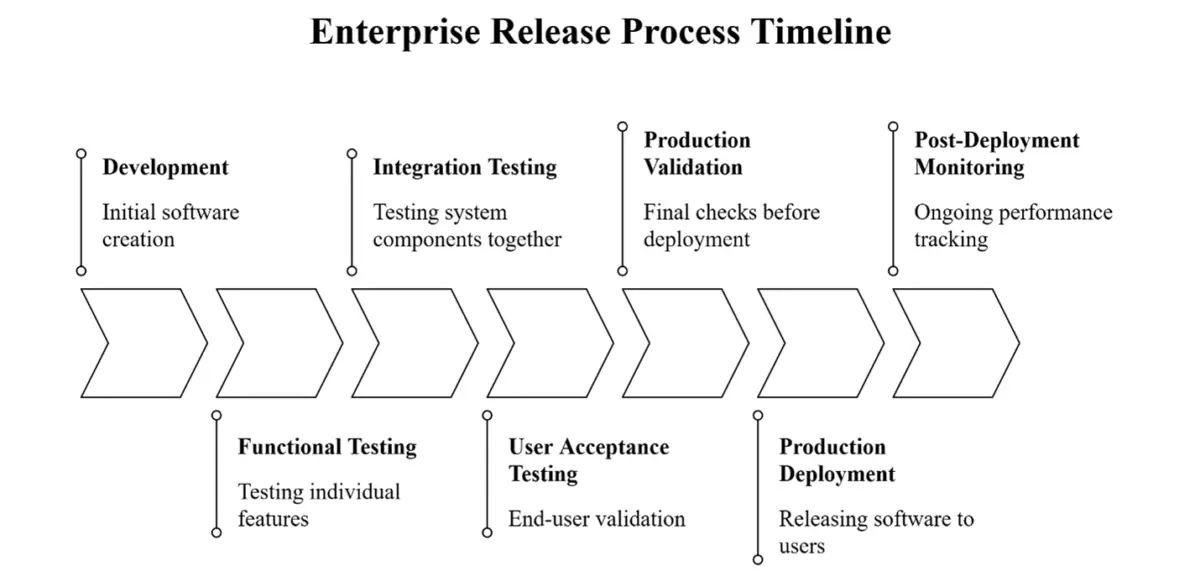
Future-proof infrastructure engineering requires a holistic mental model for certificate management. Organizations are increasingly adopting a seven-stage lifecycle standard:
- Inventory: Continuous discovery and cataloging of all internal and external certificates across multi-cloud and on-premises environments.
- Monitor: Proactive tracking of expiration dates, cryptographic algorithm strength (transitioning to post-quantum algorithms), and compliance standards.
- Renew: Automated, friction-free engagement with CAs via ACME or automated enterprise APIs.
- Deploy: Secure, context-aware transport of assets to designated application boundaries.
- Reload: Programmatic, graceful instruction to running services to ingest new cryptographic materials without dropping active connections.
- Verify: Active, external runtime probing to confirm that the correct certificate is actively being served to the network.
- Recover: Automated fallback, alerting, and rollback workflows triggered instantly if verification fails.
The Integration of Controls and Governance
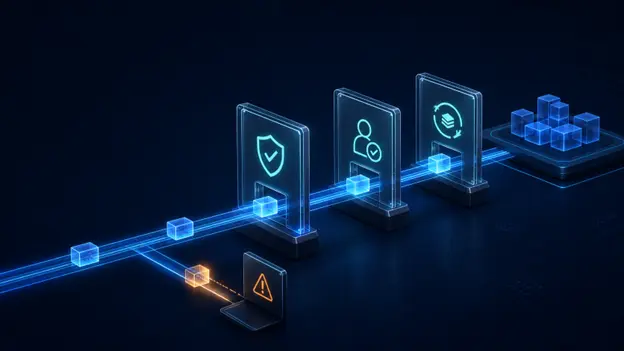
As automation deepens its integration into production systems, the governance of that automation becomes paramount. Unchecked automation moving at scale can propagate misconfigurations globally in seconds. Consequently, next-generation CLM architectures incorporate robust operational controls:
- Approval Gates: Requiring human sign-off before deploying certificates to critical production or compliance-bound environments.
- Audit Trails: Immutable logging of every issuance, deployment, reload, and verification event for compliance frameworks (SOC 2, ISO 27001, PCI-DSS).
- Rollback Capabilities: The ability to instantly revert to a previously known good certificate state if a newly issued certificate triggers application errors.
- Kill Switches: Operational mechanisms allowing administrators to safely suspend automated execution during major incident responses or network freezes.
Conclusion
Certificate renewal is no longer a low-level administrative footnote; it is a critical path deployment workflow that directly impacts organizational availability and security posture. By shedding the naive assumption that issuance equals production success, engineering teams can build resilient, self-verifying, and secure certificate lifecycles.
By treating certificates with the same operational discipline applied to application code—moving decisively from brittle cron jobs to fully verified, controlled delivery pipelines—organizations can finally eliminate the perennial threat of the avoidable cryptographic outage.