









Executive Overview
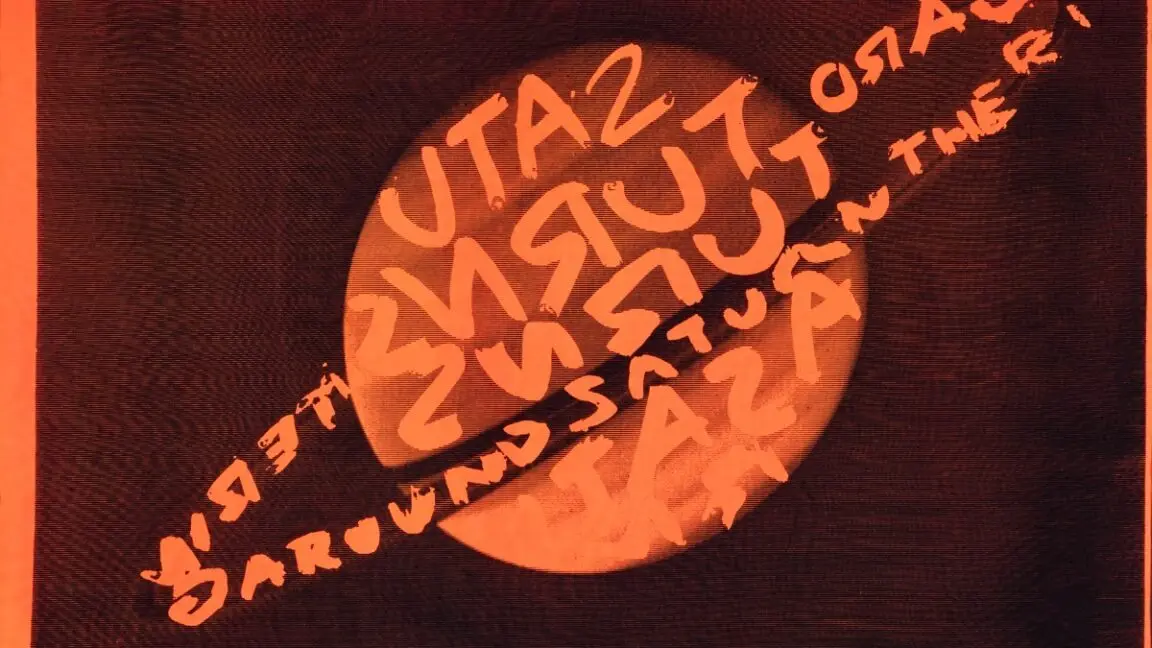
For contemporary and post-modern artists, color is not merely a tool for representation; it is a visceral, active medium engineered to assault the senses, alter spatial perception, and provoke psychological reactions. Among the most potent tools in the modern palette are daylight fluorescent pigments and phosphorescent (glow-in-the-dark) compounds. Emitting a high-impact vibrancy that conventional pigments simply cannot replicate, these materials define entire movements in fashion, fine art, and counterculture design—most notably embodied in the iconic, graffiti-emblazoned spandex textiles designed by the legendary Stephen Sprouse.
Yet, these breathtaking visual achievements carry a hidden vulnerability. Unlike traditional earth or mineral pigments that have endured for centuries on canvas, modern luminescent materials are chemically unstable. They exist in a perpetual state of quiet, invisible decay.
In a recent presentation at the American Chemical Society (ACS) meeting, Dr. Sarah Schmidtke Sobeck, a leading photochemist at The College of Wooster, illuminated the profound preservation challenges facing these vibrant works. For the past decade, Sobeck has partnered with Gregory Smith, a conservation scientist at the Indianapolis Museum of Art at Newfields, to unravel the complex chemistry governing these materials. Their groundbreaking collaboration has moved from initial baseline analyses of daylight fluorescence to startling new discoveries regarding phosphorescent pigments—specifically, the surprising revelation that environmental humidity, rather than light exposure alone, is a primary catalyst in their degradation.
This comprehensive report examines the intersection of fine art conservation and advanced photochemistry. It explores how scientific inquiry is rewriting the playbook for museum curation, detailing the historical evolution of these materials, the precise molecular mechanisms of their decay, and the high-stakes strategies being developed to save our most electrifying cultural artifacts from fading into obscurity.
Detailed Chronology: A Decade of Discovery in Conservation Science
The partnership between Sobeck and Smith did not happen by chance; it was forged out of an urgent, shared realization that museum conservation science was lagging behind the rapid evolution of synthetic chemical manufacturing in the arts.
Phase I: The Spark of Collaboration (Early 2010s)
The two researchers first crossed paths at a prominent cultural heritage science conference. Smith, tasked with safeguarding the sprawling collections at the Indianapolis Museum of Art—which includes significant holdings of late-20th-century design, such as the gift from Joanne Sprouse in memory of her son Stephen Sprouse—was grappling with a perplexing curatorial dilemma. Works featuring DayGlo pinks, electric greens, and vivid oranges were losing their punch, yet standard analytical methods failed to fully capture why the colors were shifting.
Sobeck, bringing her expertise in photochemistry, recognized that the answers lay in understanding how light interacts with the complex molecular structures of synthetic dyes. Their initial informal discussions quickly matured into a formal, multi-year research initiative aimed at demystifying daylight fluorescence.
Phase II: The Two-Part Study (2021–2022)
By the early 2020s, the Sobeck-Smith collaboration yielded its first major fruits: a comprehensive, two-part published study dissecting the composition, spectral properties, and light stability of daylight fluorescence artists’ pigments.
- Part 1: Composition and Spectral Properties: Published in late 2021, this phase established a baseline catalog of the organic dyes and resin matrices used by commercial manufacturers to create daylight fluorescent colors. The researchers mapped out how these substances absorb invisible ultraviolet (UV) radiation and re-emit it as visible light, creating that unmistakable "glowing" effect even under normal daylight conditions.
- Part 2: Light Stability: Published in early 2022, this phase subjected proxy samples and historical materials to controlled aging tests. The findings were revelatory. The researchers discovered that the optical brightener compounds—chemical additives specifically formulated to boost the brilliance of fluorescent pigments—degrade at a significantly faster rate than the underlying pigment dyes themselves.
This differential degradation rate explained a major conservation paradox: even when chemical analysis showed that the base pigment was largely intact, the artwork appeared to visibly darken and lose its punch because the optical brighteners had burnt out.
Phase III: Expanding into Phosphorescence (Present)
Building upon their foundational work with fluorescent dyes, Sobeck and Smith shifted their focus toward an even more elusive category of materials: glow-in-the-dark phosphorescent pigments. Presenting their latest findings at the ACS meeting, Sobeck detailed how the team expanded their analytical scope to examine the museum’s unique Stephen Sprouse collection.
Unlike fluorescent colorants, which rely on organic dyes trapped within a polymer matrix, the team discovered that phosphorescent materials possess a fundamentally different chemical architecture. Composed of mineral-based pigments and inorganic compounds, these materials store and slowly release light via quantum-mechanical mechanisms that react very differently to environmental stressors. Most notably, the team uncovered that moisture is a silent saboteur, accelerating the breakdown of phosphorescent matrices faster than, or on par with, prolonged photon exposure.
Supporting Context & Metrics: The Chemistry of Luminescence
To understand why these materials are so difficult to preserve, one must examine the fundamental physics and chemistry that make them glow in the first place.
Fluorescence vs. Phosphorescence: A Molecular Breakdown
While both phenomena involve the absorption and re-emission of light, their underlying quantum pathways diverge significantly:
- Daylight Fluorescence: When photons strike a fluorescent pigment, electrons in the organic dye molecules are instantly elevated to an excited energy state. As they return to their ground state, they release energy in the form of visible light. Because this transition happens almost instantaneously (within nanoseconds), the material glows only while an external light source is actively illuminating it.
- Phosphorescence: Phosphorescent materials—commonly utilized in glow-in-the-dark paints, emergency signage, and experimental modern artworks—employ a more complex pathway. When excited by light, electrons are trapped in an intermediate "metastable" state due to quantum mechanical rules known as spin forbiddenness. Escaping this trap takes time, causing the material to continue emitting light long after the external light source has been extinguished.
The Vulnerability Metrics
The fragility of these systems is quantified through several critical parameters measured by conservation scientists:
- Quantum Yield Efficiency: The ratio of photons emitted to photons absorbed. As optical brighteners degrade, the quantum yield drops precipitously, explaining the rapid visual fading.
- Half-Life of Glow (Phosphorescence Decay Time): The duration required for a phosphorescent material’s luminescence to drop to 50% of its initial post-charge intensity. Environmental factors, particularly humidity, directly degrade this metric by hydrolyzing the inorganic crystal lattices responsible for trapping electrons.
- Colorimetric Shift ($Delta E$): A standard metric used by conservators to measure the perceptible change in color over time. In fluorescent Sprouse textiles, $Delta E$ values spike dramatically within the first few years of improper display due to the selective degradation of optical brighteners.
The Stephen Sprouse Collection: A Case Study in Material Challenge
The integration of DayGlo aesthetics into high fashion and fine art by Stephen Sprouse during the 1980s and 1990s represents a pinnacle of postmodern design. Sprouse utilized spandex and other synthetic fabrics treated with aggressive neon graffiti patterns. Spandex itself—a polyurethane-polyurea copolymer—is notoriously sensitive to environmental degradation, prone to yellowing, loss of elasticity, and chemical breakdown when exposed to ozone, heat, and UV rays. When combined with daylight fluorescent dyes, conservators are left managing a multi-layered material crisis where both the substrate and the colorant are actively degrading via different, competing chemical pathways.
Official Statements & Expert Insights
The collaboration between Sarah Schmidtke Sobeck and Gregory Smith underscores a broader paradigm shift in museum curation: the transition from passive custodianship to active, scientifically driven materials science.
"For artists, the effect isn’t simply cosmetic, because they intentionally use these colors for their visual impact," stated Dr. Sarah Schmidtke Sobeck during her address at the American Chemical Society meeting. Sobeck emphasized that the aesthetic intent of the creator cannot be separated from the chemical reality of the medium. When a neon pink shifts toward a dull magenta, the core artistic message is fundamentally compromised.
Gregory Smith, reflecting on the decade-long partnership with Sobeck, has repeatedly emphasized the necessity of interdisciplinary bridges. In the past, art conservators relied heavily on traditional techniques—such as matching pigments by eye and restricting light levels. However, as artists began incorporating industrial plastics, synthetic dyes, and phosphorescent minerals into their practices during the mid-to-late 20th century, traditional methods proved inadequate.
Museum directors and conservation departments are increasingly recognizing that protecting contemporary collections requires real-time analytical data. Understanding that humidity is a primary driver of phosphorescent decay—a revelation brought to light by Sobeck and Smith’s recent work—directly challenges the conventional museum wisdom that focused almost exclusively on light-level reduction as the silver bullet for preservation.
Future Outlook: The Road Ahead for Luminescent Conservation
Armed with a deeper understanding of the photochemistry and environmental vulnerabilities of fluorescent and phosphorescent works, the Sobeck-Smith research team is not resting on its laurels. Their ongoing work points toward a more resilient, technologically sophisticated future for museum curation.
Refining Storage and Exhibition Protocols
The immediate practical application of their latest findings involves a fundamental overhaul of how museums store and exhibit glow-in-the-dark and neon-infused works. Because humidity has been proven to accelerate the chemical breakdown of phosphorescent pigments just as severely as prolonged light exposure, institutions can no longer rely solely on UV-filtering glass and dim lighting.
Moving forward, climate-controlled micro-environments—cases outfitted with precise, monitored relative humidity controls—will become standard practice for displaying sensitive modern artifacts. Museums will need to balance the human experience of viewing vibrant works with the rigorous atmospheric constraints required to halt moisture-induced hydrolysis in inorganic phosphors.
The Lithopone Frontier
The next major milestone in this ongoing project shifts the analytical spotlight onto lithopone, a classic white pigment powder composed of a mixture of barium sulfate and zinc sulfide. Lithopone has historically been utilized in various industrial and artistic formulations, frequently serving as a base or bulking agent in phosphorescent paints.
Sobeck and Smith’s upcoming research phase will test how long phosphorescent materials containing lithopone will glow after each charge. By subjecting lithopone-based formulations to rigorous cycle testing—repeatedly charging them with light and measuring their decay curves under varying conditions of humidity and temperature—the team hopes to map the exact degradation pathways of the zinc sulfide crystal matrix.
Conclusion: Safeguarding the Neon Legacy
The work being pioneered at The College of Wooster and the Indianapolis Museum of Art is more than an academic exercise in chemical analysis; it is a race to save the vibrant visual vocabulary of the late 20th and 21st centuries. As synthetic materials continue to dominate contemporary artistic expression, the lessons learned from studying Stephen Sprouse’s DayGlo spandex and phosphorescent installations will serve as a vital blueprint.
By marrying rigorous photochemistry with museum conservation, scientists are ensuring that the blindingly bright visions of modern artists do not fade quietly into the dark, preserving their electric impact for generations of viewers to come.