






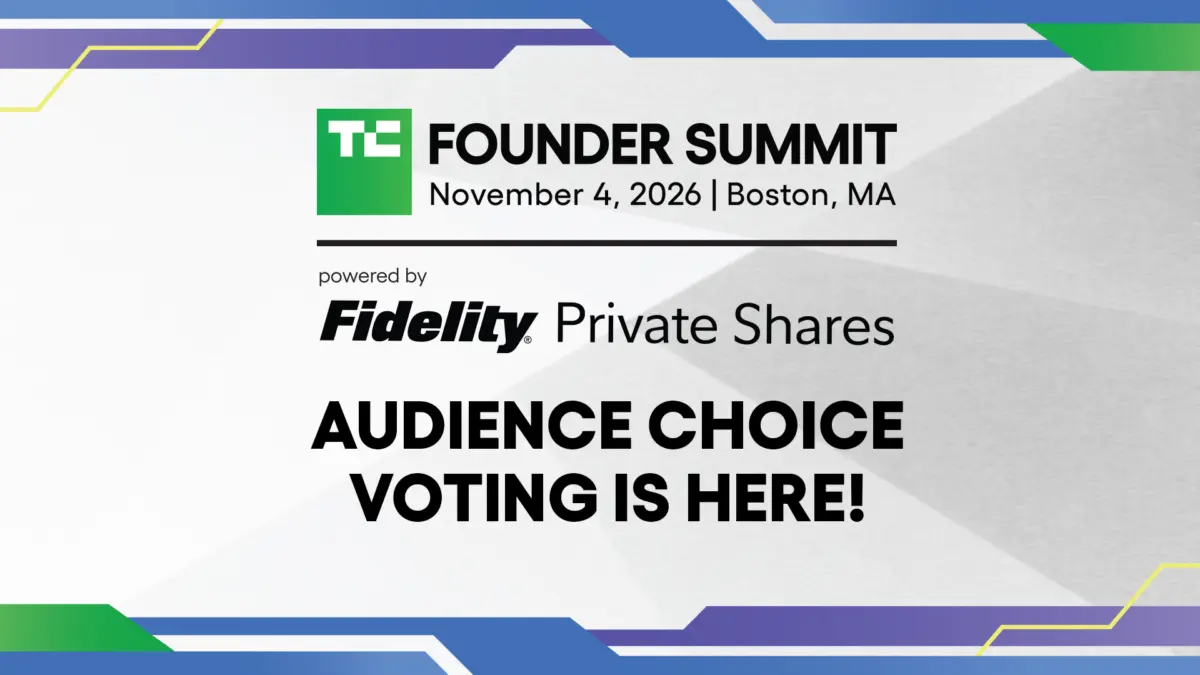
BOSTON — The annual scramble for a coveted speaking slot at the TechCrunch Founder Summit has reached its fever pitch. With the flagship event scheduled for November 4 in Boston, organizers have sifted through a mountain of applications to reveal a fiercely competitive shortlist of 11 finalists. These innovators are now vying for just four available slots on the main agenda, giving the global startup community a direct say in shaping the day’s masterclasses and roundtables.
Voting is officially open and will run through September 4, giving founders, investors, and technologists a narrow window to cast their ballots. For those looking to attend the event in person, early-bird discounts offering savings of up to $100 remain active.
As the startup ecosystem grapples with shifting macroeconomic realities, artificial intelligence maturation, and domestic manufacturing revivals, the 11 finalists represent a microcosm of the challenges defining modern entrepreneurship. From bootstrapping multi-million-dollar open-source engines to cutting through the "demo trap" of generative AI, the contenders are ready to drop the polish and deliver the raw, battle-tested playbooks that define the TechCrunch event series.
Executive Overview: The Stakes of the Founder Summit 2026
The TechCrunch Founder Summit has long established itself as a crucible for early-stage strategy, ditching abstract keynote speeches in favor of intimate, tactical, and uncompromisingly honest workshops. The incoming cohort for 2026 reflects an industry transitioning away from growth-at-all-costs toward disciplined, resilient execution.
The 11 finalists span a diverse array of sectors, including deep tech, enterprise AI, healthcare automation, hardware scaling, and open-source bootstrapping. However, a common thread unites them: they are tackling operational friction points that traditional business school textbooks ignore.
Whether it is closing Fortune 500 giants like L’Oréal and Vodafone prior to a Series A, engineering knowledge graphs to eliminate LLM hallucinations, or scaling a "Made in the USA" robotics and energy hardware venture, the stakes for these sessions are exceptionally high. The four winners, selected by public vote, will take the stage on November 4 to deliver masterclasses designed to give attendees an immediate competitive edge.
Detailed Chronology: From Submissions to the Final Showdown
The path to the Boston stage is rigorous, designed to filter out superficial pitches in favor of substantive operational expertise.
- The Influx of Submissions: Throughout the early recruitment cycle, TechCrunch received a massive volume of speaking applications from founders, CTOs, and investors across North America and beyond. The standard was exceptionally high, focusing heavily on execution metrics rather than theoretical potential.
- Editorial Shortlisting: Following careful review by the TechCrunch editorial team, the pool was narrowed down to 11 elite finalists. Each nominee was selected for their capacity to deliver practical, essential insights forged through real-world trial and error.
- The Public Vote (Closing September 4): Power has been handed directly to the audience. Through an open voting form, the tech community is tasked with evaluating the proposals and selecting the four sessions that will secure their place on the agenda.
- The Countdown to November 4: The winning speakers will take center stage at the Founder Summit in Boston, conducting deep-dive sessions crafted to elevate the next generation of builders.
Supporting Context & Metrics: The 11 Finalist Breakdowns
A closer look at the 11 nominees reveals the nuanced technical and strategic domains dominating the startup landscape in 2026.
1. Strategy & Early-Stage Scaling
-
How to Build Events Strategy Before You Can Afford a Full-Time Events Team
- Speaker: Alexandra Ames, Founder and Chief Event Strategist, Blueprint Lab
- The Core Dilemma: Early-stage founders typically fall into two traps: blindly accepting every event invite or completely ignoring the conference circuit due to elusive ROI. Ames argues that events can accelerate credibility and audience growth before formal product-market fit, provided there is a rigorous filtering framework. Attendees of this session can expect to learn how to prioritize stage-appropriate investments and evaluate event utility without bloated marketing stacks.
-
Build Something We Don’t Have a Word for Yet
- Speaker: Andy Tang, Partner, Draper Associates
- The Core Dilemma: Truly disruptive companies rarely fit into neat, pre-existing venture categories—and pattern-matching investors frequently pass on them as a result. Tang’s proposed session explores the stark difference between a simple market insight and a true market-creating idea, providing founders with the psychological and strategic tools needed to convince investors to back the unprecedented.
-
How Technical AI Founders Get Into YC, a16z Speedrun, and Raise from Top-Tier VCs
- Speaker: George Bandarian, Founder and General Partner, Untapped Ventures
- The Core Dilemma: Brilliant technical founders in AI and robotics often fail to secure capital not because their technology is flawed, but because they misread investor psychology. Bandarian’s roundtable addresses founder-market fit signals, the necessity of a business co-founder, and how to pitch an autonomous economy startup before tangible traction is established.
2. Deep Tech, Hardware, and Robotics
-
How to Build a “Made in the USA” Hardware Company and Actually Scale It
- Speaker: Hannan Happi, CEO and Co-Founder, Exowatt
- The Core Dilemma: Domestic manufacturing is experiencing a massive political and economic tailwind, yet building hardware within U.S. borders remains notoriously expensive. Happi tackles supply chain design, factory partnerships, and how legislative levers like the CHIPS Act and the Inflation Reduction Act (IRA) can be leveraged to turn domestic manufacturing into a structural competitive advantage rather than a purely symbolic branding choice.
-
The Demo Trap: Why Impressive AI Doesn’t Always Build Real Companies
- Speaker: Jeff Mahler, Co-Founder and CTO, Ambi Robotics
- The Core Dilemma: In the current AI boom, flashy prototypes easily capture headlines and venture checks, but they routinely fail the transition to dependable production environments. Mahler examines the chasm between demo performance and real-world deployment, detailing the operational reliability metrics that matter to long-term enterprise buyers.
3. Artificial Intelligence & Enterprise Workflows
-
GraphRAG in Action: Stop Hallucinations with Knowledge Graphs
- Speaker: Shishir Tewar, Head of Enterprise Data Engineering, Procore Technologies
- The Core Dilemma: Relational databases often fail to bridge the semantic gaps required by modern Large Language Models (LLMs), leading to persistent hallucinations. Tewar’s technical masterclass provides a blueprint for building production-ready GraphRAG pipelines, resolving disjointed datasets into standardized "golden records," translating flat records into Neo4j knowledge graphs, and deploying local open-source LLMs like Ollama to execute validated Cypher queries.
-
The Enterprise AI Playbook: How to Close L’Oréal and Vodafone Before You Raise a Series A
- Speaker: Merve Kitapci, Managing Partner and CGO, ADIN.AI
- The Core Dilemma: Conventional startup wisdom dictates achieving product-market fit before pursuing enterprise deals. Kitapci flips the script, detailing the exact mechanics of engaging Fortune 500 CMOs, leveraging agency partnerships to accelerate sales cycles, and pricing nascent AI products before brand recognition has been established.
-
Small but Mighty: How AI Lets Lean Teams Outship the Giants
- Speaker: Linden Tibbets, CEO and Co-Founder, IFTTT
- The Core Dilemma: Generative AI has upended traditional headcount math, enabling lean, five-person teams to outpace organizations with hundreds of engineers. Tibbets guides founders through auditing tech stacks for speed gaps, identifying high-converting AI growth motions, and avoiding the trap of workflow bloat.
-
The Healthcare AI Companies That Will Actually Matter
- Speaker: Vikram Chaudhery, PhD, CEO and Founder, Genoa Ventures
- The Core Dilemma: Healthcare AI is plagued by high-gloss demos that fail to impact clinical outcomes. Chaudhery’s roundtable separates investable health tech from expensive science experiments, focusing on agentic systems that seamlessly integrate into clinical workflows and alter actual physician behaviors.
4. Bootstrapping and Open-Source Longevity
-
Lessons from 20 Years of Bootstrapping an Open Source Business to $50M+
- Speaker: Peter Farkas, CEO, Percona
- The Core Dilemma: Building a venture-free open-source company is difficult; scaling it past $50 million in annual revenue without outside capital is extraordinary. Farkas shares two decades of institutional knowledge regarding commercializing open source while keeping core software free, managing distributed teams, and competing against heavily funded corporate rivals.
-
From CentOS to Rocky Linux: Building Movements That Outlast You
- Speaker: Gregory Kurtzer, CEO and Founder, CIQ
- The Core Dilemma: As the creator of CentOS and Rocky Linux, Kurtzer has extensive experience building community-driven open-source operating systems. His session tackles the strategic shifts required as a startup scales—moving from early versatile generalists to specialized teams—and underscores why corporate culture must remain a foundational priority rather than an afterthought.
Official Statements and Perspectives
While the candidates are busy campaigning for votes across social and professional networks, the overarching sentiment from TechCrunch’s event curation team emphasizes the critical nature of peer-reviewed content.
"Each year, we are blown away by the caliber, ambition, and operational depth of our speaker applicants," noted a TechCrunch programming representative. "Our goal with the Founder Summit is to strip away the noise. We aren’t looking for keynote fluff; we are looking for the exact frameworks that help founders survive their first three years, scale their engineering teams, and close enterprise clients against the odds. By opening these final four slots to a public vote, we ensure that the agenda is directly shaped by the community it serves."
Future Outlook: What the 2026 Summit Signals for the Industry
The selection of these 11 finalists—and the subsequent four winners who will take the stage on November 4—paints a clear picture of where the startup economy is heading. The era of unchecked cash burn and superficial metrics has been decisively replaced by an emphasis on foundational data integrity (GraphRAG), capital-efficient domestic engineering (Exowatt, CIQ), lean operational leverage (IFTTT), and ruthless enterprise go-to-market strategies (ADIN.AI).
As voting closes on September 4, the industry watches closely to see which voices will resonate most deeply with the community. For attendees heading to Boston this November, the resulting agenda promises an unvarnished masterclass in modern company-building.
Interested participants still have time to make their voices heard by casting their ballots via the official TechCrunch Audience Choice Voting Form. Tickets for the Founder Summit 2026 are currently available, with promotional discounts saving up to $100 for early registrants.