







By Investigative Desk
Executive Overview
As the global artificial intelligence boom collides head-on with critical power grid constraints, the infrastructure landscape is undergoing a radical transformation. Texas-based data center developer Lancium has announced a high-profile, strategic partnership with tech giant Nvidia to deploy state-of-the-art "AI factory" technology across its expansive portfolio. Backed by private equity titan Blackstone, Lancium’s development pipeline encompasses an impressive 4 gigawatts (GW) of leased capacity and upwards of 15 GW of powered land under development.
The alliance anchors Nvidia firmly within Lancium’s massive Texas-based campuses—including the flagship Abilene site, which serves as a linchpin for the high-profile Stargate project. By integrating Nvidia’s advanced DSX reference designs, accelerated computing platforms, and dynamic power-management systems, Lancium aims to build high-density, grid-responsive data centers designed to weather the unprecedented energy demands of modern generative AI. However, while the headlines tout gigawatt-scale ambitions, industry analysts urge caution, distinguishing between early-stage land positions and fully executable, grid-connected capacity.
Detailed Chronology & Project Evolution
To understand the magnitude of the Lancium-Nvidia collaboration, one must trace the rapid, capital-intensive evolution of Lancium’s infrastructure strategy across the Lone Star State.
Laying the Groundwork: Clean Campuses and Early Ventures
Lancium has spent years branding its data center sites as "clean campuses," strategically pairing large-scale digital loads with localized renewable energy sources such as solar and battery energy storage systems (BESS). The model is designed to insulate hyperscalers and cloud providers from chronic grid congestion while hitting corporate sustainability targets.
The developer’s public footprint has expanded rapidly through high-stakes partnerships:
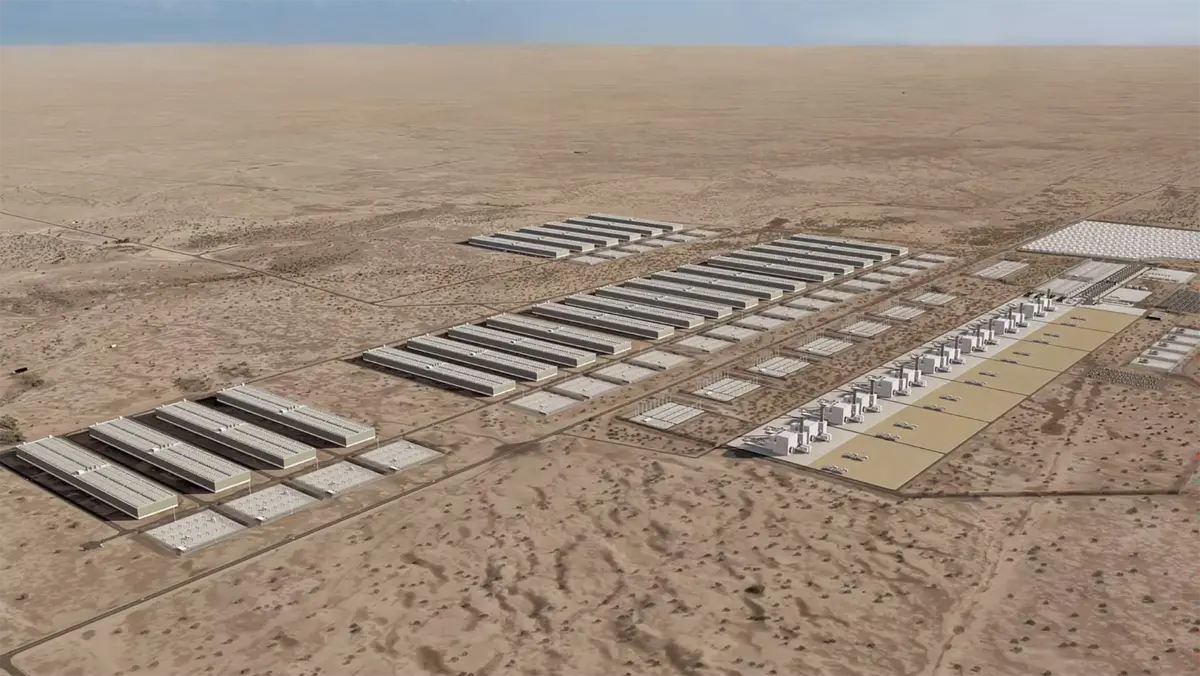
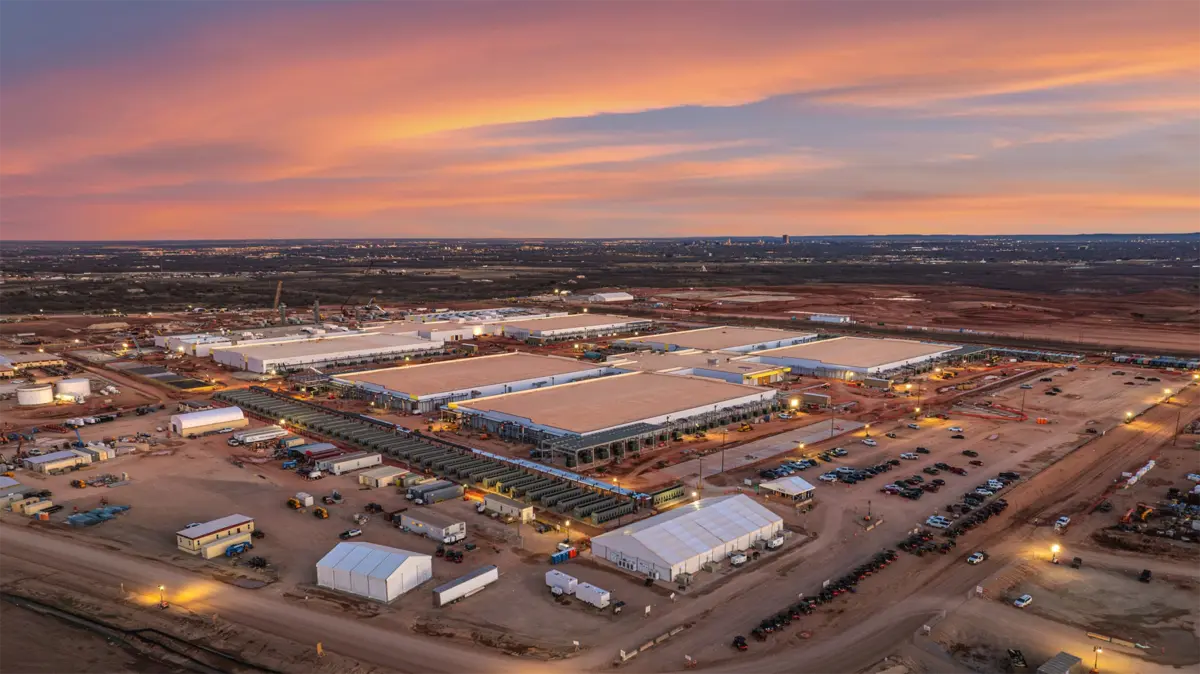
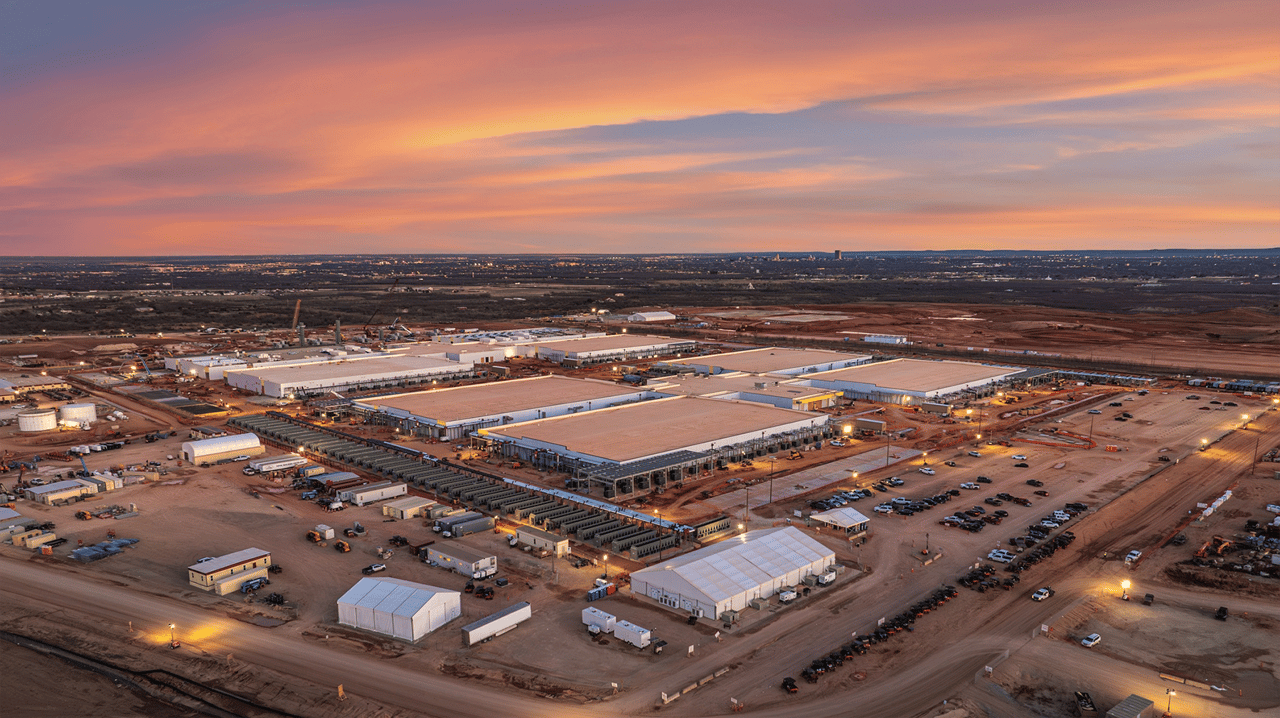
- The Abilene Flagship: Lancium’s 1.2 GW Clean Campus in Abilene, Texas, has become a focal point for next-generation AI builds. Here, Crusoe is developing massive AI data center capacity tied directly into the broader Stargate initiative. In 2024, a formidable joint venture comprising Crusoe, Blue Owl Capital, and Primary Digital Infrastructure secured $3.4 billion to fund more than 200 MW of build-to-suit capacity at this very site. Furthermore, Lancium closed a $600 million debt financing package in 2025 to fast-track its foundational clean campus strategy.
- Childress County Expansion: Expanding beyond Abilene, Lancium partnered with Crusoe on a separate 1 GW campus in Childress County, continuing its strategy of tapping rural, energy-abundant regions in West Texas.
- Hall County & QTS Partnership: In Hall County, near the town of Turkey, Lancium teamed up with QTS Data Centers to design, build, and operate advanced data center halls. This campus alone is slated to bring more than $10 billion in total capital investment to the regional economy. Crucially, Lancium and QTS are shouldering the burden of energy infrastructure upgrades independently, deploying custom solar and BESS arrays to supply clean, off-grid power stability.
The Nvidia Integration
Against this backdrop of heavy industrial construction, the new partnership brings Nvidia’s full-stack AI factory platform—encompassing accelerated computing, high-performance networking, and proprietary software—directly into Lancium’s ecosystem.
Under the agreement, Lancium will deploy Nvidia’s DSX reference architectures. These systems are specifically engineered to solve the thermal and electrical density challenges of next-generation graphics processing units (GPUs), optimizing power delivery down to the rack level.
Supporting Context & Metrics: 4 GW vs. 15+ GW
While the partnership numbers are staggering, industry experts emphasize the critical distinction between different phases of data center deployment. Lancium’s dual metrics—4 GW of leased capacity versus more than 15 GW of powered land in development—represent entirely different stages of commercial and physical execution.
The Commercial Reality of Leased vs. Planned Capacity
According to Neil Osnato, founder of Persistence Analytics Group, a massive development pipeline should not automatically be misinterpreted as 15 GW of ready-to-energize electrical load.
"Four gigawatts described as ‘under lease’ suggests a materially stronger commercial commitment than 15+ GW of ‘powered land in development,’" Osnato explains.
For the larger, unleased pipeline, critical questions remain: How far along is the interconnection study process? What transmission line upgrades are required by the grid operator? When will each tranche physically energize, and how much customer demand is contractually backed behind it?
Developers frequently secure strategic land parcels, generation rights, and initial interconnection queues years before a facility breaks ground. While this establishes a powerful real estate and energy pipeline, it does not equate to instant grid capacity.
Unlocking Efficiency: The Power-Management Promise
To maximize the utility of its incoming power budgets, Lancium is integrating Nvidia DSX MaxLPS technologies. Matt Kimball, vice president and principal analyst for data center technologies at Moor Insights and Strategy, notes that this software-driven approach helps optimize power allocation across clusters of GPUs.
Conventionally, data center operators must provision electrical infrastructure to support the maximum rated power (Thermal Design Power, or TDP) of every individual GPU. However, real-world AI workloads rarely push every chip to its absolute theoretical maximum simultaneously.
- The Optimization Mechanism: If a GPU is rated at 1 kilowatt (kW) but runs an average workload requiring 600 watts, traditional allocation leaves 400 watts stranded. Nvidia’s DSX architecture dynamically allocates power based on actual real-time workloads.
- The Scale of Impact: Kimball points out that in a 1 GW facility, even a conservative 10% to 20% improvement in power utilization frees up 100 MW to 200 MW of capacity—enough to power tens of thousands of additional GPUs without drawing an extra megawatt from the local utility substation.
While promotional figures may cite theoretical efficiency gains of up to 40% under ideal conditions, Kimball stresses that the true value lies in bridging the gap between rigid hardware limits and fluid software demands.
Official Statements and Industry Perspectives
The convergence of silicon manufacturing, private equity, and bulk power infrastructure has drawn commentary from key stakeholders across the tech and energy sectors.
Nico Caprez, vice president of global AI infrastructure growth at Nvidia, underscored the foundational nature of the collaboration:
"AI factories are the essential infrastructure of this new industrial era."
Michael McNamara, CEO and co-founder of Lancium, highlighted the multi-year effort required to assemble the necessary land and electrical rights:
"We have spent years assembling the power, land, and infrastructure expertise needed to develop AI data centers at gigawatt scale. Partnering with Nvidia allows us to bring a world-class technology stack to our campuses, offering our customers unprecedented compute density coupled with grid-responsive reliability."
Yet, grid experts caution that technological flexibility must be rigorously tested in the field. Neil Osnato notes that for a gigawatt-scale campus to truly act as a grid asset, its power-shaving capabilities must be verifiable and dependable during extreme weather events or grid emergencies.
"The question is not whether the software can technically move load; it is how much load can move, for how long, how often, under whose control, and what operating constraints remain," Osnato warns. "Utilities should not assume that technically available flexibility can substitute for foundational investment in generation and transmission."
Future Outlook: The Road Ahead for Texas AI Infrastructure
The partnership between Lancium and Nvidia signals a mature phase in the development of AI infrastructure, where real estate developers, chipmakers, and financial backers are closely interlocked. Backed by Blackstone’s deep pockets and anchored by major hyperscale builds in West Texas, Lancium is positioning itself at the absolute vanguard of the AI revolution.
However, the ultimate success of this initiative will be measured not in press releases or speculative pipeline gigawatts, but in execution. As these colossal campuses transition from drawing boards through ERCOT (Electric Reliability Council of Texas) interconnection queues and into full-scale commercial operation, they will serve as a definitive litmus test for whether private power solutions and dynamic software management can successfully sustain the most ravenous compute demand in human history.
For now, the industry watches the Texas plains closely—where the future of artificial intelligence is quite literally being wired into the earth.