Executive Overview
The artificial intelligence boom has brought forth an unprecedented era of digital infrastructure development, characterized by staggering capital expenditures and headline-grabbing power projections. However, beneath the hyperbole of gigawatt-scale announcements lies a harsh physical reality: a megawatt is only as valuable as the electrical grid behind it.
As utilities face a historic surge in industrial and computational demand, digital assets and data center infrastructure firm Galaxy Digital is pioneering a disciplined, transmission-first approach to AI real estate. Rather than chasing theoretical power allocations—what Galaxy’s leadership terms "bragawatts"—the company is building a multi-gigawatt platform focused on rigorous power quality, resilient transmission topology, and end-to-end physical infrastructure ownership.
This strategic pivot is unfolding against the backdrop of an overloaded U.S. power grid. In Texas alone, the Electric Reliability Council of Texas (ERCOT) logged more than 438 gigawatts (GW) of large-load interconnection requests by mid-2026, with data centers comprising nearly 89% of that total. To manage this influx, regulatory bodies are implementing stringent vetting measures, such as the Public Utility Commission of Texas (PUCT) approving ERCOT’s "Batch Zero" framework to evaluate large-load requests of 75 MW or greater.
Galaxy is successfully stress-testing its development model through high-profile deployments, including its flagship 1.63-GW Helios campus in West Texas—leased to anchor tenant CoreWeave—and a newly charted 500-acre site in McGregor, Texas. By transforming legacy bitcoin mining assets into high-availability AI data centers, mitigating skilled labor shortages through innovative workforce housing, and demanding standardized regulatory frameworks across regional grids, Galaxy is setting a new institutional standard for how the industry builds the backbone of the AI economy.
Detailed Chronology: From Silicon Valley Insights to Institutional Scale
Recognizing the Bottleneck (Mid-2024)
The genesis of Galaxy’s current infrastructure strategy traces back to mid-2024. Recognizing the explosive trajectory of generative AI and large language models (LLMs), a specialized team from Galaxy traveled to Silicon Valley to consult directly with frontier AI labs and hyperscalers. The assessment was immediate and clear: AI developers were experiencing an acute scarcity of physical compute, severely bottlenecked by a lack of mature, utility-backed power pipelines.
Galaxy identified a multi-layered infrastructure gap spanning upstream power generation, transmission line capacity, and complex interconnection queues. Rather than viewing this solely as a software or financial challenge, Galaxy recognized that the true differentiator would be physical real estate paired with guaranteed, high-reliability power delivery. The company began strategically securing ERCOT interconnections well before regulatory bodies like ERCOT formalized large-load vetting processes such as Batch Zero.
Pivoting the Helios Blueprint
Galaxy’s operational proof-of-concept centered on the Helios campus in West Texas. Originally conceived and engineered for bitcoin mining—a workload notoriously tolerant of sudden power interruptions—Helios represented a baseline "Tier 0" facility. To capture the lucrative and demanding AI computing market, Galaxy embarked on a massive retrofit.
The company upgraded the facility to deliver concurrent maintainability, redundancy, and a stringent availability standard required by enterprise-grade commercial AI tenants. This pivot allowed Galaxy to establish a distinct multi-gigawatt template, separating site-level utility approvals from gross facility power and critical IT load.
By mid-2026, Galaxy achieved significant capital market milestones to accelerate this vision. The company priced a massive $3.507 billion offering of senior secured notes earmarked for financing two major buildings at Helios, housing eight data halls, 400 MW of utility capacity, and 260 MW of critical IT capacity.
Expanding the Footprint: McGregor and Beyond
With Helios serving as the operational template, Galaxy expanded its footprint to a 500-acre site in McGregor, Texas. The phased buildout at McGregor is structured to scale dynamically, starting with an initial 74 MW phase while positioning subsequent hundreds of megawatts upon the completion of supporting regional transmission infrastructure.
Concurrently, Galaxy began extending its geographic reach outside of Texas. Leveraging its disciplined site-selection screening process, the company initiated development pipelines in the continental Midwest, identifying prospective locations capable of delivering roughly 300 MW of utility capacity tailored for latency-sensitive inference workloads.
Supporting Context & Metrics: The Anatomy of Power Quality
Unpacking the "Bragawatt" Phenomenon
As data center developers trade massive capacity figures, industry analysts and infrastructure engineers warn that nominal megawatt numbers can be deeply misleading. Austin Storms, Galaxy’s co-head of data centers, coined the term "bragawatts" to describe headline-grabbing power figures that fail to account for true system reliability.
+-------------------------------------------------------------------+
                       THE POWER PIPELINE HIERARCHY
+-------------------------------------------------------------------+
| 1. Site-Level Utility Capacity (Gross ERCOT / RTO Interconnection) |
+-------------------------------------------------------------------+
                                  │
                                  ▼
+-------------------------------------------------------------------+
| 2. Facility Power Capacity (Substations, Transformers, HVAC)       |
+-------------------------------------------------------------------+
                                  │
                                  ▼
+-------------------------------------------------------------------+
| 3. Critical IT Load (Actual Power Delivered to Server Racks)      |
+-------------------------------------------------------------------+
Neil Osnato, founder of Persistence Analytics Group, emphasizes that an AI campus does not simply purchase a point of interconnection; it buys exposure to an entire upstream electrical system. A nominal or approved megawatt figure may look impressive on paper, but it rarely reveals when power can actually be energized or how it will perform under extreme grid stress.
Transmission Topology vs. Radial Systems
To illustrate the difference between superficial capacity and structural infrastructure value, industry experts frequently contrast robust redundant networks with weak radial systems.
- The Weak Radial Trap: A hypothetical 500 MW site located at the end of a long 138-kilovolt radial transmission line may boast impressive capacity numbers. However, its contingency performance is severely compromised. If a fault occurs along that single line, the entire campus faces high restoration exposure.
- The Robust Ring Configuration: Conversely, 500 MW backed by a multi-sourced, looped transmission topology with independent electrical paths provides the high availability required by billion-dollar AI training clusters.
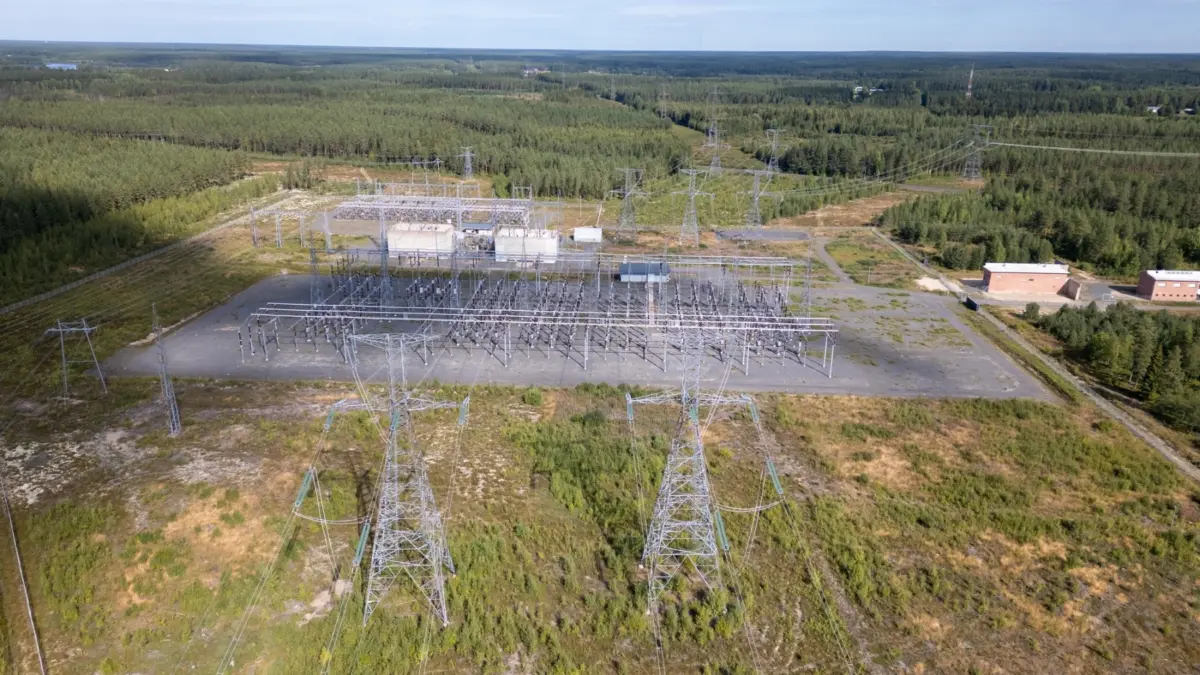
For Galaxy, power availability and reliability sit non-negotiably at the top of the site-selection rubric. The company maintains an in-house power systems engineer and former ERCOT transmission modeler to evaluate prospective sites for capacity limits, energization schedules, ramp rates, and upstream reinforcement needs before any capital commitment is made.
.jpg?disable=upscale&width=1200&height=630&fit=crop)
The Texas Regulatory Landscape and "Batch Zero"
Texas remains a cornerstone of Galaxy’s expansion strategy due to its unique energy matrix, which includes abundant natural gas generation, rapid solar development, and extensive utility-scale battery energy storage systems (BESS).
However, the sheer volume of incoming demand prompted regulatory intervention. In June 2026, ERCOT tracked over 438 GW of large-load interconnection requests, with data centers making up nearly 89% of the total. To restore order and weed out speculative or unviable projects, the Public Utility Commission of Texas (PUCT) approved ERCOT’s "Batch Zero" process. This systemwide evaluation evaluates eligible large-load requests of 75 MW or greater, analyzing their combined reliability impacts and defining mandatory transmission upgrades before grid access is granted.
Official Statements and Industry Perspectives
Galaxy’s leadership has been vocal about the evolving responsibilities of infrastructure landlords in an AI-dominated market. Rather than acting as a merchant utility or a generic real estate investor, Galaxy views its role as a specialized physical operator.
"We want to be the owner and operator of the buildings, the mechanical and electrical infrastructure, as landlord to a variety of tenants," said Austin Storms, Galaxy’s Co-Head of Data Centers. "Building data centers is a tough business, but it’s fairly commoditized at this point. Our differentiation lies in sourcing highly available, reliable power and delivering physical infrastructure on schedule and on budget."
Storms notes that while Galaxy operates a multi-tenant business model overall, its operational preference for individual campuses leans toward a single-tenant structure. This approach eliminates the operational friction and complex power-allocation disputes that can arise when multiple hyper-scale customers share the same upstream utility infrastructure.
Addressing the complexities of grid integration, Neil Osnato of Persistence Analytics Group underscores the necessity of deep technical due diligence:
"A large AI campus does not buy a point of interconnection… It buys exposure to an entire upstream electrical system. The number of megawatts may be identical between two sites, but the infrastructure value is definitively not."
Future Outlook: Labor, Standardization, and the Next Frontier
The Human Capital Constraint
As land and power emerge as primary hurdles, construction labor has rapidly become the ultimate bottleneck for gigawatt-scale campus development. While global supply chain pressures for transformers and electrical equipment have moderated compared to the acute shortages of 2023 and 2024, securing skilled electrical and mechanical trades remains exceedingly difficult.
This labor reality directly dictates Galaxy’s geographic strategy. A prospective gigawatt-scale campus in a remote, environmentally ideal location—such as Wyoming—can instantly fail Galaxy’s internal screening process if the company cannot mobilize, house, and support the thousands of construction workers required to build it on an aggressive schedule.
To combat this, Galaxy integrated workforce development directly into its real estate strategy, constructing a dedicated workforce housing hub adjacent to its Helios campus capable of accommodating up to 1,600 beds.
The Need for a Unified Regulatory Rulebook
Looking ahead, Galaxy is advocating for systemic regulatory reform. As data center developers expand across multiple regional transmission organizations (RTOs) and independent system operators (ISOs)—including ERCOT, PJM, MISO, and SPP—the lack of uniform interconnection standards creates unnecessary friction.
"The biggest thing that Galaxy needs, and the industry needs more broadly from utilities and independent system operators, is a fully formed framework and rule set for how these types of facilities interconnect to the existing grid," Storms emphasized.
A standardized, multi-market rulebook would allow developers to deploy proven high-voltage electrical designs and modular data center layouts seamlessly across state lines, dramatically accelerating the deployment of critical AI infrastructure.
Conclusion: The Verdict on AI Real Estate
Galaxy Digital’s calculated march into multi-gigawatt AI infrastructure demonstrates that the next phase of the artificial intelligence boom will be won in the sub-station, the transmission line, and the workforce training camp. By separating true electrical reliability from marketing hype, pioneering flexible conversion models like Helios, and demanding rigorous regulatory standardization, Galaxy is establishing a resilient blueprint for the future of digital compute. As the grid absorbs waves of new industrial load, the companies that survive and thrive will be those that realize power is not merely a commodity to be consumed, but an entire ecosystem to be engineered.