By Nathan Eddy
Berlin, Germany — Data Center Technology & Infrastructure Desk
Executive Overview
The Asia-Pacific (APAC) data center development landscape has reached an unprecedented milestone. Driven by an unrelenting wave of investments in generative artificial intelligence (AI) and cloud infrastructure, the region’s total capacity pipeline soared to a historic 26.5 gigawatts (GW) in the first half of 2026. According to a comprehensive new market report published by Cushman & Wakefield, the data center expansion rate reflects one of the strongest half-year periods on record, adding 7.1 GW of new capacity to the regional pipeline over a mere six-month window.
Despite a massive influx of 1.4 GW of newly operational capacity coming online during this period, regional colocation vacancy rates tightened further, dropping from 10.9% in the second half of 2025 to 10.3%. Industry experts point out that the insatiable demand for high-density computing is outstripping supply delivery, with a rapidly growing percentage of upcoming capacity pre-leased before construction is even finalized.
As Southeast Asian markets emerge as hyper-growth powerhouses—anchored by aggressive cross-border investments in Malaysia and Thailand—established metropolises like Seoul and Tokyo face extreme capacity squeezes. The entire APAC ecosystem has officially entered an era of "power-constrained execution," where access to scalable electrical grids, sustainable energy sources, and prime land will ultimately dictate which markets thrive and which stall.
Detailed Chronology of the H1 2026 Surge
The explosive growth observed in the first half of 2026 did not happen in a vacuum; it is the culmination of structural shifts in enterprise technology deployment that began accelerating during the post-pandemic cloud boom and have since been supercharged by generative AI.
Q1 2026: The Acceleration of AI-Driven Pipelines
As hyperscalers—including Microsoft, Google, AWS, and Alibaba—rushed to secure long-term computing power for large language model (LLM) training and inference, the development pipeline experienced an immediate shock to the system. In the first quarter alone, strategic land acquisitions and grid-connection applications surged across secondary and tertiary markets in Southeast Asia. Traditional primary hubs, facing severe physical and electrical limitations, saw vacancy rates plummet to historic lows.
Q2 2026: Milestone Reached at 26.5 GW Total Pipeline
By the close of the first half of the year, Cushman & Wakefield’s tracking data confirmed the 26.5 GW aggregate milestone. A closer examination of the pipeline reveals a stark division between immediate construction and long-term planning:
- Under Construction: Approximately 4.8 GW of capacity is actively being built across the APAC region.
- Planning Stages: A massive 21.7 GW remains in various stages of pre-development, land-banking, and regulatory approval.
While the sheer size of the pipeline signals robust developer confidence, the heavy skew toward the planning phase—roughly 82% of the total capacity—highlights the severe bottlenecks developers face when attempting to translate capital into operational brick-and-mortar reality.
Supporting Context & Metrics: Regional Breakdowns and Market Shifts
The APAC data center ecosystem is far from monolithic. Diverse regulatory frameworks, varying energy costs, and disparate levels of digital maturity have created a multi-speed market across the fourteen countries analyzed in the Cushman & Wakefield report (Australia, mainland China, Hong Kong, India, Indonesia, Japan, Malaysia, New Zealand, the Philippines, Singapore, South Korea, Taiwan, Thailand, and Vietnam).
Southeast Asia Leads the Construction Boom
Southeast Asia has firmly established itself as the engine room of APAC data center development, accounting for roughly half of all active construction in the region—totaling 2.38 GW.

- Malaysia Leads the Charge: Malaysia is currently leading the Southeast Asian surge with an incredible 1.04 GW under construction. Much of this development is anchored by massive cross-border expansion in Johor, which has effectively transformed into an overflow market for land-starved and power-constrained Singapore. Johor’s capacity under construction grew by an astonishing 91% to reach 602 MW, while its overall development pipeline expanded by 28% to 3.09 GW. Combined, Johor’s existing and future pipeline exceeds 4 GW, making it the single largest market in Cushman & Wakefield’s APAC maturity index.
- Bangkok’s Meteoric Rise: Thailand is tracking closely behind its southern neighbor. Bangkok’s active construction pipeline skyrocketed by 148% to 859 MW, while its total development pipeline nearly doubled to 2.08 GW, driven by aggressive domestic cloud adoption and regional digital transformation initiatives.
- Other Key Markets: Sydney’s construction pipeline expanded by 65% to 2.13 GW, Jakarta grew 56% to 1.70 GW, and Mumbai expanded 31% to 1.73 GW, demonstrating that high-growth emerging economies are rapidly catching up to legacy hubs.
Japan Overtakes India as the Second-Largest Operational Market
In terms of delivered, revenue-generating infrastructure, Japan added 293 MW of operational capacity in H1 2026, lifting its total to 1.8 GW. This milestone pushed Japan ahead of India to become APAC’s second-largest operational market, trailing only mainland China. Market projections indicate that Australia, India, Japan, and Malaysia are all on track to comfortably exceed 2 GW of operating capacity individually by the year 2028.
The Great Squeeze: Extreme Tightness in Mature Hubs
While emerging markets expand outward, established tier-one cities are grappling with critical capacity crunches:
- Greater Seoul: Recorded a microscopic 1.1% colocation vacancy rate in the first half of 2026. Although operational capacity rose by 10%, the development pipeline remained virtually flat, trapping the market in an exceptionally tight supply-demand loop.
- Tokyo and Singapore: Both maintained remarkably low vacancy figures at 4.4% and 4.8%, respectively. However, strict land zoning, environmental regulations, and severe local power constraints are effectively capping conventional facility expansion in these financial capitals.
Official Statements and Industry Insights
The structural shift toward pre-leased, power-secured developments has transformed how real estate developers, investors, and enterprise tenants negotiate infrastructure deals.
Pritesh Swamy, Head of Research and Consulting at Cushman & Wakefield’s Asia-Pacific Data Center Group, shared critical market insights in an exclusive statement to Data Center Knowledge:
"New supply is being absorbed quickly, with a growing share of capacity pre-leased before delivery, meaning much of the new stock is already committed when it becomes operational," Swamy noted. "While conditions vary across markets, we expect this trend to continue as strong demand and limited new supply keep availability tight."
Swamy emphasized that the traditional build-it-and-they-will-come mentality is fading rapidly. Power constraints, extended development timelines, and the complex thermodynamic and electrical requirements of high-density AI hardware are forcing enterprise customers and hyperscalers to lock in capacity agreements years ahead of project completion.
"More importantly, power and land constraints are increasingly influencing where new capacity can be built," Swamy added. "Tight availability is likely to support rental growth and encourage further development, although rental data varies by market."
Future Outlook: Navigating "Power-Constrained Execution"
As the Asia-Pacific region charges toward the latter half of the decade, the primary constraint on digital growth is no longer capital availability or real estate acquisition—it is raw electrical power.
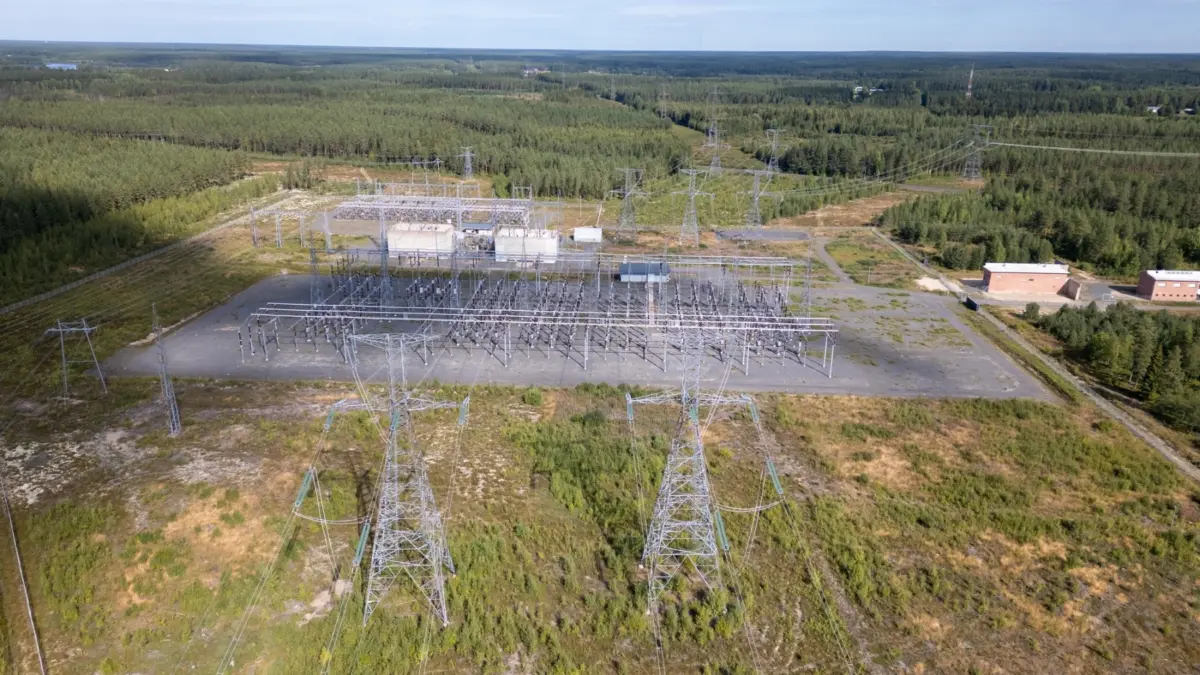
Historically, data center site selection was dictated by proximity to core network fiber and telecommunications carrier hotels. However, the mass adoption of AI infrastructure demands unprecedented electrical densities and advanced liquid cooling methodologies. This paradigm shift is forcing developers away from saturated inner-city districts and toward peripheral submarkets, industrial zones, and remote greenfield locations capable of supporting mega-watt or gigawatt-scale power hookups.
Key Challenges Facing the 21.7 GW Planned Pipeline:
- Grid Interconnection Delays: Securing high-voltage utility connections often takes years, creating bottlenecks for projects stuck in the planning phase.
- Environmental and Sustainability Mandates: Regulators across APAC are enforcing stringent energy efficiency standards, pushing operators to invest heavily in renewable energy purchase agreements (PPAs) and waste-heat recovery systems.
- Supply Chain Friction: Essential heavy electrical equipment—such as step-down transformers, generators, and switchgear—remain subject to prolonged global manufacturing lead times.
Conclusion
The record-breaking 26.5 GW pipeline underscores the unstoppable momentum of the Asia-Pacific digital economy. Yet, as the industry transitions into a period of disciplined, power-constrained execution, the winners of tomorrow will not simply be those with the largest financial backing, but those capable of securing reliable, scalable power and navigating complex cross-border logistics. As traditional hubs tighten and secondary markets like Johor and Bangkok rise to prominence, the architecture of the internet’s physical foundation is undergoing a permanent, historic transformation.