Executive Overview
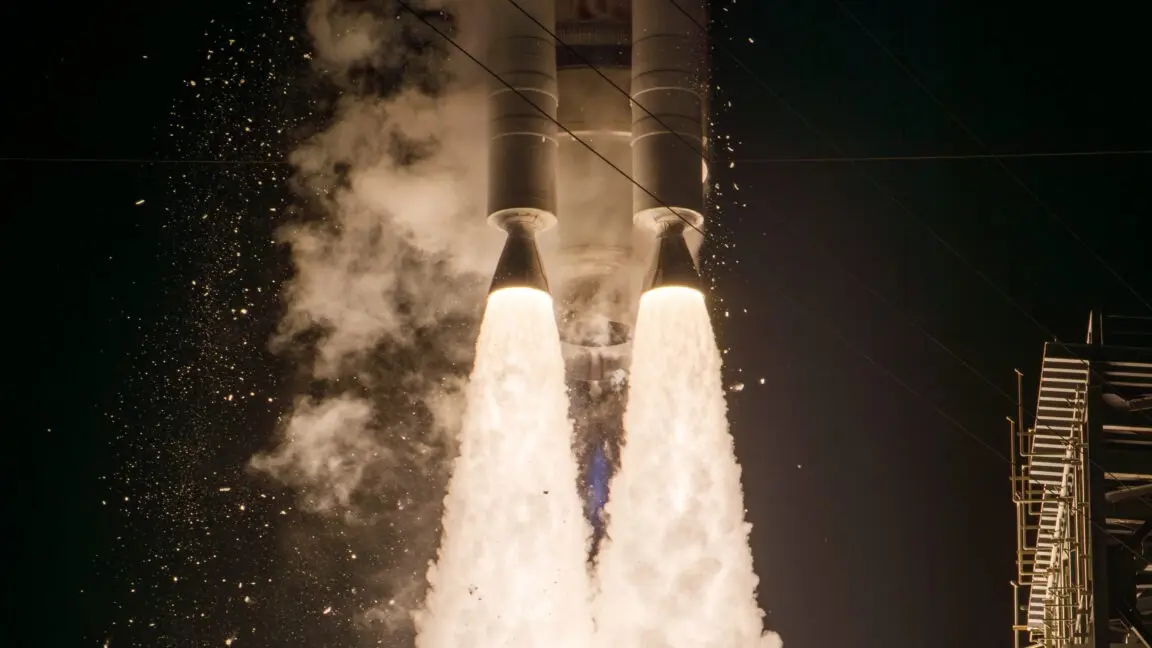
In a sweeping directive aimed at modernizing the United Kingdom’s—and by extension, the Western world’s—geopolitical positioning in low-Earth orbit and deep space, the White House has unveiled a transformative national space transportation policy. This comprehensive framework addresses the escalating bottlenecks facing America’s space program. By systematically identifying new domestic launch and reentry sites, modernizing air traffic management to seamlessly integrate commercial rockets into national airspace, and designating specialized "priority airspace" for critical space corridors, the federal government is laying the groundwork for an industrial-scale space economy.
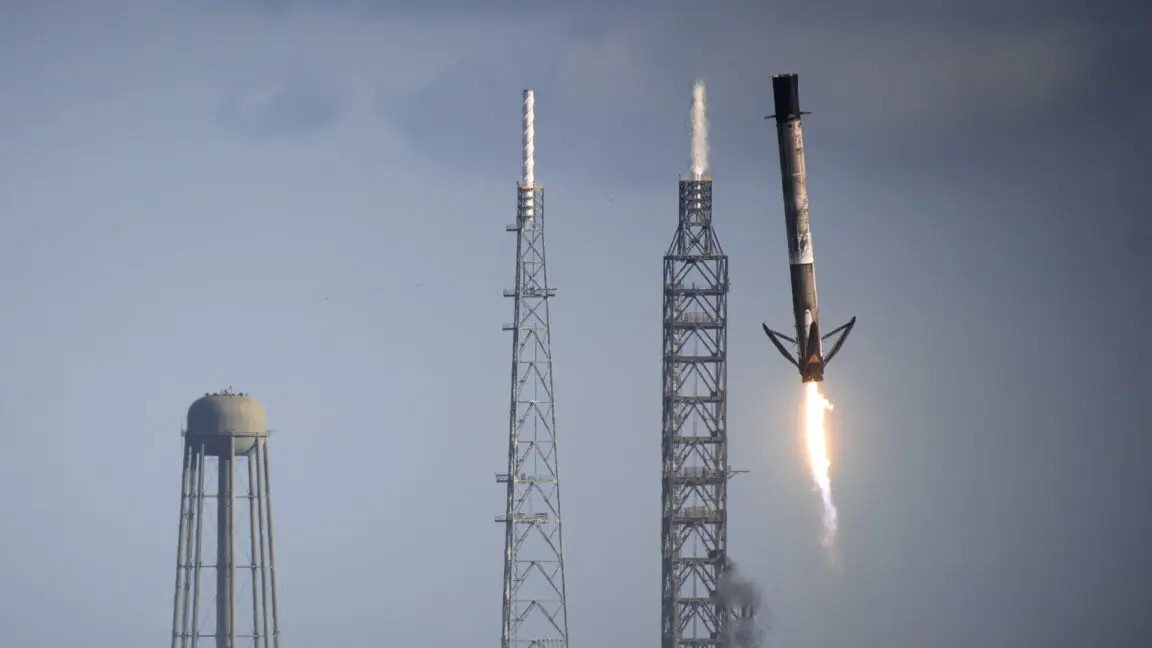
At the core of this policy is a critical realization: the current infrastructure supporting American rocketry is rapidly approaching saturation. For decades, the United States has relied primarily on dual bastions of spaceflight—Cape Canaveral Space Force Station on the East Coast and Vandenberg Space Force Base on the West Coast. However, the exponential rise of commercial megaconstellations, reusable rocket technologies, military responsive-space needs, and crewed lunar missions has turned these historic facilities into congested hubs.
To break this geographic and logistical gridlock, the new executive directive marshals several federal agencies, most notably the Department of the Interior and the Department of Defense, to forge alternative pathways. From exploring the conversion of abandoned offshore oil rigs on the Outer Continental Shelf into floating spaceports to laying the groundwork for a third heavy-lift land facility within the continental United States, Washington is rewriting the rules of engagement for the final frontier. This reporting explores the mechanics of this ambitious overhaul, examining the Pentagon’s strategic assessments, regulatory streamlining efforts, the push for 48-hour responsive launch capabilities, and the broader implications for civil, commercial, and national security space operations.
Detailed Chronology: From Concept to Execution
The path toward this modern space transportation framework has been paved by a series of incremental regulatory shifts, military assessments, and legislative adjustments over the past several years, culminating in the recent executive actions and administrative requests for information.
Laying the Regulatory Groundwork (2023–2024)
The tension between the explosive growth of commercial spaceflight and legacy federal oversight reached a boiling point in the early 2020s. Aerospace companies frequently cited sluggish environmental reviews, bureaucratic red tape, and siloed federal land management as primary hurdles to scaling operations.
In response, federal agencies began pivoting toward a more streamlined, airport-style operational model. Military officials and civil regulators alike initiated discussions on transforming federal launch ranges into dynamic spaceports where commercial operators could drop in, service payloads, and fly with minimal delay. Concurrently, the administration advanced initiatives to spare space companies from redundant or overly burdensome environmental reviews, recognizing that technological velocity in rocketry outpaces traditional bureaucratic timelines.
The Pentagon’s Quiet Alarm (May 2026)
The conceptual impetus for expanding heavy-lift infrastructure gained critical momentum during a pivotal hearing before the House Armed Services Committee in May 2026. Military leaders laid bare the vulnerabilities inherent in the nation’s reliance on just two primary space ports.
Air Force Secretary Troy Meink revealed the findings of an unreleased Pentagon study detailing the urgent need for a third heavy and super-heavy-lift launch site within the United States. Meink emphasized that beyond geographic resiliency, physical space constraints at Cape Canaveral made expansion an absolute necessity. During the same hearing, General Chance Saltzman, the top general of the U.S. Space Force, amplified these concerns, stressing that military readiness demands both increased aggregate launch capacity and geographic diversification to eliminate single points of failure in the national defense apparatus.
The Offshore Frontier and Federal Lands (July 2026)
Following the spring congressional warnings, the administrative wheels began turning with notable speed. In July 2026, the Department of the Interior’s Bureau of Ocean Energy Management (BOEM) issued an official request for public comment regarding the potential industrial use of the Outer Continental Shelf. Specifically, BOEM sought industry and public feedback on transforming submerged federal lands and repurposed, abandoned offshore oil platforms into offshore sea-based space launch and reentry complexes.
This move signaled a radical departure from traditional land-locked spaceports. By looking to the ocean, the federal government opened the aperture for novel operational concepts that could mitigate noise pollution, bypass crowded overland trajectories, and provide near-equatorial launch advantages closer to domestic manufacturing hubs.
The White House Directive (Current Phase)
Capping these foundational efforts, the White House has now formalized a comprehensive national strategy. The directive binds multiple agencies into a coordinated mission: identify new domestic launch locations, protect dedicated launch corridors through modern air traffic control protocols, mandate the selection of an additional federal land reentry site through the Department of the Interior, and align civil space ambitions with deep-space commercialization goals for both the Moon and Mars.
Supporting Context & Metrics: The Case for Geographic Resiliency
To fully appreciate the gravity of the new space transportation policy, one must examine the operational pressures facing the current American launch ecosystem. The metrics of modern rocketry tell a story of breathtaking success matched by unprecedented logistical strain.
The Congestion Crisis at Cape Canaveral and Vandenberg
Historically, American orbital insertion has been dominated by two geographic nodes:
- Cape Canaveral Space Force Station / Kennedy Space Center (Florida): Ideal for equatorial and geostationary insertions due to the Earth’s rotational velocity, this corridor handles the lion’s share of commercial and civil payloads. However, launch frequencies have skyrocketed from a handful of missions per year decades ago to multiple weekly flights today. Range turnaround times, tracking asset availability, and airspace de-confliction with commercial aviation have transformed the Cape into a logistical bottleneck.
- Vandenberg Space Force Base (California): The premier site for polar and sun-synchronous orbits, essential for reconnaissance, weather, and Earth-observation satellites. While less congested than the Cape, Vandenberg faces severe geographic constraints, bounded by the Pacific Ocean and rugged coastal terrain, limiting pad expansion and ground infrastructure growth.
The Pentagon’s unpublicized study, cited by Secretary Meink, underscores that relying indefinitely on these two geographic anchors exposes the United States to unacceptable single-point-of-failure vulnerabilities. A natural disaster, severe industrial accident, or coordinated adversarial interdiction at either Cape Canaveral or Vandenberg could temporarily paralyze the nation’s ability to place heavy payloads into orbit—a catastrophic scenario in a contested security environment.
The Pivot to Sea-Based Launch and Offshore Assets
The exploration of the Outer Continental Shelf for space operations represents a paradigm shift in American infrastructure development. Traditional onshore spaceports require extensive safety buffers (clear zones), which consume thousands of acres of land and frequently trigger fierce environmental opposition.
By evaluating abandoned offshore oil and gas platforms, the federal government is eyeing assets that already possess robust structural engineering, marine logistical support networks, and isolation from civilian populations. Sea-based platforms offer inherent geographic mobility and flexibility, allowing operators to position launch infrastructure optimally relative to specific orbital inclinations while shielding mainland communities from the acoustic and safety hazards of super-heavy-lift vehicles.
Responsive Space and Expeditionary Launch
Beyond heavy lift, the new policy tackles the tactical imperative of "responsive space"—the ability to reconstitute lost or damaged satellite constellations within hours rather than months or years. The directive aims to operationalize high-priority payload deployments within a 48-hour window from the moment of need.
Achieving this capability requires moving beyond fixed, highly instrumented ranges. Innovative aerospace firms, including Rocket Lab (with initiatives like its deployable launch systems) and other agile startups, are pioneering mobile, "expeditionary" launch infrastructure. These systems can be transported via standard logistics channels to remote, austere locations, transforming any flat expanse of land or coastal zone into a temporary spaceport. Integrating these operations into national air traffic control systems without disrupting commercial aviation is one of the primary technical hurdles the new White House directive seeks to clear.
Official Statements and Stakeholder Perspectives
The formulation of this national policy has drawn commentary from key figures across the military, executive branch, and private aerospace sector, highlighting a rare alignment of strategic priorities.
-
Air Force Secretary Troy Meink (House Armed Services Committee Hearing):
"At a high level, what it says is we probably need another site that’s capable of heavy and super heavy launch capability, both from a resiliency perspective and just, even at the Cape, limitations on how much space we’ve got… We’re going to have to increase the capacity."
-
General Chance Saltzman, Chief of Space Operations, U.S. Space Force:
"And then, maybe connected to that, is the geographic resiliency that you might need to have separate launch locations and not be so tied to just the two specific launch ports that we have."
-
White House Policy Advisors on Civil and Commercial Space:
While emphasizing national security, the administration’s directives maintain a steadfast commitment to civil exploration. The policy actively supports NASA’s ongoing transition to commercial transportation services for lunar missions—such as the Commercial Lunar Payload Services (CLPS) program and human landing systems—while officially directing the agency to lay the groundwork for future commercial robotic and crewed expeditions to Mars. -
Commercial Industry Reaction:
Aerospace executives have largely welcomed the administration’s focus on streamlining environmental reviews, curbing redundant permitting delays, and establishing user-fee structures that modernize military and civil spaceports. By treating spaceports more like commercial airports—where standardized fees pay for predictable, high-efficiency services—the government is facilitating a more predictable business environment for private launch providers.
Future Outlook: Building the 21st-Century Space Economy
As the United States transitions from an era of government-dominated space exploration to a vibrant, multi-trillion-dollar commercial space economy, the infrastructure supporting it must fundamentally evolve. The recent White House directive marks a crucial inflection point, bridging the gap between near-term operational bottlenecks and long-term geopolitical imperatives.
What Lies Ahead: Key Milestones to Watch
- Site Selection for the Third Heavy-Lift Complex: Over the next 18 to 24 months, federal agencies and the Department of Defense are expected to narrow down potential geographical candidates for the nation’s third heavy-lift land facility. Environmental impact assessments, logistical connectivity to manufacturing hubs, and proximity to open ocean drop-zones will dictate the final choice.
- The Evolution of Offshore Spaceports: Following the public comment period initiated by BOEM, pilot projects utilizing submerged lands and modified offshore oil rigs will likely transition from conceptual studies to engineering prototypes. Success in sea-based launches could fundamentally alter where and how heavy-lift rockets clear the atmosphere.
- Airspace Modernization and Priority Corridors: The Federal Aviation Administration (FAA) and Department of Defense face the immense technical challenge of designating "priority airspace for critical space launch corridors." Integrating frequent rocket reentries and launches with domestic and international air traffic without inflicting chronic delays on commercial airlines will require advanced, automated air traffic management systems.
- Deep Space Commercialization (Moon to Mars): With NASA formally directed to incorporate commercial partners into future Mars planning, private aerospace companies will increasingly pivot from low-Earth orbit logistics to deep-space architecture, testing the limits of commercial heavy-lift vehicles in interplanetary transit.
Ultimately, this executive directive acknowledges a profound truth: America’s future economic prosperity, technological leadership, and national security are inextricably bound to the heavens. By fortifying its physical launch infrastructure, diversifying its geographic footprint, and embracing agile, responsive operational concepts, the United States is engineering a resilient foundation for the next century of space exploration.