By Aerospace and Defense Investigative Desk
Published: August 2024
Executive Overview
In a stark reminder of the unforgiving nature of orbital mechanics and the hazards of high-stakes space exploration, NASA and commercial startup Katalyst Space Technologies announced Wednesday that they are officially abandoning their daring robotic rescue mission for the Neil Gehrels Swift Observatory.
The ambitious venture—conceived as a pioneering leap forward in commercial on-orbit servicing—was designed to intercept the aging gamma-ray astronomy satellite before it succumbed to atmospheric drag and burned up in Earth’s upper atmosphere. The rescue spacecraft, an innovative, refrigerator-sized vehicle dubbed Link, launched on July 3 with the singular objective of grappling Swift using a trio of precision robotic arms and pushing it into a safe, higher-altitude parking orbit.
However, persistent and ultimately insurmountable attitude control anomalies have crippled Link’s ability to rendezvous with its target. While mission operators at Katalyst maintain that the spacecraft remains "alive" and communicative, its primary mission profile is officially dead. Instead of a historic orbital rescue, the mission will now transition into a limited technology demonstration, with engineers attempting to utilize Link’s remaining functional capacity to test close-range proximity navigation systems near the doomed observatory.
The premature end of the Link mission marks a sobering setback for NASA’s "faster, better, cheaper" commercial partnership model. Developed under an accelerated, high-risk $30 million contract awarded in late 2023, the mission pushed engineering teams to compress a multi-year spacecraft development cycle into a blistering nine-month window. While the calculated gamble ultimately fell short of its ultimate goal, space agency leaders and industry analysts alike are grappling with the complex legacy of a mission that dared to move fast—and pushed the envelope of modern orbital logistics.
Detailed Chronology: From Concept to Orbital Crisis
The saga of the Swift rescue mission is a masterclass in compressed aerospace engineering, rapid prototyping, and the cascading consequences of hardware failures in the vacuum of space.
Phase I: The Breakneck Development Cycle (Late 2023 – June 2024)
The genesis of the rescue mission lay in the impending demise of the Neil Gehrels Swift Observatory. Launched in 2004, Swift has been an invaluable asset for astrophysics, detecting gamma-ray bursts, supernovae, and transient cosmic phenomena. But decades of orbital decay meant the telescope was slowly spiraling toward a fiery, uncontrolled reentry.
Recognizing the scientific value of preserving the observatory, NASA turned to the burgeoning commercial on-orbit servicing sector. In a departure from traditional, risk-averse procurement strategies, the space agency awarded Katalyst Space Technologies a fixed-price contract worth approximately $30 million. The catch? Katalyst had to design, build, integrate, and launch the rescue vehicle within a remarkably tight nine-month window. In the aerospace industry, where first-of-a-kind spacecraft typically require three to five years from preliminary design review to launch pad, nine months was practically unprecedented.
This breakneck schedule forced Katalyst engineers to make difficult trade-offs. To meet the inflexible launch deadline imposed by Swift’s orbital decay rate, the team had to bypass certain traditional testing redundancies and accept higher-than-normal technical risks. Despite these compromises, the integration process proceeded smoothly, culminating in the successful delivery and stacking of the Link spacecraft atop its launch vehicle.
Phase II: Liftoff and Initial Success (July 3 – Mid-July 2024)
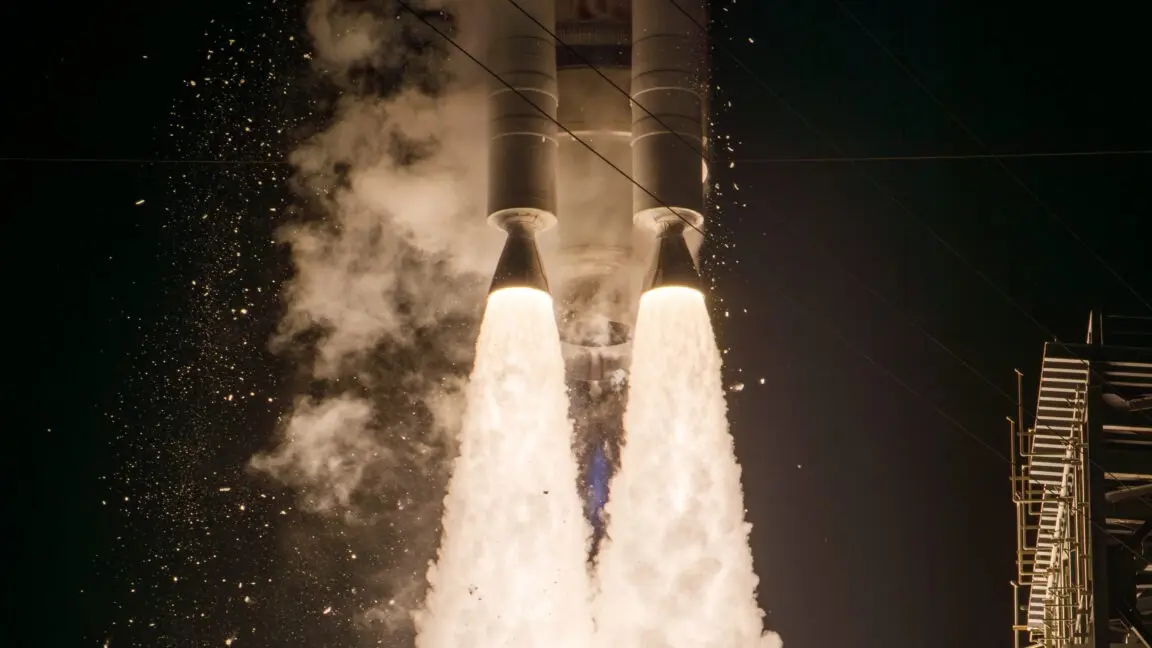
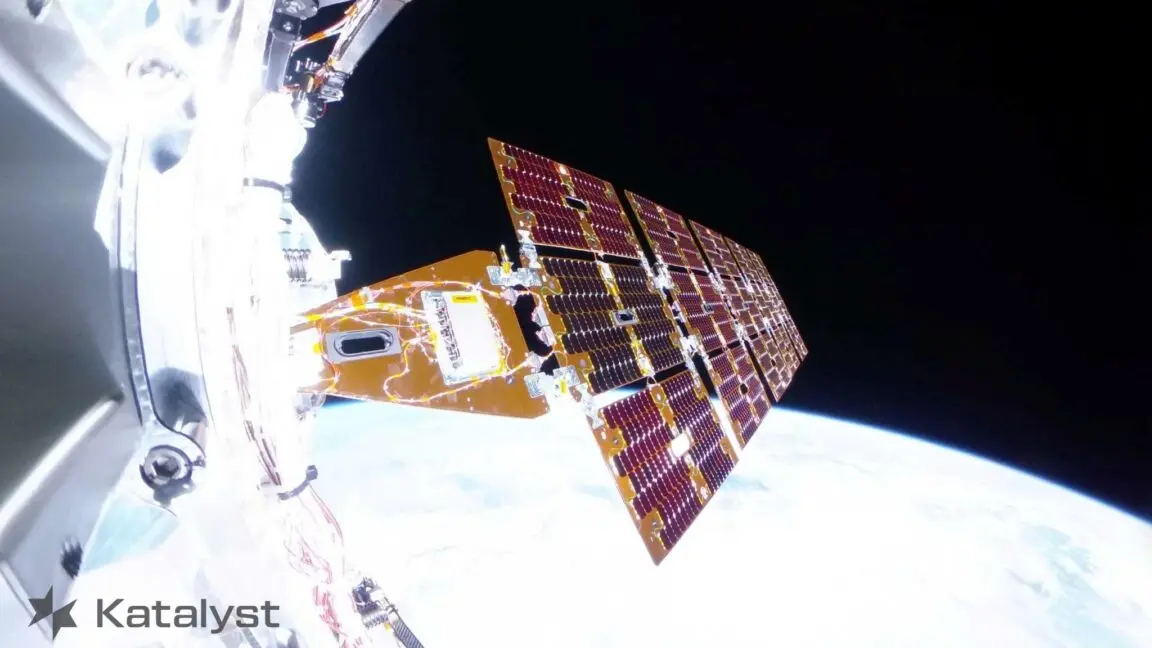
On July 3, Link lifted off into a clear summer sky, carrying the hopes of both NASA’s astrophysics division and the commercial in-space servicing industry. Roughly the size of a standard domestic refrigerator, the spacecraft was packed with advanced technology: two high-efficiency solar arrays for power generation, three xenon-fueled electric thrusters for long-range orbital transfers, a suite of cold gas thrusters for fine attitude adjustments, and three specialized low-impulse plasma thrusters. Most notably, it carried a trio of mechanical robotic arms engineered to clamp onto Swift’s exterior framework.
During the initial weeks following insertion into low Earth orbit, Link performed remarkably well. Initial systems checks, telemetry handshakes, and deployment sequences all executed according to plan. Ground controllers watched with growing optimism as the spacecraft’s vital signs flickered green across mission control monitors. Engineers began making preparations for the complex phasing maneuvers required to bring Link into alignment with the Swift observatory.
Phase III: The Anomaly and Downward Spiral (Late July 2024)
That cautious optimism was shattered in late July when Link suddenly and violently spun out of control.
While Katalyst has yet to release a comprehensive post-mortem detailing the root cause of the failure, early telemetry indicates a catastrophic loss of primary attitude determination and control system (ADCS) hardware. Specifically, two of the spacecraft’s three reaction wheels—the heavy, spinning gyroscopic wheels used to precisely orient a satellite without expending propellant—ceased functioning.
Compounding the crisis, secondary anomalies manifested in the cold gas thruster system, which was slated to provide auxiliary pointing and orientation control. With the reaction wheels locked or spinning out of specification and the cold gas system compromised, Link was left adrift, tumbling through an orbital regime where it whipped around the Earth at roughly 5 miles per second (8 kilometers per second).
Desperate remediation efforts followed. Flight controllers worked around the clock to command the spacecraft’s three remaining low-impulse plasma thrusters to counteract the tumble and regain stable orientation. Despite moments of stabilization, the delicate balance required to execute a complex orbital rendezvous and robotic capture proved mathematically and mechanically out of reach. Recognizing the severe safety risks of attempting a high-precision grapple with an unstable, tumbling chaser satellite, NASA and Katalyst made the joint decision Wednesday to formally call off the rescue attempt.
Supporting Context & Metrics: The Anatomy of a High-Risk Gamble
To understand why the Link mission captured the imagination of the aerospace community—and why its failure stings—one must examine the intersection of orbital economics, engineering timelines, and the broader push toward commercial space sustainability.
The Economics of In-Space Servicing
As low Earth orbit (LEO) becomes increasingly congested with operational satellites, defunct hardware, and orbital debris, the paradigm of space exploration is shifting from "disposable" hardware to sustainable orbital management. Traditional spacecraft are built with limited fuel reserves; once their propellant is exhausted, they are typically decommissioned and left to burn up in the atmosphere or pushed into crowded "graveyard" orbits.
In-space servicing, assembly, and manufacturing (ISAM) represent the holy grail of modern space commerce. Companies capable of refueling, repairing, boosting, or deorbiting existing assets stand to unlock billions of dollars in enterprise value. Extending the lifespan of a multi-hundred-million-dollar asset like the Swift observatory for a fraction of its original replacement cost is the textbook definition of high-return commercial enterprise.
Quantitative Breakdown of the Link Mission
| Parameter | Specification / Metric |
|---|---|
| Primary Target | Neil Gehrels Swift Observatory (Launched 2004) |
| Service Vehicle | Link (Developed by Katalyst Space Technologies) |
| Contract Value | ~$30 Million (Fixed-price NASA contract) |
| Development Timeline | ~9 Months (From contract award to launch) |
| Launch Date | July 3, 2024 |
| Spacecraft Dimensions | Approximately refrigerator-sized |
| Propulsion Systems | 3x Xenon electric thrusters, Cold gas thrusters, 3x Low-impulse plasma thrusters |
| Primary Capture Mechanism | 3x Robotic arms |
| Orbital Speed | ~5 miles per second (~8 km/s) |
| Primary Point of Failure | Reaction wheels and attitude control system (ADCS) anomalies |
The Compression Trade-Off Matrix
Engineering managers at Katalyst faced an unenviable matrix of constraints:
[ Compressed Timeline (9 Months) ]
       │
       ├──► Reduced Environmental & Vibration Testing
       │
       ├──► Heightened Reliance off-the-shelf COTS (Commercial Off-The-Shelf) Hardware
       │
       └──► Acceptance of Elevated Hardware Failure Risk
In standard aerospace engineering, rigorous multi-axis vibration testing, thermal-vacuum chamber cycling, and prolonged avionics burn-in periods are designed to shake out infant mortality defects in hardware before it ever leaves the ground. By compressing this timeline into nine months, those safety margins were intentionally compressed. Both NASA and Katalyst leadership acknowledged this calculated risk prior to launch, framing it as an essential test of whether the American commercial sector could adapt to wartime-speed development cycles.
Official Statements and Industry Reactions
The decision to abandon the mission has elicited a wave of candid commentary from agency executives and commercial leaders, reflecting a mature—if disappointed—philosophical acceptance of the inherent dangers of spaceflight.
In an official statement released Wednesday, NASA Administrator Jared Isaacman defended the agency’s willingness to embrace high-risk, high-reward contracting:
"NASA should be willing to move quickly and take smart risks when the potential return is worth it, and that is exactly what we did with this mission," Isaacman said. "This is not the outcome we were working toward, but it does not change why this mission was worth attempting. Innovation requires the freedom to push boundaries, and sometimes those boundaries push back."
Katalyst Space Technologies echoed this sentiment, emphasizing that the mission’s utility has not been entirely reduced to zero despite the forfeiture of the primary capture objective.
"While the mission will not have the ending we originally intended, NASA and Katalyst are assessing what milestones remain ahead," Katalyst stated. "The spacecraft is structurally intact and fully powered. We will continue working to extract technical and operational value from the spacecraft, utilizing its remaining capabilities to advance our understanding of close-in navigation dynamics."
Industry analysts have pointed out that while the headline is undoubtedly negative, the transparency with which NASA and Katalyst are handling the failure marks a cultural shift from the bureaucratic obfuscation that historically plagued government-led aerospace programs. Swift-class astronomy missions may lose a potential savior, but the broader engineering ecosystem stands to inherit a wealth of telemetry data regarding attitude control failures in low Earth orbit.
Future Outlook: Salvaging Science and Paving the Way Ahead
As the dust settles on the Link mission, engineers and scientists are forced to pivot toward alternative futures for both the Link vehicle and the doomed Swift observatory.
What’s Next for Link?
Rather than powering down the crippled chaser satellite, Katalyst mission controllers are planning a series of engineering exercises. Because Link retains maneuvering capability via its low-impulse plasma thrusters—despite the loss of its primary reaction wheels—operators will attempt to fly the spacecraft into close proximity to the Swift observatory.
While a physical docking or capture is entirely off the table, a controlled flyby will allow Katalyst to test optical navigation sensors, relative GPS tracking, and autonomous collision-avoidance software in a real-world orbital environment. Successfully executing these proximity operations would still yield invaluable intellectual property and operational validation for future iterations of Katalyst’s servicing architecture.
The Inevitable Fate of the Swift Observatory
Without a rescue vehicle to boost its altitude, the Neil Gehrels Swift Observatory remains on borrowed time. Atmospheric drag—dictated by fluctuations in solar activity and upper atmospheric density—will continue to drag the telescope downward.
Astronomers and operators at NASA’s Goddard Space Flight Center will continue to extract high-priority gamma-ray observations from Swift for as long as its instruments remain functional and power systems remain stable. When the orbit degrades to a critical threshold where telemetry loss becomes imminent, mission controllers will execute a final, controlled deorbit burn to ensure that any surviving remnants of the hardware safely burn up over remote ocean expanses.
Lessons for the Commercial ISAM Sector
The true legacy of the Swift rescue attempt will not be written in the glowing arcs of an atmospheric reentry, but in the institutional lessons absorbed by NASA and its commercial partners.
As humanity pivots toward a future defined by orbital servicing, debris removal, and on-orbit manufacturing, the Link mission will serve as a foundational case study. It highlights both the breathtaking potential of agile, low-cost commercial space development and the uncompromising physics that dictate reality beyond Earth’s atmosphere.
Speed is a powerful asset in the new space race, but as NASA and Katalyst discovered on the razor-thin edge of orbit, velocity without absolute control is a trajectory destined for the history books rather than the stars.