By Chris Kerr
Senior Editor, News, GameDeveloper.com
August 20, 2026
Executive Overview
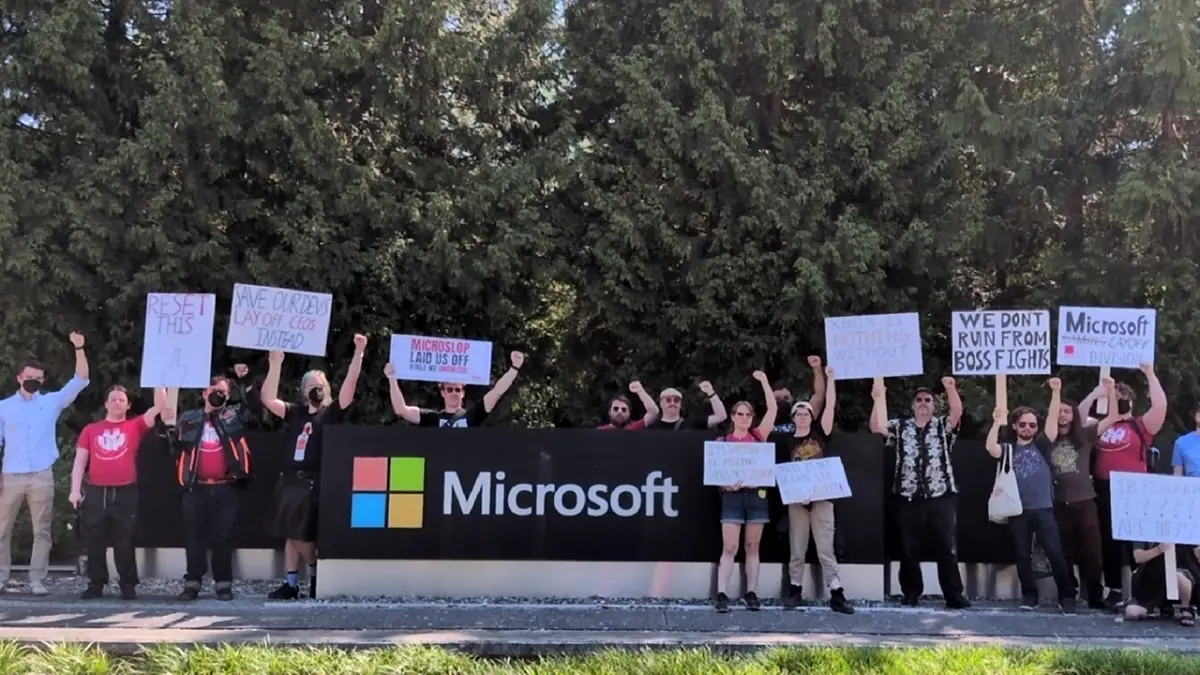
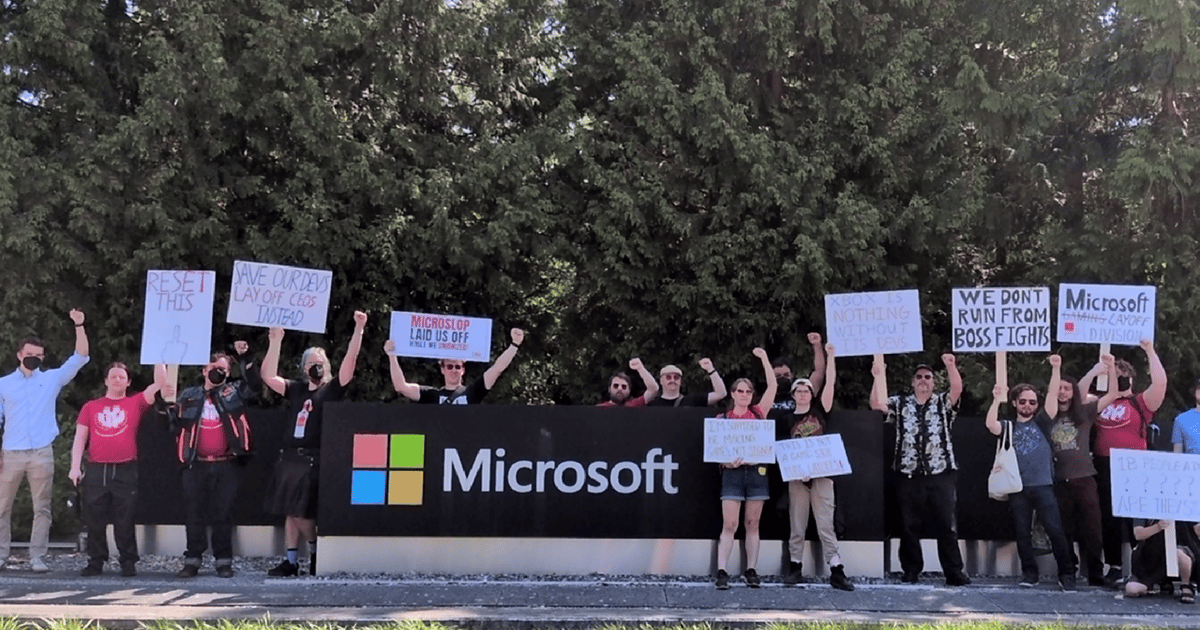
The fault lines within the modern video game industry are shifting from corporate boardrooms to the streets. This week, hundreds of unionized video game workers amassed outside major Xbox studios across the United States and Canada, staging a coordinated wave of "Save Our Devs" rallies. Represented by the Communications Workers of America (CWA) and local labor allies, the demonstrations—held on August 19, 2026—served as a visceral rebuke of Microsoft’s aggressive downsizing strategy.
The protests represent a critical flashpoint in an ongoing war of attrition between labor unions and one of technology’s most powerful conglomerates. At the heart of the conflict is a devastating series of workforce reductions that has seen Microsoft slash thousands of jobs across its gaming division over a three-year span. With a planned total of 3,200 layoffs slated to hit before the end of the current fiscal year—including an immediate wave of 1,600 cuts across legendary subsidiaries like Obsidian Entertainment, id Software, and ZeniMax Online Studios—workers say the corporate mandate of "resetting" the business is gutting the soul of interactive entertainment.
As the CWA pursues legal action against Microsoft for alleged labor law violations during the execution of these cuts, the talent that built some of gaming’s most beloved franchises is being shown the door. What remains is a shell-shocked workforce living in perpetual precarity, watching centuries of institutional knowledge vanish overnight.
Detailed Chronology: Anatomy of a Corporate Pivot
The current crisis did not materialize overnight; it is the culmination of years of hyper-expansion followed by sudden, drastic contraction across the AAA games sector.
The Lead-Up to the Reset
In the years following massive acquisitions—most notably the historic $68.7 billion purchase of Activision Blizzard King, alongside earlier multi-billion-dollar acquisitions of Bethesda parent company ZeniMax Media—Microsoft positioned itself as an undeniable titan of the video game landscape. However, macroeconomic pressures, shifting consumer habits, and a corporate imperative to boost profit margins quickly turned expansion into consolidation.
Over the past three years, Microsoft’s gaming division has endured five distinct waves of layoffs. Each cycle has chipped away at the operational stability of studios that were previously promised creative independence under the Xbox banner.
The July 2026 Directive
The situation deteriorated rapidly in July 2026 when Xbox CEO Asha Sharma announced a sweeping corporate restructuring. Sharma stated that Xbox needed to fundamentally "reset" its operational model to find a sustainable path forward. As part of this strategic pivot, the division confirmed it would eliminate 3,200 jobs by the end of the fiscal year.
The bloodletting began immediately with 1,600 pink slips handed out across prominent subsidiaries. Studios that had defined the golden age of PC and console gaming—such as Obsidian Entertainment, id Software, and ZeniMax Online Studios—were hit hardest. Simultaneously, Microsoft began divesting from or restructuring other cornerstone teams, including Double Fine, Undead Labs, Ninja Theory, and Compulsion Games. These studio spinoffs and sell-offs immediately triggered secondary waves of layoffs at the newly independent or restructured entities.
The ‘Save Our Devs’ Mobilization
Recognizing that individual studios lacked the collective leverage to fight back, workers mobilized. The first wave of "Save Our Devs" rallies took place in mid-July, capturing national attention.
When the dust failed to settle, the CWA escalated its response. On August 19, 2026, the second wave of coordinated protests descended on Xbox development hubs in Austin, Dallas, Seattle, Rockville, Hunt Valley, Montreal, and Minneapolis. Hundreds of union members, industry sympathizers, and labor advocates braved the elements to demand fair first contracts and an immediate halt to what they termed "corporate greed across the industry."
Supporting Context & Metrics: The Human and Economic Toll
To understand the severity of the "Save Our Devs" protests, one must examine the staggering scale of the structural damage inflicted upon the Xbox studio ecosystem.
The Numbers Game
- 3,200: The total number of jobs slated for elimination by the end of the current fiscal year under Xbox CEO Asha Sharma’s "reset" plan.
- 1,600: The number of immediate layoffs executed in July 2026 across vital subsidiaries like id Software, Obsidian, and ZeniMax Online Studios.
- 5: The number of distinct mass layoff waves experienced by Microsoft’s gaming division over a grueling three-year period.
- 7: Major metropolitan hubs where August 19 labor rallies took place simultaneously (Austin, Dallas, Seattle, Rockville, Hunt Valley, Montreal, and Minneapolis).
The Drain of Institutional Knowledge
Beyond the cold statistics lies an irreplaceable loss of human capital. According to candid interviews conducted by Game Developer with laid-off Xbox personnel, the division is teetering on the edge of structural collapse. Thousands of workers—representing centuries of collective production experience, engine optimization mastery, and narrative design expertise—have been severed from the company.
When veteran creators are pushed out en masse, the consequences extend far beyond delayed project roadmaps. They alter the DNA of studio cultures that took decades to cultivate. The corporate strategy of treating human resources as purely elastic overhead fails to account for the specialized, interdependent nature of game development, where a single departed technical director or lead programmer can jeopardize years of engine architecture.
Official Statements and Labor Action
The legal and rhetorical battles between Microsoft management and union representatives have grown increasingly fierce.
Legal Escalation
The CWA and CWA Canada are not merely protesting in the streets; they are taking direct legal recourse. The unions have filed formal legal actions against Microsoft, alleging that the corporation mishandled the execution of the layoffs, violated federal labor guidelines, and failed to engage in good-faith negotiations regarding the restructuring’s impact on unionized personnel.
In response to these legal challenges, Microsoft representatives stated that the company proactively reached out to union leadership to initiate "effects bargaining"—a legal process wherein an employer must negotiate the practical consequences of a management decision with a certified union. Microsoft maintains that it remains fully committed to working through that process.
Voices from the Front Lines
For the workers caught in the crossfire, corporate talking points offer little comfort. The human cost of the restructuring is reflected in the raw, emotional testimonies of those who built the very games that populate Xbox’s commercial portfolio.
"Each of the 1,600 people from July’s layoffs have their own unique tale, and every developer still employed at an Xbox studio lives in anxious fear, waiting to discover if they are one of the next 1,600 stories," said John Roberts, an id Software Principal Engine Programmer and member of CWA Local 6215, who was impacted by the July cuts. "We cannot allow Microsoft to set a precedent of ignoring federal labor law, leaving so many union workers discarded."
The erosion of legacy is a sentiment shared across multiple generations of developers. Stephanie Zachariadis, a Bethesda Game Studios quest designer and member of CWA Local 2108 who was also let go in July, reflected on the heartbreak of watching a dream workplace dissolve.
"When I first started working [at Bethesda Game Studios], I was in awe. I wanted nothing more than to contribute to the legacy created by the developers here: the people who forever changed my perception of what a video game could be like when I first played Fallout 3 at eight years old," Zachariadis shared in a CWA press release. "Now? The legends who filled those trophy cases are, for the most part, gone, laid off, or driven away."
Future Outlook: A Precarious Horizon for AAA Development
As the smoke clears from the August 19 rallies, the broader implications for the video game industry loom large. The labor movement within game development—once considered an improbable dream given the historically transient and passionate nature of the workforce—has undeniably cemented its place as a formidable counterweight to executive overreach.
The immediate future for Xbox studios remains fraught with tension. With half of the planned 3,200 cuts still to be realized over the remainder of the fiscal year, developers remaining at Obsidian, Bethesda, id, and other subsidiaries continue to work under a heavy cloud of anxiety. The "effects bargaining" tables between Microsoft and the CWA will serve as a critical crucible; the agreements forged—or bitterly contested—there will likely establish a legal and cultural precedent for unionized tech and gaming labor across North America.
Ultimately, the "Save Our Devs" movement is about more than just severance packages and job security. It is a fundamental philosophical battle over who bears the financial risk of corporate miscalculation. As long as massive publishers continue to prioritize short-term financial corrections over the preservation of creative talent, the friction between labor and management will only intensify, transforming the digital playgrounds of tomorrow into battlegrounds for worker rights.