Executive Overview
In the fast-evolving landscape of consumer electronics, modularity and right-to-repair initiatives have carved out a passionate, dedicated following. At the vanguard of this movement is Framework Computer, a company celebrated for its transparent business model, user-upgradable hardware, and commitment to eliminating electronic waste. However, even the darlings of the open-hardware community are not immune to the complex engineering challenges that plague traditional computing giants.
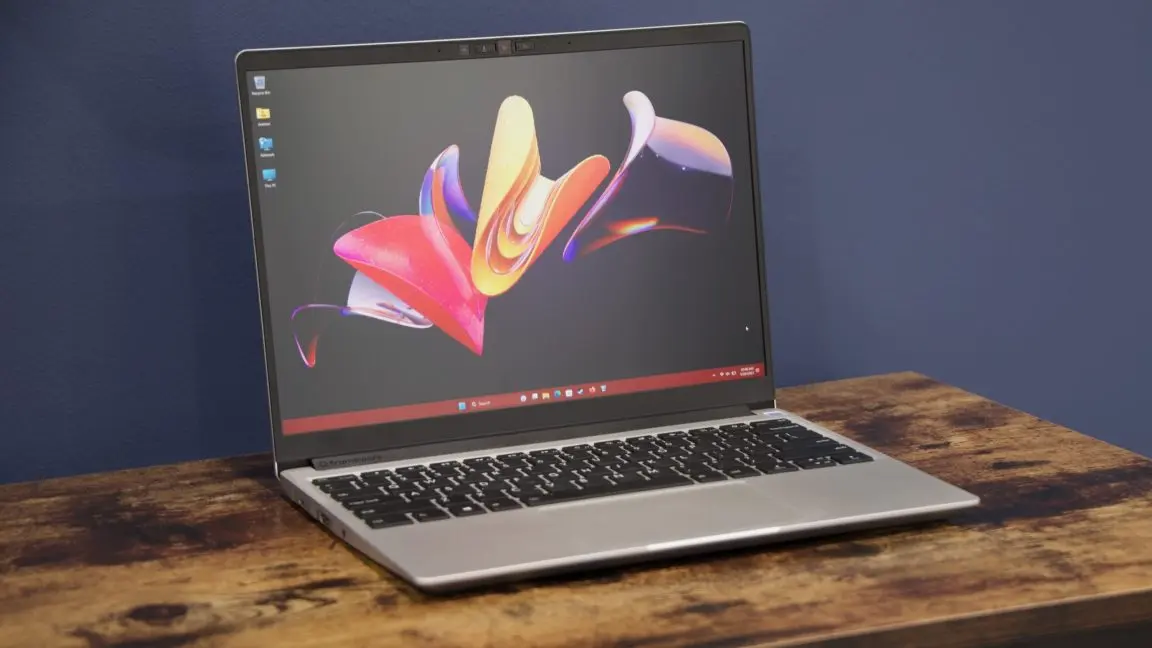
Over the past several months, a growing controversy has unfolded within the Framework ecosystem. Users of the Framework Laptop 13 equipped with AMD Ryzen 7040 series processors have reported critical failures following routine BIOS updates. These botched flashes have rendered expensive motherboards entirely non-bootable—colloquially referred to in the tech community as "bricked."
The situation escalated from a minor technical glitch into a notable customer relations crisis when out-of-warranty users experiencing the bug were initially told by support representatives that they would have to purchase replacement mainboards out of pocket. For a company built on the premise of longevity and sustainability, the prospect of forcing users to discard expensive hardware over a software routine sent shockwaves through the community forum.
Amid mounting public scrutiny, detailed independent post-mortems by affected software developers, and direct media inquiries, Framework has adjusted its stance. The company has clarified its warranty policies for affected users, pledged free mainboard replacements for out-of-warranty customers whose systems were bricked by stable-release BIOS updates, and accelerated the rollout of a long-overdue "Crisis Recovery Mode."
This report provides an exhaustive, investigative look into the Ryzen 7040 BIOS crisis, tracing its origins, exploring the technical anomalies uncovered by independent developers, analyzing Framework’s official responses, and evaluating what this means for the future of modular computing.
Detailed Chronology of the Ryzen 7040 BIOS Crisis
Early Warning Signs: March 2025 to Early 2026
The first murmurs of trouble regarding firmware upgrades on the Ryzen 7040-based Framework Laptop 13 variants began surfacing in community support channels as early as March 2025. Initially treated as isolated incidents—often blamed on unexpected power interruptions, user error, or corrupted download packages—the reports followed a familiar pattern. Users would initiate a standard BIOS update within their operating environment, only for the system to hang, display erratic artifacts, and ultimately fail to post upon reboot.
Because firmware updates carry inherent risks across all computing platforms, these early failures did not immediately trigger alarm bells within Framework’s engineering departments. However, as subsequent BIOS iterations rolled out, the volume of similar complaints began to climb steadily.
The Flashpoint: BIOS Version 3.20 and the Support Deadlock
The crisis reached a boiling point following the release of the Ryzen 7040 BIOS version 3.20. While intended to introduce stability improvements, security patches, and hardware optimizations, this specific update triggered a disproportionate wave of catastrophic failures.
As affected users flooded the Framework Community forums, a secondary issue emerged: customer service friction. Several users who experienced the bricking phenomenon after applying the update shared troubling interactions with Framework support. Because many of these Ryzen 7040 systems had been in the wild for a considerable period, a significant portion of the user base had drifted past their standard hardware warranty windows. According to user testimonials, support staff initially informed these customers that because their devices were out of warranty, the responsibility for the hardware failure fell on the user, necessitating the purchase of a replacement mainboard.
This policy enforcement struck a raw nerve. The community argued that if a manufacturer-released, stable firmware update actively destroyed a component through no fault of the user, denying warranty support—regardless of the calendar date—betrayed the core ethos of the right-to-repair movement.
Independent Investigation and the Developer Post-Mortem
As frustration mounted, technical community members began taking matters into their own hands. A significant breakthrough in understanding the hardware failure came this week when software developer and blogger Guanzhong Chen published an exhaustive, highly technical post detailing their experience recovering a bricked AMD Ryzen 7040 Framework 13 mainboard.
Chen’s investigation shed light on several bizarre behaviors occurring beneath the surface during the update and failure cycles. According to Chen’s findings, the software bug responsible for the bricking event often manifests visually right before failure, causing the display to render what appears to be random memory contents. This specific visual artifact had been observed by multiple users across different historical BIOS versions, pointing to a persistent underlying vulnerability in the flashing routine.
Perhaps most damningly, Chen highlighted systemic inefficiencies in how Framework’s software handles the flashing process itself:
"At the same time, it somehow flashes the BIOS slower in regular operation than a cheap 15 MHz programmer over pogo pins, which really makes you wonder what it’s doing under the hood."
Using inexpensive hardware tools (totaling roughly $20), Chen successfully bypassed the bricked state, flashed the correct firmware directly onto the flash chip via physical pins, and restored the mainboard to a fully functional state. This DIY recovery demonstrated that the hardware itself was rarely permanently damaged; rather, the flash memory had been left in an unbootable, unrecoverable state due to software failure—a problem that should theoretically be solvable without soldering irons or specialized external programmers.
Supporting Context & Metrics: The Modular Hardware Landscape
To understand the weight of this crisis, one must evaluate the unique market position Framework occupies. Traditional laptop manufacturers—such as Dell, HP, Lenovo, and Apple—operate on closed-ecosystem models. When a catastrophic BIOS failure bricks a motherboard on a traditional laptop, the repair path usually involves mailing the device to a regional depot or visiting an authorized service center, where technicians routinely swap out integrated components under warranty. For out-of-warranty devices, the repair costs often approach the market value of the machine, encouraging device replacement over repair.
Framework’s entire value proposition flips this dynamic on its head. By modularizing internal components—allowing the motherboard ("Mainboard") to be removed and upgraded independently of the chassis, screen, and keyboard—Framework promised a greener, more economical paradigm. If a component fails, you simply buy or replace that specific module.
However, this architecture places heightened importance on the reliability of user-performed maintenance. When desktop PC builders encounter a bricked BIOS, many motherboards feature built-in redundancies such as "USB FlashBack," dual-BIOS chips, or physical recovery jumpers. Laptops, due to space and power constraints, historically lack these physical redundancies, leaving users vulnerable to botched updates.
When Framework designed its modular laptops, the assumption was that software updaters would be sufficiently robust to prevent unrecoverable states. The Ryzen 7040 crisis exposed a critical gap in this assumption: when a software routine fails on a device lacking hardware-level recovery mechanisms, the modular Mainboard essentially becomes an expensive paperweight.
Official Statements and Corporate Policy Adjustments
Faced with a convergence of negative press, detailed public post-mortems by respected developers, and vocal community backlash, Framework leadership moved to clarify its policies and outline technical mitigations.
Clarifying the Warranty Stance
In an official statement provided to technology publication Ars Technica, Framework sought to quell fears regarding out-of-warranty costs. The company explicitly stated:
"…in addition to replacing in-warranty Mainboards, we are making exceptions for out-of-warranty replacements where we can confirm a stable-release BIOS update caused the board to become non-bootable."
This policy correction is a vital concession. By formally decoupling the warranty status from firmware-induced failures caused by stable releases, Framework has aligned its customer service practices with consumer expectations of software liability. Users who fell victim to the bug and were previously quoted replacement fees are now positioned to receive manufacturer support.
Introducing "Crisis Recovery Mode"
Recognizing that replacing hardware en masse is neither sustainable for the company nor convenient for the user, Framework’s engineering teams have accelerated the development of a fail-safe mechanism designed to prevent future bricks.
The company is actively introducing a "Crisis Recovery Mode" across its product lineup. This specialized BIOS functionality establishes a direct, foolproof recovery path, allowing the system to restore itself from a failed update attempt without requiring external hardware programmers or factory intervention.
Framework elaborated on the rollout schedule in its communications:
"Our latest Framework Desktop BIOS release includes this functionality, and we are actively bringing it to Framework Laptop 12, 13, and 16 in our upcoming BIOS release cycles for each."
While details on the exact technical implementation of Crisis Recovery Mode on the Laptop 13 remain forthcoming, the inclusion of a dedicated recovery routine addresses the root vulnerability that allowed botched updates to brick systems permanently.
Future Outlook: Rebuilding Trust in the Modular Ecosystem
The Ryzen 7040 BIOS crisis serves as a critical stress test for Framework Computer and the broader modular computing movement. As companies attempt to scale consumer-facing modular hardware, they inherit the exact software complexities that traditional OEMs spend decades managing.
Short-Term Remediation and Communication
In the immediate future, Framework’s primary objective must be execution and transparency. The company needs to streamline the process by which affected out-of-warranty users can claim their replacement mainboards or receive guided recovery assistance. Furthermore, publishing an official post-mortem detailing why the Ryzen 7040 flash routine behaved erratically—and how BIOS 3.20 interacted with the hardware to cause the memory display artifacts noted by developers like Guanzhong Chen—would go a long way toward restoring technical confidence.
Long-Term Engineering Resilience
The expedited deployment of Crisis Recovery Mode across the Framework Laptop 12, 13, and 16 product lines is a step in the right direction. However, engineering teams must ensure that these recovery mechanisms are truly foolproof and capable of rescuing a device even when the primary bootloader is entirely overwritten or corrupted.
For the right-to-repair community, this episode highlights both the vulnerabilities and the strengths of an open ecosystem. While proprietary manufacturers might have swept such an issue under the rug or quietly charged customers for out-of-warranty repairs, the public pressure exerted by independent developers, community forums, and technology journalists forced a swift corporate pivot.
Ultimately, Framework’s willingness to listen, correct its course, and absorb the cost of out-of-warranty mainboard replacements demonstrates that the company takes its foundational promises seriously. If the forthcoming BIOS release cycles successfully deliver robust recovery features, the Ryzen 7040 crisis may ultimately be remembered not as the downfall of modular computing, but as the painful growing pain that made it structurally bulletproof.