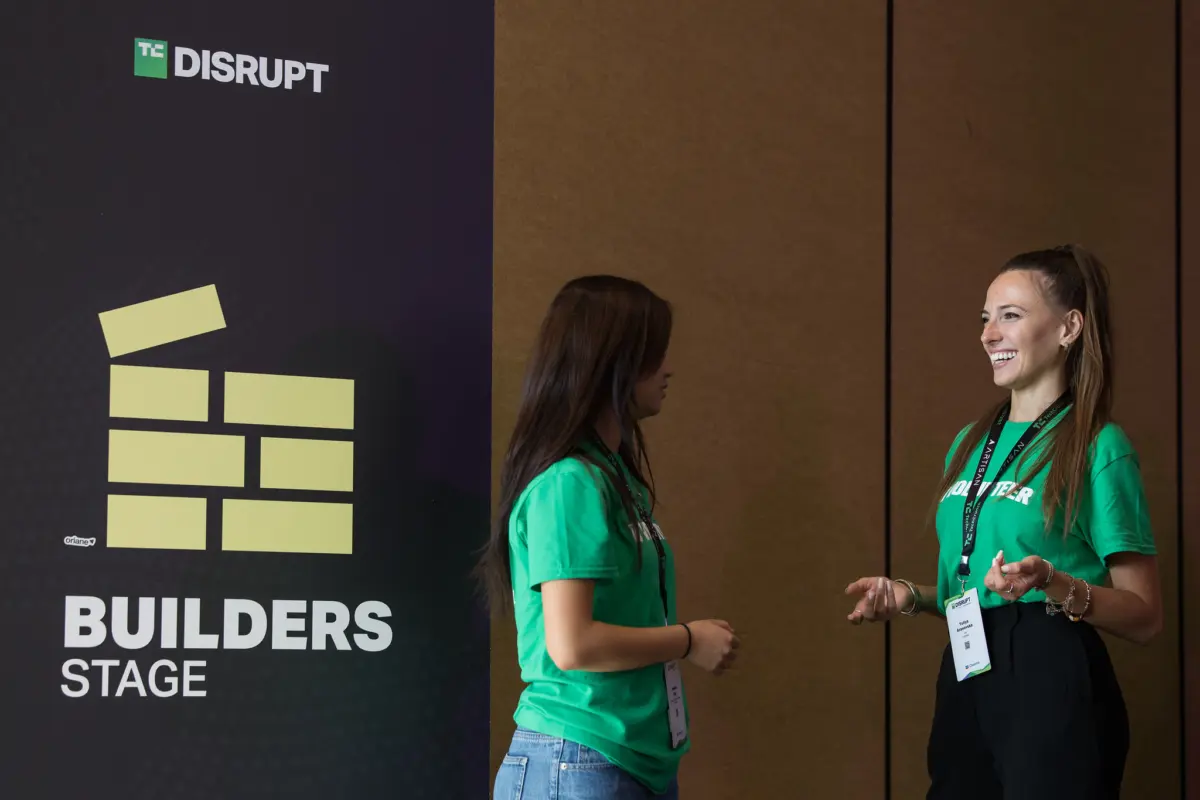
SAN FRANCISCO — What is the invisible architecture that separates founders who build category-defining, generational companies from those whose ideas stall in the ideation phase? Ask any venture capitalist, seasoned operator, or serial entrepreneur, and the answer rarely points solely to code, capital, or charisma. It points to ecosystem fluency.
The elite builders of the technology world understand how ecosystems operate because they have studied them from the inside. They have watched how major industry events are orchestrated, how serendipitous networks are artificially and naturally engineered, and how monumental business opportunities materialize in real time from casual hallway conversations.
For aspiring founders, early-stage operators, and future venture capitalists, the most direct—and often overlooked—pathway to gaining this insider’s perspective is through direct immersion. Applications are officially open for those looking to work behind the scenes by volunteering at TechCrunch Disrupt 2026, scheduled to take place from October 13 to October 15 at San Francisco’s iconic Moscone West.
Executive Overview: The Anatomy of an Industry Epicenter
TechCrunch Disrupt has long served as the crucible of the global startup ecosystem. It is where garage-built prototypes meet institutional capital, where policy debates shape the future of artificial intelligence and biotechnology, and where the next wave of decacorns makes its public debut on the Startup Battlefield stage.
However, attending as a standard ticket-holder offers only a spectator’s view of the machinery. Volunteers, by contrast, are embedded directly into the production infrastructure of the event. Working shoulder-to-shoulder with the TechCrunch events team, volunteers gain a panoramic, unvarnished view of the startup economy’s mechanical gears.
“The people running TechCrunch Disrupt 2026 learned by doing it. Now it’s your turn.”
By stepping behind the curtain, participants transition from passive consumers of tech media to active participants in the week’s orchestration. They observe firsthand how founders pitch their highest-stakes ideas under pressure, how top-tier venture capitalists deliberate and make multi-million-dollar investment decisions behind closed doors, and how strategic partnerships are forged in the crucible of a high-intensity conference environment.
Crucially, this behind-the-scenes access unlocks a powerful currency in the tech sector: experiential education that pays lifelong dividends, whether your ultimate goal is launching a venture, scaling an engineering team, or deploying capital as an investor. Better still, the compensation structure bridges accessibility and opportunity, granting volunteers full, free general admission to all three days of the conference when they are off-shift.
Detailed Chronology: The Road to Moscone West 2026
The lead-up to TechCrunch Disrupt 2026 represents a meticulously planned logistical and intellectual undertaking. Understanding the timeline of how this massive convergence of talent, capital, and media comes together provides a vital lesson in large-scale ecosystem management.
Phase 1: Mobilizing the Infrastructure (Spring to Early Summer)
Months before the first keynote speaker takes the stage at Moscone West, the groundwork for Disrupt is laid by a lean, specialized core team. Venue logistics, vendor negotiations, stage designs, and software integrations are finalized. Concurrently, the curation of the speaker roster begins—a delicate balancing act of identifying emergent tech trends, securing high-profile industry titans, and vetting early-stage startups for the world-renowned Startup Battlefield competition.
Phase 2: Building the Human Network (August to September)
As summer transitions into autumn, the focus shifts heavily toward community activation. This includes opening applications for the volunteer cohort—the operational lifeblood of the event. Selected volunteers undergo rigorous briefings, learning the ins and outs of event operations, attendee services, media management, and stage production. This period also marks the ramp-up of marketing campaigns, ticket sales, and press outreach that will ultimately draw thousands of global attendees to San Francisco.
Phase 3: The Three-Day Crucible (October 13–15, 2026)
When the doors of Moscone West swing open on October 13, the months of strategic planning culminate in a high-velocity, 72-hour marathon of innovation.
- Day 1 (October 13): Focuses heavily on the macro-trends shaping the future—artificial intelligence regulation, next-generation computing architectures, and the shifting venture capital landscape. Volunteers assist with opening-day registrations, media check-ins, and guiding early-stage founders through the labyrinth of expo halls.
- Day 2 (October 14): The intensity peaks as the Startup Battlefield narrows its cohort. Panels delve deep into tactical growth, product-market fit, and scaling through economic headwinds. Volunteers manage stage transitions, facilitate green-room protocols for high-profile speakers, and help coordinate breakout networking sessions.
- Day 3 (October 15): The climax of the event features the final rounds of the Startup Battlefield, culminating in the crowning of the Disrupt winner. The final day also hosts extensive reverse-pitch sessions and career fairs, allowing volunteers to leverage their newly forged connections and full-access passes to network with top employers and investors.
Supporting Context & Metrics: The Value Proposition of Sweat Equity
To understand the tangible value of volunteering at TechCrunch Disrupt, one must examine the economics of modern tech conferences alongside the structural realities of breaking into the venture and startup spheres.
The Cost of Access
Attending a premier tech conference like Disrupt as a general attendee is a significant financial commitment. Standard ticket prices routinely run into hundreds—and sometimes thousands—of dollars, not including the ancillary costs of lodging and travel in San Francisco. For students, early-career professionals, and bootstrapped founders, these financial barriers can effectively lock them out of the rooms where critical industry decisions are made.
By trading time and labor for access, the volunteer model democratizes entry into the ecosystem. Volunteers receive:
- Full 3-Day General Admission: Valued at hundreds of dollars, granting entry to all keynotes, panels, and expo floors during off-shift hours.
- Unfiltered Access to Decision-Makers: Proximity to venture capitalists, angel investors, and executives who are otherwise insulated behind VIP passes and security details.
- Operational Resumes: Real-world experience managing complex, high-pressure logistics for a globally recognized media and events brand—a compelling bullet point for any resume targeting tech operations or venture capital.
The Network Effect
In the venture ecosystem, "network is net worth" is more than a cliché; it is an operating principle. Traditional networking events often feel forced, transactional, and superficial. Working collaboratively alongside peers, tech journalists, and event organizers creates natural, low-pressure bonds.
Furthermore, observing how veteran operators handle crisis management, speaker scheduling, and floor coordination provides a masterclass in project execution. These are precisely the operational competencies that venture capital firms look for when evaluating early-stage founding teams.
Official Guidelines: What TechCrunch Looks For in 2026 Volunteers
Not everyone is suited for the fast-paced, high-stress environment of a major technology conference. TechCrunch maintains a selective application process to ensure its volunteer corps possesses the professionalism, adaptability, and enthusiasm required to keep Moscone West running smoothly.
Core Requirements
To be considered for a volunteer position at TechCrunch Disrupt 2026, applicants must meet several baseline criteria:
- Reliability and Punctuality: Shifts must be covered precisely as assigned. The conference runs on a strict timeline, and operational bottlenecks can disrupt thousands of attendees.
- Professional Demeanor: Volunteers often serve as the first point of contact for high-profile speakers, international press, and major institutional investors. Exceptional interpersonal skills and a customer-first attitude are mandatory.
- Adaptability: The tech world is unpredictable, and live events doubly so. Volunteers must be comfortable pivoting quickly when plans change or unexpected challenges arise.
Geographic and Logistical Considerations
While TechCrunch strongly prefers local candidates based in the San Francisco Bay Area—given the logistical simplicity of commuting to Moscone West—the opportunity is open to dedicated applicants willing to make their own travel and lodging arrangements.
Future Outlook: Translating Experience into Industry Longevity
The technology sector is entering a new era defined by rapid paradigm shifts, particularly catalyzed by autonomous systems, generative AI, and shifting macroeconomic realities. In this environment, static theoretical knowledge rapidly depreciates. What remains valuable is operational agility and deep-seated network density.
Volunteering at TechCrunch Disrupt 2026 is not merely a mechanism for getting a free conference badge; it is an incubator for future industry leaders. Historically, many of the operators, founders, and investors who now command stages at Disrupt began their journeys by working behind the scenes—carrying clipboards, managing room capacities, and learning the rhythm of the ecosystem from the ground up.
As spots for the volunteer cohort are strictly limited and fill up rapidly on a rolling basis, prospective applicants are urged to act without delay.
The best networkers, founders, and investors in technology have never been content with merely sitting in the audience. They are the ones who step up, roll up their sleeves, and help build the event from the inside out.
To secure your place at the epicenter of startup culture, submit your application today by visiting the official TechCrunch Disrupt 2026 Volunteer Portal.