Executive Overview
The modern software supply chain is under siege. As cybercriminals leverage increasingly sophisticated automation, artificial intelligence, and deep-pocketed resources, traditional perimeter defenses and source-code-centric reviews are no longer sufficient. Recognizing this evolving threat landscape, Cloudsmith—a prominent software artifact management platform provider—has announced a significant expansion of its policy management and continuous risk detection capabilities.
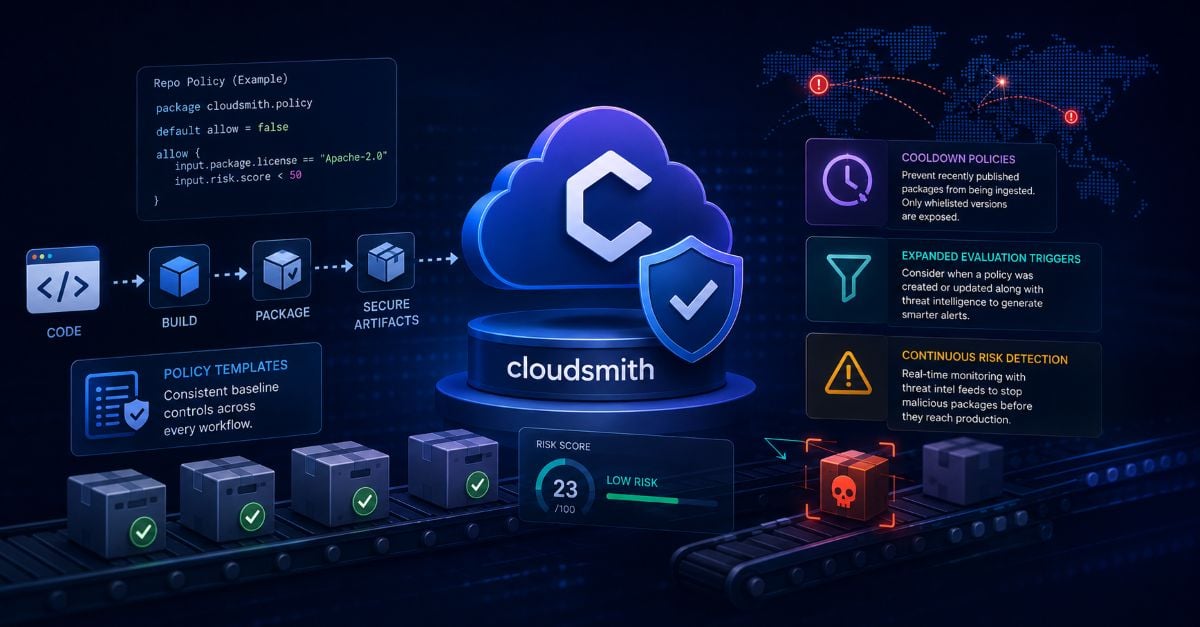
The update introduces three critical features designed to intercept malicious software before it can infiltrate production binaries: reusable Rego-based policy templates, strategic cooldown policies, and expanded evaluation triggers. According to Cloudsmith executives, these additions are engineered to address a blind spot in many DevOps workflows: the assumption that third-party dependencies, open-source packages, and compiled binaries are inherently safe.
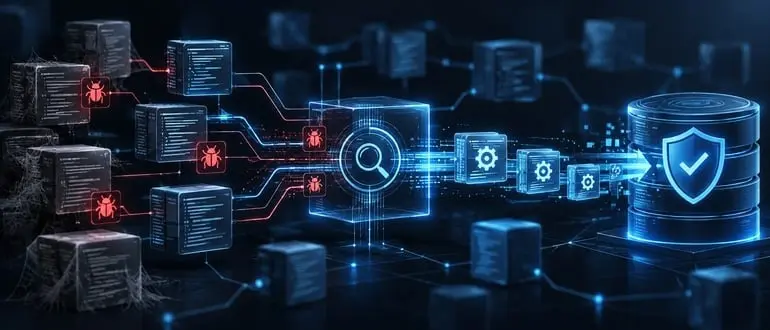
By shifting security controls closer to the artifact level—where malicious actors routinely target unsuspecting developers—Cloudsmith aims to disrupt common attack vectors, such as compromised package manager instances and typosquatting campaigns. This article provides an in-depth examination of Cloudsmith’s latest platform enhancements, the shifting philosophy behind software supply chain security in the AI era, and what these changes mean for enterprise Chief Information Security Officers (CISOs) and development teams alike.
Detailed Chronology: The Evolution of Cloudsmith’s Governance Engine
To understand the significance of Cloudsmith’s latest release, it is necessary to examine how software governance has evolved within the platform. Historically, artifact repositories functioned primarily as storage and distribution hubs for build outputs, container images, and package dependencies. Security was often bolted on retroactively through periodic vulnerability scans of static files.
As attacks on open-source repositories escalated—typified by high-profile incidents involving compromised upstream dependencies—it became clear that passive storage was no longer viable. Cloudsmith’s recent rollout represents the culmination of a strategic shift toward active, automated artifact governance.
1. The Introduction of Rego-Based Policy Templates
In previous iterations, enforcing consistent security and compliance rules across disparate development teams required custom scripts or manual reviews, introducing friction and human error. With the latest update, Cloudsmith has integrated support for policy templates written in the Rego programming language—the same declarative language widely used in cloud-native policy engines like Open Policy Agent (OPA).
These templates provide a standardized set of baseline controls that security architects can write once and consistently implement across the entire DevOps workflow. Whether a team is pushing to a staging environment or compiling final production binaries, the Rego templates act as guardrails, automatically evaluating packages against organizational compliance and safety mandates.
2. Strategic Implementation of Cooldown Policies
Perhaps the most innovative addition to the platform is the concept of "cooldown policies." Historically, when a new or updated open-source package became available, it was immediately indexed and made accessible to application developers. Threat actors quickly capitalized on this speed, using compromised accounts or newly registered malicious packages to inject malicious code into developer pipelines before security tools could flag the threat.
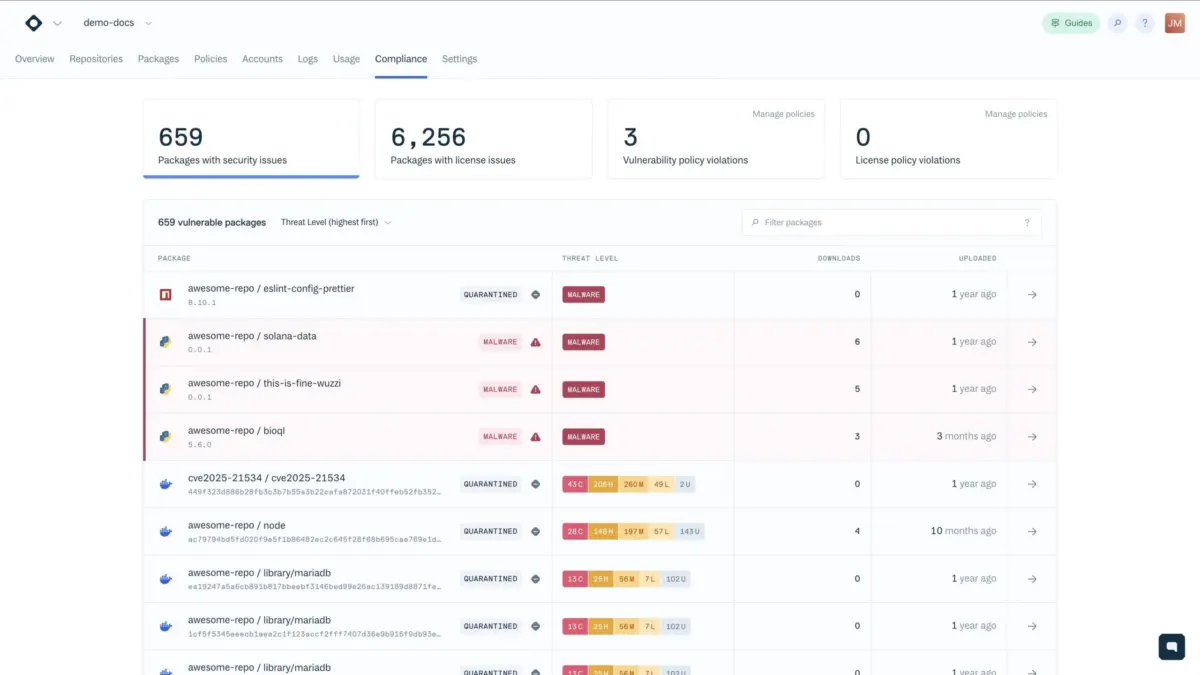
Cloudsmith’s cooldown policies allow organizations to enforce a mandatory waiting period for newly published software packages. During this cooldown window, the package cannot be indexed or exposed to application developers. This delay gives threat intelligence feeds, automated scanners, and security teams critical time to vet the package. By preventing zero-day or recently poisoned dependencies from being immediately consumed, organizations can neutralize sophisticated adversaries who rely on the sheer speed of automated package consumption.
3. Expanded Evaluation Triggers
Security policies are only as good as their execution frequency. In fast-paced DevOps environments, codebases, threat intelligence feeds, and compliance mandates change daily. Cloudsmith has responded to this reality by introducing expanded evaluation triggers.
These new triggers factor in the creation and update timestamps of policies themselves, weaving them alongside real-time threat intelligence feeds to generate dynamic alerts. If a policy has not been updated to reflect a newly discovered threat vector, or if a critical component of the software supply chain shifts, the platform flags the discrepancy. This ensures that security governance evolves synchronously with the application development lifecycle rather than lagging behind it.
Supporting Context & Metrics: Why Binary-Level Security Matters
The motivation behind Cloudsmith’s feature expansion stems from a fundamental shift in how modern cyberattacks are executed. For decades, DevSecOps teams focused heavily on the source code repository. Code reviews, static application security testing (SAST), and secret scanning became the standard pillars of pipeline security.
However, attackers have increasingly bypassed source code entirely, targeting the software supply chain further downstream—specifically at the artifact and binary level.
The Threat of Compromised Binaries
Consider the mechanics of modern software delivery. Modern applications are often composed of only 10% to 20% proprietary code; the remaining 80% consists of open-source libraries, frameworks, and third-party dependencies. When a malicious actor compromises an upstream package—such as the widely used Axios Node Package Manager instance targeted in high-profile supply chain incursions—the malicious payload often evades initial source code scans because it is introduced after the source code phase, during dependency resolution or binary compilation.
According to industry observations, adversaries are investing significant time, patience, and financial resources into cultivating trusted open-source maintainer accounts or executing subtle typosquatting attacks. Once trusted, they push updates containing malicious code designed to exfiltrate data, establish persistence, or compromise production infrastructure post-deployment.
The Death of Severity-Ranked Vulnerability Management
Alison Sickelka, Vice President of Product at Cloudsmith, points out a profound philosophical shift in how organizations approach risk. For years, DevSecOps teams prioritized remediation based on vulnerability severity scores (such as CVSS ratings). If a vulnerability was marked "medium" or "low," it was often backlogged.
In the AI era, that luxury no longer exists. Cybercriminals are increasingly using artificial intelligence to rapidly discover, chain, and exploit vulnerabilities that were once considered marginal. Consequently, business and IT leaders are pivoting from reactive patch management to proactive prevention. CISOs are shifting budgets toward platforms that can stop malicious packages from entering the pipeline entirely, thereby reducing the immense downstream cost and operational disruption of responding to a full-scale cyber incident.
Official Statements and Industry Insights
Cloudsmith’s leadership emphasizes that securing the software supply chain requires balancing rigorous control with developer velocity. Security measures that grind innovation to a halt are inevitably bypassed by frustrated engineers.
"These additions to the platform will make it simpler to prevent malicious packages from inadvertently being incorporated into the binaries that DevOps teams deploy in production environments," explains Alison Sickelka, VP of Product at Cloudsmith.
Elaborating on the inclusion of cooldown policies, Sickelka highlights the patience and resourcefulness of modern threat actors:
"Many of those packages have been created by maintainers of open source software projects that are targeted by adversaries that have no shortage of time, patience and financial resources. Cooldown policies ensure that only versions of a validated package are exposed to application developers."
Furthermore, Sickelka stresses the necessity of moving beyond traditional source-code paradigms:
"Rather than trying to secure software supply chains by focusing mainly on the source code used to create binaries, Cloudsmith is making a case for applying policies to the binaries that cybercriminals are actually targeting."
On the broader macroeconomic and operational shifts within enterprise security, Sickelka notes a distinct change in executive appetite for security tooling:
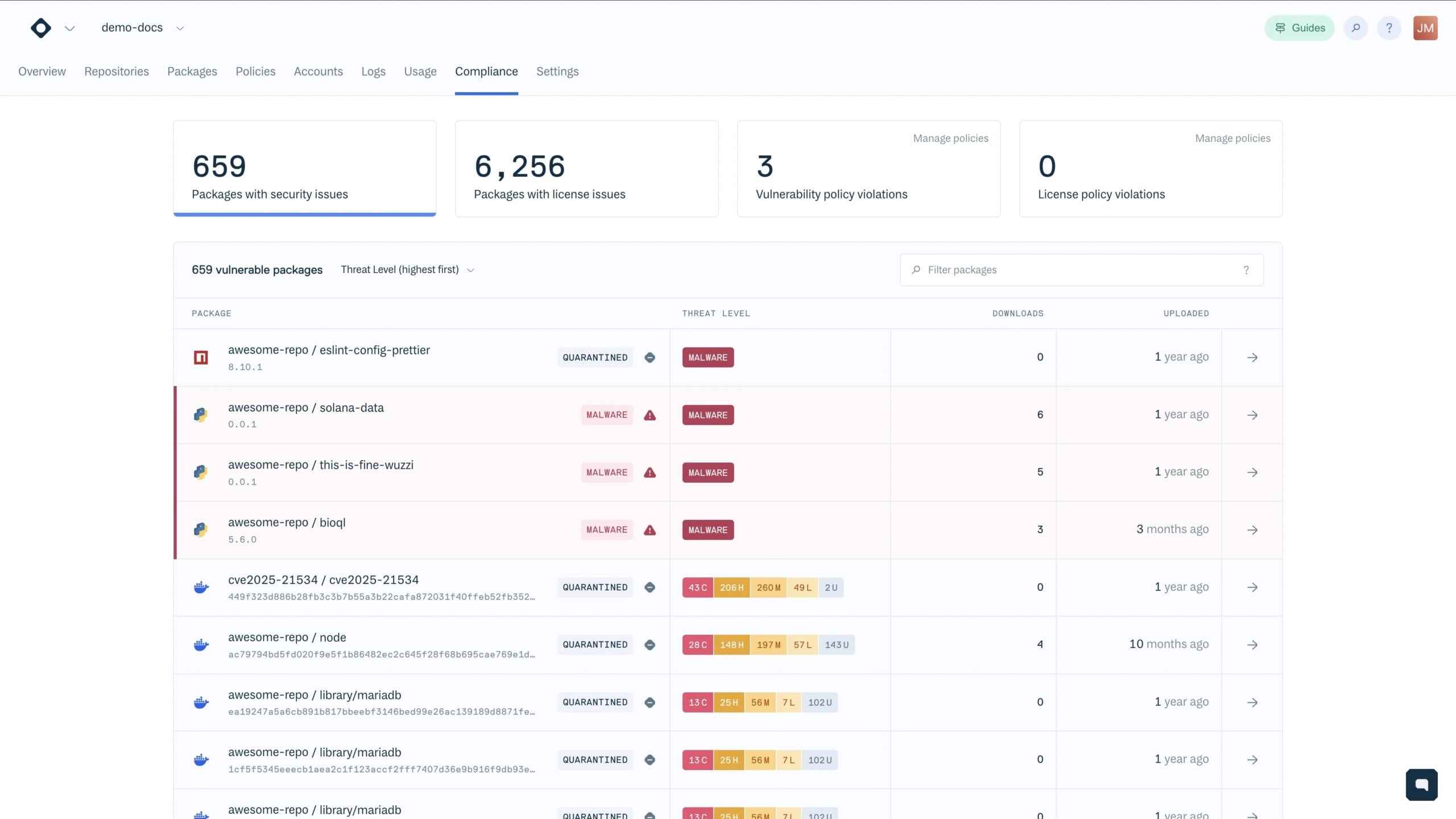
"The days when DevSecOps teams could prioritize their efforts based on the severity ranking of a vulnerability are over. In fact, in many cases CISOs are now willing to fund the acquisition of the tools and platforms needed to secure software supply chains in the hopes of reducing the number of downstream incidents they might later need to respond to in the event of a cyberattack."
Future Outlook: Navigating the AI-Driven Threat Landscape
As artificial intelligence continues to reshape both offensive and defensive cybersecurity, the software supply chain will remain a primary battleground. In the short term, industry experts predict a significant wave of turmoil. Cybercriminals are increasingly weaponizing generative AI to automate the discovery of software weaknesses, craft convincing malicious packages at scale, and bypass legacy security controls with unprecedented agility.
However, this technological arms race also presents a defining opportunity. By embedding rigorous, automated policy management directly into artifact repositories, organizations can establish a resilient defense-in-depth strategy.
Platforms like Cloudsmith are charting a path forward where security and speed are not mutually exclusive. Through the strategic use of Rego policy templates, mandatory cooldown periods for new packages, and dynamic evaluation triggers, engineering teams can maintain high deployment velocity while ensuring that only verified, trustworthy binaries ever reach production environments.
Ultimately, the success of modern software engineering will depend not just on how fast applications can be built, but on how intelligently and proactively their foundational components are governed. As executive sponsorship and CISO funding increasingly align around supply chain integrity, tools that secure the binary artifact will transition from optional enhancements to non-negotiable enterprise infrastructure.
Frequently Asked Questions
What new capabilities did Cloudsmith add to its platform?
Cloudsmith has expanded its software artifact management platform to include policy templates (written in Rego), cooldown policies, and expanded evaluation triggers designed to catch malicious packages before they enter production.
What are cooldown policies and why are they important?
Cooldown policies prevent newly published software packages from being immediately indexed or exposed to application developers. This mandatory waiting period gives automated threat intelligence feeds and security teams crucial time to vet packages, mitigating the risk of zero-day supply chain attacks.
How do Cloudsmith’s policy templates function?
The templates utilize the Rego programming language to establish a standardized set of baseline controls. Security teams can write these policies once and ensure they are consistently implemented across all DevOps workflows.
Why is binary-level security becoming more important than source-code security?
While source-code reviews remain vital, modern cybercriminals frequently bypass them by targeting third-party dependencies and open-source packages that are introduced later in the pipeline during dependency resolution and binary compilation. Securing the artifact ensures that malicious packages injected at these late stages are intercepted.
How are CISOs responding to modern software supply chain threats?
Driven by the realization that AI-powered attacks can rapidly exploit vulnerabilities, CISOs are increasingly willing to fund specialized software supply chain governance tools. Their goal is to proactively prevent security incidents rather than reacting to costly downstream breaches.