Executive Overview
In a dramatic escalation of the ongoing conflict, Ukrainian forces have executed a high-precision, long-range strike deep inside the sovereign territory of the Russian Federation. Ukrainian President Volodymyr Zelenskyy formally confirmed on Saturday that Ukraine successfully targeted the Progress Rocket Space Center—a premier aerospace facility situated in Russia’s Samara region, roughly 900 kilometers (approx. 560 miles) from the nearest Ukrainian border.
The raid, executed using domestically developed ground-launched cruise missiles known as the “Flamingo”, marks a watershed moment in the asymmetric warfare capabilities of the Ukrainian military. By projecting offensive strike power deep into the Volga Federal District, Kyiv has demonstrated an evolving capacity to bypass sophisticated Russian air defense networks and hit high-value, strategically vital targets that underpin both Russia’s civil space program and its military-industrial complex.
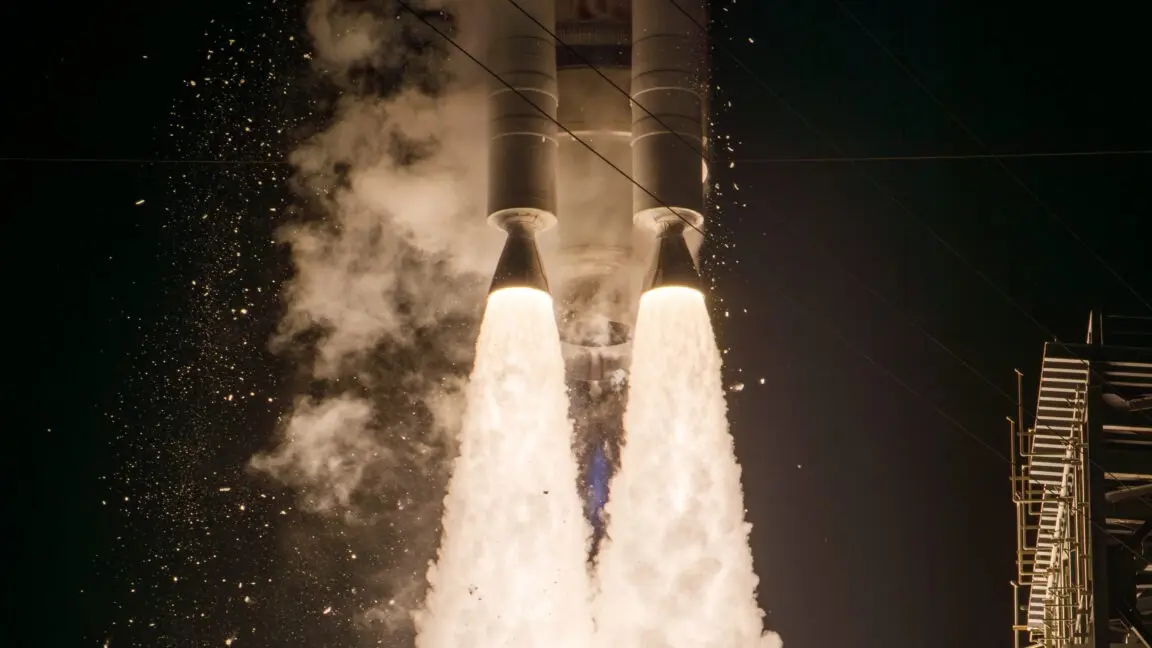
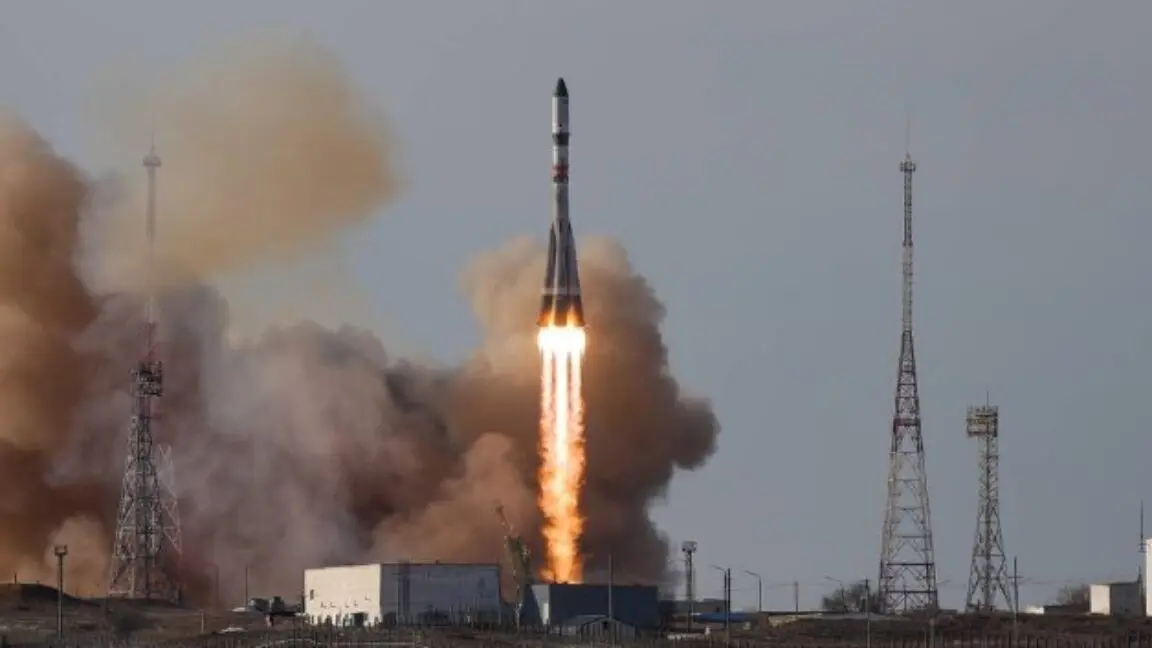
The Progress Rocket Space Center is not a standard munitions factory or conventional military barracks; it is the beating heart of Russian space exploration and a cornerstone of its orbital military infrastructure. As the primary assembly site for the Soyuz-2 launch vehicle—the workhorse rocket responsible for both commercial payloads and crewed missions to the International Space Station (ISS)—as well as next-generation Soyuz-5 rockets and military surveillance satellites, the facility holds irreplaceable value for Moscow.
While open-source intelligence and official accounts are still piecing together the full extent of the structural and operational devastation, preliminary reports suggest that critical avionics and electronics manufacturing facilities within the sprawling complex sustained direct hits. Coming at a time when the Russian aerospace sector is already grappling with severe component shortages, international sanctions, and production bottlenecks, this strike threatens to cripple near-term launch schedules for both Russian military assets and international cooperative space missions.
Detailed Chronology of the Strike
The Incursion: Tracking the Flight Path to Samara
The operation began in the early hours of Saturday, stretching the geographical and technical parameters of the conflict. The missile launch originated from undisclosed positions within Ukrainian-controlled territory, setting a trajectory that would test the outer limits of Russia’s regional early-warning radar arrays and surface-to-air missile batteries.
Flying at low altitudes to evade radar detection, the ground-launched Flamingo cruise missiles traversed roughly 900 kilometers across Russian airspace before zeroing in on their coordinates in the Samara Oblast. Local residents reported hearing a series of sharp, rolling detonations echoing across the industrial sectors of Samara, followed by billowing plumes of smoke rising from the secure perimeter of the Progress complex.
Immediate Aftermath and First Responders
Emergency services rushed to the scene within minutes of the impact, cordoning off the industrial zone. Initial reports from regional Russian emergency ministries acknowledged “industrial fires” stemming from what they initially termed “falling debris from neutralized aerial targets.” However, these official narratives quickly unraveled as satellite imagery and local eyewitness footage circulated across open-source intelligence (OSINT) channels, revealing definitive structural damage to specific buildings within the secure compound.
By midday Saturday, Ukrainian leadership broke the silence. President Zelenskyy took to social media to officially claim responsibility for the operation, providing specific technical details that caught international defense analysts by surprise. The confirmation transformed what Moscow initially attempted to spin as a minor industrial accident or neutralized drone strike into a undeniable strategic triumph for Kyiv.
Strategic Significance & Technical Context of the Target
To fully understand the magnitude of this strike, one must examine the operational weight of the Progress Rocket Space Center within the broader framework of Russian state power. Located in the city of Samara—the largest urban center in the Samara Oblast—the Progress enterprise is inextricably linked to the history and current execution of Russian aerospace dominance.
The Soyuz-2 and Soyuz-5 Production Lines
The Progress facility is universally renowned as Russia’s premier manufacturer of medium-lift launch vehicles.
- The Soyuz-2 Vehicle: Serving as the absolute workhorse of the Russian space program, the Soyuz-2 boasts a lift capacity of approximately 8 metric tons to low-Earth orbit (LEO). It is deployed across a variety of configurations for both civil and military payloads. Most critically, it is the exclusive launch vehicle utilized for crewed Soyuz spacecraft missions carrying cosmonauts and international astronauts to and from the International Space Station.
- The Soyuz-5 Vehicle: Representing the future of Russian heavy-lift capacity, the Soyuz-5 (also known as Irtysh) is currently under development at the facility to compete in the commercial satellite launch market and replace older legacy systems.
Military Satellites and Avionics
Beyond civil space exploration, the Progress center is heavily militarized. The facility plays a direct role in the assembly, testing, and integration of military reconnaissance and communication satellites. Furthermore, the factory houses specialized clean rooms dedicated to advanced avionics and electronics production—the very nervous system of modern rocketry and guided munitions.
Open-source intelligence indicates that the strike may have specifically targeted a building housing a high-precision clean room dedicated to avionics integration. If verified, the destruction of sensitive calibration equipment, microelectronics, and specialized assembly tools could halt production lines for months, regardless of whether the primary structural shell of the building remains standing.
Official Statements and International Reactions
Kyiv’s Perspective: A “Good Achievement”
President Volodymyr Zelenskyy’s public acknowledgment was direct and pragmatic, framing the strike as a necessary demonstration of Ukraine’s long-range strategic reach.
"In Russia’s Samara region, one of the key enterprises within Roscosmos—the Progress Center, which was involved, among other things, in electronics production—was hit," Zelenskyy stated via his official channel on the social media platform X. "Flamingo missiles were used. A good achievement."
Military analysts in Kyiv emphasize that targeting deep-seated Russian industrial assets is a vital retaliatory measure designed to degrade the supply chains fueling the ongoing invasion. By bringing the war directly to the facilities that manufacture the technology behind Russian military reconnaissance and space dominance, Ukraine seeks to impose tangible economic and strategic costs on the Kremlin.
Moscow’s Response and Information Control
The initial reaction from Russian federal authorities and Roscosmos was characterized by strict information containment. State-run media outlets downplayed the incident, echoing initial local administrative claims that a drone attack had been successfully repelled, with minor structural damage attributed to falling debris.
However, as international news agencies verified the use of cruise missiles and the identity of the struck facility, official Russian commentary grew sparse. Roscosmos officials issued brief statements asserting that backup protocols were in place, though they declined to provide a detailed architectural damage assessment or comment on the operational status of the Soyuz assembly lines. Independent military observers note that this reticence is typical of Moscow when high-value strategic assets are compromised, as acknowledging vulnerability in the Volga region deals a heavy psychological blow to Russian domestic morale.
Pre-existing Vulnerabilities: The Looming Soyuz Shortage
The timing of the strike could not be more precarious for the Russian federal space agency. Well before the Flamingo missiles struck Samara, independent aerospace analysts and industry insiders had already flagged a growing crisis within Russia’s rocket manufacturing sector.
Sanctions and Supply Chain Strain
In the wake of international sanctions imposed following the escalation of the conflict in 2022, Roscosmos has faced severe shortages of critical high-grade microelectronics, specialized carbon composites, and precision-guidance components previously imported from Western nations or allied partners. Substitutions sourced domestically or via parallel import channels have often resulted in longer testing cycles, increased failure rates, and diminished production output.
The Domino Effect on the ISS and Commercial Manifests
With the Progress Center now absorbing direct kinetic damage, the compounding effect on Russia’s launch manifest could be catastrophic.
- Crewed Flights: Any disruption to the Soyuz-2 manufacturing and testing pipeline directly threatens the rotation schedule for crews aboard the International Space Station, placing pressure on international partners like NASA to compensate for potential gaps.
- National Security Payloads: Russia’s military depends heavily on timely replacements for aging reconnaissance, early-warning, and communication constellations in LEO and geostationary orbits. A bottleneck in Samara directly degrades the situational awareness of Russian military commanders on the ground in Ukraine.
Future Outlook: Strategic Implications for the Conflict
As the smoke clears over the Samara Oblast, defense planners and geopolitical strategists are drawing several long-term conclusions from this unprecedented strike.
1. The Redefinition of Geographic Sanctuary
For decades, Russian military doctrine assumed that strategic depth—the vast expanses of territory separating its industrial heartland from potential battlefields—provided absolute sanctuary. The deployment of the Ukrainian-made Flamingo cruise missile shatters this assumption. No facility inside European Russia or the western Urals can now be considered entirely immune to long-range precision strikes. This reality forces the Russian Ministry of Defense to make a difficult strategic choice: either pull vital military-industrial production facilities even further east (at immense financial and logistical cost), or divert scarce, high-end air defense systems (such as the S-400 and Pantsir networks) away from the front lines to protect domestic factories.
2. Escalation Dynamics and Technological Innovation
The successful employment of the Flamingo missile highlights Ukraine’s rapid maturation as a designer and manufacturer of advanced asymmetric weaponry. Cut off from heavy foreign long-range offensive systems due to various international restrictions on striking deep inside Russia, Ukraine’s domestic defense industry has engineered indigenous cruise missile platforms capable of navigating hundreds of kilometers of hostile airspace. This technological self-sufficiency changes the calculus of the war, ensuring that Kyiv retains a strategic deterrent even as foreign aid packages fluctuate.
3. The Future of International Space Cooperation
The strike on the Progress Rocket Space Center also casts a long shadow over the fragile remnants of international space cooperation. While projects like the ISS have thus far weathered geopolitical storms, the physical targeting of the primary facility that services human spaceflight underscores the totalizing nature of modern industrial warfare. As repair teams assess the damage in Samara, the global aerospace community watches with bated breath, recognizing that a blow to Russia’s rocket factory is, by extension, a shockwave felt across the entire ecosystem of global orbital exploration.
In summary, the strike on the Progress Rocket Space Center is far more than a localized military tactical action; it is a strategic turning point that marries technological innovation with deep-reconnaissance capability, permanently altering the spatial and industrial geography of the conflict between Ukraine and Russia.