Executive Overview
In an aggressive push to reshape the economics of digital video game distribution, commerce giant Xsolla has unveiled a comprehensive, next-generation suite of publishing tools designed specifically for PC game studios. Formally announced via a corporate press release, this new product rollout seeks to fundamentally alter how developers interact with their audiences long after the initial point of sale. While traditional platforms like Steam, the Epic Games Store, and GOG have historically acted as both the storefront and the primary custodian of the player relationship, Xsolla’s latest initiative provides a bridge for studios to establish robust, independent, direct-to-consumer (D2C) ecosystems.
By running parallel to existing third-party marketplaces, Xsolla’s newly enhanced publishing suite empowers developers to capture higher profit margins, accumulate valuable first-party player data, and reclaim absolute autonomy over their promotional and monetization calendars. This strategic evolution arrives at a critical juncture in the games industry. As profit margins compress under heavy platform revenue splits—often ranging up to 30%—and the market grows increasingly saturated, developers are actively seeking sustainable alternatives to platform dependency. Xsolla’s new toolset is not merely a collection of backend utilities; it is a holistic infrastructure designed to help studios cultivate vibrant, self-sustaining communities that thrive independently of major digital gatekeepers.
Detailed Chronology of the Xsolla Publishing Suite Expansion
To fully understand the weight of Xsolla’s latest announcement, it is essential to trace the deliberate, step-by-step evolution of the company’s product roadmap over the past few years. Xsolla has methodically built out a robust ecosystem tailored to dismantling the barriers that separate developers from their consumers.
The Foundation: Direct-to-Consumer Monetization
The groundwork for this ecosystem was laid significantly prior to the current product drop. Xsolla has consistently positioned itself as an advocate for developer autonomy. Last year, the company made headlines by launching a specialized Software Development Kit (SDK) engineered specifically to enable direct-to-consumer monetization options for developers working within the Unity engine. This move signaled Xsolla’s intent to embed its commerce solutions directly into the workflows of creators, regardless of their team size or production budget.
The Anti-Gatekeeper Stance
The philosophical underpinnings of these technical releases were brought into sharp focus in October 2024. During major industry appearances, Xsolla President Chris Hewish, alongside Senior Vice President of EMEA Chris Meredith, launched a vocal critique against traditional industry "gatekeepers." Speaking candidly about the state of the market, the executives characterized the modern digital landscape as an "awfully congested market" where traditional platform holders extract disproportionate value from hardworking creators.
Rather than targeting specific storefronts by name, Hewish and Meredith championed the broader concept of "democratizing the business of gaming." They argued that creators should have the unencumbered right to sell digital goods directly to players without navigating a labyrinth of restrictive platform policies and hefty revenue cuts. Meredith notably pointed out the inherent difficulties smaller teams face, stating, "For us, with the relationship with the advertisers bringing their products to market, we are very much aware of trying to put them on the track of the D2C roadmap, and if you’re a small three-man developer, that’s quite challenging."
The Present Rollout: Comprehensive Publishing Tools
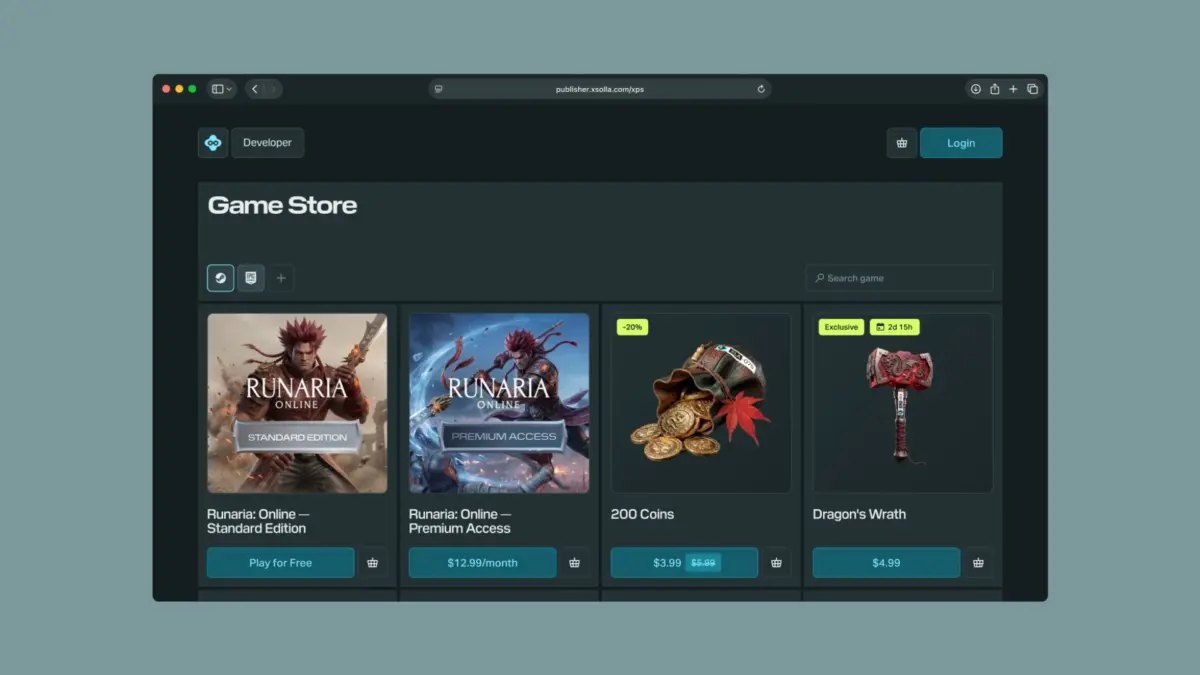
Building directly upon this ideological and infrastructural foundation, Xsolla’s latest deployment delivers a suite of modular, self-service tools designed to eliminate the technical friction of D2C integration. Rolled out for live-service and premium PC video game studios alike, the package requires no custom engineering for standard integration, allowing developers of varying scales to tap into enterprise-grade direct-to-consumer capabilities.
Deconstructing the Toolkit: Core Features and Technical Capabilities
Xsolla’s newly introduced publishing suite features five distinct pillars, each engineered to address a specific pain point in post-purchase player retention, community management, and direct merchandising.
+-----------------------------------------------------------------+
|                  XSOLLA PC PUBLISHING SUITE                     |
+-----------------------------------------------------------------+
       |                  |                  |               |
       v                  v                  v               v
[Community Hub]    [Live Ops Templates]  [Enhanced Media]  [Launcher Notifs]
 Studio-Owned       No-Code Seasonal      Gameplay Video    Centralized Comms
 Engagement Space   Events & Offers       Product Pages     Without Discord
1. The Studio-Owned Community Hub
Historically, developers have had to rely on third-party applications like Discord, Reddit, or platform-specific forums to foster communities around their games. While effective, these platforms introduce a dangerous intermediary: the developer does not own the user data, and algorithmic shifts can sever communication lines overnight.
Xsolla’s new community hub offers a studio-owned "engagement space" that exists entirely beyond traditional storefronts. Within this dedicated hub, studios can host breaking news, community quests, user-generated content (UGC), and referral programs. Most importantly, all player data generated within this space remains strictly with the studio, enabling more personalized marketing and community management efforts.
2. No-Code Live Ops Event Templates
Keeping players engaged requires a steady stream of fresh content and temporal incentives. Previously, executing seasonal events, battle passes, or limited-time offers required significant engineering overhead to build, test, and deploy directly into a storefront.
Xsolla’s live ops event templates solve this by introducing a no-code framework. Studios can now spin up seasonal celebrations, holiday discounts, and time-sensitive item drops directly within their direct storefronts with minimal technical strain, dramatically increasing the agility of their monetization calendars.
3. Dedicated Merchandising and Enhanced Visuals
Static 2D images have long been the standard for digital storefront product pages, often failing to capture the dynamic, kinetic nature of modern video games. Xsolla’s updated publishing suite introduces dedicated merchandising experiences specifically optimized for digital cosmetics—such as weapon skins, character outfits, and cosmetic bundles.
Furthermore, the suite transitions product pages into the modern era by allowing developers to integrate video as primary illustrations. Studios can now seamlessly embed gameplay clips, cinematic trailers, and dynamic interactive media directly onto product pages, giving prospective and returning buyers a visceral preview of what they are purchasing.
4. Centralized Launcher Notifications
Communication fatigue is a real challenge for players who must monitor multiple discords, Twitter feeds, and email inboxes to stay updated on patch notes and events. Xsolla has integrated a direct notification system within the Xsolla Launcher. This tool centralizes all vital communications—ranging from emergency hotfixes and patch notes to special events and store offers—directly inside the game launcher environment, bypassing the need for fragmented third-party communication channels.
.png?disable=upscale&width=1200&height=630&fit=crop)
5. Seamless Self-Service Integration
Perhaps the most pragmatic feature for resource-constrained independent developers is the self-service setup. Tailored explicitly for live-service and premium PC video game studios, the integration requires zero custom engineering for standard configurations. This democratization of backend tech ensures that a small indie team can implement enterprise-grade D2C architecture with the same ease as an established mid-tier publisher.
Supporting Context, Industry Metrics, and Market Dynamics
To grasp why Xsolla’s timing is so potent, one must examine the broader economic realities facing game developers today. The digital games industry is currently experiencing a paradoxical era: while global gaming revenues continue to scale new heights, individual development studios—particularly in the indie and AA space—are finding it harder than ever to remain profitable.
The Platform Tax and Margin Compression
For over two decades, dominant PC storefronts have commanded a standard 30% revenue share for digital game sales. While justified in the early days of digital distribution by the high costs of server infrastructure, bandwidth, and global payment processing, this monolithic "platform tax" is increasingly viewed by developers as predatory in a market where marketing costs have skyrocketed.
When a studio surrenders nearly a third of its top-line revenue to a platform holder, its runway shrinks dramatically. This margin compression is especially punishing for live-service games, which require continuous, costly server maintenance, ongoing content updates, and active community moderation. By bypassing or supplementing traditional storefronts with direct-to-consumer sales channels, developers can retain a vastly higher percentage of every transaction. This reclaimed capital can then be funneled back into studio growth, employee retention, and creative R&D.
The Data Ownership Deficit
Beyond sheer financial margins, the modern games industry is waging a quiet war over data. Platforms like Steam protect user privacy fiercely—often to the detriment of the developer. Studios frequently sell millions of copies of a game without ever knowing the real email addresses, geographical preferences, or purchasing habits of their actual players.
This data vacuum forces developers to market their subsequent titles blindly, relying heavily on platform-controlled recommendation algorithms rather than direct, targeted communication. Xsolla’s focus on first-party player data addresses this exact vulnerability. By driving players to an owned storefront and community hub, studios can build robust customer relationship management (CRM) databases, enabling targeted retention campaigns, direct feedback loops, and data-driven game design.
Official Perspectives: The Vision Behind the Launch
The philosophy driving Xsolla’s aggressive expansion into D2C tooling is anchored in a fundamental critique of the status quo of digital distribution. In the official press release accompanying the launch, Xsolla President Chris Hewish articulated the core mission of the new publishing suite with absolute clarity:
"Storefronts put a game in front of players, yet they do not give a studio a direct relationship with them. This release is about what happens after the first sale. The new store, Community Hub, and launcher tools give PC game studios their own channel to keep players engaged, on their own schedule, with the player data that comes from it."
This sentiment encapsulates the core thesis of Xsolla’s corporate strategy: storefronts are exceptional discovery engines, but they are notoriously poor relationship-builders. By uncoupling the initial discovery phase from the long-term lifecycle management of the player, Xsolla is positioning itself as the infrastructure layer that allows developers to retain ownership over their own commercial destinies.
Senior VP of EMEA Chris Meredith reinforced this perspective during his previous industry commentary, emphasizing the disproportionate challenges faced by smaller development teams. While major publishers like Electronic Arts, Ubisoft, and Epic Games have long possessed the capital to build and maintain proprietary launchers and D2C storefronts, independent studios have historically been priced out of this luxury. Xsolla’s self-service, no-code publishing suite democratizes this capability, leveling the playing field so that a three-person team can wield the same retention mechanics as a multinational publishing conglomerate.
Future Outlook: What This Means for the Future of PC Gaming
As Xsolla rolls out these advanced publishing tools, the ripple effects across the PC gaming landscape will likely be profound. While Steam will undoubtedly remain the dominant discovery engine and marketplace for the foreseeable future, the narrative surrounding digital distribution is undergoing a fundamental shift.
The Rise of the Hybrid Distribution Model
We are rapidly approaching an era of hybrid distribution. Studios are realizing that relying on a single third-party platform for 100% of their sales and player engagement is an unnecessary vulnerability. Going forward, expect to see an increasing number of PC developers utilize platforms like Steam primarily for initial customer acquisition and top-of-funnel discovery, while aggressively incentivizing players to migrate to direct-to-consumer storefronts for DLC, microtransactions, community interaction, and future purchases through exclusive rewards, better pricing, or community perks.
Democratizing Enterprise-Grade Tech
The lowering of technical barriers through self-service, no-code templates means that indie developers will no longer view direct-to-consumer operations as an insurmountable engineering hurdle. As more studios adopt these tools, the expectation from players regarding community interaction, direct patch updates, and seasonal events will evolve. Studios that fail to cultivate direct relationships with their players may find themselves losing mindshare to competitors who offer richer, more integrated community ecosystems.
Ongoing Friction with Gatekeepers
As adoption of D2C tools grows, it will inevitably provoke friction with traditional platform owners. While major storefronts explicitly permit developers to sell game keys and merchandise externally, any aggressive push by developers to migrate high-value live-service transactions away from platform-owned wallets will be closely monitored. However, given the overwhelming economic incentives for developers to claw back their margins, the momentum behind direct-to-consumer monetization appears unstoppable.
Xsolla’s latest publishing suite update is more than a routine software patch; it is a declaration that the future of game development belongs to those who own their player relationships. By giving studios the keys to their own digital kingdoms, Xsolla is helping to forge a more equitable, sustainable, and developer-centric gaming industry.