By Chris Kerr, Senior Editor, News, GameDeveloper.com
August 11, 2026
Executive Overview
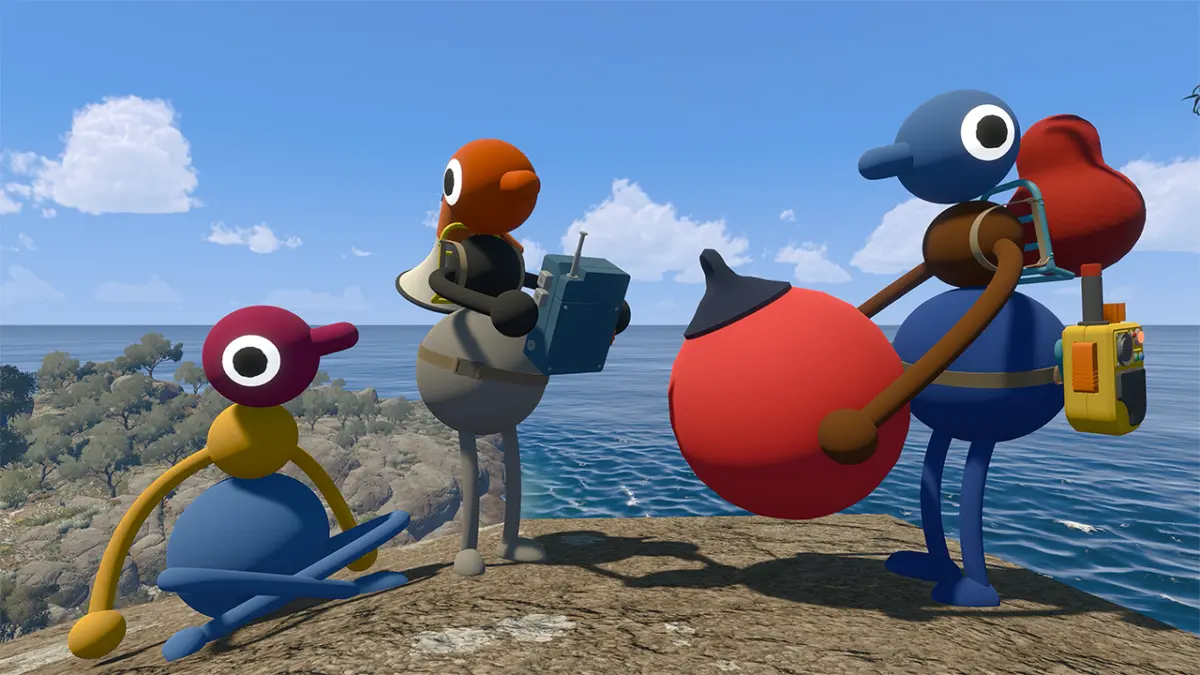
In an era dominated by high-stakes live-service juggernauts, hyper-realistic graphical showcases, and sprawling, hundreds-of-hours open-world epics, the gaming landscape continues to prove that there is an unquenchable thirst for original, human-centric cooperative experiences. Big Walk, the whimsical and scenic multiplayer stroller from Australian indie developer House House—the studio universally recognized for turning global audiences into mischievous, honking waterfowl in Untitled Goose Game—has officially surpassed one million copies sold in less than a week.
Launched globally on August 4, 2026, across Windows PC, the newly minted Nintendo Switch 2, and PlayStation 5, the title’s rapid ascendance caught even seasoned market analysts by surprise. Adding fuel to its already blazing trail of momentum, publisher Panic confirmed that Big Walk was also made available to subscribers of Sony’s PlayStation Plus service as a day-one addition to its monthly curated lineup. This hybrid strategy of targeted retail purchasing and massive subscription-tier day-one distribution has catalyzed an unprecedented wave of community engagement, transforming a quaint, conversation-driven cooperative adventure into an overnight global phenomenon.
Panic, the Portland-based publisher renowned for its discerning curation of indie titles like Firewatch and Untitled Goose Game itself, broke the news via a celebratory post on the decentralized social platform Bluesky. Alongside the milestone achievement, the publisher published a complete, exhaustive record of the online credits to honor every individual contributor who brought the sprawling, verdant landscapes of Big Walk to life.
This report provides an in-depth look at Big Walk‘s explosive debut, analyzing the mechanics of its success, the strategic brilliance of its multi-platform launch, the community-driven wave of user-generated content that propelled its virality, and what this milestone signifies for the future of House House and the broader independent development sector.
Detailed Chronology: From Concept to Phenomenal Launch
To truly understand how Big Walk managed to shift over a million units in a mere six days, one must trace the developmental trajectory of House House, a Melbourne-based studio that has consistently defied conventional industry expectations. Comprising a tight-knit team of developers, House House first captured the international zeitgeist in 2019 with Untitled Goose Game, published by Panic. The game’s premise was deceptively simple: play as an obnoxious goose terrorizing a sleepy English village. It went on to sell millions of copies, win numerous Game of the Year accolades, and cement the studio’s reputation as masters of comedic, physics-based systemic gameplay and charm.
Following the monumental success of their avian sandbox, the industry waited with bated breath to see what House House would cook up next. Rumors and cryptic teases eventually coalesced around a new project centered not around solitary malice, but rather around collective communication. Big Walk was formally revealed as a cooperative adventure where players control characters navigating expansive, picturesque environments with a core focus on talking, walking, and solving environmental navigation puzzles together.
The timeline leading up to the August 4, 2026 launch was meticulously orchestrated:
- Early 2026: Panic and House House ramp up marketing efforts, showcasing extended gameplay snippets that emphasize spatial audio, ambient exploration, and the nuanced hilarity of coordinating movements with friends over voice chat.
- Late July 2026: Review codes drop, met with universal critical acclaim. Critics praise the game’s bold rejection of traditional combat loops, action-oriented checklists, and aggressive monetization schemes in favor of pure, unadulterated companionship.
- August 4, 2026: Big Walk officially launches simultaneously on PC, PlayStation 5, and Nintendo Switch 2. Crucially, its strategic inclusion as a day-one PlayStation Plus monthly offering guarantees an instant, massive baseline pool of concurrent multiplayer participants.
- August 4–August 9, 2026: Word-of-mouth spreads like wildfire across streaming platforms, social media, and digital storefronts. Streamers and content creators highlight the organic, often chaotic hilarity of navigating the game’s vast vistas together.
- August 11, 2026: Panic officially confirms that Big Walk has surpassed the elusive one-million-sales milestone in just under six days, cementing its status as one of the fastest-selling independent games of the decade.
Supporting Context & Metrics: Breaking Down the Numbers
Achieving one million sales within six days is a rare feat typically reserved for AAA sequels or massive franchise releases backed by tens of millions of dollars in marketing expenditure. For an independent developer like House House, this metric is nothing short of historic.
The Platform Breakdown and Hardware Synergy
A critical element of Big Walk‘s commercial triumph lies in its calculated platform strategy. By launching on day one across Windows PC, the PlayStation 5, and Nintendo’s next-generation hardware—the Nintendo Switch 2—the title positioned itself directly in front of audiences spanning various gaming ecosystems:
- Nintendo Switch 2: Given the massive familial and casual appeal associated with House House’s previous titles, the Nintendo Switch 2 version capitalized on the console’s upgraded technical capabilities while retaining the intuitive, pick-up-and-play local and online cooperative nature that defined its predecessor’s success on the original Switch.
- PlayStation 5 & PlayStation Plus: The dual approach of a traditional storefront purchase alongside a PlayStation Plus monthly offering created a powerful funnel. While millions downloaded the game via their subscription, millions more actively purchased physical and digital copies on PC and consoles to play with friends across platform boundaries—a testament to the game’s strong cross-play demand.
- PC (Steam & Epic Games Store): The PC market provided a robust baseline of dedicated cooperative gaming enthusiasts, leveraging Discord integrations, Steam’s vibrant community features, and user-generated content distribution.
The Power of Virality and UGC
In the modern gaming ecosystem, sales milestones are rarely achieved through traditional advertising alone. Big Walk became an organic darling of User-Generated Content (UGC). Because the core gameplay loop revolves entirely around communication, spatial awareness, and shared journeying, it naturally yielded infinitely entertaining moments for platforms like Twitch, YouTube, and TikTok.
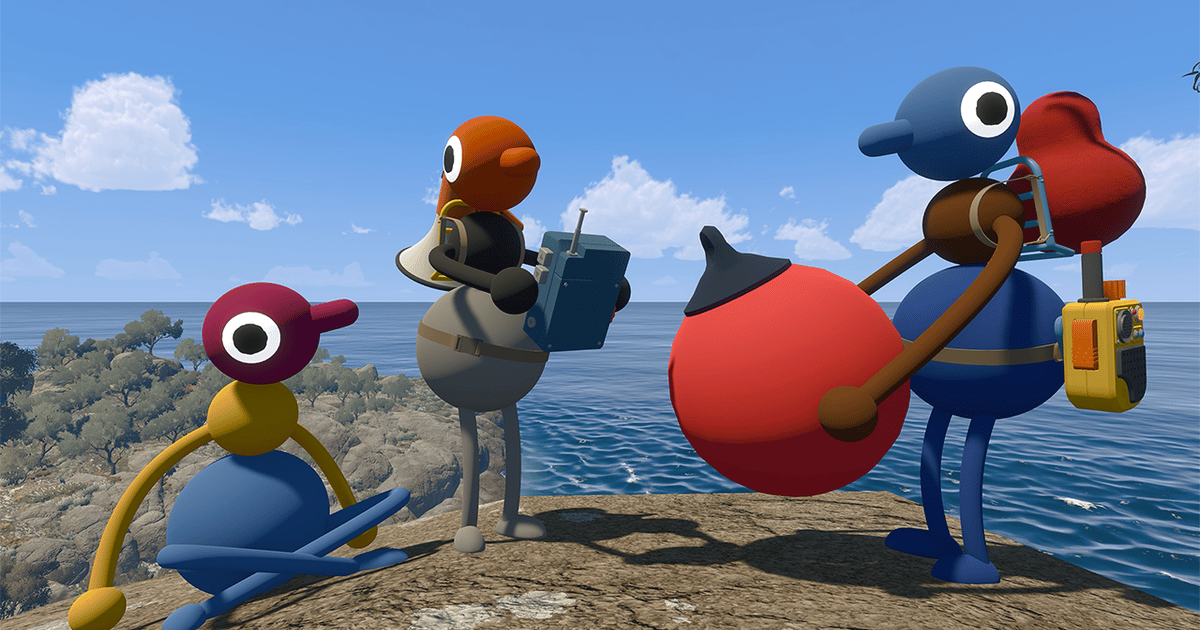
Clips of players getting hilariously lost, misinterpreting navigational cues, or sharing quiet, picturesque vistas while chatting about mundane topics flooded social media feeds. This spontaneous grassroots marketing campaign acted as a catalyst, converting passive observers into active buyers who wanted to experience the journey firsthand with their own social circles.
Official Statements and Industry Resonance
The sheer velocity of the game’s success prompted an outpouring of gratitude from both the publisher and the development community. Panic took to Bluesky to express their astonishment and appreciation for the global gaming community’s reception:
"In just six days, over one million of you have bought Big Walk, our co-op adventure all about talking and walking. We are so grateful that so many of you are spending time with our game. And we deeply appreciate your fanart, your streams, your stories, and your moments. Thank you for playing."
The statement underscores a deliberate ethos that House House has cultivated: games as spaces for human connection rather than arenas for competitive dominance or compulsive reward loops.
Industry analysts have noted that Big Walk‘s success signals a broader shift in consumer appetite. After years of market saturation involving live-service burnout, battle passes, and high-stress extraction shooters, players are increasingly seeking "comfort games"—experiences designed to lower heart rates rather than spike them, while still providing meaningful, cooperative social interaction. By stripping away violence, timers, and failure states, House House has carved out a unique design philosophy that values emotional resonance and shared memory-making above all else.
In celebration of the milestone, Panic’s decision to publish the complete online credits list on the game’s official web domain was widely praised by industry advocacy groups. In an era where game development is increasingly corporate and detached, highlighting the specific contributions of every designer, programmer, artist, composer, and QA tester reinforces the collaborative artistry behind independent game creation.
Future Outlook: What’s Next for Big Walk and House House?
As Big Walk enters its second week on the market with momentum showing no signs of slowing down, attention naturally shifts toward the future of the franchise and its creators.
Post-Launch Support and Community Roadmaps
While House House has historically preferred to focus on singular, polished releases rather than endlessly expanding live-service roadmaps, the sheer scale of Big Walk‘s multiplayer infrastructure means that ongoing technical maintenance, stability updates, and community feedback integration will be paramount. Publishers and developers alike will be watching closely to see how Panic and House House manage server loads, cross-play optimization, and potential quality-of-life patches in the coming weeks.
Furthermore, the community’s insatiable appetite for new environments, cosmetic customization options, and expanded interaction mechanics will undoubtedly spark discussions regarding potential content updates, downloadable content (DLC), or expansions. Whether House House chooses to enrich the existing world of Big Walk with new regions or eventually pivot toward entirely new conceptual horizons remains to be seen.
The Broader Impact on Independent Game Design
Beyond the immediate commercial windfall for its creators, Big Walk‘s milestone achievement serves as a vital proof-of-concept for the indie development community. It demonstrates that publishers are still willing to take calculated risks on unconventional, non-violent, communication-heavy cooperative titles—and that the global audience is more than ready to reward originality.
As developers dissect the reasons behind Big Walk‘s explosive debut, the primary takeaway is clear: authenticity, meticulous polish, and an unwavering focus on human connection will always find a receptive audience in a crowded marketplace. House House and Panic have not merely sold one million units of a video game; they have orchestrated a shared cultural moment that reminds millions of players why they fell in love with interactive entertainment in the first place: simply to walk, talk, and explore the world together.