By Chris Kerr
Senior Editor, News, GameDeveloper.com
August 5, 2026
Executive Overview
In the volatile landscape of modern interactive entertainment, long-term fiscal stability is rarely secured by shiny new releases alone. For Swedish publisher Coffee Stain Group, the company’s Q1 fiscal report for the period ending June 2026 offers a masterclass in portfolio balancing. Despite a turbulent quarter defined by softer-than-expected player engagement for major new titles—namely Deep Rock Galactic: Rogue Core and Fellowship—Coffee Stain managed to post a significant year-over-year revenue increase.
Net sales surged by 37 percent to SEK 253 million (approximately $26.6 million USD), fueled overwhelmingly by the enduring strength of catalog anchors. Chief among these legacy hits is the studio’s premier automation simulator, Satisfactory, whose recent console expansion proved to be a critical catalyst for corporate cash flow.
At the same time, Coffee Stain’s leadership has demonstrated a pragmatic, bottom-line-focused willingness to course-correct. Confronted with declining engagement curves on early-access titles and underperforming multiplayer projects, the publisher has actively restructured development teams, trimmed ongoing operational investments, and recalibrated expectations.
This financial agility arrives during a transformative era for the publisher, following its high-profile spin-out from the Embracer Group. As the broader games industry moves past the era of runaway mergers and acquisitions into a period marked by fiscal restraint, Coffee Stain’s Q1 performance highlights both the vulnerabilities of live-service development and the safety net provided by a robust, multi-platform core portfolio.
Detailed Chronology: Q1 FY 2026/27 Performance Breakdown
To fully understand Coffee Stain’s current market standing, one must examine the specific trajectories of its catalog during the first quarter of fiscal year 2026/27. The publisher’s financial health was a tale of two distinct operational tiers: a booming catalogue anchored by heavy-hitter ports, contrasted against a friction-heavy rollout for new intellectual properties and live-service expansions.
The Catalytic Impact of Satisfactory on Consoles
The primary engine driving Coffee Stain’s 37 percent net sales leap—reaching SEK 253 million ($26.6 million)—was its flagship automation sandbox, Satisfactory. Long celebrated as a PC darling that graduated from early access to massive commercial success, the title received a long-awaited console adaptation leading into this fiscal period.
According to the company’s financial disclosures, the console version acted as an "important contributor" to the quarter’s balance sheet. By successfully bridging the gap between PC builders and couch-based controller users, Satisfactory proved that deep, systemic automation games can find lucrative secondary life on console ecosystems when ported with care.
Roblox Platforms and Welcome to Bloxburg
Beyond traditional PC and console footprints, Coffee Stain continues to extract reliable ancillary revenue from user-generated content platforms and mobile ecosystems. Net sales generated via Roblox and mobile channels amounted to SEK 36 million ($3.8 million) for the quarter.
A notable engine within this segment was Welcome to Bloxburg, the quintessential life-simulation experience on Roblox developed by Coffee Stain Gothenburg. The title single-handedly contributed SEK 20 million ($2.1 million) to the corporate ledger, validating the publisher’s multi-tiered strategy of capturing younger, highly engaged digital communities alongside traditional gamers.
The Deep Rock Galactic: Rogue Core Early Access Hurdle
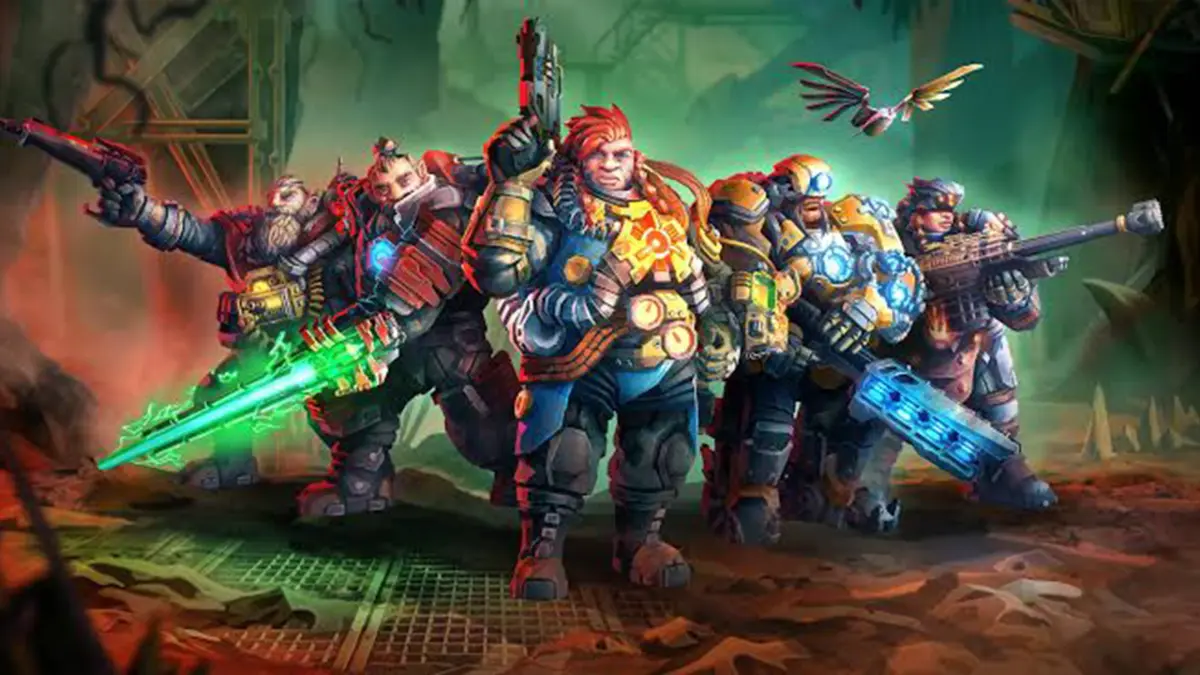
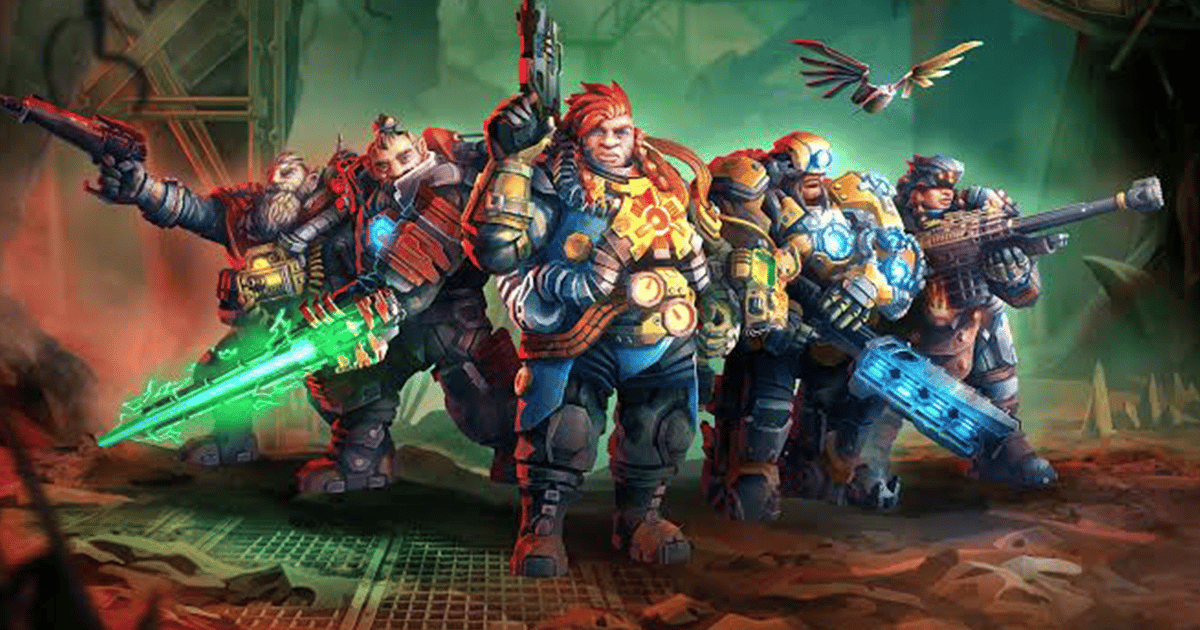
Not all ventures enjoyed smooth sailing. Following its early access debut in May 2026, Deep Rock Galactic: Rogue Core exposed the inherent risks of translating established brand equity into new genre experiments.
While the game capitalized on the immense goodwill of the Deep Rock franchise to post strong initial net sales of SEK 48 million, player retention quickly hit a wall. Sentiment among the community turned mixed, and daily active user engagement plummeted at a rate far exceeding internal forecasts. Coffee Stain’s leadership noted that the project struggled to transition from an initial impulse-buy phenomenon into a sticky, long-term live-service experience.
Fellowship Season 3 and the Reality of Downscaling
Similarly, the multiplayer dungeon adventure Fellowship—developed in partnership with external studio Chief Rebel—faced an uphill battle to secure a sustainable audience. Following the release of its pivotal Season 3 update in June 2026, engagement numbers flatlined below corporate benchmarks.
Rather than throwing good money after bad in an over-leveraged live-service market, Coffee Stain and Chief Rebel made the pragmatic decision to scale down ambitions. Effective in Q3 FY 2026/27, the development team will shrink from 35 Full-Time Equivalents (FTEs) down to a lean core unit of 15 FTEs. This structural downsizing materially reduces ongoing operational burn while aligning resource allocation directly with the game’s actual market footprint.
Supporting Context & Metrics: Navigating Industry Headwinds
The financial realities of Coffee Stain’s Q1 report cannot be analyzed in a vacuum. They reflect broader structural transformations across the global video game industry, characterized by soaring development costs, shifting consumer habits, and a post-pandemic contraction in user acquisition.
The Live-Service Squeeze
The struggles faced by Deep Rock Galactic: Rogue Core and Fellowship illustrate a brutal truth plaguing contemporary game development: the live-service market is ruthlessly saturated. Players increasingly concentrate their time on a handful of entrenched, multi-year ecosystem titles—such as Grand Theft Auto V, which recently sailed past 230 million copies sold ahead of Grand Theft Auto VI’s impending launch—leaving marginal room for mid-tier cooperative or competitive games to build sustainable communities.
When an early-access launch experiences front-loaded sales followed by rapid attrition (as seen with Rogue Core), publishers are forced to make hard choices regarding patch cadence, community management, and ongoing infrastructural costs. Coffee Stain’s willingness to tie future financial commitments strictly to empirical evidence of player engagement signals a disciplined shift away from "hope-based" publishing strategies.
Operational Independence Post-Embracer
Compounding these operational realities is Coffee Stain’s unique corporate evolution. The studio was recently spun out of the Embracer Group as part of the Swedish conglomerate’s massive corporate restructuring. Following years of unchecked mergers, acquisitions, and rapid expansion, Embracer faced severe market corrections, prompting a deluge of studio closures, mass layoffs, and asset divestments.
By separating into a standalone, publicly traded entity, Coffee Stain has insulated its core creative culture while retaining the fiscal autonomy necessary to weather the storms of individual project underperformance. The publisher’s ability to absorb the soft launches of Rogue Core and Fellowship without threatening its broader financial health is a direct vindication of this independence-focused model.
Official Statements and Executive Insight
Coffee Stain’s management team addressed the dual realities of portfolio strength and project-level friction with refreshing transparency in their Q1 earnings presentation.
Addressing the performance of Deep Rock Galactic: Rogue Core, the company outlined a data-driven approach to future investment:
"The release benefited from the strength of the Deep Rock franchise and generated strong initial sales, but player sentiment was mixed and engagement declined faster than expected. We have a clear view of what did not work as intended and are taking focused action with the development team. Further commitment will depend on evidence of improved player engagement."
On the strategic restructuring of Fellowship alongside external partner Chief Rebel, management emphasized efficiency and sustainability:
"Multiplayer game Fellowship launched Season 3 in June, but engagement remained below our targets. Following the discussions described in the previous quarter, we have agreed a more sustainable setup with the external developer. From Q3 FY 2026/27, the game will be developed by a more focused core team of 15 FTEs, compared with 35 FTE previously. This creates a more efficient development setup, better aligned with the game’s current traction and priorities, while materially reducing our ongoing investment."
These statements underscore a mature corporate philosophy: management is willing to support creative iteration, but only within strict financial boundaries that protect the broader organization from systemic risk.
Future Outlook: Resilience as a Competitive Advantage
As Coffee Stain Group looks toward the remainder of fiscal year 2026/27, the publisher’s overarching narrative is one of adaptive resilience. The games industry has entered an era where raw top-line revenue growth is secondary to margin protection, sustainable headcounts, and portfolio diversification.
Coffee Stain has proven that its foundational pillars—exemplified by the multi-platform longevity of Satisfactory and the steady cash flows generated by Roblox properties like Welcome to Bloxburg—can effortlessly absorb the turbulence of early-access growing pains and live-service adjustments.
By ruthlessly pruning operational bloat on underperforming titles like Fellowship and conditioning future investments in Deep Rock Galactic: Rogue Core on tangible community retention, Coffee Stain is positioning itself as a model of modern publishing pragmatism. For investors and industry watchers alike, the Swedish publisher’s Q1 report is not a tale of failure, but a masterclass in how institutional discipline safeguards long-term viability in an unpredictable market.