Executive Overview
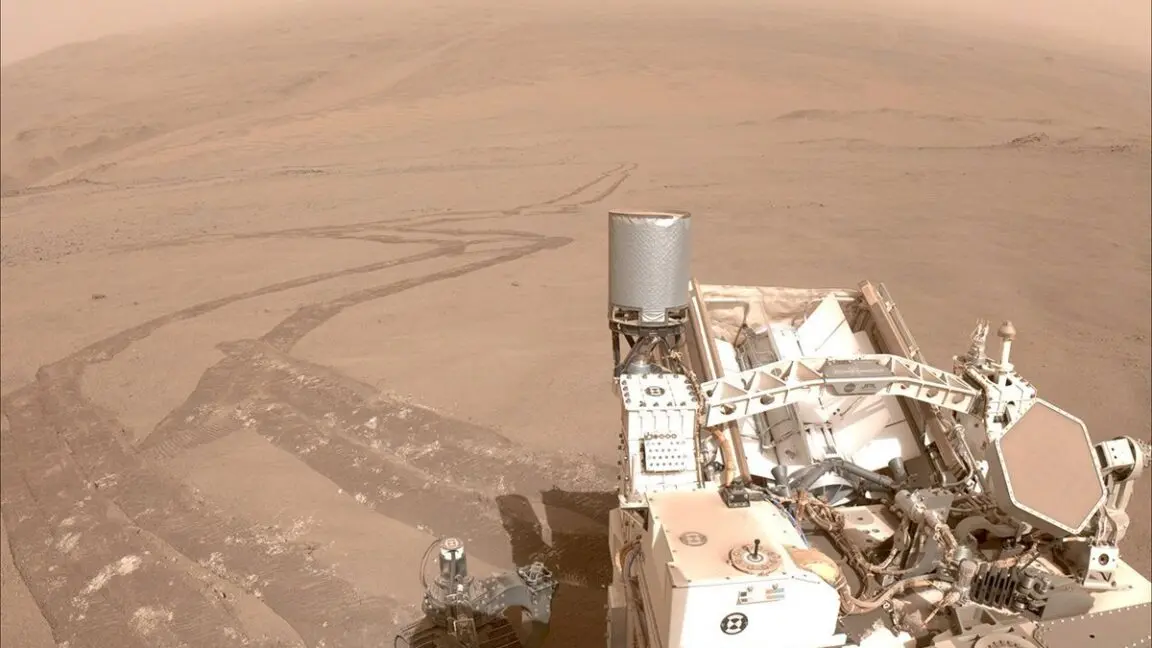
High upon the rust-colored, windswept slopes of Jezero Crater, NASA’s Perseverance rover continues its meticulous, groundbreaking exploration of a world long dead yet endlessly revealing. Nearly four years into its primary and extended mission phases, the car-sized robotic explorer is operating at the absolute peak of its technical capabilities.
Free from the constraints of chemical propellants and reliant instead upon a resilient, long-lasting radioisotope thermoelectric generator (RTG), Perseverance represents the pinnacle of modern interplanetary engineering. More importantly, it serves as humanity’s proxy in a high-stakes scientific detective story: piecing together the environmental and geological history of an era that predates the oldest surviving rock formations on Earth.
Far from home, the rover is currently examining some of the most ancient geological strata in the Solar System. Dating back approximately 4 billion years, these rocks place Perseverance and its handlers squarely in the middle of the Late Heavy Bombardment era—a chaotic epoch when the inner planets were still subjected to frequent, catastrophic impacts by wandering asteroids and comets. Yet, even as cosmic debris rained down upon the young Red Planet, conditions were beginning to stabilize, paving the way for environments that may have once supported microbial life.
This comprehensive report examines the current status of the Perseverance mission, drawing upon recent engineering updates and scientific insights from mission personnel. We explore the triumphs of the rover’s hardware design—including a dramatic overhaul of its mobility systems—the tantalizing clues hidden within Jezero Crater’s ancient lakebed, and what the future holds for humanity’s most advanced astrobiology laboratory on wheels.
Detailed Chronology: From Launch to the Floor of Jezero Crater
To fully appreciate the significance of Perseverance’s current operations, one must look back at the harrowing journey that brought it to the Martian surface and the systematic steps that have defined its tenure thus far.
The Launch and the Seven Minutes of Terror
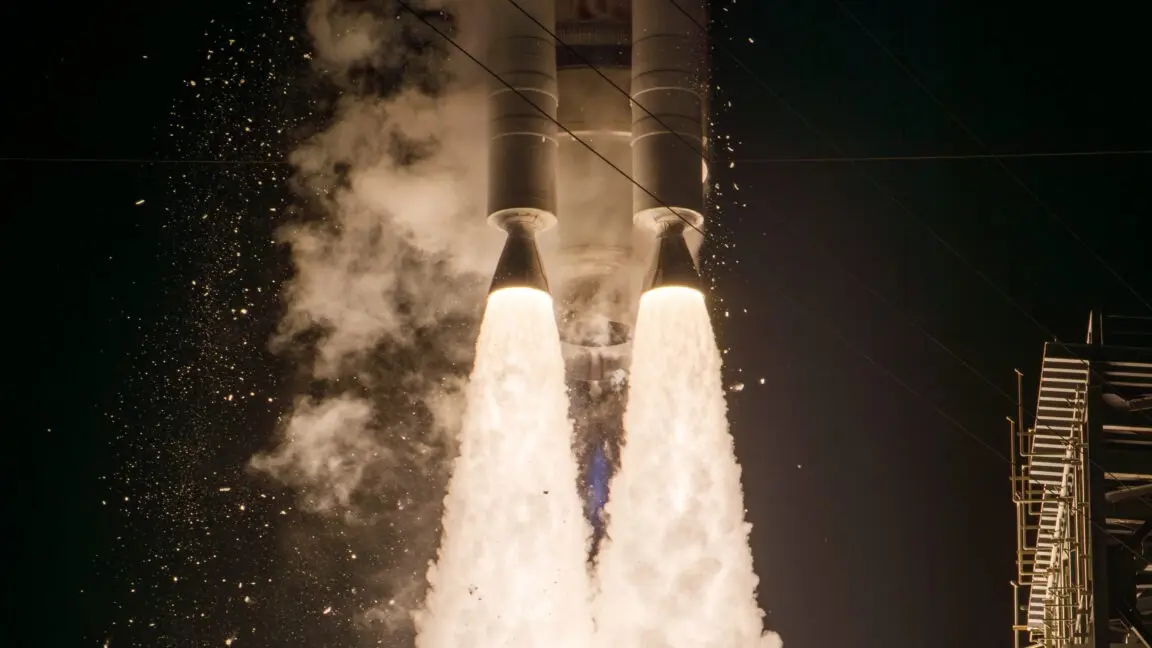
On July 30, 2020, amid the global disruptions of the COVID-19 pandemic, an Atlas V 541 rocket roared away from Space Launch Complex 41 at Cape Canaveral Space Force Station. Encased within its payload fairing was the Mars 2020 spacecraft, carrying the Perseverance rover and its experimental companion, the Ingenuity helicopter.
After a nearly seven-month interplanetary cruise spanning 292.5 million miles (470.7 million kilometers), the spacecraft arrived at Mars on February 18, 2021. What followed was the now-legendary "Seven Minutes of Terror"—the automated atmospheric entry, descent, and landing (EDL) sequence. Utilizing a novel Terrain-Relative Navigation (TRN) system, Perseverance autonomously analyzed the Martian terrain beneath it during descent, steering itself away from hazardous boulders and steep craters to touch down safely on the floor of Jezero Crater.
Commissioning and the Ingenuity Era
The weeks immediately following touchdown were dedicated to system checks, software updates, and the deployment of the rover’s robotic arm and remote-sensing mast. During this early phase, the mission also achieved a historic aerospace milestone: the deployment and successful flight of Ingenuity, the first powered aircraft to fly on another planet. Though initially planned as a brief 30-day technology demonstration, Ingenuity shattered expectations, flying 72 times before finally retiring due to rotor damage in early 2024. Its success permanently altered the landscape of planetary exploration, proving that aerial scouting is a viable and invaluable tool for future surface missions.
The Delta Campaign and Ancient Waters
Once surface operations shifted focus entirely to Perseverance, the rover embarked on its primary scientific campaign: investigating the ancient river delta fan at the western edge of Jezero Crater. Scientists long suspected that Jezero once held a sprawling body of water—a lake fed by a river network that breached the crater wall.
By analyzing the fine-grained mudstones, sandstones, and conglomerates deposited by this ancient water system, Perseverance has been able to read the pages of Mars’ geological history in unprecedented detail. The rover has drilled and cached numerous core samples from these sedimentary layers, sealing them in pristine titanium tubes destined to be returned to Earth by a future Mars Sample Return campaign.
As mission scientists continue to analyze Perseverance’s in situ data, the narrative of a warmer, wetter Mars—one potentially hospitable to life roughly 4 billion years ago—gains increasingly robust empirical footing.
Supporting Context & Metrics: Engineering Resilience and Deep-Time Geology
The successes of the Perseverance mission are twofold: the profound scientific discoveries made within Jezero Crater, and the remarkable engineering triumphs that allow the rover to survive and thrive in one of the most hostile environments in the Solar System.
The Heavy Bombardment Epoch
To understand the rocks Perseverance is currently studying, scientists must peer back 4 billion years into the Solar System’s formative chapters. At this time, Mars was undergoing the final, tapering stages of the Late Heavy Bombardment. Despite the cataclysmic impacts still occurring across the inner planets, the environment on Mars was beginning to settle into a pattern characterized by liquid water.
Geological data gathered by the rover suggests that during this epoch, large lakes—and potentially even regional or global oceans—graced the Martian surface. While debate continues regarding the exact atmospheric pressure and temperature required to sustain such large bodies of liquid water, many researchers draw comparisons to Earth’s Mojave Desert: an arid, windswept landscape punctuated by intermittent river systems, ephemeral lakes, and intense evaporation cycles.
The rocks within Jezero Crater are older than any pristine, in-situ geological formations found on Earth, where plate tectonics have long since recycled the planet’s earliest crust. Consequently, Perseverance is providing planetary geologists with a rare, undisturbed window into conditions that existed on rocky worlds across the inner Solar System during the dawn of planetary evolution.
Mobility and Mechanical Evolution: Learning from Curiosity
While Perseverance shares a structural lineage with its older sibling, Curiosity—which has been exploring Gale Crater for nearly 15 years—NASA engineers applied critical lessons learned from the older vehicle to ensure the longevity of the newer rover.
A notable issue encountered by Curiosity operators involved significant wear and tear on the rover’s aluminum wheels. Sharp, jagged rocks embedded in the Martian terrain frequently punctured and dented Curiosity’s treads. To mitigate this vulnerability, engineers thoroughly redesigned the wheels for Perseverance. The new wheels feature a thicker aluminum skin, modified cleat patterns, and subtle structural adjustments that distribute weight more evenly. According to mission specialists, these design changes have successfully prevented the appearance of appreciable wear and tear, even after years of traversing punishing terrain.
Power Systems and Actuator Certification
Beyond its physical chassis, Perseverance’s longevity is rooted in its power architecture. The rover is powered by a Multi-Mission Radioisotope Thermoelectric Generator (MMRTG), a nuclear power source that generates electricity from the natural radioactive decay of plutonium-238. Because it does not rely on solar panels alone, Perseverance is immune to the dust storms that frequently plague solar-powered missions (such as the Opportunity and InSight landers). Furthermore, the rover carries no chemical propellants, consumables, or liquid lubricants that could degrade or be depleted over time.
However, mechanical components subjected to extreme thermal cycles and abrasive Martian dust still require rigorous monitoring. A primary area of focus for the engineering team is the health of the actuators housed within the rover’s wheels.
Initially, these critical components were life-tested to withstand approximately 20 kilometers of cumulative driving. Recognizing the extraordinary durability of the rest of the vehicle, NASA engineers have undertaken extensive re-evaluations and ground testing to formally certify the actuators for at least 100 kilometers of travel—and potentially significantly more.
Official Statements and Expert Analysis
The intersection of engineering durability and high-impact science has generated immense enthusiasm within the Mars 2020 team. During recent mission updates, key scientists and operations leads emphasized the unprecedented nature of the terrain being explored.
"It’s the first time we’ve been able to investigate this terrain in situ, and that’s been very exciting," noted mission scientist Dr. Sun, highlighting the unique value of direct, ground-level analysis over orbital remote sensing. The ability to deploy spectroscopic instruments, microscopic cameras, and abrasion tools directly onto 4-billion-year-old rock faces has allowed the science team to test hypotheses regarding ancient habitability with rigorous precision.
Addressing the mechanical health of the vehicle, engineering leads expressed high confidence in the rover’s mechanical future. Lee, a senior member of the operations team, pointed out that the deliberate elimination of vulnerabilities seen in earlier generations of Martian rovers has paid massive dividends.
"The vehicle could keep driving itself across Mars for many years to come," Lee stated, referencing the combination of the MMRTG power source, the absence of consumables, and the upgraded wheel and actuator systems. This robust operational baseline ensures that Perseverance will remain an active asset on the Martian surface well into the foreseeable future, limited only by the eventual degradation of its power source or unexpected, catastrophic terrain hazards.
Future Outlook: The Road Ahead for Perseverance
As Perseverance looks toward the horizon of its extended mission, the road ahead is as demanding as it is promising. Having successfully characterized the ancient lakebed and delta formations of Jezero Crater, mission planners are setting their sights on new geological units situated along the crater rim and beyond.
Exploring the Crater Rim
Beyond the delta lies the inner rim of Jezero Crater, an environment composed of ancient megabreccia and impact-derived materials that could hold clues to the planet’s deepest crustal composition. Exploring these elevated terrains will test the rover’s hill-climbing capabilities and autonomous navigation software, pushing the boundaries of what automated robotic systems can achieve on alien worlds.
The Imperative of Sample Return
Perhaps the most enduring legacy of the Perseverance mission will be its role as the collection agent for the Mars Sample Return (MSR) initiative. By carefully selecting, documenting, and sealing core samples representing diverse environments within Jezero Crater, the rover has curated a geological time capsule. While the organizational and budgetary timelines for returning these samples to Earth continue to evolve within NASA and international partnerships, the scientific value of the cache remains unrivaled. Once analyzed in terrestrial laboratories equipped with instruments far too massive and complex to send to Mars, these samples may finally answer the definitive question: Did life ever gain a foothold on the Red Planet?
Until that day arrives, Perseverance will continue its lonely yet purposeful journey across the Martian landscape. Driven by an unyielding nuclear heart and guided by the best minds in planetary science and robotics, the rover stands as a testament to human ingenuity—rolling on, and on, and on, into the annals of exploration history.