









Executive Overview
The modern application security landscape is defined by an unprecedented paradox: while artificial intelligence has democratized the discovery of software vulnerabilities, it has simultaneously overwhelmed development pipelines with a staggering volume of alerts, false positives, and raw exposure debt. Malicious actors, similarly empowered by generative AI, are now capable of architecting and deploying functional exploits in less than 24 hours—frequently outstripping the remediation cycles of traditional DevSecOps teams.
To bridge this widening operational chasm, vulnerability coordination and bug bounty pioneer HackerOne has officially announced the launch of H1 Remediation. This strategic expansion of the core H1 Platform introduces a specialized remediation capability designed to dramatically shrink the timeline between the validation of a software vulnerability and its ultimate eradication within specific lines of source code.
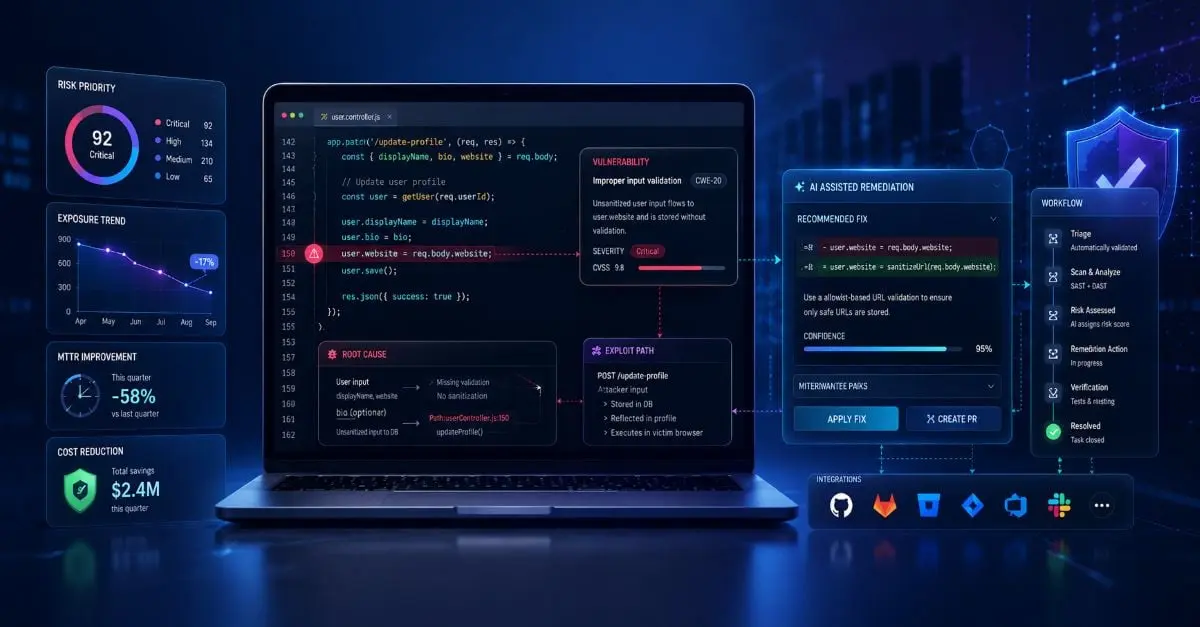
By strategically fusing crowdsourced human ingenuity with advanced artificial intelligence, H1 Remediation addresses the root causes of application risk rather than merely treating symptoms. The system goes beyond standard static application security testing (SAST) or dynamic application security testing (DAST) by tracing vulnerabilities back to their exact architectural origins. It integrates natively with existing software development lifecycles (SDLC) through standard issue-tracking tools and Model Context Protocol (Protocol/MCP) servers, arming developers with language-specific fixes, business context, and visual exploitation proofs.
As enterprises find themselves locked in a high-stakes race against automated adversaries, the introduction of H1 Remediation signals a fundamental maturation in continuous threat exposure management (CTEM). Organizations can no longer rely on sluggish, manual triage protocols. This report explores the core mechanics of H1 Remediation, the underlying industry pressures driving its creation, its technical architecture, and its profound implications for the future of enterprise software security.
Detailed Chronology: The Evolution of Vulnerability Management and the Birth of H1 Remediation
The Historical Bottleneck of Application Security
For decades, the traditional relationship between internal cybersecurity teams and software development organizations has been fraught with friction. Historically, application developers have been forced to allocate significant chunks of their sprint cycles manually validating vulnerability reports generated by automated scanners or external penetration testers.
This workflow frequently devolved into a cycle of frustration and wasted effort. Developers would spend hours investigating alerts, only to discover that the flagged code was either entirely inaccessible from external networks, trapped inside legacy libraries, or never actually loaded into system memory. These false positives created deep cultural divides between security teams—who viewed developers as slow to patch—and engineering teams—who viewed security professionals as detached from delivery deadlines.
The AI Disruption: A Double-Edged Sword
The mass adoption of large language models (LLMs) and specialized AI coding assistants fundamentally shattered this delicate status quo. On one hand, development velocity skyrocketed. On the other hand, AI-generated code introduced novel classes of structural flaws at scale, while automated offensive tools empowered malicious actors to scour codebases with unprecedented efficiency.
Cybercriminals are no longer constrained by the time-intensive manual reconnaissance phases of the past. Threat intelligence reports now confirm that attackers leveraging automated frameworks can synthesize an exploit for a newly discovered zero-day or edge-case vulnerability in less than 24 hours. In many cases, the weaponized exploit materializes in production environments faster than the corresponding patch can move through standard QA and deployment pipelines.
Recognizing this seismic shift, HackerOne’s product leadership—spearheaded by Chief Product Officer Nidhi Aggarwal—began architecting a solution that could match the velocity of AI-driven threats with an equally sophisticated, automated, yet context-aware defense mechanism. The result of this development cycle is H1 Remediation.
Architecture and Integration of H1 Remediation
Announced as a native extension of the H1 Platform, H1 Remediation is engineered to fit seamlessly into existing developer toolchains rather than demanding a complete overhaul of team workflows.
At its core, H1 Remediation leverages a Model Context Protocol (MCP) server to establish secure, real-time communication bridges with popular issue-tracking and AI coding agents. Whether an enterprise relies on Atlassian Jira, Linear, Confluence, or custom-built CI/CD pipelines, H1 Remediation injects actionable intelligence directly into the developer’s active workspace.
Rather than delivering a generic notification that a vulnerability exists within a broader application module, the platform pinpoints the exact line of source code responsible for the exposure. Furthermore, it generates comprehensive forensic reports that include:
- Root Cause Analysis (RCA): A granular breakdown of how the underlying logic flaw or memory corruption issue manifested.
- Data Flow Mapping: Precise identification of where risky, untrusted user input enters the code and the downstream damage it inflicts across the application architecture.
- Contextual Impact Assessments: Clear evaluations of business logic risks and implementation guidance tailored to the organization’s specific operational environment.
- Automated Code Change Suggestions: Language-specific patches and code modifications ready for review and integration.
Supporting Context & Metrics: The Anatomy of Exposure Debt
To fully grasp the necessity of platforms like H1 Remediation, one must examine the macro-economic and technical metrics defining modern enterprise security postures.
The Accumulation of Exposure Debt
Similar to financial technical debt, "exposure debt" refers to the cumulative accumulation of unmitigated vulnerabilities, misconfigurations, and weak access controls across an organization’s internal and external digital attack surface. As organizations scale their cloud-native footprints, embrace microservices architectures, and rapidly deploy AI-generated micro-applications, exposure debt grows exponentially.
Traditional vulnerability management dashboards have historically focused on volume metrics—total open bugs, high-severity alerts, and compliance checklists. However, these metrics often fail to capture the true operational risk. According to industry analyses, application security teams are drowning in a sea of low-priority alerts, with remediation backlogs expanding year-over-year.
Key Metrics Tracked by H1 Remediation Dashboards
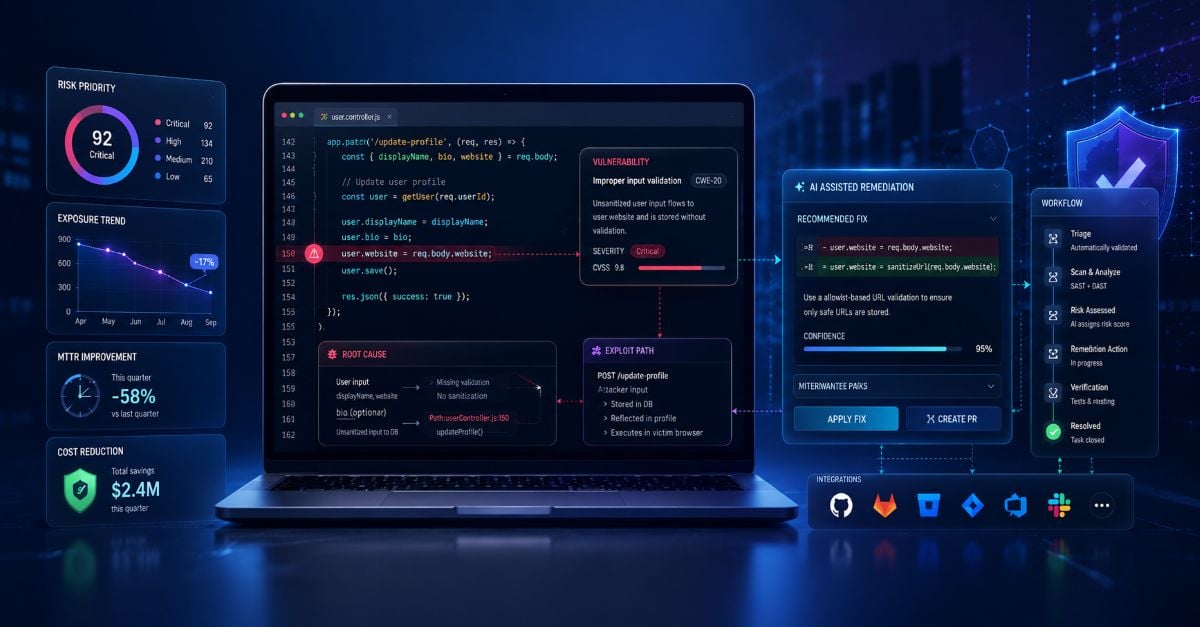
To combat exposure debt effectively, security leaders require real-time visibility into operational bottlenecks. The H1 Remediation dashboard introduces granular telemetry designed to measure and optimize the remediation lifecycle:
- Resolution Rate Tracking: Monitoring the velocity at which validated exposures transition from discovery to permanent fix across different business units.
- Mean Time to Remediate (MTTR) by Severity: Breaking down how quickly critical, high, medium, and low-severity findings are resolved, allowing security directors to identify systemic delays in specific product lines.
- Findings Flow Dynamics: Visualizing the influx of new vulnerabilities versus the outflow of verified fixes to ensure the enterprise is not falling further behind the threat curve.
- Peer Benchmarking & Year-Over-Year Comparisons: Providing organizations with industry-standard comparative data to gauge their security posture and remediation efficiency relative to sector competitors.
Visualizing Exploitation: Moving Beyond Static Reports
One of the most persistent hurdles in application security has been developer buy-in. When presented with a text-based security report detailing an abstract vulnerability, developers frequently struggle to visualize the real-world vector.
H1 Remediation directly tackles this psychological and technical barrier by surfacing video demonstrations of how specific lines of source code can be successfully exploited. Looking ahead, HackerOne has announced roadmaps to incorporate interactive, containerized exploit environments. Developers will be able to observe vulnerabilities actively running inside a controlled Docker container, witnessing firsthand how an attacker manipulates the code. This tactile, visual feedback loop transforms security from a theoretical compliance exercise into an intuitive engineering challenge.
Official Statements and Industry Perspective
The launch of H1 Remediation represents a strategic pivot for HackerOne, transitioning the company from a pure vulnerability discovery platform (powered by its global community of ethical hackers) to an end-to-end remediation partner.
In an official statement detailing the launch, Nidhi Aggarwal, Chief Product Officer for HackerOne, emphasized the changing realities of the threat landscape:
"H1 Remediation combines artificial intelligence and crowdsourced research to identify the root cause of issues that are traced back to specific lines of code. Designed to integrate with existing issue tracking tools and AI coding agents via a Model Context Protocol server, the goal is to better prioritize remediation efforts in a way that reduces the amount of exposure debt that continues to increase as advanced AI models discover many more vulnerabilities in code."
Aggarwal further underscored the plague of false positives that have historically crippled development velocity, noting that while AI tools have democratized vulnerability discovery, they have also injected unprecedented levels of noise into security pipelines:
"Historically, application development teams have allocated a significant amount of time validating any vulnerabilities reported by cybersecurity teams. That often led to a lot of frustration and wasted effort when application developers discovered the code in question was either not externally accessible or was never loaded into memory. AI tools have now made it much easier to discover vulnerabilities, but along with that advance has come a sharp rise in the number of false positives discovered in code."
By providing concrete visual proof—such as exploit videos and containerized execution environments—H1 Remediation empowers engineering teams to bypass the tedious validation phase entirely. Armed with these insights, developers can rapidly implement precise code fixes or construct robust kill chains that mitigate threats within the framework of a Continuous Threat Exposure Management (CTEM) strategy.
Addressing the broader macroeconomic implications for DevSecOps teams, Aggarwal warned that the traditional reactive security model is no longer viable:
"It’s not clear at what rate cybercriminals are now moving to exploit vulnerabilities in production environments, but it has been confirmed that with help from AI they are able to create an exploit in less than a day. In many instances, the exploit is now being created faster than the patch needed to fix the vulnerability. In effect, DevSecOps teams are now locked in a race against time that requires them to be much more proactive about discovering and remediating vulnerabilities versus waiting for them to be discovered by their cybersecurity teams."
Future Outlook: The New Reality of Application Security
As we look toward the horizon of enterprise cybersecurity, the release of H1 Remediation highlights a profound and irreversible transformation in how application security is achieved, maintained, and scaled.
The traditional boundaries separating security operations (SecOps), software development (Dev), and quality assurance (QA) are rapidly dissolving. In an era where AI-driven threat actors can reverse-engineer codebases and deploy weaponized exploits within hours of a vulnerability’s inception, the margin for operational delay has shrunk to near zero.
The Imperative of Adaptive Defense
Organizations that cling to legacy, siloed vulnerability management practices—where security teams toss over long PDF reports and developers treat patching as an administrative chore—will find themselves perpetually outpaced. The future belongs to integrated ecosystems where human crowdsourced intelligence, AI-driven contextual analysis, and automated remediation pipelines operate in real-time synchronicity.
The integration of Model Context Protocol (MCP) servers and AI coding agents into remediation platforms hints at a future where autonomous patch generation and verification become standard practice. However, human oversight remains irreplaceable. By pairing the creative problem-solving and contextual intuition of ethical hackers with the raw processing power of machine learning, platforms like H1 Remediation establish a sustainable equilibrium between software velocity and security rigor.
The Ultimate Stakes
Ultimately, the success or failure of modern digital enterprises will hinge on their ability to adapt to this new reality. The technology sector now stands at a critical juncture. The question facing executive boards and chief information security officers (CISOs) is no longer if their applications will be targeted by AI-augmented adversaries, but how fast their internal engineering teams can identify, understand, and remediate underlying code flaws before those exploits are realized in production environments.
Organizations that fail to adapt to this new paradigm will inevitably experience a wave of sophisticated cyberattacks—attacks that promise to become increasingly lethal, disruptive, and costly with each passing day. Conversely, those that embrace proactive, context-aware remediation frameworks like H1 Remediation will be uniquely positioned to secure their digital assets, protect their customer trust, and maintain a competitive edge in an increasingly hostile cyberspace.