









Executive Overview
The breathless acceleration of software engineering has reached a pivotal juncture. AI coding assistants have fundamentally transformed how developers write software, allowing them to draft complex routines, boilerplate logic, and expansive features at unprecedented speeds. Yet, this high-octane velocity has surfaced a profound, underlying vulnerability: trust. While generating lines of code has never been easier, verifying whether that code is robust, secure, and genuinely functional remains a persistent bottleneck.
Current industry surveys paint a sobering picture. Average developer trust in AI-generated output languishes just above the midpoint of a standard five-point scale. More alarmingly, over half of all developers readily admit to shipping AI-written code into production environments without executing a single preliminary test. While traditional metrics like line and branch coverage numbers on AI-written code often look pristine on paper, a deeper inspection reveals a veneer of shallow verification—such as basic tests that merely check if a return value is non-null before declaring success and calling it a day.
To bridge this widening chasm between rapid code generation and rigorous quality assurance, Microsoft has introduced a powerful new open-source solution: an autonomous unit-testing agent named code-testing-generator. Housed within the dotnet-test plugin of the dotnet/skills repository, this purpose-built agent tackles the fundamental ambiguities that plague generic "generate unit tests" prompts. By intelligently navigating repository structures, identifying existing testing frameworks, locating proper directory paths, and verifying continuous integration (CI) pipelines, Microsoft’s new tool aims to fundamentally redefine how software teams validate automated code.
Detailed Chronology: How the Agent Operates
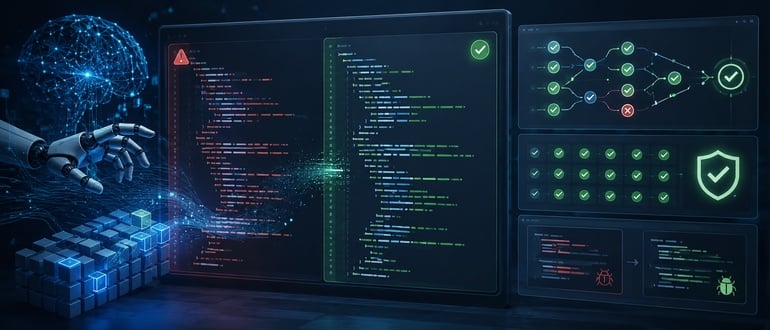
The code-testing-generator agent departs significantly from the single-shot, prompt-and-pray mechanics of traditional AI coding assistants. Instead of leaping straight into code generation, it follows a meticulous, multi-phase operational workflow designed to mimic the thoroughness of a senior software engineer.
Phase 1: Repository Intelligence and Context Gathering
Before writing a single line of test code, the agent embarks on a comprehensive research phase within the target repository. It automatically detects the programming language, identifies the pre-existing test framework (such as NUnit, xUnit, MSTest, pytest, or Go testing packages), and studies existing test files to internalize local coding styles, naming conventions, and architectural patterns.
Crucially, the agent adapts its execution strategy based on the scale of the task:
- Single Methods: A focused, direct read-write-validate pass is initiated.
- Larger Modules: A structured planning phase maps out dependencies and potential edge cases.
- Subsystem Coverage: An iterative loop runs continuously until specific, predefined coverage goals are met.
Phase 2: Systematic Code Generation and Self-Correction
Once the planning phase concludes, the agent begins writing tests from the ground up, starting with simple, isolated components and progressively advancing toward complex code with deep dependencies. As it drafts tests, it actively maps behaviors to appropriate test files.
Unlike standard LLM interactions where syntax errors or broken assertions require manual developer intervention, Microsoft’s agent executes tests iteratively as it writes them. If a test fails to compile or an assertion evaluates incorrectly, the agent autonomously troubleshoots and fixes the issue before proceeding. Furthermore, the agent operates under strict guardrails: it never modifies production code, and it proactively avoids generating flaky tests that rely on real network URLs, open ports, or precise system timing.
Phase 3: The Crucial Final Step – Mutation Testing
Perhaps the most transformative aspect of the agent’s workflow is the final validation step—a practice routinely skipped by conventional automated testing tools. To ensure the generated tests are actually valuable and not just inflating metrics, the agent executes a lightweight form of mutation testing.
By introducing deliberate, small alterations into the underlying source code (mutations that should ideally break a properly written test), the agent confirms whether its generated tests catch the induced failures. It also scans for weak assertions, verifies that every requested scenario has a matching test case, and executes the entire suite end-to-end before declaring the job complete.
Supporting Context & Metrics: Putting Performance to the Test
To validate the efficacy of code-testing-generator, Microsoft conducted rigorous benchmarking against stock GitHub Copilot utilizing the exact same underlying large language model. Across 152 diverse tasks pulled directly from real-world open-source repositories, the specialized testing agent completed 92.1% of tasks, compared to just 78.9% for stock Copilot—representing a remarkable 63% reduction in overall task failures.
Breaking Down the Benchmark Data
The performance divergence between the specialized agent and stock Copilot became most apparent when handling ambiguous inputs:
- Vague Prompts: When given open-ended instructions that required autonomous decision-making, the specialized agent achieved an 88.8% success rate, vastly outperforming stock Copilot’s 66.3%.
- Code-Diff Prompts: When instructed to write tests tied to a specific code diff, the agent successfully passed all 15 test cases in the benchmark, whereas stock Copilot passed zero.
- Detailed Prompts: When prompts were meticulously detailed from the outset, both configurations tied. This alignment underscores a logical reality: a highly specific, well-crafted prompt effectively performs the initial research phase on behalf of the AI.
Intriguingly, these performance gains were not achieved by mindlessly generating a higher volume of tests. In fact, the specialized agent produced fewer tests than stock Copilot while maintaining roughly identical line and branch coverage percentages, while finishing tasks about 5.5% faster on average. The dramatic improvement stemmed entirely from reliability—securing a working, verified result on the very first try rather than relying on sheer output volume.
Cross-Model and Cross-Language Scalability
Microsoft’s testing extended across multiple frontier models, including Claude Opus 4.8, GPT-5.5, and Claude Haiku 4.5. The structured workflow elevated the performance of all tested models, with Claude Opus experiencing the most substantial reduction in failure rates.
Language support proved equally robust. The agent more than doubled completion rates on Python tasks and achieved a flawless 100% pass rate across Go tasks in the benchmark (though stock Copilot maintained a slight edge in PowerShell scenarios). Additionally, an independent, highly stringent benchmark known as SWE Atlas—which explicitly evaluates whether generated tests successfully catch newly injected bugs—corroded the trend, registering a 36.4% task completion rate for the specialized agent versus 27.3% for stock Copilot.
Official Statements and Industry Perspective
Industry analysts have been quick to recognize the systemic significance of Microsoft’s approach. Mitch Ashley, Vice President and practice lead for software lifecycle engineering and AI-native software engineering at The Futurum Group, argues that the true narrative lies in methodology rather than raw model capability.
"Coverage numbers have been lying to teams for years. AI-generated code made the lie bigger," Ashley observed. "Microsoft’s agent runs mutation testing on its own output, breaking code to confirm the tests actually notice."
Ashley emphasizes that the headline-grabbing 63% reduction in failures is a direct byproduct of disciplined engineering procedures, not simply a smarter neural network.
"Verification debt does not get paid down by generating more tests," Ashley warned. "Engineering leaders should require proof that a test fails when the code breaks, before coverage targets go into any AI policy."
This perspective highlights a dangerous cultural trap within modern software development: treating high code coverage percentages as a proxy for software quality. When AI tools are used to autonomously write both the application code and its corresponding tests, the risk of "circular validation"—where flawed tests validate flawed code—grows exponentially. By introducing mutation testing into the automated loop, Microsoft’s agent attempts to sever this vicious cycle.
Future Outlook and the Path Forward
None of these advancements imply that AI-written code is suddenly infallible or trustworthy by default. Rather, Microsoft’s code-testing-generator points toward a much narrower, highly practical paradigm: a development workflow that treats test generation not as a single, prompt-and-done transactional request, but as an iterative, multi-stage pipeline governed by strict quality checkpoints.
Given the staggering volume of AI-generated code currently being pushed into enterprise codebases—and the frequently superficial testing architectures safeguarding them—this structured methodology represents a critical evolution in developer tooling.
Availability and Integration
The code-testing-generator agent is open source and available immediately. Developers can access it via the GitHub Copilot CLI, with preview support currently rolled out for Visual Studio Code and VS Code Insiders. Microsoft has confirmed that native Visual Studio integration is currently under development.
Beyond its initial .NET ecosystem roots, the tool already provides robust support for more than a dozen programming languages, including Python, Go, Java, and Rust. Looking ahead, Microsoft engineering teams are actively exploring whether this iterative, agentic verification framework can be successfully expanded to other critical domains of software quality assurance, such as integration testing, security vulnerability scanning, and performance benchmarking.
Ultimately, as AI continues to reshape the software development lifecycle, tools like code-testing-generator signal a much-needed maturation in the industry—shifting the competitive focus away from how fast code can be manufactured, and toward how rigorously it can be trusted.