





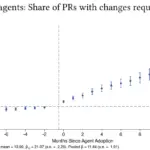


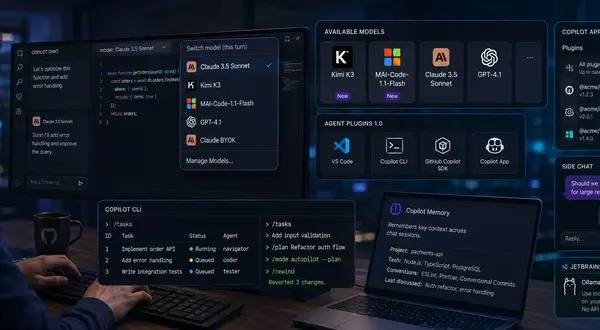
The Multi-Model Paradigm Shift: Inside GitHub Copilot’s Latest Architecture and the Invisible Code Dilemma

Executive Overview The days of development teams tethering themselves to a single proprietary AI model are officially over. Modern software engineering requires agility, context-shifting, and hyper-specific task execution, meaning developers naturally gravitate toward different foundational models depending on the problem at hand—whether it is raw reasoning, multi-turn instruction following, or low-latency code completion. GitHub’s expansive…

Read Full News

Breaking the Million-Point Barrier: How Reflex’s New Open-Source Library ‘XY’ Is Revolutionizing Python Data Visualization

Executive Overview For decades, data scientists, quantitative analysts, and software engineers have shared a quiet, universally accepted frustration: the performance ceiling of Python charting libraries. Whether building exploratory models in Jupyter notebooks or deploying high-stakes enterprise analytics dashboards, developers working with massive datasets have routinely hit a brick wall when attempting to visualize millions of…

Read Full News

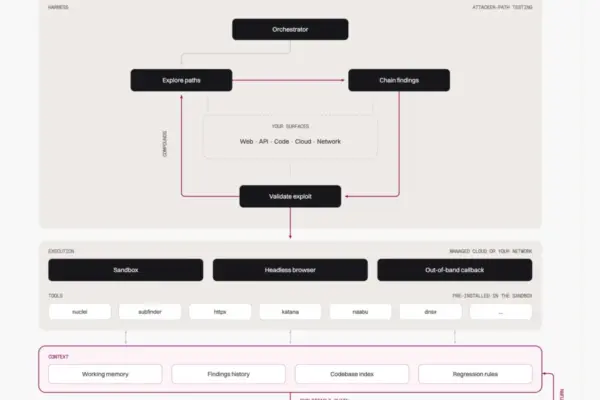
Autonomous Security Testing Enters a New Era: ProjectDiscovery Launches Neo 1.0 Amid Escalating AI Threat Landscapes

Executive Overview The landscape of application security is undergoing a seismic shift. As generative artificial intelligence and autonomous models accelerate both the discovery of software flaws and the creation of sophisticated exploits, traditional DevSecOps workflows are rapidly hitting their limits. In response to this compounding operational strain, ProjectDiscovery has officially announced the general availability of…

Read Full News

The Great Engineering Divide: Why Developers Are Resisting AI—Not Out of Fear, But Out of Grief

Executive Overview For the past several years, the tech industry has operated under a comforting, convenient narrative: developers are afraid of artificial intelligence because they think it will take their jobs. Corporate boards, productivity consultants, and executive leadership teams have largely framed the friction of AI integration as a labor dispute born of job insecurity….

Read Full News

Visual Studio Code 1.133 Redefines AI Development: The Architectural Shift to Independent Agent Hosts

Executive Overview The landscape of AI-assisted software engineering underwent a foundational shift on August 12, with Microsoft’s rollout of Visual Studio Code version 1.133. While minor point releases often bring superficial cosmetic tweaks or iterative bug fixes, version 1.133 introduces an architectural overhaul that fundamentally alters how developers interact with artificial intelligence. At the center…

Read Full News

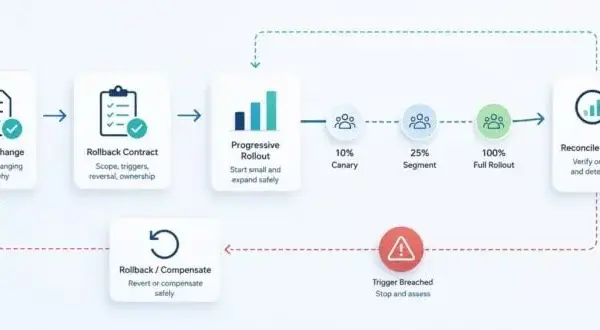
The Silent Blast Radius: Why Modern Business Automation Demands Enterprise Release Discipline

Executive Overview In the contemporary corporate landscape, business automation has evolved into the invisible nervous system of enterprise operations. Spanning complex micro-services, low-code visual builders, and enterprise integration platforms, modern workflows orchestrate billions of dollars in capital, route sensitive customer data, and dictate operational pacing. Yet, a perilous disconnect persists between traditional application software development…

Read Full News

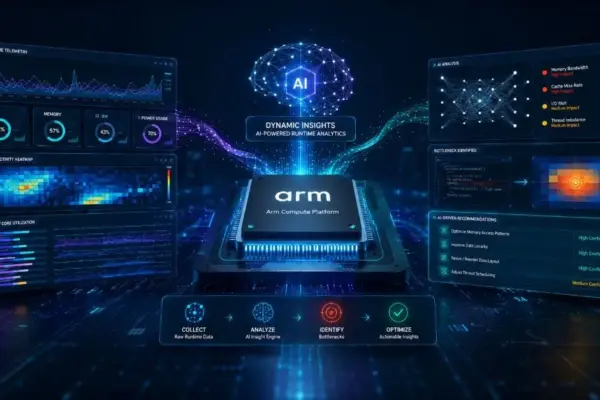
Arm Unveils AI-Powered ‘Dynamic Insights’ Tool to Democratize Processor Optimization and Curb Rising Infrastructure Costs

Executive Overview The landscape of software development is undergoing a seismic shift. As generative artificial intelligence (AI) tools flood the market with unprecedented volumes of newly minted code, development teams are grappling with a hidden, high-stakes crisis: application bloat and structural inefficiency. Simultaneously, the skyrocketing cost of compute infrastructure and tightening hardware capacity mean that…

Read Full News

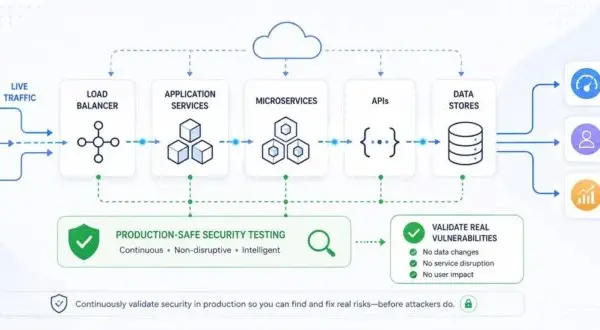
Bridging the DevSecOps Blind Spot: Why Production-Safe Testing is the Frontier of Modern Cyber Defense

Executive Overview For over a decade, the core tenet of application security has been "shift-left." Organizations have poured unprecedented capital, engineering hours, and tooling into pre-deployment pipelines—scanning source code, running static and dynamic application security testing (SAST/DAST), and auditing container images long before a single line of code reaches end users. Yet, despite these rigorous…

Read Full News

The End of the "Looks Fine" Era: Why Software Supply Chain Security Must Treat AI Agents as Untrusted Third Parties

Executive Overview The modern software development lifecycle (SDLC) is undergoing an unprecedented structural transformation. For decades, the foundational bottleneck of engineering organizations has been human bandwidth: developers write code line by line, commit it in modest increments, and subject it to peer review. This human-to-human bottleneck was not merely an administrative hurdle; it was the…

Read Full News

The Autonomous Security Imperative: Bridging the Speed Gap in Modern CI/CD Pipelines

Executive Overview The architecture of modern software engineering has undergone a seismic shift over the past decade. Continuous Integration and Continuous Delivery (CI/CD) pipelines have fundamentally redefined the velocity of product development. Engineering teams now merge code dozens—sometimes hundreds—of times a day; infrastructure is dynamically reprovisioned via code on every commit; and new builds can…

Read Full News