In an era where artificial intelligence is rapidly transitioning from a tool of convenience to a digital companion and counselor, technology giants face mounting pressure to balance innovation with child safety. Meta, the parent company of Facebook, Instagram, and WhatsApp, has announced the global rollout of a comprehensive suite of parental supervision tools designed specifically for Meta AI. The initiative, which begins deployment today, aims to give parents and guardians unprecedented visibility into how teenagers interact with generative AI platforms, without compromising the privacy of individual conversations.
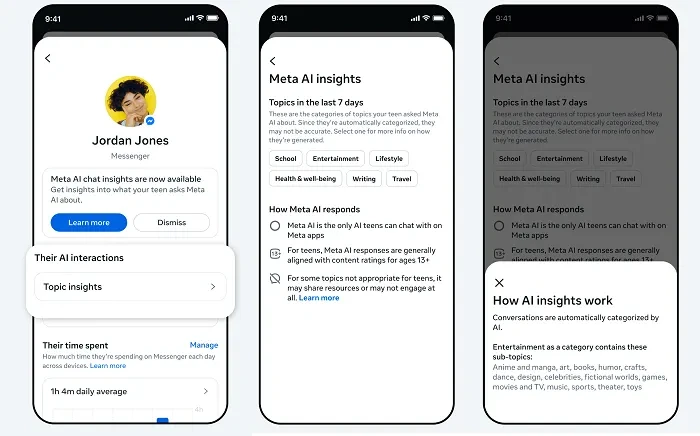
The newly introduced features allow parents to monitor the overarching topics their teenage children have inquired about over a rolling seven-day period. Crucially, the system is engineered to provide thematic oversight—highlighting subjects of interest or potential concern—while deliberately withholding verbatim chat transcripts to preserve a degree of adolescent autonomy and trust. Furthermore, the update introduces a "Limited Content" mode, empowering families to transition away from default settings and enforce a more restrictive conversational boundary within the dedicated Meta AI application.
This development arrives at a critical juncture in the digital landscape. With recent studies indicating that a majority of American teenagers routinely utilize AI chatbots for academic assistance, information retrieval, and—increasingly—emotional support and companionship, the societal implications are profound. While Meta’s supervisory expansion represents a proactive step toward digital safety, industry analysts, child psychologists, and policymakers remain locked in a debate over whether thematic oversight goes far enough to shield developing minds from misinformation, emotional dependency, and the unseen biases of algorithmic advisors.
Detailed Chronology
To fully understand the current rollout of Meta’s parental controls, it is essential to trace the rapid evolution of generative AI integration within consumer ecosystems and the corresponding regulatory and safety measures that followed.
The Rise of Generative AI in Consumer Portals (2023–Early 2024)
Following the explosive mainstream debut of generative AI, Meta rapidly integrated its foundational large language models across its family of apps. Initially deployed as search assistants and creative tools within Instagram DMs, WhatsApp, and Messenger, Meta AI quickly evolved from a novelty feature into a ubiquitous digital assistant. As accessibility expanded, so did the user base, with millions of minors encountering generative AI interfaces embedded seamlessly into their daily digital routines.
The First Wave of Oversight Tools (April 2024)
Recognizing the anxiety among parents regarding unmonitored AI interactions, Meta took its first formal step toward family safety in April 2024. During this initial phase, the company introduced basic parental overview tools designed to capture queries shared specifically within the AI elements nested inside core Meta applications. While groundbreaking for the platform at the time, these tools possessed significant gaps, as they primarily addressed embedded functionalities rather than dedicated, standalone AI applications and expanding ecosystem features.
The Shift Toward Companionship and Specialized Agents (Late 2024–2025)
As the technology matured, user habits shifted. Generative AI ceased to be used merely for summarizing texts or generating images; teenagers increasingly began treating chatbots as conversational partners. Reports from developmental psychologists and media outlets highlighted a growing cohort of youths turning to bots for emotional resonance, mental health coping mechanisms, and personal advice. Concurrently, Meta began developing advanced conversational agents—often referred to internally and across the industry as "Muse" agents—designed to offer highly personalized, hyper-realistic interactions.
The Launch of Comprehensive Meta AI Supervision (Present)
Culminating months of safety engineering and policy review, Meta officially announced its next-generation parental supervision controls. Rolling out globally beginning today, this update bridges the gap between embedded features and dedicated applications. By providing a structured, thematic window into a teenager’s AI activity and introducing the "Limited Content" setting, Meta has established a new baseline for how social media and AI conglomerates manage minor safety in the generative era.
Supporting Context & Metrics
The urgency surrounding Meta’s new supervision controls is underscored by empirical data detailing how deeply integrated artificial intelligence has become in the daily lives of minors. The transition of AI from a technical utility to a social and emotional pillar has fundamentally altered youth development and information consumption.
Statistics on Teen AI Usage
Recent research paints a vivid picture of widespread adolescent adoption:
Information Retrieval: According to a landmark study published by the Pew Research Center in February 2026, an overwhelming 57% of U.S. teens have utilized AI chatbots to search for information and answer general knowledge queries, frequently bypassing traditional search engines.
Academic Assistance: The same Pew Research data reveals that 54% of teens regularly rely on AI to assist with schoolwork, raising complex questions regarding academic integrity, cognitive offloading, and critical thinking development.
Emotional Support and Companionship: Investigations by outlets such as The Conversation have highlighted a burgeoning trend: a significant percentage of teenagers are turning to AI bots not just for facts, but for emotional support, crisis coping, and mental health advice, driven by the algorithms’ 24/7 availability and non-judgmental programming.
The Psychological Dilemma
While AI chatbots are engineered to be helpful, polite, and infinitely patient, they lack genuine emotional intelligence, empathy, and ethical grounding. Researchers note several distinct hazards associated with high levels of AI reliance among developing minds:
Misinformation and Hallucinations: Generative models are notoriously prone to confidence-soaked inaccuracies ("hallucinations"). Teens relying on bots as authoritative advisors may absorb false information without cross-referencing.
Confirmation Bias and Echo Chambers: Chatbots can be easily prompted to validate a user’s preconceived notions, potentially reinforcing unhealthy behavioral loops or isolating teenagers from constructive human intervention.
Emotional Dependency: Forming parasocial relationships with AI agents can stunt a young person’s ability to navigate complex, messy human relationships and conflict resolution.
Official Statements
Meta’s leadership and safety teams have framed the new controls as a balanced compromise between adolescent privacy and parental peace of mind.
In an official corporate release detailing the update, Meta explained the mechanics of the new oversight architecture:
"By turning on supervision, parents and guardians will be able to see the topics their teen has been asking [Meta AI] about over the past seven days, but not the conversations themselves."
This deliberate structural choice—revealing the "what" while concealing the "how" of the dialogue—is intended to foster an environment where teenagers do not feel excessively spied upon, which might otherwise drive them to covert, unregulated digital spaces. Meta elaborated on the motivation behind the design:
"This should ensure that parents will see if their kids are asking about topics that could be of concern. It could also prompt parents to talk to their kids about AI engagement."
Furthermore, addressing the demand for stricter household boundaries, Meta introduced a customizable safety tier:
"Parents who want a more restrictive AI experience for their teen can also switch from the default 13+ setting to the Limited Content setting, which further limits the kinds of conversations their teen can have in the Meta AI app."
Industry advocates and safety organizations have offered mixed reactions. While many applaud Meta for expanding oversight beyond basic messaging apps into dedicated AI environments, others argue that viewing past topics is reactive rather than preventive, leaving a window of exposure open before a parent ever looks at the weekly digest.
Future Outlook
As Meta continues its aggressive pursuit of artificial intelligence supremacy—exemplified by its long-term vision of bringing personalized superintelligence to every global user—the questions surrounding youth safety will only intensify.
Expanding Ecosystems and Lowering Age Restrictions
The rollout of these parental controls is not merely a defensive compliance measure; it is a foundational infrastructure block. Presumably, lowering age restrictions and integrating younger demographics into advanced agent ecosystems—such as Meta’s evolving Muse agents—form a core pillar of the company’s long-term commercial strategy. To responsibly onboard younger users into hyper-advanced, personalized superintelligence environments, robust, scalable parental oversight frameworks are legally and ethically mandatory.
The Limits of Oversight
Despite the utility of Meta’s new dashboard, experts caution that technology tools alone cannot substitute for active human guidance. Even with advanced supervision features enabled, managing the nuanced, psychological ways in which generative AI molds adolescent decision-making remains an uphill battle.
Moving forward, the efficacy of Meta’s controls will depend heavily on parent-teen communication catalyzed by these weekly topic digests. As generative models become more persuasive, autonomous, and seamlessly integrated into the human experience, the digital safety paradigm will require ongoing iteration, cross-industry collaboration, and vigilant regulatory oversight to ensure that the minds of the next generation are nurtured rather than manipulated by artificial intelligence.