








Executive Overview
The global race for artificial intelligence supremacy is encountering a porous frontier, defined by illicit networks, multi-million-dollar shell corporations, and high-performance silicon slipping quietly across borders. In a sweeping federal indictment unveiled in October 2026, the United States Department of Justice (DOJ) announced the arrest of 38-year-old Greg Lui, chief executive of Earthmade Computer. Lui stands accused of orchestrating an expansive, multi-year smuggling ring that funneled more than $300 million worth of export-controlled, high-end computer servers—housing coveted Nvidia graphics processing units (GPUs)—directly into China.
This high-profile arrest is far from an isolated incident. Instead, it serves as the latest flashpoint in an intensifying geopolitical struggle over the dissemination of foundational AI infrastructure. As law enforcement tightens the screws on black-market tech brokers, a broader, more contentious debate has emerged surrounding the compliance blind spots of Silicon Valley’s crown jewel: Nvidia.
While US federal agencies and intelligence officials grow increasingly alarmed by a sprawling shadow trade feeding Chinese data centers, Nvidia has continuously downplayed the scale of the leak. Pitting corporate growth in friendly nations against national security imperatives, the company finds itself caught in the crosshairs of Capitol Hill watchdogs, investigative journalists, and an executive administration steering a radically hands-off approach to technology regulation.
Detailed Chronology of an Illicit Empire
The operational timeline outlined by the FBI and the DOJ paints a sophisticated picture of global sanctions evasion. Spanning from October 2023 through August 2026, the conspiracy orchestrated by Greg Lui systematically exploited vulnerabilities in international freight forwarding, trade documentation, and corporate transparency across multiple jurisdictions.
The Mechanism of Evasion
According to federal indictments, Lui utilized Earthmade Computer as a front to acquire restricted hardware from US manufacturers. Rather than routing these sensitive assets directly to restricted destinations—a move that would have immediately triggered trade compliance alarms—Lui conspired with logistics and freight-forwarding firms embedded in pivotal South Asian transit hubs, primarily Malaysia and Singapore.
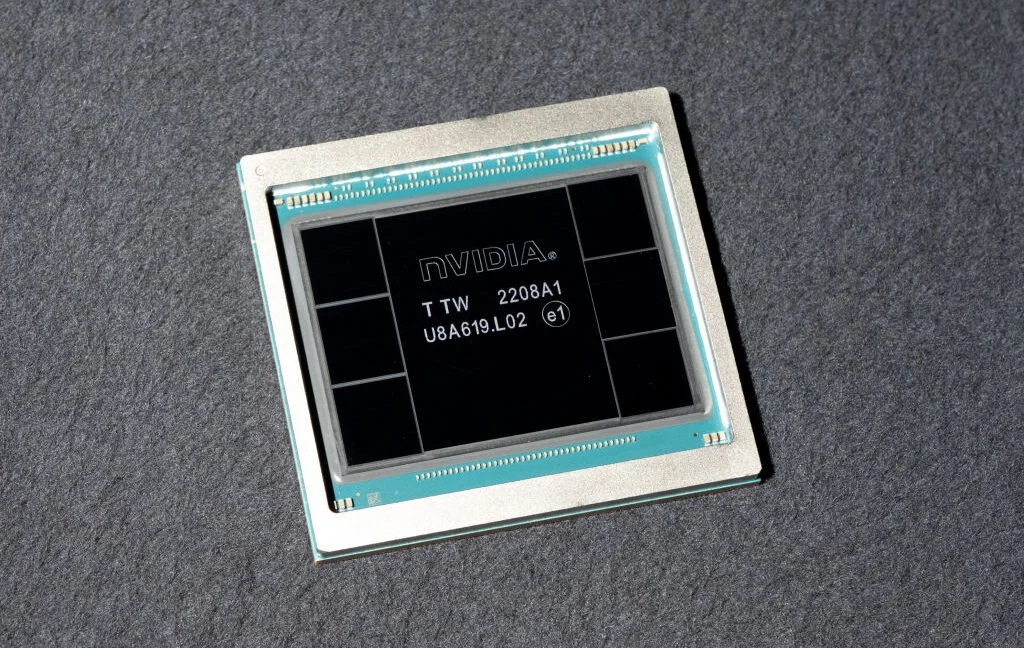
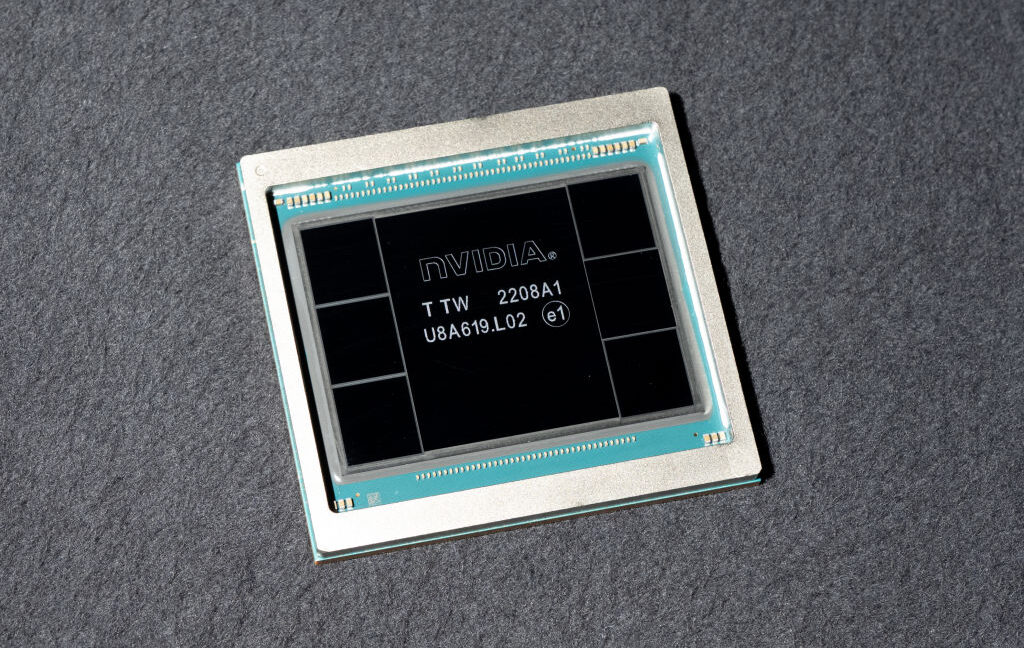
The hardware involved featured powerful data-processing accelerators, including Nvidia’s A100 and H100 GPUs. While these components sit one generation below Nvidia’s absolute bleeding-edge architectures, they remain extraordinarily potent. Capable of digesting astronomical volumes of data and training complex large language models (LLMs), these GPUs represent the very lifeblood of generative AI development. US national security agencies have repeatedly warned that provisioning China with a critical mass of these chips could radically accelerate its military modernization and domestic AI capabilities, undercutting long-term strategic containment policies.
Paper Trails and Ghost Buyers
The unraveling of Lui’s enterprise began with a digital paper trail of internal emails, corporate bank accounts spanning Bank of America and JPMorgan Chase, and falsified purchase orders that eventually hauled in over $176 million in illicit revenue during 2024 alone.
Federal investigators highlighted several glaring instances of deceit:
- The Malaysian Divergence: In 2024, Lui submitted a purchase order to a US manufacturer for 27 servers packing export-restricted GPUs, valued at approximately $7.6 million, with paperwork falsely claiming the final destination was Malaysia. Internal communications later revealed a co-conspirator casually reporting to a Malaysian government official that the entire batch had been successfully redirected to China.
- The Hangzhou Pipeline: A parallel shipment comprising 92 restricted servers took an even more circuitous route. Routed first through Singapore, then back to Malaysia, and onward to Hong Kong, the hardware eventually found a home with a Chinese firm located in Hangzhou—a municipality widely recognized by industry analysts as a primary epicenter for China’s domestic AI expansion.
- Stolen Identities: Demonstrating the lengths to which the ring would go to bypass scrutiny, Lui organized a 100-server shipment of Nvidia H100 units valued at over $22 million under the guise of a fictitious buyer. The fake corporate entity listed its chief executive as "Jackie Lui." According to the FBI, Lui had purchased the stolen identity documents of a real individual three years prior, weaponizing personal data to execute fraudulent trade agreements.
Supporting Context & Metrics: The Scale of the Shadow Trade
The arrest of Greg Lui highlights a much larger, systemic issue that investigators and industry experts are only beginning to quantify: a sprawling, underground gray market for advanced AI infrastructure.
The Black Market Economy
According to comprehensive findings from a multi-month Bloomberg investigation—which drew on dozens of interviews across five countries—officials worldwide suspect that hundreds of thousands of AI chips are currently circulating via unauthorized secondary markets. This shadow trade is believed to be actively provisioning smaller data centers and, potentially, select "hyperscalers" within mainland China.
These illicit imports directly bridge a hardware deficit that Chinese domestic semiconductor industries do not expect to organically close until approximately 2030. While domestic alternatives like Huawei’s Ascend chips have absorbed a significant portion of mainland demand, Nvidia’s architecture remains the gold standard that top-tier developers desperately crave.
The "Drop in the Bucket" Defense
Nvidia has consistently pushed back against the narrative that its hardware leaks are fundamentally undermining US export policy. Pointing to the vast domestic compute capacity already embedded within China—largely accelerated by indigenous manufacturing efforts and prior stockpiling—company executives have characterized the diverted inventory as statistically insignificant.
In statements to the press, Nvidia representatives noted that "less than one half of one percent" of the company’s products have ever been allegedly diverted into China.
"Governments and media have found insignificant diversion of controlled US products—a drop in the bucket compared to the ocean of domestic compute China already has," an Nvidia spokesperson argued.
Independent trade analysts and intelligence researchers, however, warn that black markets are inherently opaque and exceptionally difficult to measure accurately. Even a fraction of Nvidia’s enterprise-grade allocation represents thousands of cutting-edge chips capable of training frontier models that bypass Washington’s best defensive walls.
Official Statements and Corporate Accountability
The friction between Washington’s regulatory expectations and Silicon Valley’s commercial imperatives has exposed stark disagreements regarding corporate due diligence.
Nvidia’s Compliance Blind Spots
Federal officials and industry critics are increasingly targeting Nvidia’s screening protocols, questioning how numerous red flags could repeatedly slip past the company’s compliance divisions. Investigations have repeatedly pointed to anomalous orders originating from front companies operating in Thailand, Malaysia, and Singapore—jurisdictions that have emerged as primary transshipment hotbeds.
In one notable instance highlighted by investigators, Nvidia and server partner Supermicro conducted an onsite visit to a Taiwanese facility that had purchased high-end chips destined for immediate redirection to China. Although Taiwan’s Coast Guard ultimately seized the bulk of the servers after detecting manifesto discrepancies, internal reviews suggested that Nvidia could—and should—have flagged the deal much earlier. The facility in question was structurally and operationally inadequate to house the massive volume of ordered hardware, a discrepancy that basic on-the-ground scrutiny would have easily uncovered.
Similarly, investigations revealed instances where small data centers in Thailand relied on demonstrably fake real estate leases to secure massive bulk allocations of Nvidia GPUs. When questioned, Nvidia declined to comment on whether those specific sites had been properly audited.
The Corporate Stance
Nvidia fiercely defends its business model, arguing that trade policy must be anchored in the explicit text of the law rather than speculative anxiety.

- The Startup Defense: Company representatives argue that a startup’s rapid growth trajectory within a friendly foreign nation should be viewed as an economic opportunity for the United States, rather than an automatic security threat. Refusing orders simply because a facility’s immediate capacity looks lean would stifle legitimate market expansion, particularly because Nvidia-powered servers act as financeable assets that help emerging tech firms secure vital capital and infrastructure.
- The Megaspeed Controversy: Nvidia has faced direct questioning regarding its continued commercial relationship with entities like Megaspeed, which US authorities recently flagged for potential export curb evasion. Nvidia has declined to confirm whether it conducted expedited government-requested audits on the firm, stating plainly that it will continue commercial operations with any partner until legally ordered to cease.
- The Whitelist Approach: Rather than executing deep-dive forensic investigations into every end-user downstream from its direct buyers, Nvidia has reportedly established an internal "whitelist" of pre-approved Asian firms cleared for rapid AI chip acquisition.
"When the law is clear, American companies honor US laws as they are, not as America’s critics wish they were," an Nvidia spokesperson asserted.
Future Outlook: Geopolitics, "Super Intelligence," and the Path Forward
As legal proceedings against Greg Lui advance toward trial—carrying potential prison sentences of up to 20 years for conspiracy and money laundering—the broader structural battle over AI governance continues to shift along political fault lines.
The Influence of Jensen Huang and the White House
Despite mounting pressure from national security hawks in Congress to choke off remaining export loopholes, legislative fixes have proven difficult to pass. Earlier legislative efforts aimed at tightening anti-smuggling statutes were systematically watered down due to intense industry lobbying. Furthermore, Nvidia CEO Jensen Huang’s growing diplomatic and economic influence within the highest levels of the executive branch has fostered an environment where the Trump administration has opted for a distinctly hands-off regulatory posture.
Rather than imposing mandatory, sweeping restrictions that would crimp corporate revenues, the administration has largely relied on major tech firms to police their own supply chains. This philosophy aligns neatly with broader presidential strategies concerning artificial intelligence governance, which prioritize maintaining global technological dominance and out-pacing geopolitical rivals over implementing stringent domestic or international guardrails.
The Semantics of Power: AI vs. SI
This laissez-faire approach has been mirrored in unexpected rhetorical shifts within Washington. The administration’s recent push to rebrand "artificial intelligence" (AI) to "super intelligence" (SI)—a term enthusiastically adopted by national security officials in DOJ press releases and embraced by tech leaders like Jensen Huang and Elon Musk—has added another layer of complexity to the policy debate.
While administration proponents argue that "super intelligence" more accurately captures the epochal scale and capability of modern American tech ecosystems, critics and policy analysts view the rebrand as an intentional distraction. Brookings Institution fellow Kyle Chan and other critics have warned that the nomenclature shift is designed to project an illusion of unassailable American technological supremacy while papering over very real security vulnerabilities, supply chain leaks, and public safety concerns.
What Lies Ahead
Ultimately, unless lawmakers successfully pass binding, airtight legislation or the executive branch dramatically pivots its enforcement strategy, Nvidia appears positioned to maintain its aggressive commercial expansion across Asian markets. The shadow trade in silicon will likely persist as long as the global demand for advanced compute outstrips official supply allocations.
For federal investigators, each arrest like Greg Lui’s represents a major victory against illicit networks. Yet, for an industry reshaping the boundaries of modern civilization, these high-profile busts are merely symptoms of a deeper, structural race where commercial ambition and national security remain locked in an uneasy, perpetual standoff.