








Executive Overview
For decades, the fundamental law of modern industrial economics seemed absolute and unbending: economic growth required an escalating toll on the natural environment. To build wealth, produce goods, transport commodities, and power modern civilization, the United States—like every other major industrial power—had to burn increasingly vast quantities of fossil fuels. Higher Gross Domestic Product (GDP) invariably meant higher carbon dioxide emissions. The two lines moved in lockstep upward, a pair of parallel tracks driving the nation into a warming future.
Today, that ironclad rule has been broken.
A rigorous long-term analysis of energy data and macroeconomic indicators reveals that the relationship between American economic output and carbon pollution underwent a profound structural shift following the 2008 global financial crisis. Far from returning to its historic trajectory, the US economy has successfully decoupled financial growth from greenhouse gas emissions. While the American economy has continued to expand—aside from the sudden, anomalous shock of the COVID-19 pandemic—national carbon emissions have steadily trended downward.
This phenomenon, often referred to by environmental economists as "opening the scissors" due to the diverging paths of GDP growth and emissions lines on a graph, offers a vital historical lesson. It proves definitively that further economic expansion does not require a parallel rise in pollution. However, while this decoupling represents a monumental milestone in energy and climate history, analysts urge caution. The rate of decline remains far too slow to avert the most catastrophic projections of global climate change, and emerging threats—ranging from the power-hungry boom of artificial intelligence data centers to shifting political landscapes—threaten to stall or even reverse these hard-won gains.
Detailed Chronology: From Lockstep Growth to the Great Decoupling
To understand the magnitude of the modern decoupling, one must first look back at how the American energy landscape operated for the better part of a century.
The Era of Industrial Parallelism (Pre-2008)
For generations, tracking US carbon emissions was a relatively predictable endeavor for energy analysts. Whenever the American economy entered a recession, factory output slowed, commuting dropped, and carbon emissions dipped temporarily. As soon as economic recovery took hold, emissions roared back, typically matching or exceeding their previous peaks.
Energy consumption was treated as the literal lifeblood of economic productivity. Efficiency gains were routinely outpaced by sheer volume growth, population expansion, and the proliferation of energy-intensive consumer goods and suburban sprawl. Throughout the latter half of the 20th century, policymakers operated under the assumption that any serious attempt to cap or reduce carbon emissions would necessarily require placing a hard ceiling on economic growth and consumer prosperity.
The 2008 Watershed
The Great Recession of 2008 acted as an unprecedented tectonic shock to the global financial system—and to US energy markets. As economic activity plummeted, US carbon emissions dropped precipitously.
Initially, energy experts and institutional forecasters expected this drop to be a cyclical blip. As the economy recovered from the ashes of the housing crisis and subsequent credit crunch, analysts anticipated the familiar return of the old relationship: economic growth would resume, and carbon emissions would bounce right back to their pre-crisis highs.
Instead, something unexpected happened. As economic growth slowly clawed its way back over the ensuing years, carbon emissions stubbornly refused to follow suit. Instead of surging upward, emissions flatlined, displaying a hesitant, volatile pattern.
The Sawtooth Years and the Pandemic Shock
During the early 2010s, tracking annual emissions data felt like trying to read a weather report through heavy fog. The US appeared to enter a "sawtooth" pattern. Several years of gradual, encouraging emissions declines would be abruptly wiped out by a sudden, sharp spike driven by weather extremes, cheap fossil fuel availability, or localized industrial surges.
This ambiguity made it exceedingly difficult for climate scientists, economists, and policymakers to determine whether a genuine structural trend was underway or if the nation was simply experiencing statistical noise.
Then came 2020 and the global SARS-CoV-2 pandemic. The pandemic years introduced a massive, unprecedented plunge in economic mobility and industrial output, followed by an equally dramatic, whip-saw economic rebound. For a brief period, the baseline data was heavily distorted.
Yet, when analysts strip away the pandemic anomalies and plot the data on a multi-decade timeline, the broader trajectory comes into sharp, undeniable focus: 2008 marked a permanent inflection point. Since that year, the long-term trend line for US carbon emissions has sloped steadily downward, even as the nation’s GDP has continued to march upward.
Supporting Context & Metrics: The Data Behind the Divergence
To verify this structural shift, researchers rely on comprehensive macroeconomic and environmental data sets. For gross domestic product, economists typically utilize historical records from institutions like the World Bank, which track the total monetary value of all finished goods and services produced within the United States. For carbon metrics, researchers turn to empirical repositories such as the University of Exeter’s Global Carbon Project, which compiles fossil fuel consumption, industrial processes, and land-use data globally.
[US Economic Growth vs. Carbon Emissions (Conceptual Timeline)]

GDP Growth ($)       ------------------- (Steadily Upward Trend)

2008 Crisis: ----------------X------- (Inflection Point)

Carbon Emissions                    ------------------ (Gradual Downward Trend)
Deconstructing the "Scissors" Effect
When these two datasets are superimposed—GDP growth represented by green indicators and carbon emissions tracked via a blue trajectory—the visual metaphor of the open scissors becomes apparent.
- Economic Resilience: Outside of the 2008 financial crash and the 2020 pandemic lockdowns, American GDP has demonstrated remarkable, continuous growth.
- Carbon De-escalation: Simultaneously, the carbon intensity of each unit of American economic output has fallen dramatically.
This decoupling is driven by several structural transformations within the US economy over the past fifteen years:
- The Coal-to-Gas Transition: Driven largely by the fracking boom, the domestic energy market experienced a massive pivot away from highly carbon-intensive coal toward cleaner-burning natural gas for electricity generation.
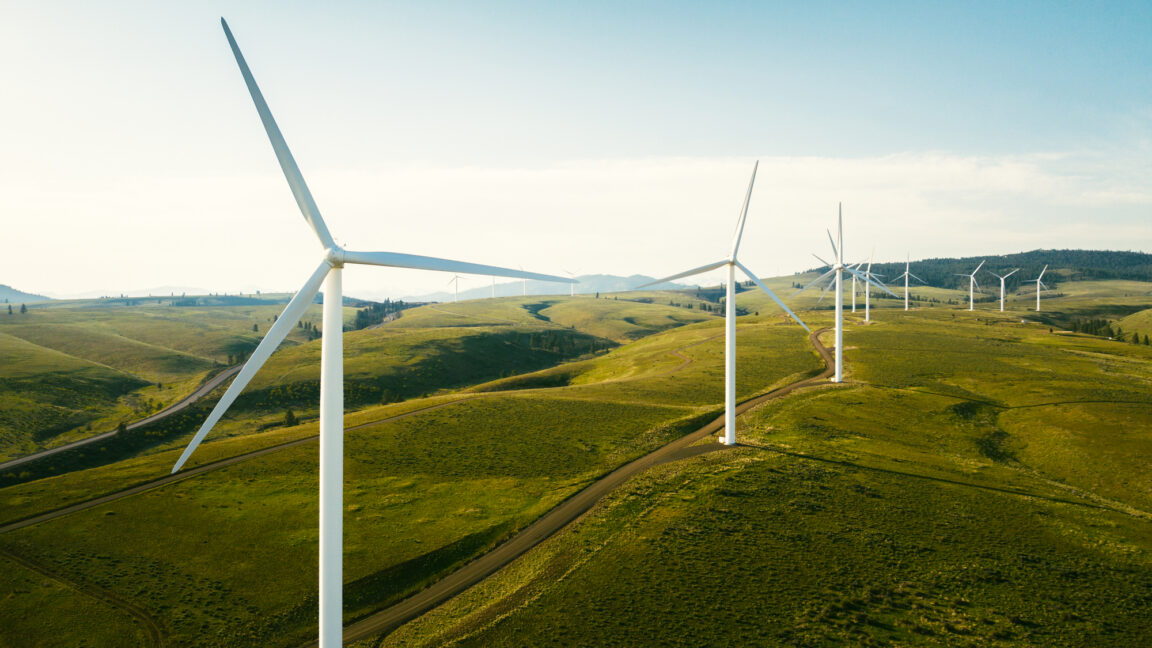
- The Renewable Energy Surge: Wind and solar power transitioned from expensive, subsidized novelties to the cheapest sources of new electricity generation across vast regions of the United States.
- Energy Efficiency: Across commercial real estate, manufacturing, lighting, and appliance manufacturing, systemic efficiency gains have allowed the country to do more work with significantly less energy input.
The Limits of GDP as a Metric
While the GDP-versus-emissions graph tells a compelling story of ecological decoupling, institutional economists are quick to add important caveats regarding GDP itself.
Gross Domestic Product is a measure of total economic throughput and market activity; it is not a welfare index. GDP says nothing about income inequality, the distribution of wealth, ecological health beyond carbon, or the overall quality of life experienced by the average citizen. An economy can post stellar GDP growth while large segments of the population struggle with housing, healthcare, and basic economic security.
Nevertheless, within the narrow confines of the debate over whether economic expansion mandates environmental destruction, the GDP metric remains vital: it proves that the physical constraints binding wealth creation to greenhouse gas pollution have been successfully severed.
Future Outlook: Challenges on the Horizon and Reasons for Caution
While the empirical reality of the decoupling is a cause for historical relief, it provides no grounds for complacency. Energy analysts and climate scientists emphasize that the current trajectory, while encouraging, falls dangerously short of what is required to stabilize global temperatures and avoid the worst-case scenarios outlined by the Intergovernmental Panel on Climate Change (IPCC).
The Speed Trap
The primary concern is the rate of decline. While US emissions are trending downward, they are doing so at a slow, gradual pace. A slow slope downward means that cumulative carbon concentrations in the atmosphere will continue to rise for decades, locking in severe climate impacts, including more intense heatwaves, rising sea levels, and increasingly destructive extreme weather events. To hit international climate targets such as net-zero emissions by mid-century, the downward slope of the carbon line must accelerate dramatically.
The Artificial Intelligence and Data Center Boom
A newly emerged threat to ongoing emissions reductions is the explosive growth of the digital economy. The rapid expansion of artificial intelligence, cloud computing infrastructure, and massive corporate data centers has created an unprecedented surge in electricity demand.
Alarmingly, many technology companies and grid operators, desperate for uninterrupted, baseload power to feed these facilities, have turned to dedicated fossil fuel generators—and in some cases, delayed the retirement of aging coal and gas plants. If the digital infrastructure boom outpaces the deployment of clean energy generation, it could trigger a localized or national reversal in emissions trends, temporarily closing the scissors that took over a decade to open.
Political Headwinds and Policy Volatility
The future of American carbon policy remains deeply vulnerable to political shifts. Administrations hostile to renewable energy, carbon pricing, and regulatory efficiency standards can introduce significant friction into the green transition. From attempts to roll back clean energy tax credits to the promotion of legacy fossil fuel extraction, political interference can distort market signals and slow the momentum of decarbonization technologies.
However, the core takeaway from the data analysis remains resilient against short-term political headwinds: the historical link between economic growth and carbon emissions has been broken.
Even if policy rollbacks, economic shocks, or data center expansions cause emissions to tick upward temporarily over the next few years, analysts now know with empirical certainty that such increases are neither economically necessary nor structurally inevitable. The US economy has proven that it can generate wealth while cleaning the air; the challenge of the coming decades is ensuring that this decoupling accelerates fast enough to matter.