







Executive Overview
The history of American space exploration is frequently told through the legendary exploits of the astronauts who walked on the Moon, commanded the orbital spaceplanes, and lived inside orbiting laboratories. Yet, the monumental successes—and miraculous survivals—of NASA’s golden age of human spaceflight were equally forged in the high-tension environment of Mission Control. Among the elite cadre of legendary flight directors who steered humanity into the cosmos stood Milton "Milt" Windler.
A pioneer of real-time orbital scheduling, a pivotal leader during the harrowing Apollo 13 crisis, and a foundational architect of operations for both the Space Shuttle and the International Space Station (ISS), Windler’s legacy spans the entire formative epoch of modern space exploration. Passing away at a time when commercial space ventures look back to the foundations laid in Houston and Virginia, Windler’s career encapsulates the transition of aerospace engineering from early NACA research aeronautics to sophisticated, multi-national orbital laboratories.
This retrospective explores Windler’s extraordinary life, tracing his trajectory from an aeronautical engineering graduate in post-war Virginia to a presidential honoree in the White House. It examines his technical innovations in real-time mission planning during the pioneering Skylab missions, his indispensable contributions to the Space Shuttle’s robotic systems, and his enduring philosophy on the relentless, breakneck pace of space exploration.
Detailed Chronology: From NACA to the Threshold of the Stars
Early Life and Academic Foundations
Milton Windler was born on January 10, 1932, in Hampton, Virginia—a crucible of American aviation research. Growing up against the backdrop of global conflict and rapid technological advancement, Windler pursued a rigorous technical education. He attended Virginia Polytechnic Institute and State University (Virginia Tech), where he immersed himself in the nascent discipline of aeronautical engineering.
During his undergraduate years, Windler joined the United States Air Force’s Reserve Officers’ Training Corps (ROTC), balancing military discipline with complex aerodynamic coursework. He graduated in 1954, stepping directly into a professional landscape dominated by high-speed flight research. His initial employment was with the National Advisory Committee for Aeronautics (NACA), the federal agency tasked with pushing the boundaries of flight dynamics and supersonic propulsion.
Military Service and Return to Civil Aviation
Following his tenure with NACA, Windler fulfilled his military obligations by serving actively in the U.S. Air Force for four years. This stint provided him with firsthand operational experience in military aviation logistics and command structures, traits that would profoundly inform his leadership style in future aerospace control rooms.
Upon completing his military service, Windler returned to civilian research at NACA’s Langley Research Center in Hampton, Virginia. It was a historic era for the institution. In 1958, in direct response to the Soviet launch of Sputnik 1, President Dwight D. Eisenhower signed the National Aeronautics and Space Act into existence, transforming NACA into the National Aeronautics and Space Administration (NASA). Windler was there on the ground floor as his home institution seamlessly transitioned into a flagship facility of the newly minted space agency.
The Move to Houston and the Apollo Era
As NASA accelerated its ambitions toward lunar exploration, the agency recognized the need for a centralized, dedicated facility to manage human spaceflight operations. In the early 1960s, Windler relocated to Houston, Texas, joining the newly established Manned Spacecraft Center (subsequently renamed the Lyndon B. Johnson Space Center).
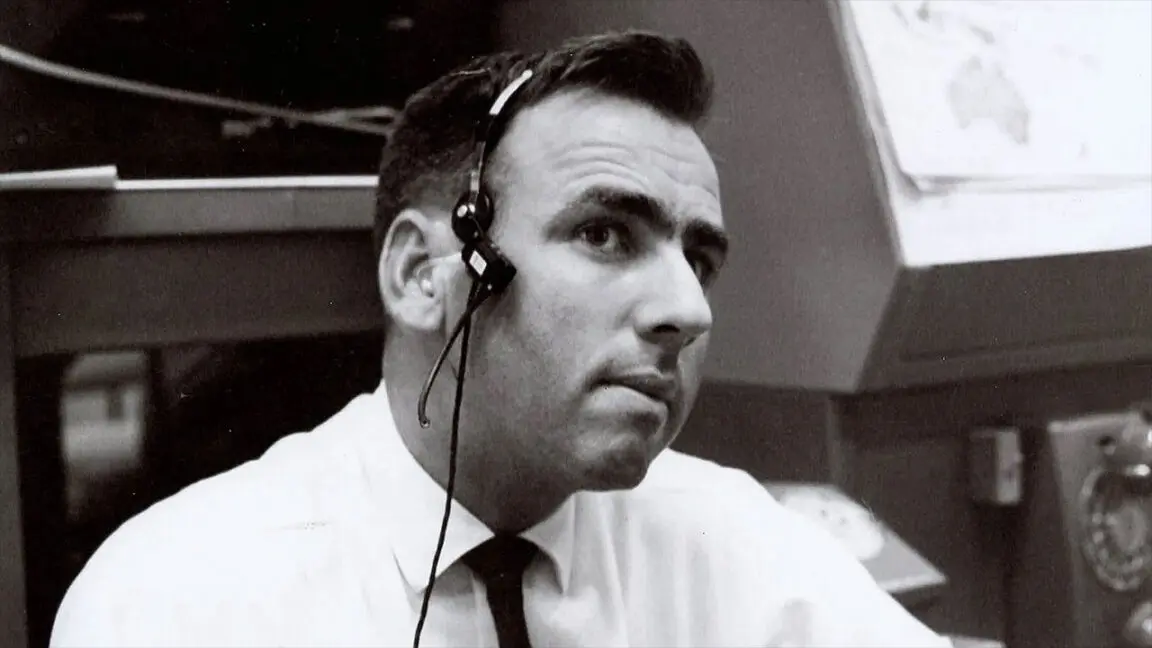
In Houston, Windler integrated into the core team of flight directors working under Christopher C. Kraft Jr. This elite group—which famously included Gene Kranz, Glynn Lunney, and Gerry Griffin—was tasked with creating the protocols, emergency procedures, and operational methodologies for the Gemini and Apollo programs.
Windler’s finest hour as a frontline flight director came during the Apollo 13 mission in April 1970. When an oxygen tank explosion crippled the spacecraft halfway to the Moon, transforming a routine scientific expedition into a desperate fight for survival, Windler and his fellow flight controllers worked around the clock in Mission Control. By reallocating power, devising unprecedented burn procedures, and managing life support resources under impossible constraints, the operations team successfully guided astronauts Jim Lovell, Fred Haise, and Jack Swigert safely back to Earth.
In recognition of their extraordinary heroism and technical brilliance, President Richard Nixon presented Windler and his fellow Apollo 13 flight directors with the Presidential Medal of Freedom on April 18, 1970—the highest civilian honor in the United States. Windler was also honored with NASA’s Exceptional Service Medal for his steady hand during institutional crises.
Supporting Context & Metrics: Engineering Real-Time Operations
While Apollo cemented Windler’s place in history, his technical contributions extended deep into the post-Apollo era, fundamentally reshaping how NASA executed long-duration space missions.
Pioneering Real-Time Flight Planning in Skylab
Following the conclusion of the Apollo lunar landings, NASA turned its focus toward Earth-orbital habitation with Skylab, the United States’ first space station, launched in 1973. Managing a permanent orbital laboratory presented entirely new operational hurdles compared to transient lunar missions. The scientific payloads, particularly the Apollo Telescope Mount (ATM) used for solar observation, required dynamic, flexible scheduling to capture unpredictable solar flares and coronal mass ejections.
Reflecting on this operational paradigm shift in a 2006 retrospective interview, Windler noted:
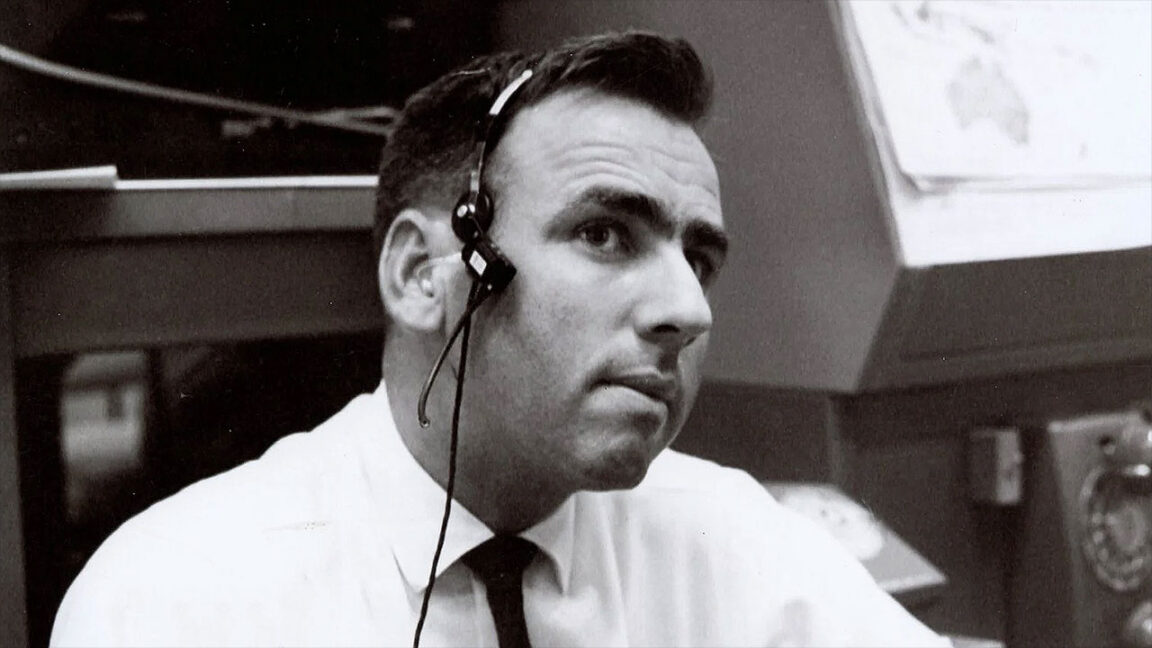
"We had to come up with a system that would allow us to plan in real time and accommodate the science people. If something interesting happened on the sun, which it did several times, then we needed to be able to schedule the ATM work… We invented a way of flight planning in real time, or cycles, where one day the science people talked about what they wanted to do, and the ‘Science Czar’ got with them and said, ‘All right, then, we need these particular objectives for tomorrow.’"
This decentralized yet tightly coordinated iterative cycle revolutionized mission management, laying the procedural groundwork for the continuous, uninterrupted operations seen today aboard the International Space Station.
Expanding into the Shuttle Era and Robotics
With the Skylab program concluded, Windler transitioned to the Space Shuttle program. As America’s winged orbiters took shape, Windler focused heavily on the development of the Remote Manipulator System (RMS)—universally known as the "Canadarm." Contributed by the Canadian space program, this sophisticated robotic arm was vital for deploying, retrieving, and manipulating heavy payloads in low Earth orbit. Windler’s operational expertise ensured that the complex integration of human-piloted spacecraft and precision robotics functioned seamlessly in the vacuum of space.
Transition to Private Industry and the International Space Station
Upon retiring from NASA civil service, Windler did not leave the aerospace sector. Instead, he transitioned into private industry to help lay the groundwork for what would become the International Space Station (ISS).
Leveraging decades of institutional knowledge, Windler acted as a senior consultant on the operations aspects of the orbiting laboratory. As individual modules were manufactured across international facilities in the United States, Europe, Russia, and Japan, Windler assisted in establishing rigorous verification procedures. These protocols ensured that hardware built by disparate nations would integrate flawlessly once joined in orbit.
Official Statements & Reflections: The Burden of the "Bang-Bang" Pace
The human cost of America’s rapid acceleration into space—driven by Cold War geopolitics and intense national rivalry—left a profound psychological mark on the engineers who directed the flights. The pace was relentless, leaving little room for psychological decompression or philosophical reflection.
Reflecting late in life on the breakneck tempo of the 1960s and 1970s, Windler offered a poignant perspective on what it meant to live inside the pressure cooker of Mission Control:
"If I did it again, I’d probably try to do something more about trying to pay more attention. Apollo was — well, all of [the missions] were — bang-bang-bang. You couldn’t enjoy, really, in a way you couldn’t savor it, like maybe it would have been better to have done."
This candid admission underscores the sheer emotional and physical toll exacted upon the architects of the space age. To Windler and his colleagues, missions were engineering sprints where survival and mission success superseded personal awe. Every success was immediately followed by preparation for the next launch, leaving little time to absorb the profound philosophical weight of humanity leaving its planetary cradle.
In his personal life, Windler built a lasting family foundation alongside his wife, Betty (née Selby) Windler. Together, they raised three children and welcomed eight grandchildren. Following his passing, memorial arrangements were scheduled at the family’s former church in Friendswood, Texas—a community deeply tied to the history of Houston’s astronaut and flight controller corps.
Future Outlook: The Enduring Legacy of Mission Control Pioneers
As modern space exploration transitions into a new paradigm defined by commercial space stations, lunar return missions under the Artemis program, and ambitions for crewed Martian transit, the foundational principles established by Milton Windler remain more relevant than ever.
The operational models Windler helped pioneer—real-time adaptive flight planning, rigorous failure-mode mitigation, and multidisciplinary coordination between scientists and flight directors—are the bedrock upon which today’s automated and commercial space operations are built. Companies operating private constellations and commercial habitats study the legacy of the Apollo flight control room not merely as historical lore, but as a masterclass in crisis leadership and systems engineering.
Milton Windler belonged to a generation of engineers who turned theoretical physics and raw mechanical power into a disciplined, functioning orbital discipline. While the spacecraft have evolved from the cramped analog consoles of Apollo to the glass-cockpit displays of the Space Shuttle and the modular digital architecture of the ISS, the human element—the calm, analytical voice in Mission Control making split-second decisions when the unexpected happens—remains unchanged.
In remembering Milton Windler, the global aerospace community honors not just a man who wore the badge of Apollo 13, but an architect of the modern space age whose quiet dedication ensured that when humanity reached for the stars, someone was always watching the instruments, ready to bring them home.