




Executive Overview
Every few years, a quiet reckoning takes place across the Digital Asset Management (DAM) landscape. It addresses the fundamental question that professionals whisper at conferences, mull over during metadata migrations, and ponder when trying to justify headcount to executive leadership: How much are organizations actually paying to keep complex metadata schemas from collapsing under their own weight?
The launch of the 2026 DAM Salary Survey marks the latest chapter in a long-running effort to answer this question transparently. Now in its fifth iteration, this benchmark study has become the definitive pulse-check for an industry operating at the intersection of technology, creative operations, and information science.
For nearly a decade and a half, these surveys have documented a radical professional transformation. What was once viewed as a niche subset of IT or a glorified digital filing cabinet has matured into a mission-critical operational pillar. Today, DAM professionals manage multi-million-dollar asset libraries, navigate intricate digital rights management (DRM) frameworks, orchestrate automated workflows, and increasingly oversee generative AI asset integration. Yet, despite the growing weight of these responsibilities, transparent compensation data remains notoriously difficult to pin down.
The 2026 survey aims to change that. Spearheaded by a dedicated committee of industry veterans—Elizabeth Keathley, Lisa Grimm, Deb Fanslow, and Jennifer Tyner—the project continues its tradition of operating as an independent, community-driven resource. Unlike proprietary benchmarking reports sold back to corporate HR departments at exorbitant rates, this survey remains free, anonymous, and open to all practitioners. As the call for participation goes live, the industry faces a vital opportunity: to document its worth, expose ongoing compensation trends, and provide practitioners with the empirical leverage they need to navigate their careers.
Detailed Chronology: The Evolution of the DAM Salary Survey
To understand the significance of the 2026 edition, it is necessary to examine the survey’s unique and somewhat circuitous history. The initiative began in 2012, born out of a recognized need for professional visibility within a rapidly expanding discipline. In its infancy, the survey was championed by the now-defunct DAM Foundation, serving as an early attempt to map out job titles, responsibilities, and salaries in a field where formal career paths were still being invented.
Following the initial 2012 benchmark, follow-up iterations were conducted in 2014 and 2017. By 2017, the survey had undergone a structural rebirth. Following the closure of the DAM Foundation, industry advocate Ralph Windsor—alongside Elizabeth Keathley, Lisa Grimm, and Deb Fanslow—revived the initiative, publishing findings derived from over 100 global respondents. This 2017 snapshot captured a workforce heavily anchored in traditional library and information science (LIS) degrees, while exposing early, difficult-to-quantify gender and regional pay gaps.
After a hiatus that spanned the disruptions of the global pandemic, the survey returned in 2024 under a slightly larger authorial committee. The 2024 results revealed a post-pandemic workforce that had largely decoupled from traditional geographic hubs.
Now, in 2026, the survey enters its fifth major installment. The organizing committee has expanded to include Jennifer Tyner, cementing a leadership team with well over a decade of collective experience in tracking DAM compensation. This continuity is vital; it ensures longitudinal consistency, allowing researchers to track how compensation models have shifted alongside technological revolutions—from the rise of cloud storage to the modern explosion of AI-generated content management.
Supporting Context & Metrics: A Look Back at the Data
Before filling out the 2026 questionnaire, examining the trajectory of previous datasets provides critical context for how the profession is evolving financially and structurally.
The 2024 Benchmark: Remote Work and the Death of Location Premiums
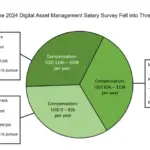
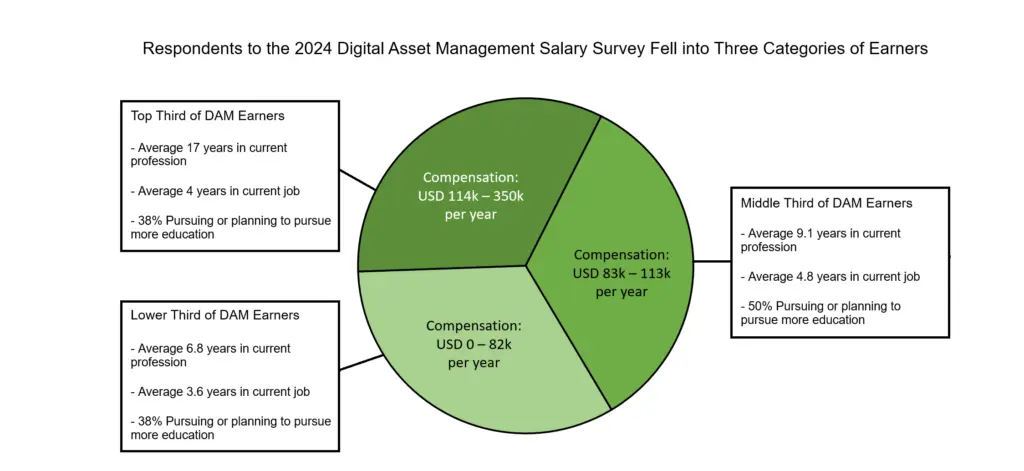
The 2024 DAM Salary Survey painted a vivid picture of a profession adapting to a decentralized corporate world. Key metrics from the 2024 report included:
- Median Full-Time Salary: $99,000 USD
- Mean Full-Time Salary: $109,645 USD
- Remote Adoption: Nearly 50% of all survey respondents were working fully remotely.
Perhaps the most striking takeaway from the 2024 data was the diminishing importance of geographic location. Historically, professionals based in major metropolitan creative and financial hubs—such as London, New York, and Los Angeles—commanded a distinct salary premium to offset the cost of living. By 2024, however, location had become almost irrelevant. As remote work normalized across enterprise organizations, talent acquisition broke free from geographic boundaries.
Instead, the 2024 survey confirmed that experience was the single most reliable predictor of compensation. As DAM managers accumulated tenure, their earning potential scaled accordingly, superseding the physical location of either the employee or the corporate headquarters.
The 2017 Baseline: LIS Roots and Emerging Disparities
Comparing the 2024 findings to the 2017 results highlights the maturation of the discipline. In 2017, the demographic profile skewed heavily toward traditional information professionals—archivists, librarians, and database administrators who brought formal information science methodologies to corporate media repositories.
While the 2017 dataset was smaller, it captured an industry in transition. It hinted at structural pay disparities tied to gender and geography that the broader industry was hesitant to address openly. Over subsequent years, as DAM formalized into a distinct corporate discipline with specialized software ecosystems, the data began to reflect a more standardized, albeit still opaque, job market.

Why Your Data Matters
Gathering accurate metrics in a specialized field is notoriously difficult. As anyone who has attempted to spearhead industry research knows, the integrity of the data is entirely dependent on sample size and diversity. When practitioners sit down on a busy Thursday afternoon to complete a ten-minute anonymous form, they are performing a vital service for the broader community.
Without empirical data, DAM managers negotiating salaries are forced to rely on generalized recruiter guesses or mismatched IT job descriptions that fail to capture the unique blend of creative workflow management, technical taxonomy design, and stakeholder diplomacy required to run a successful enterprise repository.
Official Insights & The Human Element Behind the Data
The longevity of the DAM Salary Survey is a testament to the dedication of its steering committee. Comprising Elizabeth Keathley, Lisa Grimm, Deb Fanslow, and Jennifer Tyner, this group has spent years championing professional visibility and operational transparency within the digital asset management community.
In crafting these surveys, the authors have consistently emphasized that the initiative is built by the community, for the community. The driving philosophy has always been egalitarian: ensure that the data is gathered anonymously, analyzed rigorously, and published freely for public consumption. By keeping the report open-access, the committee prevents the findings from being locked behind corporate paywalls or weaponized as expensive intelligence reports sold back to the very professionals who generated the data.
The human element of DAM management cannot be overstated. Behind every data point in the salary survey is a professional wrestling with complex organizational challenges:
- Negotiating rights clearance for global multi-channel campaigns.
- Untangling legacy folder structures inherited from decades of corporate mergers.
- Explaining to creative teams why rigid metadata standards are not optional roadblocks, but essential safeguards for brand equity.
- Integrating artificial intelligence tools to tag, sort, and retrieve assets without compromising data privacy or copyright compliance.
These responsibilities require a rare hybrid of left-brain technical acumen and right-brain creative empathy. The salary survey serves as an institutional mirror, reflecting whether corporate compensation packages are keeping pace with these expanding job descriptions.
Future Outlook: What the 2026 Survey Hopes to Uncover
As the 2026 DAM Salary Survey officially opens its doors, the professional landscape is shifting faster than ever. Several emerging trends will likely shape the narrative of the upcoming results:
1. The Generative AI Impact on DAM Roles
The widespread enterprise adoption of generative AI has fundamentally altered what organizations expect from their digital asset repositories. DAM managers are no longer just cataloging human-created photography, video, and copy; they are increasingly tasked with managing synthetic assets, tracking AI model provenance, establishing governance frameworks for generated outputs, and handling rights issues surrounding training data. The 2026 survey will provide vital clues as to whether these expanded technical demands are translating into higher compensation tiers.
2. The Evolution of Remote and Hybrid Work Models
While the 2024 survey captured a workforce experiencing peak remote flexibility, the corporate landscape has since seen various pushes toward hybrid mandates and office returns. The 2026 dataset will test whether the death of geographic pay premiums remains a permanent structural shift or if localized compensation adjustments are making a comeback.
3. Career Pathing and Specialization
As DAM matures, specialization is becoming more common. Organizations are distinguishing between operational DAM coordinators, strategic enterprise architects, metadata specialists, and integration engineers. The 2026 survey aims to map these distinctions more granularly, helping professionals understand where specialized skill sets command the highest market value.
Call to Action: Make Your Voice Heard
The success of the 2026 DAM Salary Survey relies entirely on the participation of active practitioners. Whether you administer an enterprise DAM platform, wrangle complex metadata taxonomies, manage digital rights, or oversee creative operations, your compensation data matters.
By taking ten minutes to complete the anonymous survey, you contribute to a vital public resource that empowers the entire community. Armed with accurate, peer-reported data, professionals can approach performance reviews, salary negotiations, and career transitions with empirical confidence rather than guesswork.
Take the Survey Today:
Access the official form via the 2026 DAM Salary Survey Google Form.
Share the link with your colleagues, peers, and industry networks. The more comprehensive the dataset, the stronger the entire DAM community becomes.