









Executive Overview
In the world of digital piracy, few operations grew as brazenly or scaled as lucratively as Xoi Lac TV and its sprawling constellation of sister sites. For years, millions of Vietnamese football fans relied on the network as their go-to destination for free, high-definition Premier League broadcasts, complete with localized, energetic commentary. Behind the scenes, however, what began as a grassroots streaming hub evolved into a highly professionalized, multi-million-dollar enterprise.
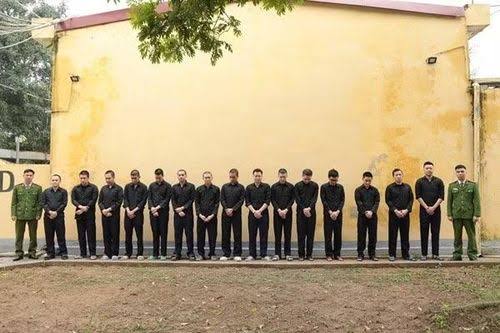
The syndicate’s sophisticated business model—anchored by aggressive online gambling advertisements—eventually drew the intense scrutiny of Vietnamese cybercrime authorities. What started as a localized raid in February 2024 has now culminated in a massive legal milestone. Police in Hung Yen province have officially concluded their sprawling investigation, petitioning prosecutors to bring criminal charges against 74 individuals linked to the network.
While the sheer scale of the copyright infringement is staggering—encompassing thousands of unauthorized broadcasts and tens of millions of dollars in claimed losses by rightsholders—the legal jeopardy facing the defendants extends far beyond intellectual property law. Under Vietnam’s stringent penal code, copyright violations carry relatively light maximum sentences. It is the integration of illegal online gambling banners that poses the gravest threat to the accused, with organizers facing up to a decade behind bars.
Beyond Vietnam’s borders, the Xoi Lac takedown carries profound geopolitical and economic weight. The operation has become a central chess piece in a high-stakes international intellectual property dispute. While the British government has formally commended Hanoi for its enforcement efforts, Washington remains skeptical, recently targeting Vietnam with aggressive trade investigations and "Priority Foreign Country" designations over systemic online piracy. As the case moves from police investigators to state prosecutors, the fate of the 74 defendants will not only shape the future of digital enforcement in Southeast Asia but may also determine whether Vietnam can successfully stave off crippling U.S. trade tariffs.
Detailed Chronology: From Grassroots Streaming to a 74-Defendant Indictment
The life cycle of the Xoi Lac empire is a masterclass in the rapid ascension and inevitable collision of digital piracy networks with state power.
Inception and Expansion (2018–2024)
The foundation of the network was laid in late 2018. According to investigators in Hanoi, technology entrepreneur Pham Nguyen Dung provided the initial financial backing, while programmer Nguyen Cong Dinh engineered the proprietary streaming architecture. The duo established an operational blueprint that would allow them to bypass domain blocks with impunity: whenever authorities cracked down on a specific web address, the network seamlessly migrated to a fresh domain, retaining its user base through aggressive social media marketing and brand recognition.
Over the ensuing years, the operation metastasized. By the time law enforcement intervened, the collective controlled a massive portfolio of pirate domains, including XoilacTV, 90PhutTV, VeboTV, ThapcamTV, BanhkhucTV, and CakeoTV. Simultaneously, Dinh collaborated with secondary defendants to run the rival "Cakhia" streaming network, effectively monopolizing the unauthorized broadcast of major European football leagues in Vietnam.
The Raid and Initial Charges (Early 2024)
The first domino fell in February 2024, when Vietnam’s cybercrime police launched coordinated raids across multiple provinces, disrupting the technical infrastructure and rounding up key operators. A month later, authorities officially charged 30 individuals. At the time, industry observers viewed the bust as a standard—albeit large-scale—enforcement action against regional sports piracy.
The Investigation Concludes (Late 2024 / Present)
The scope of the investigation expanded exponentially over the following months as cyber-forensic teams traced server logs, financial transactions, and communication channels. Last week, police in Hung Yen province officially closed the preliminary investigative phase, submitting a comprehensive dossier requesting that prosecutors formally charge 74 suspects.

The case now rests with state prosecutors, who have a statutory window of up to 30 days to review the file, issue formal indictments, remand the dossier for supplementary investigation, or dismiss the charges—though dismissal remains statistically negligible given the mountain of gathered evidence.
Supporting Context & Metrics: Inside the Pirate Machine
The scale of the Xoi Lac operation defies the stereotype of lone-wolf hackers operating from a basement. It operated with the structure, hierarchy, and efficiency of a modern digital corporation.
The Workforce: Commentators and Technicians
The investigation revealed that the 74 suspects encompassed a wide spectrum of specialized roles, ranging from server administrators and financial handlers to on-air talent.
Remarkably, the network employed more than 30 professional Vietnamese commentators who lent personality, humor, and localized flavor to the broadcasts. These commentators were paid a modest operational stipend ranging from 200,000 to 500,000 Vietnamese Dong ($8 to $20 USD) per match.
The crown jewels of the commentary team operated under colorful pseudonyms, most notably "Batman" and "Scarecrow." Investigative disclosures later unmasked "Batman" as co-founder Nguyen Cong Dinh himself. Digital forensic audits revealed that Dinh personally accrued over 12 billion dong (approximately $470,000 USD) directly from his involvement in the syndicate.
The Content and Financial Engines
Between April 2025 and January 2026 alone, the pirate network systematically ripped and rebroadcast 1,529 live football matches without authorization, trampling upon the exclusive licensing rights of the English Premier League and domestic broadcast partners.
While the primary product was free sports content, the monetization strategy relied entirely on high-volume traffic redirection to offshore gambling platforms. Banners and promotional integrations for prominent betting brands—including 8XBET, LU88, Man88, and HBET—were embedded directly into the streaming interfaces.
Police financial estimates indicate that these gambling partnerships generated over 130 billion dong ($5 million USD) in illicit advertising revenue during a relatively brief operational window.
The Damage to Rightsholders
While the syndicate’s gross revenues ran into the millions, rightsholders argue that the economic damage inflicted upon the legitimate broadcasting ecosystem is exponentially higher.

- K+ (Vietnam Pay-TV Service): Preliminarily estimates its direct commercial and subscriber losses to exceed $83 million USD.
- The English Premier League: Which licenses its valuable Vietnamese broadcast rights exclusively through regional partners, estimates its direct losses at over $4.6 million USD.
These staggering financial figures are expected to play a central role during the eventual courtroom proceedings, though precise restitution amounts will be formally adjudicated by the presiding judges.
Legal Mechanics: Copyright vs. Organized Gambling
A critical nuance of Vietnamese jurisprudence dictates that the 74 defendants face wildly disparate legal exposures depending on the specific statutes under which they are prosecuted.
The Copyright Ceiling
Of the 74 suspects, 51 individuals—including masterminds Dung and Dinh—have been recommended for prosecution on combined charges of copyright infringement and organizing gambling.
Under Vietnam’s current Penal Code, intellectual property and copyright infringement offenses are heavily capped, carrying a maximum sentence of just three years in prison, regardless of how many millions of dollars in profit the illegal enterprise generated. For major piracy rings, this statutory cap has historically represented an acceptable business risk.
The Weight of Gambling Charges
What transforms the Xoi Lac case from a routine copyright infringement matter into a catastrophic legal reckoning for the defendants is the inclusion of gambling-related charges.
Promoting and organizing illegal online gambling is treated with extreme severity under Vietnamese law. Operating as part of a professional, organized syndicate elevates the charge to a felony level, carrying a maximum prison sentence of up to 10 years.
Consequently, while the unauthorized streaming of Premier League matches built the brand and captured the audience, it is the illicit betting banners that will form the primary basis for the lengthy prison sentences prosecutors are expected to seek.
Official Statements and International Diplomatic Pressure
The crackdown on Xoi Lac TV has transcended domestic law enforcement, morphing into a major flashpoint in international trade diplomacy and intellectual property enforcement.
Gratitude from London
In May, the diplomatic impact of the raid became public when Vietnam’s Ministry of Public Security announced that the British Embassy in Hanoi had dispatched a formal letter of gratitude. The correspondence praised Vietnamese law enforcement for decisively safeguarding international copyright holders and cracking down on operations that routinely siphon value from British sports properties like the Premier League.
Washington’s Retaliatory Trade Measures
While London offered praise, Washington maintained a posture of aggressive skepticism.
- The "Priority Foreign Country" Designation: At the end of April, the Office of the U.S. Trade Representative (USTR) designated Vietnam as a "Priority Foreign Country" due to systemic failures in combating online piracy—marking the first time any nation had received this punishing label in thirteen years.
- Section 301 Investigation: Shortly thereafter, the USTR initiated a formal Section 301 investigation into Vietnam’s intellectual property enforcement practices, leaving the door wide open for punitive tariffs on Vietnamese exports. The USTR stated explicitly that despite incremental local actions, widespread online infringement "continues to impair the competitive position of U.S. innovators and creators."
Vietnam’s Defense Strategy
Cornered by the threat of debilitating U.S. trade sanctions, Hanoi has aggressively brandished its recent anti-piracy sweeps as proof of systemic reform. In its formal July rebuttal to the USTR, the Vietnamese government cited the Xoi Lac dismantling alongside high-profile takedowns of piracy portals Rophim and Y2Mate, explicitly petitioning Washington to remove Vietnam from the priority watch list.
Furthermore, Vietnam highlighted the concurrent HiAnime criminal proceedings, in which the Ministry of Public Security announced charges against seven suspects on July 2—precisely the same day Vietnam filed its formal defense in Washington.
Whether the timing of the Hung Yen police’s recommendation to prosecute 74 Xoi Lac defendants was accelerated by this intense international pressure remains an open question. Regardless of motivation, the political optics are clear: Hanoi is eager to demonstrate to Western trade partners that its digital borders are no longer a safe haven for international copyright infringers.
Future Outlook
As the Xoi Lac TV case transitions from police investigation to judicial prosecution, several critical questions remain unanswered.
Within the next 30 days, state prosecutors must officially review the 74-defendant dossier, formulate formal indictments, and set the stage for what promises to be a landmark trial in Vietnam’s legal history. The sentences handed down to masterminds Pham Nguyen Dung and Nguyen Cong Dinh, alongside their supporting cast of commentators and technicians, will send a definitive signal to the regional piracy underground.
However, the war against digital piracy is far from won. A simple web search for "xoi lac" and its historical iterations reveals a resilient ecosystem of anonymous copycat domains already working to fill the vacuum left by the syndicate’s collapse.
Globally, the ultimate test for Vietnam will not simply be securing convictions in headline-grabbing show trials, but dismantling the systemic infrastructure of online infringement sufficiently to satisfy Washington, lift the looming threat of Section 301 tariffs, and restore long-term confidence to the international creative economy.