








Executive Overview
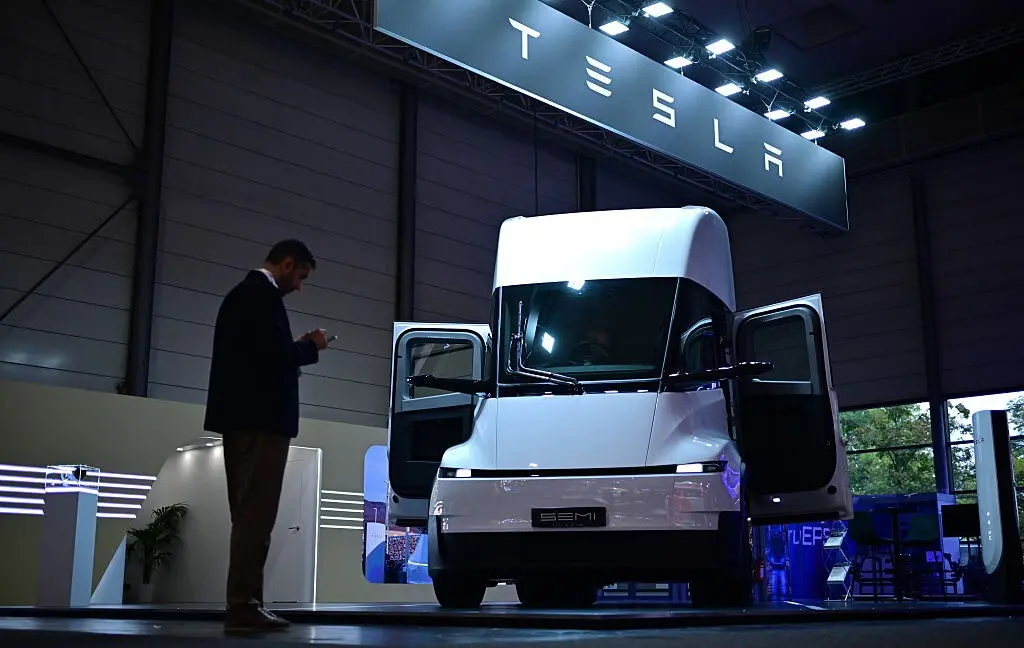
The global transition toward sustainable commercial transportation is navigating an era of profound paradox. Even as the political landscape in Washington shifts dramatically away from federal decarbonization incentives, market forces are stepping in to accelerate the adoption of heavy-duty electric vehicles (EVs). A striking case in point materialized this week, when a coalition of corporate shipping giants—including tech titan Microsoft and consumer goods behemoth PepsiCo—announced a record-breaking order for 2,500 Tesla Semi trucks. Deliveries are slated to begin immediately and span the next 18 months, a deployment scale that threatens to nearly double the total population of heavy-duty electric trucks operating on United States roadways today.
This massive commercial commitment arrives against a backdrop of deep political irony. Elon Musk, the chief executive of Tesla, poured millions of dollars into the successful election campaign of the current Trump administration and even served a brief stint inside the federal apparatus. Yet, this same administration has systematically dismantled billions of dollars in federal support for electric vehicles, while actively working to roll back fuel economy standards for heavy-duty truck engines. These regulatory retreats aim to relieve manufacturers from aggressive climate targets, even though heavy-duty freight trucks alone account for roughly 7 percent of all US greenhouse gas emissions.
Despite the headwinds in Washington, the economics of long-haul logistics are being aggressively redrawn by geopolitical instability. The ongoing conflict involving Iran has severely disrupted global energy markets, choking off oil production and destabilizing maritime shipping lanes in the Middle East. As a direct consequence, domestic US diesel prices have skyrocketed to record highs, nearly doubling compared to the same period last year.
In a pre-taped address celebrating the monumental fleet purchase, Musk acknowledged the volatile economic environment forged by the very administration he once advised. Pointing to soaring fuel expenses, he argued that electric propulsion has never made more financial sense for fleet operators, given that the localized cost of electricity remains a fraction of diesel prices during these turbulent times.
Behind the corporate headlines lies a complex story of collaborative procurement, rigorous technical evaluation, and lingering questions regarding autonomous vehicle integration. As the commercial freight sector pivots toward survival and cost-efficiency, the Tesla Semi deal signals a watershed moment for heavy-duty electrification—proving that commercial demand can occasionally outpace, and outmaneuver, hostile federal policy.
Detailed Chronology
The Political Alliance and Regulatory Rollbacks
The genesis of today’s commercial EV landscape is inextricably linked to the political realignments of recent years. Elon Musk’s financial backing of the Trump administration was viewed by many observers as a high-stakes gamble to secure influence at the highest levels of federal policy-making. For a brief period, Musk’s involvement in government efficiency initiatives suggested a direct pipeline between Silicon Valley innovation and federal regulatory strategy.
However, the reality of governance quickly fractured any idealized alignment on clean energy. Within its first year, the Trump administration—backed by a Republican congressional majority—fulfilled campaign promises by stripping billions of dollars in federal subsidies, consumer tax credits, and infrastructure grants designed to accelerate EV adoption across passenger and commercial sectors. Furthermore, the administration initiated sweeping efforts to lower fuel economy standards for heavy-duty truck engines. These revised standards significantly relaxed the emissions trajectories previously mandated for class 7 and 8 trucks, relieving traditional internal combustion engine manufacturers from aggressive climate compliance targets.
For an industry where heavy trucks contribute roughly 7 percent of total US greenhouse gas emissions, the regulatory rollback was seen as a major victory for legacy automakers and diesel proponents, but a severe blow to environmental advocates and green technology startups.
The Geopolitical Shockwave and Energy Crisis
While Washington sought to rewind environmental regulations, geopolitical events across the globe rendered those regulatory debates largely secondary to raw economic survival. The escalating conflict involving Iran and its regional proxies triggered a worst-case scenario for global energy markets.
Oil production facilities in the Middle East faced direct and indirect disruptions, while key maritime chokepoints critical to petroleum shipping experienced severe security threats. The resulting supply shock sent crude oil prices spiraling upward, culminating this month in record-high domestic US diesel prices. Fleet operators watched in dismay as fuel costs nearly doubled compared to the previous year, threatening the profit margins of supply chains nationwide.
It was within this crucible of macroeconomic pain that the economic calculus of fleet management fundamentally shifted. Electric vehicle proponents had long argued that the Total Cost of Ownership (TCO) favored electrification over the long term, primarily due to lower maintenance and fueling expenses. The sudden eruption of record diesel prices compressed that long-term horizon into an immediate, urgent financial imperative.
The Megadeal Unfolds
Capitalizing on this energy volatility, a powerful coalition of major shippers—anchored by corporate heavyweights Microsoft and PepsiCo—concluded months of meticulous market assessment this week. Acting through a collaborative procurement strategy facilitated by the nonprofit Smart Freight Centre, the coalition finalized a record-setting order for 2,500 Tesla Semi trucks.
The delivery schedule is aggressive: units will begin rolling off production lines immediately, with fulfillment stretching across the next year and a half. By pooling their collective market demand, these carriers were able to negotiate favorable pricing terms with Tesla, demonstrating the viability of cooperative purchasing models in the nascent commercial EV space. If every unit successfully reaches its destination and integrates into active fleets, the order will single-handedly expand the footprint of heavy-duty electric trucking in the United States by nearly 100 percent.
Supporting Context & Metrics
The Economics of Electrification vs. Diesel
To understand the rationale behind the Microsoft-PepsiCo coalition’s historic order, one must examine the stark economic realities facing logistics managers today. Diesel fuel is traditionally the single largest variable operating expense for commercial trucking fleets, often accounting for up to 40 percent of total per-mile operational costs.
When diesel prices spike—as they have following the Middle East energy disruptions—carrier profit margins evaporate almost overnight. In his address addressing the new Semi deployment, Musk highlighted this exact vulnerability:
"The truck is going to make a ton of sense economically because the cost of electricity is much less than the cost of diesel, especially in these crazy times."
While electricity prices are subject to regional fluctuations and peak-demand pricing structures, they do not experience the sudden, catastrophic supply shocks characteristic of global oil markets. For enterprise-scale shippers operating massive long-haul and regional distribution networks, transitioning to battery-electric propulsion serves as a vital corporate hedge against geopolitical oil volatility.
Quantifying the Impact on US Infrastructure
To contextualize the magnitude of the 2,500-unit Tesla Semi order, it is necessary to examine current baseline data from organizations tracking zero-emission truck (ZET) deployments, such as CALSTART and the Smart Freight Centre.
- Current Fleet Size: Prior to this announcement, the total number of heavy-duty electric trucks operating in active commercial service across the United States hovered near 2,800 to 3,000 units.
- The Surge: Adding 2,500 new Tesla Semis over the next 18 months represents an immediate 85% to 90% expansion of the existing national fleet.
- Emissions Profile: Heavy-duty trucks represent a disproportionate share of the nation’s transportation emissions. While passenger cars dominate public attention, class 8 trucks are responsible for approximately 7 percent of total US greenhouse gas emissions and a massive share of localized particulate matter pollution in urban freight corridors.
- Corporate Scale: The involvement of Microsoft and PepsiCo introduces immense enterprise capital and institutional credibility to the commercial EV sector, proving that zero-emission freight is no longer confined to small-scale corporate pilot programs.
Official Statements and Industry Perspectives
The Evaluation Process: Why Tesla?
Selecting a heavy-duty electric truck is an intricate engineering and financial decision. Freight operators cannot afford downtime, battery degradation failures, or insufficient service support. According to Meena Bibra, a spokesperson for the nonprofit Smart Freight Centre who worked closely on the multi-company procurement deal, the selection process was exhaustive.
"The group selected Tesla trucks over competitors after assessing price, performance, production capability, and service support," Bibra explained in an interview with WIRED.
This rigorous evaluation underscores that while brand loyalty and executive relationships exist, enterprise buyers ultimately demanded hard proof of manufacturing capacity and reliable roadside and depot service support. However, Bibra also noted that the market remains pluralistic. Carriers accustomed to traditional manufacturing relationships, or whose specific route profiles demand alternative vehicle specifications, continue to explore and purchase electric commercial trucks from established legacy competitors such as Kenworth, Ride, and Volvo. The collective purchasing pool demonstrated that cooperative demand aggregation can successfully drive down purchase prices across multiple platforms, benefiting the broader zero-emission commercial ecosystem.
The Autonomy Question: Full Self-Driving on the Horizon
Beyond powertrain economics, technology integration remains a central pillar of Tesla’s pitch to commercial fleet operators. During his pre-taped address, Musk touched upon the integration of Tesla’s advanced driver-assistance software, Full Self-Driving (Supervised).
While the system is not yet active on the Semi platform, Musk stated that the technology is slated to debut in "the very near future." This announcement carries a hint of déjà vu for industry watchers. The predecessor technology, Enhanced Autopilot, was originally promised for the Tesla Semi during its initial grand unveiling back in 2017.
Safety advocates and transportation analysts are closely monitoring the intersection of heavy commercial vehicles and autonomous driver-assistance software. While the promise of reduced driver fatigue and optimized fuel/energy efficiency is enticing for long-haul operations, deploying supervised autonomous systems on 80,000-pound class 8 trucks introduces complex liability, regulatory, and safety challenges that far exceed passenger vehicle applications.
Future Outlook
Navigating Headwinds and Horizons
The convergence of record diesel prices, aggressive corporate procurement, and hostile federal policy creates a fascinating roadmap for the future of commercial transportation. As the Trump administration presses forward with its deregulatory agenda and the rollback of fuel economy standards, traditional internal combustion engine manufacturers may experience short-term cost relief. However, the global energy market is sending an entirely different signal to enterprise leadership.
Corporate sustainability mandates, combined with the hard-nosed economic reality of unstable oil supplies, are compelling companies like Microsoft and PepsiCo to decouple their balance sheets from fossil fuels. The successful deployment of 2,500 Tesla Semis over the next 18 months will serve as a critical stress test for the viability of battery-electric long-haul trucking at scale.
What Lies Ahead for Commercial Electrification
- Infrastructure Expansion: The massive influx of new electric trucks will place immediate pressure on private and public charging infrastructure. Fleet operators will need to accelerate investments in high-capacity megawatt-charging depots along major freight corridors.
- Competitive Pressure on Legacy Automakers: With Tesla securing a landmark multi-carrier order, legacy truck manufacturers—including Volvo, Kenworth, and Freightliner—will face mounting pressure to scale their own zero-emission production lines and enhance service support networks.
- Regulatory Divergence: A widening gap is emerging between federal policy and private sector action. While Washington attempts to slow down climate compliance mandates, corporate supply chain imperatives and international market pressures are driving decarbonization forward from the bottom up.
- The Role of Autonomy: If Tesla successfully introduces Full Self-Driving (Supervised) to the Semi platform in the coming years, it could fundamentally alter the labor dynamics and operating economics of long-haul freight, provided regulatory hurdles can be successfully navigated.
Ultimately, the record-setting Tesla Semi deal proves that while political winds in Washington can shift overnight, the underlying economics of energy efficiency and corporate risk management will ultimately dictate the evolution of the American highway.