







Executive Overview
Earlier this month, the coastal landscapes of southern France played host to the inaugural Lumière Summit—a high-stakes, one-day gathering of international studio executives, government ministers, and elite filmmakers co-hosted by French President Emmanuel Macron and South Korean President Lee Jae Myung. Designed to align global creative economies and forge unified strategies against the leakage of copyrighted digital assets, the summit concluded with the signing of several thematic declarations. Chief among them was a voluntary compact aimed at bolstering international cooperation against cinematic and audiovisual piracy.
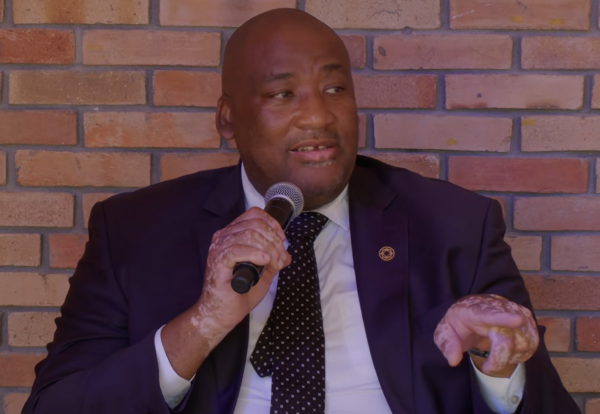
Yet, what was intended to be a seamless, unified display of transatlantic and intercontinental resolve quickly turned into an arena for fierce ideological debate. The fault lines of the global intellectual property (IP) debate were laid bare not by rebellious tech advocates, but by a sitting government official: Gayton McKenzie, South Africa’s Minister of Sport, Arts and Culture.
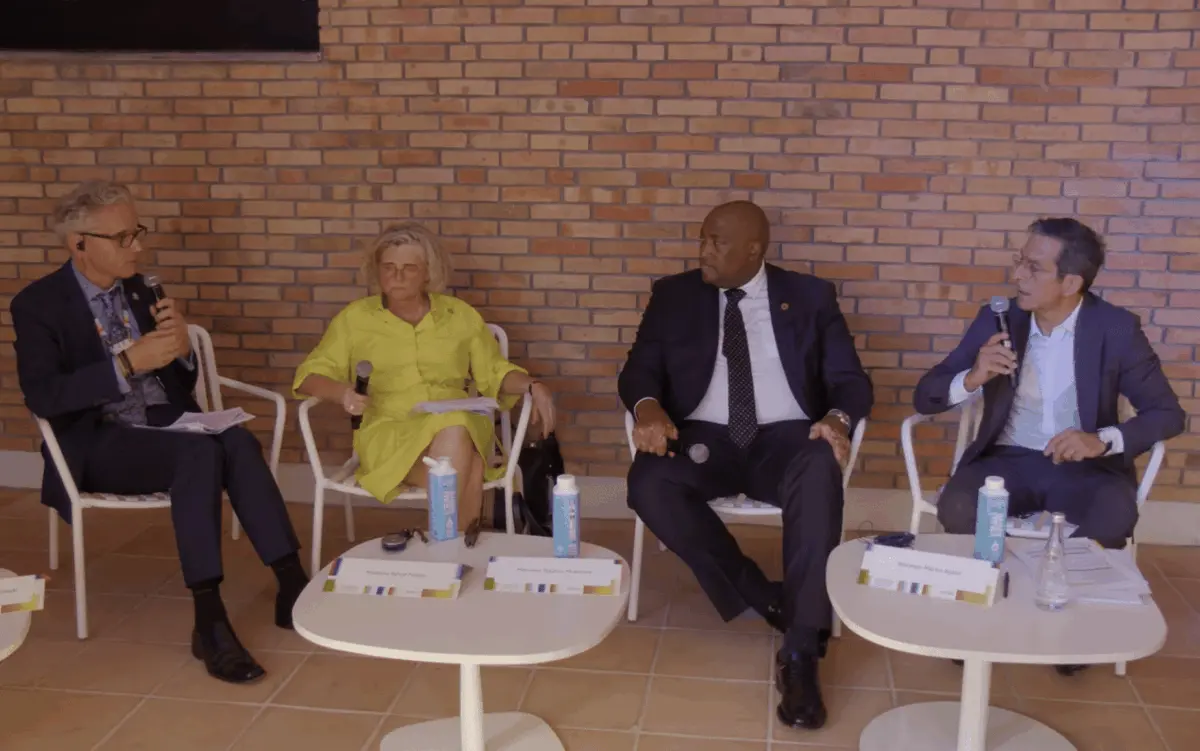
Sharing a stage with senior representatives from the World Intellectual Property Organization (WIPO) and France’s audiovisual regulatory authority (ARCOM), McKenzie delivered a stinging critique of Western IP orthodoxy. Accusing the global entertainment industry of hypocrisy, he challenged the selective moral outrage surrounding copyright infringement, pointing out how Hollywood and Western filmmakers frequently celebrate piracy when it circumvents authoritarian censorship, yet criminalize the exact same behaviors when practiced by economically disadvantaged populations. Furthermore, McKenzie issued a stern warning against paternalistic trade pressures from developed nations, demanding that developing economies be treated as equal partners rather than subordinate players on the global stage.
Detailed Chronology: From Presidential Openings to a Clash on Stage
Setting the Stage in the South of France
The Lumière Summit opened under the heavy weight of traditional copyright protectionism. Studio bosses, policy makers, and representatives from the Motion Picture Association (MPA) convened to discuss what they termed "the race against piracy." Charles Rivkin, CEO of the MPA, had been scheduled to deliver a keynote address framing the existential threat unauthorized streaming poses to modern studio models. However, caught up in a closed-door presidential meeting, Rivkin was temporarily replaced by Emilie Anthonis, the MPA’s president for Europe, the Middle East, and Africa (EMEA).
While industry executives prepared to champion aggressive enforcement metrics, the subsequent panel discussions immediately pivoted away from standard corporate talking points. The tone was unexpectedly set by Minister Gayton McKenzie, whose unorthodox presence on a panel dominated by traditional IP regulators signaled that the proceedings would not follow the usual script.
Tarik Saleh’s Confession and the Irony of Banned Cinema
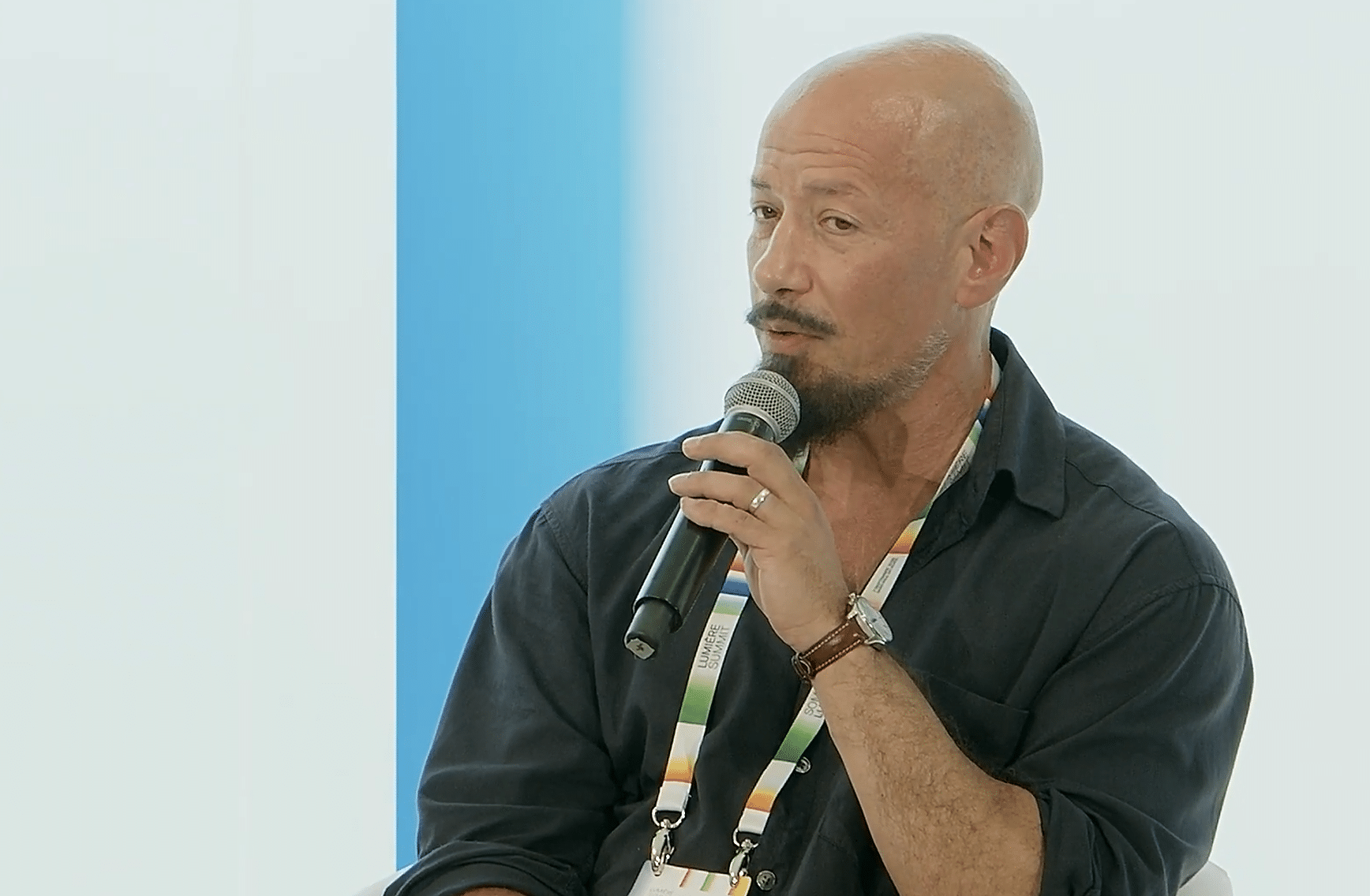
The ideological clash at the heart of the summit crystallized around a paradox highlighted earlier in the day by Swedish-Egyptian director Tarik Saleh. Known for acclaimed political thrillers such as The Nile Hilton Incident and Cairo Conspiracy, Saleh addressed the opening session of the summit to recount his harrowing introduction to filmmaking in his ancestral home.
Saleh revealed that when he attempted to shoot his debut feature in Egypt, he was abruptly told to leave the country. Describing the encounter in blunt terms, he noted, "I was going to shoot my first film in Egypt and I was asked to leave. Uh, I’m putting it nicely. I mean, they said, ‘Get the fck out of here.’"* Forced to relocate production to Morocco, Saleh’s films went on to achieve international critical acclaim. However, because his politically charged narratives directly challenge state power, his works are heavily banned by Egyptian authorities.

Yet, despite these sweeping government bans, Egyptian audiences are far from cut off from his work. In a moment of striking candor during the opening panel, Saleh smiled and admitted that piracy acts as a vital bridge between his art and his target audience. "Here is where piracy comes into the picture in a little reversed way," Saleh remarked with a laugh. "Egyptians love piracy, which is working very well for me."
As Saleh recounted this tale, the moderated room offered no applause. The discomfort among industry traditionalists was palpable. However, rather than letting the irony fade into the background, Minister McKenzie seized upon Saleh’s comments during the afternoon session, using them as Exhibit A in his indictment of industry double standards.
Supporting Context & Metrics: The ARCOM Model and Global Disparities
The European Enforcement Apparatus
To understand the friction at the Lumière Summit, one must examine the regulatory benchmarks presented by European authorities during the panels. Martin Ajdari, chair of France’s ARCOM (the Regulatory Authority for Audiovisual and Digital Communication), took to the stage to outline France’s aggressive anti-piracy record.
Ajdari proudly reported that ARCOM had successfully issued more than 22,000 blocking and delisting injunctions over a five-year period. The pace of enforcement has accelerated dramatically, with approximately 10,000 injunctions issued in 2026 alone. According to ARCOM’s internal metrics, these aggressive regulatory interventions have successfully slashed the French piracy audience in half since 2018.
To French and European regulators, these figures represent an unmitigated success story—a blueprint for how modern states can successfully choke out unauthorized digital distribution channels through systemic domain blocking and search engine sanitization.
The Leaking Boat Analogy
Minister McKenzie acknowledged the technical impressiveness of ARCOM’s achievements, but quickly rejected the notion that European solutions can be universally applied without addressing structural inequalities. He deployed a vivid metaphor to describe the global ecosystem of intellectual property enforcement: two people sitting in a boat that is actively taking on water, but with a leak restricted entirely to one side.
"We on the same boat. We both hate piracy," McKenzie explained to his fellow panelists, which included ARCOM leadership and WIPO Deputy Director General Sylvie Forbin. "The boat is leaking on our side and you are praising, like, where we are sitting we’ve done this."
The minister argued that successes in wealthy, heavily digitized Western European nations do little to safeguard the creative industries of developing nations if those same nations are left to navigate the crisis without adequate infrastructure, contextual understanding, or structural support. When developed economies trumpet their localized enforcement milestones while ignoring the broader socioeconomic drivers of unauthorized media consumption, the global anti-piracy framework begins to fracture.
Official Statements & Industry Friction
Accusations of a "Schizophrenic" Approach
McKenzie’s core critique centered on what he characterized as a profoundly contradictory set of moral standards within the Western entertainment establishment. He pointed out the glaring disconnect between how the industry views unauthorized distribution when it serves political or artistic defiance, versus when it is practiced by impoverished populations seeking basic entertainment.
In addition to Tarik Saleh’s experience in Egypt, McKenzie cited a second example: a Canadian drama series—reportedly Heated Rivalry, a production focusing on a gay hockey player—which has faced censorship or bans in various international jurisdictions. When this censored media is inevitably pirated in the nations that banned it, McKenzie noted, "everybody in the industry is clapping."
Drawing from his own nation’s turbulent historical backdrop, McKenzie recalled that during South Africa’s apartheid regime, numerous groundbreaking films and pieces of literature were systematically banned by the state, leaving underground distribution and unauthorized copying as the sole avenues for civic education and cultural survival.
"We need to define what is piracy," McKenzie asserted. "There’s a failure by the people tasked to fight piracy not to define it definitively." When wealthy studio executives praise copyright infringement as a noble tool for bypassing tyrannical censorship, yet turn around to drag impoverished citizens through the civil and criminal courts for consuming the exact same media formats, the policy becomes, in the minister’s words, "a bit schizophrenic" with "dual standards."
Pushing Back Against Paternalism
The tension on the panel escalated further when WIPO’s Sylvie Forbin detailed the historical conditions and structural adjustments tied to World Trade Organization (WTO) membership during the 1990s—implying that developing nations must adhere strictly to codified international IP standards to participate in global trade.
The remarks clearly struck a nerve with the South African delegation. Pushing back against institutional condescension, McKenzie delivered one of the most memorable lines of the summit:
"Don’t try to punish us like we are children, because we are not children."
This friction is far from theoretical. South Africa has experienced sustained diplomatic and trade pressure from Washington over its intellectual property policies. Notably, in 2020, powerful U.S. copyright lobbies petitioned the United States government to review South Africa’s trade preferences under the Generalized System of Preferences (GSP). The trigger for this retaliatory pressure was South Africa’s progressive copyright bill, which introduced broad, U.S.-style "fair use" exceptions designed to improve educational access and digital equity—provisions that traditional U.S. copyright holders viewed as dangerously expansive.
Future Outlook: Seeking a Partnership of Equals
Beyond Financial Aid: The Demand for Respect
Toward the conclusion of the session, Minister McKenzie sought to disabuse the audience of any notion that South Africa’s hesitance stems from a lack of capital or resources. He emphasized that the South African government possesses the economic capacity to fund robust anti-piracy architecture on par with Sweden or the United Kingdom.
"We don’t lack the money. There are countries that lack the money," McKenzie clarified. "Pero we don’t want to be treated like, here’s money for you, do one, two, three. We want you also to listen to our ideas."
Reiterating that South Africa refuses to occupy a subservient role in global cultural policy negotiations, he stated unequivocally: "We are not beggars. We want a partnership of equals."
To prove that South Africa is far from passive on the issue, McKenzie highlighted proactive steps his administration is already taking. The government has established direct channels of communication with major pay-TV operator Canal+ to combat live sports broadcasting theft, resulting in mandatory anti-piracy warning notices airing before every major football match nationwide. South Africa is entirely willing to participate in global anti-piracy initiatives—provided it is treated as a respected, sovereign collaborator rather than a recalcitrant pupil requiring Western discipline.
The Limits of Voluntary Declarations
As the Lumière Summit drew to a close, organizers unveiled the formal Declaration on Strengthened International Cooperation in the Fight Against Film and Audiovisual Piracy. Billed as a major milestone in cross-border regulatory alignment, the text commits signatory nations to closer intelligence sharing, coordinated judicial responses, and standardized pressure on intermediary platforms.
However, the voluntary nature of the agreement leaves its practical impact open to question. Crucially, because of the ideological and structural disputes highlighted during the panels, no South African representative signed the declaration.
As the global entertainment industry marches toward increasingly aggressive automated enforcement, geo-blocking, and legal harmonization, the events in southern France have exposed a deeper rift. The battle against digital piracy is no longer merely a technical contest between rights-holders and pirates; it has evolved into a geopolitical debate over cultural sovereignty, freedom of expression, and whether the rules governing the digital economy apply equally to the powerful and the marginalized.