









Executive Overview
Take a moment to look at the everyday technology surrounding you. When your smartphone buzzes with an incoming notification, it is the result of a microscopic, high-performance magnet rapidly shifting an internal weight. When you swipe across its pristine display, that glass was polished using cerium powder. If you rely on the internet to connect with the rest of the world, vast oceans are crossed by fiber-optic cables whose signals are amplified using erbium. And if you commute by car, rare earth magnets assist your steering system while complex chemical compounds actively scrub toxic elements from your vehicle’s exhaust.
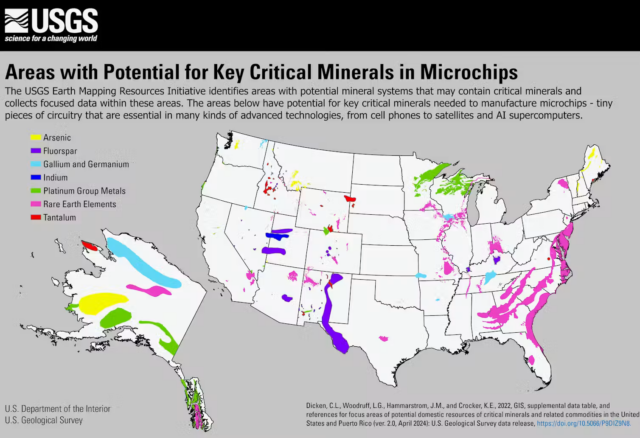
These indispensable devices function entirely because of a suite of 17 chemically similar metallic elements known collectively in the scientific community as rare earth elements (REEs). Ironically, the scientists who labeled this group in 1794 created a lasting misnomer; elements like cerium are actually quite abundant in the Earth’s crust—roughly as common as copper. The true challenge lies not in their geographical scarcity, but in the grueling, environmentally hazardous, and technologically complex process required to separate these minerals from one another and from raw ore.
This intricate bottleneck has transformed rare earth processing into one of the most potent instruments of geopolitical leverage in the modern world. Today, China dominates this critical sector, controlling the vast majority of global processing and refining capacity. This dependence extends far beyond consumer electronics, striking at the heart of national security. The United States military relies heavily on these same refined minerals to construct advanced defense platforms, including F-35 fighter jets and Virginia-class nuclear submarines.
As former war game adjudicators for the U.S. Navy know intimately, military planning depends heavily on uncovering hidden constraints that can render even the most sophisticated operational plans untenable. Rare earth processing is precisely such a constraint. By deploying a series of stringent export controls in 2025—temporarily suspended until November 10, 2026—Beijing demonstrated the immense coercive power of its supply chain dominance. In the classic diplomatic formulation of Theodore Roosevelt, controlling the world’s rare earth pipeline functions as a very big stick, leaving industrialized nations scrambling to rebuild a domestic industrial foundation they spent decades dismantling.
The Great Migration: How China Captured the Market
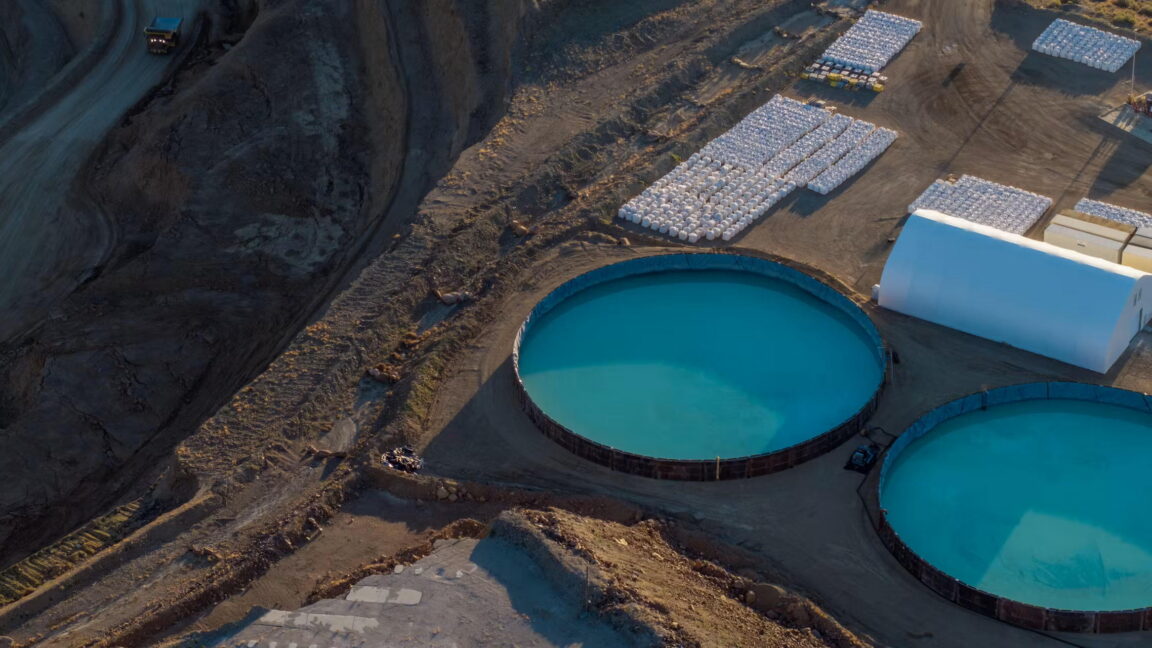
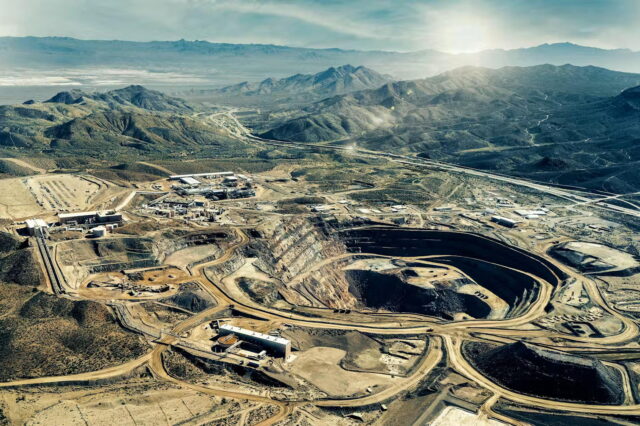
To understand how the United States lost its strategic footing, one must look back to California’s Mojave Desert. For decades, the Mountain Pass mine stood as the undisputed global leader in rare earth production. However, by the late 1980s, the economic realities of domestic mining began to collide with severe environmental liabilities. A series of industrial accidents involving radioactive wastewater spills from the Mountain Pass facility into the sensitive Mojave ecosystem made continued domestic operations increasingly untenable.
At the same time, Beijing recognized the immense strategic value of the sector. The Chinese government aggressively subsidized domestic mining, refining, and manufacturing, allowing state-backed enterprises to sell processed rare earth materials globally at prices far below what Western competitors could match. For industrial buyers, the economic logic was irresistible. Shifting rare earth procurement to China offered cheaper materials without the associated domestic environmental cleanup costs, regulatory friction, or public relations backlash.
[U.S. Raw Ore Mining] ---> [Historical Export to China for Refining] ---> [Chinese Monopoly on Separation] ---> [Global Supply Vulnerability]This implicit trade-off was understood by Western markets, but during an era of rapid globalization and expanding trade with a rising China, the long-term vulnerabilities remained obscured. The consequences materialized swiftly:
- 1998: The Mountain Pass separation plant closed its doors.
- 2002: Mining operations at Mountain Pass were completely halted.
- 2017: Recognizing a growing national security vulnerability, MP Materials successfully restarted mining operations at the site.
Despite these domestic revivals, the U.S. remained heavily reliant on foreign supply chains. As recently as 2025, the United States imported more than two-thirds of the rare earth elements it consumed. By 2024, while China mined approximately 60 percent of the world’s rare earth elements destined for high-performance magnets, it exercised an ironclad grip over 91 percent of global separation and refining capacity. Western industries had outsourced their toxic industrial legacy, trading short-term cost savings for long-term strategic subjugation.
Rebuilding the Chain: Why Industrial Recovery is Painfully Slow
Reversing decades of industrial hollowing is neither quick nor inexpensive. In 2010, the U.S. Government Accountability Office (GAO) published estimates projecting that rebuilding a fully domestic supply chain—encompassing raw mining, chemical separation, and downstream magnet manufacturing—would take as long as 15 years. That forecast has proven grimly accurate.
The barriers to entry are formidable:
- The Expertise Gap: Chinese processing facilities operate with thousands of highly specialized chemical engineers and metallurgists. By contrast, the Western industrial ecosystem suffers from a profound shortage of specialized expertise in rare earth separation chemistry.
- Technological Barriers: The cutting-edge, industrial-scale technologies required for efficient rare earth separation were largely developed within China. The Chinese government has no commercial incentive to share this intellectual property. In December 2023, Beijing formalized this protective stance by enacting a total ban on the export of rare earth separation and refining technology.
- Environmental and Regulatory Hurdle: Chemical separation is inherently messy. Extracting rare earth elements requires large volumes of harsh acids and frequently generates low-level radioactive byproducts, inviting rigorous regulatory scrutiny and lengthy permitting delays.
Recognizing the existential nature of this vulnerability, the U.S. federal government has mobilized billions of dollars. Since April 2025, Washington has committed more than $7 billion to catalyze domestic rare earth production capacity. Key interventions include:
- Direct Equity Investment: In 2025, the Pentagon acquired $400 million in preferred stock in MP Materials, securing a 15 percent ownership stake. MP Materials’ upcoming magnet manufacturing facility is scheduled to begin equipment testing in 2028.
- Federal Loans and Grants: In 2026, the Department of Commerce’s CHIPS Program Office signed a letter of intent to award magnet manufacturer USA Rare Earth $277 million in direct funding alongside a $1.3 billion federal loan, earmarked for developing integrated production facilities in Texas and Oklahoma.
Despite these capital injections, Chinese export restrictions continue to actively impede the reconstruction of Western industrial capacity.
Chronology of Coercion: The 2025–2026 Escalation
The friction between Washington and Beijing reached a critical inflection point on October 9, 2025, when China’s Ministry of Commerce announced six sweeping export control measures. Among them, Announcement No. 61 sent shockwaves through global manufacturing by extending Beijing’s regulatory reach far beyond its borders. Under this rule, a manufacturing facility operating in a third-party nation—such as Germany or Japan—was required to obtain an official Chinese export license if its finished product incorporated Chinese-origin rare earths valued at just 0.1 percent or more of the total product cost, or if the manufacturing process utilized Chinese rare earth technology.
The geopolitical fallout was immediate. The vulnerability of Western supply chains was vividly illustrated in May 2025, when automaker Ford was forced to idle its Chicago assembly plant for an entire week. The cause? A sudden shortage of rare earth magnets—critical components for vehicle speakers and electric motors—precipitated by the new export restrictions. Ford CEO Jim Farley publicly described the company’s parts supply as "day to day," noting the complete absence of alternative sourcing options. Ford was ultimately forced to wait for Beijing’s direct approval before production could resume.
The Fragile Truce and the November 10 Deadline
High-level diplomacy temporarily averted a total trade freeze. Following a summit between President Donald Trump and Chinese leader Xi Jinping in late 2025, Beijing agreed to a temporary suspension of six key export controls until November 10, 2026. In exchange, Washington paused its "affiliates rule," a regulatory measure designed to restrict companies majority-owned by blacklisted foreign entities.
However, this diplomatic truce came with significant caveats:
- Unpaused Restrictions: Crucial licensing requirements imposed by China in April 2025 on exports of seven heavy rare earth elements were never suspended and remain strictly enforced.
- Targeted Retaliation: On June 22, 2026, China’s Ministry of Commerce escalated tensions by placing 10 U.S. companies on its official export control list. This designation prohibited both domestic and foreign firms from selling dual-use goods—items with both civilian and military applications—to these entities.
- Targeting the Pioneers: Significantly, two of the blacklisted companies were MP Materials and USA Rare Earth—precisely the two federally backed American firms furthest along in establishing an independent mine-to-magnet supply chain. Beijing’s actions were widely interpreted as a direct counter-strategy to Pentagon blacklists, aimed squarely at hobbling America’s emerging domestic competitors.
Strategic Metrics & Supply Chain Vulnerability
| Metric / Indicator | Data Point | Strategic Significance |
|---|---|---|
| Global Mining Share (Magnets) | China: ~60% (2024) | High concentration of raw extraction capacity under single-nation control. |
| Refining & Separation Share | China: ~91% | Extreme bottleneck; virtually all global raw ore must pass through Chinese refineries. |
| U.S. Import Dependency | >66% (as of 2025) | Continued reliance on foreign supply despite domestic mining revivals. |
| Value Threshold (Announcement 61) | 0.1% | Foreign factories using minute amounts of Chinese REEs are subject to Beijing export licensing. |
| Federal Capital Investment | >$7 Billion (Since April 2025) | U.S. government financial commitment to bootstrap domestic processing and manufacturing. |
Future Outlook: The Three Divergent Paths for the West
As the November 10, 2026 expiration date for the suspended export controls approaches—and in light of high-level bilateral discussions scheduled between Presidents Trump and Xi—policymakers face three distinct strategic pathways:
1. The Status Quo (Re-reliance on China)
Returning to a model where the U.S. relies entirely on Chinese processing is theoretically the fastest and cheapest economic path. However, it leaves Western industries perpetually vulnerable to sudden regulatory cutoffs, export quotas, and geopolitical coercion.
2. Full Domestic Autarky
Rebuilding an entirely self-contained U.S. rare earth supply chain eliminates foreign dependency and national security vulnerabilities. While federal funding and public-private partnerships have accelerated progress, this path requires billions in upfront capital, takes years to fully operationalize, and carries substantial environmental remediation challenges.
3. Allied Diversification
Building a collaborative, multi-lateral supply chain anchored by trusted international partners—such as Australia and Japan, both of which possess advanced mineral reserves and processing initiatives—offers a resilient middle ground. Japan has successfully pioneered supply diversification strategies in the past, though navigating the extraterritorial reach of Chinese technology controls remains a formidable obstacle.

Ultimately, while diplomatic summits may temporarily alter the timeline of export restrictions, the fundamental struggle for technological and industrial leverage is set to define great power competition for decades to come.