







Executive Overview
Meta is once again placing a massive strategic bet on artificial intelligence, positioning its new line of personal AI agents as the future of consumer interaction. Yet, beneath the polished marketing and promises of autonomous convenience lies a strategy that feels unmistakably familiar.
Recent investigative reports reveal that Meta’s newly launched "Muse" AI agents—designed to act as virtual concierges capable of making outbound calls to businesses for pricing inquiries, reservations, and customer service tasks—are not entirely autonomous. Much like the ill-fated "Project M" experiment of the mid-2010s, Meta is quietly augmenting its cutting-edge AI infrastructure with human workers stationed in call centers.
This hybrid model, often described by tech critics as "Wizard of Oz" engineering, raises critical questions about scalability, cost-efficiency, data privacy, and the true capabilities of modern large language models (LLMs). While leaning on human labor during early deployment phases is a common industry tactic designed to smooth out rough edges and gather training data, it also underscores the limitations of AI systems when tasked with navigating the unpredictable nuances of real-world human interactions.
As Meta aggressively pushes its vision of an AI-driven future onto its billions of global users, this retrospective look examines whether the tech giant has truly innovated or is simply repeating past mistakes with a higher-stakes playbook.
Detailed Chronology: From Project M to the Muse Initiative
To understand the current dynamics surrounding the Muse AI rollout, it is essential to trace the lineage of Meta’s past ventures into conversational assistants and agentic AI. The parallels between the company’s 2015 ambitions and its current strategies reveal a persistent philosophical blueprint within Menlo Park.
2015: The Birth and Promise of Facebook M
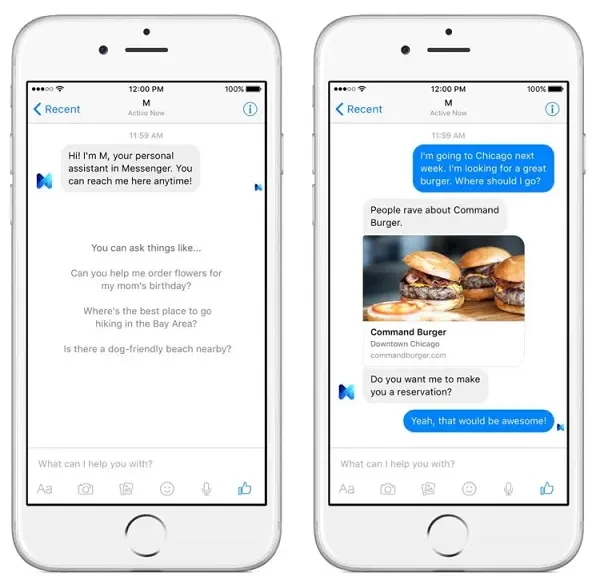
In August 2015, Facebook (now Meta) introduced "M," an integrated digital assistant embedded directly within Messenger. Pitched as a direct competitor to Apple’s Siri, Microsoft’s Cortana, and Google Now, M was introduced with immense fanfare.
Unlike its competitors, which relied purely on algorithmic processing, Meta marketed M as an intelligent assistant capable of executing complex real-world tasks. Users could ask M to purchase holiday gifts, book travel itineraries, arrange restaurant reservations, or coordinate local services.
Behind the curtain, however, the technology was heavily reliant on human contractors. Known internally as "M trainers," these human operators were tasked with stepping in whenever the artificial intelligence stumbled, failed to comprehend a prompt, or required complex external execution. To the end user, the boundary between machine and human was blurred; the assistant simply delivered the requested outcome.
2018: The Quiet Demise of Project M
Despite its functional utility, Project M quickly ran into insurmountable economic and operational barriers. In January 2018, Meta officially pulled the plug on the experiment.
The primary culprit behind M’s cancellation was scalability. While human-in-the-loop systems excel at delivering high-touch customer experiences in early developmental phases, they are notoriously difficult and expensive to scale to a user base numbering in the billions. The cost structure of employing thousands of human operators to supervise automated tasks proved economically unsustainable.
Furthermore, user adoption plateaued. Tech journalists and early adopters, including prominent industry analysts, noted that despite the novelty, they rarely found natural, recurring use cases for the assistant. When Meta CEO Mark Zuckerberg discussed the shutdown, he conceded that user experiences with M mirrored those of broader consumer testing: intriguing in theory, but rarely indispensable in daily life.
2024–2026: The Evolution of Muse and the Human "Concierge"
Fast-forwarding to the present day, Meta has re-entered the personal AI agent race with Muse. Announced by Meta’s Chief AI Officer Alexandr Wang, the Muse ecosystem represents a significant leap forward in generative AI capabilities, boasting advanced reasoning, voice synthesis, and multi-modal integration.
As part of its expansion, Meta rolled out outbound calling capabilities for Muse, allowing the AI to dial physical businesses on behalf of users to secure bookings, check product availability, or negotiate service times. However, investigations by technology publications like 404 Media and Reuters have revealed that these calls are frequently augmented—and in some cases entirely handled—by human staff working within specialized call centers.
Leaked internal insights indicate that Meta has tested various workflows where AI-generated calls encountering friction or complex conversational branches are seamlessly handed off to human representatives. While this ensures a high success rate for the end user, it mirrors the exact hybrid architecture that ultimately doomed Project M a decade prior.
Supporting Context & Metrics: The Economics and Engineering of Hybrid AI
The deployment of hybrid AI architectures—systems that blend algorithmic generation with human verification, data labeling, or real-time intervention—presents a complex matrix of engineering challenges, financial burdens, and operational trade-offs.
The Scaling Dilemma
At the heart of the hybrid model lies an intractable economic paradox: AI is deployed to reduce labor costs and achieve infinite scalability, yet early-stage AI often requires more intensive human intervention than traditional software to function reliably.
| Era | Project (M / Muse) | Core Technology | Human Involvement | Primary Bottleneck | Outcome |
|---|---|---|---|---|---|
| 2015–2018 | Project M | Early NLP & Rule-based bots | Extensive "M Trainers" for task fulfillment | High operational costs, non-linear scaling | Shut down after failing to achieve commercial viability |
| Present | Muse AI Agents | Advanced LLMs & Voice Synthesis | Call center augmentation for complex outbound calls | Data privacy concerns, contractor dependency | Ongoing rollout amid regulatory and structural scrutiny |
When deploying agents designed to interact with external entities—such as calling a restaurant or service provider—the margin for error is razor-thin. If an AI agent stammers, misunderstands scheduling details, or behaves unnaturally, the business on the other end of the line will quickly hang up or refuse to cooperate. Consequently, human oversight acts as a necessary safety net to preserve the illusion of flawless artificial intelligence.
However, scaling this model globally requires massive capital expenditures. Maintaining call center infrastructure alongside high-performance computing clusters strains profit margins, transforming what is ostensibly a software product into a labor-intensive service operation.
Data Privacy and Security Vulnerabilities
Beyond financial viability, the integration of human workers into automated AI loops introduces severe security risks. According to reports from Reuters, Meta previously explored a "human concierge" initiative designed to supplement standard Meta AI responses with human oversight.
Ultimately, that specific concept was shelved due to acute concerns surrounding data privacy. When human contractors are granted access to live user interactions, queries, and personal data to correct or guide AI outputs, the attack surface for data breaches expands exponentially. Ensuring that third-party or internal contractors adhere to strict privacy frameworks—especially when handling sensitive consumer communications, financial requests, or personal schedules—presents an ongoing compliance nightmare for technology conglomerates.
Official Statements and Industry Perspectives
Meta has consistently defended its aggressive integration of artificial intelligence across its family of apps, framing AI agents not as optional novelties, but as foundational layers of the future digital experience.
In public addresses and investor calls, executive leadership has emphasized that current generative AI models possess capabilities vastly superior to those available during the era of Project M. Modern foundational models exhibit advanced contextual understanding, nuanced tone modulation, and superior task execution, theoretically reducing the long-term reliance on human fallback systems.
Industry analysts, however, remain divided. Supporters argue that leveraging human-in-the-loop validation is a pragmatic, iterative engineering necessity. By capturing edge cases where the AI fails, developers can fine-tune weights and parameters more effectively, driving the system closer to true autonomy over time.
Conversely, skeptics point out that utilizing human labor to simulate autonomous AI capability borders on misleading marketing. When consumers engage with an agent marketed as an advanced artificial intelligence, they operate under the assumption that algorithms are processing their requests. Introducing human workers into the pipeline without explicit, transparent disclosure can erode consumer trust, particularly if personal data is exposed in the process.
Future Outlook: Will History Repeat Itself?
As Meta continues to refine and expand the capabilities of its Muse AI agents, the company stands at a critical crossroads. The fundamental question facing leadership is whether technological advancements in large language models over the past decade are sufficient to overcome the economic and operational gravity that dragged down Project M.
The Case for Optimism
Proponents of Meta’s current strategy argue that the baseline intelligence of today’s models is incomparably higher than the rule-based systems of 2015. Modern voice synthesis, real-time speech recognition, and intent-parsing algorithms mean that human intervention will likely represent a shrinking percentage of total interactions as the model trains on millions of real-world examples. If Meta can successfully leverage human-guided data loops to achieve complete autonomy within a compressed timeline, Muse could successfully transition into a truly independent personal concierge.
The Case for Caution
On the other hand, critics argue that certain domains—such as real-world voice negotiations, complex scheduling, and dynamic problem-solving with third-party vendors—will indefinitely require a degree of human intuition and social dexterity that purely statistical models struggle to master consistently. If the cost of maintaining human augmentation remains high while user retention mirrors the apathy directed at Project M, Meta may find itself forced to pivot or scale back its ambitions once again.
Ultimately, Meta’s unwavering dedication to embedding AI agents into the daily lives of its users—regardless of market friction—signals that the company is willing to absorb short-term inefficiencies in pursuit of long-term market dominance. Whether consumers ultimately embrace a world where artificial intelligence (backed quietly by human hands) manages their personal affairs remains one of the defining questions of the current technological era.