







Executive Overview
The rapid, unyielding expansion of the digital economy has triggered an unprecedented political reckoning at the ballot box. According to a comprehensive review of election results, government filings, campaign literature, and local investigative reporting conducted by Data Center Knowledge, at least 18 incumbent officeholders across the United States lost their bids for reelection between August 2025 and August 2026. These defeats were tied directly to documented votes, policy approvals, tax incentive packages, or public advocacy concerning data center developments in their districts.
While the exact causal weight of these infrastructure projects varied from race to race—ranging from single-issue insurgencies to broader referendums on local governance, skyrocketing electricity costs, and land use—the overarching trend is undeniable. Data centers, once welcomed unconditionally by municipalities desperate for a boost to their tax bases, have transformed into toxic political liabilities.
This friction exposes a glaring chasm between the tech industry’s historical approach to site selection and the stark realities of grassroots political engagement. Tech companies, accustomed to rapid, frictionless permitting cycles and expedited zoning approvals, now find themselves navigating a hostile landscape characterized by deep public skepticism. Voters are increasingly weaponizing local planning decisions against incumbent politicians, turning data centers into a potent shorthand for broader anxieties surrounding public resources, local autonomy, environmental degradation, and the staggering cost of grid modernization.
Detailed Chronology of Incumbent Defeats
The political fallout from data center expansion has not been confined to localized municipal zoning boards; it has steadily climbed the political ladder, unseating powerful county commissioners, city council members, state representatives, and even senior state legislative leaders.
Utah: The High-Stakes Epicenter
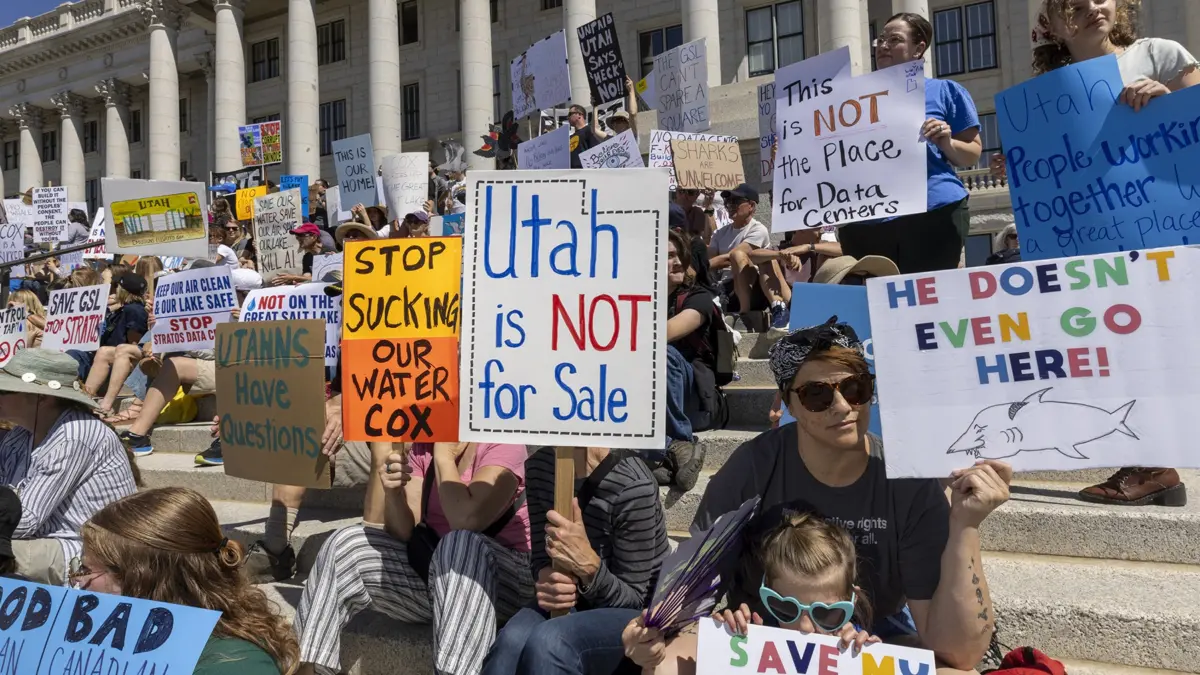
Utah has emerged as the most vivid illustration of how data center politics can transcend local boundaries to consume high-ranking state officials. The controversy centers primarily around the proposed Stratos data center project in Box Elder County, a massive development that immediately drew fierce public opposition over its projected water consumption and environmental footprint.
The political earthquake struck in June 2026 during the state’s Republican primaries. State Senate President J. Stuart Adams, one of the most powerful politicians in Utah, suffered a stunning primary defeat to challenger Stephanie Hollist. Adams had become inextricably linked to the Stratos project, serving as chair of the board for the Military Installation Development Authority (MIDA)—the state entity that voted to create the Stratos project area and, in doing so, effectively overrode local county zoning and land-use restrictions. Late in the campaign, as pressure mounted, Adams attempted to soften his stance on the project’s footprint, but the pivot came too late. Hollist made unyielding opposition to Stratos the cornerstone of her campaign.
The backlash also swept through Box Elder County itself. County Commissioners Lee Perry and Boyd Bingham, both of whom voted to advance the project and facilitate the MIDA override, were soundly defeated in their Republican primaries. Perry offered a remarkably candid post-mortem to The Salt Lake Tribune following his concession: "Do I think that the data center vote cost me the election? Yes I do."
Missouri: Municipal Tumult in Festus and Independence
Missouri proved to be another fertile ground for anti-data center insurgencies, most notably in the city of Festus. A staggering four incumbent city council members—Jimmy Collier, Brian Wehner, Bobby Venz, and Jim Tinnin—lost their reelection bids following a bitter community battle over a proposed $6 billion data center.
The Festus political dynamics defied simplistic categorization, proving that voter anger extended beyond a simple punitive response to a "yes" vote. While Collier, Venz, and Tinnin voted in favor of the development agreement, Wehner voted against it; yet, all four incumbents were ejected by voters. The electoral purge reflected a profound breakdown in public trust, centered on complaints regarding city transparency, the rushed development process, and backroom deal-making.
A parallel dynamic unfolded in Independence, where city council members Jared Fears and Bridget McCandless (who was simultaneously mounting a mayoral campaign while serving as an incumbent council member) both lost their elections amid a contentious debate over another proposed data center and its associated tax incentives. Fears later acknowledged that the project played a decisive role in his political demise.
Regional Ripples: North Carolina, Virginia, and Maryland
The anti-incumbent wave extended far beyond the Midwest and the Intermountain West, manifesting in varied ways across the country:
- North Carolina: In Edgecombe County, four-term Commissioner Donald Boswell was unseated by David Batts, who campaigned explicitly against the proposed Kingsboro data center. Batts had aggressively warned the commission that residents would organize primary challenges against any official supporting the project. His campaign signs left no room for ambiguity: "Vote no for data centers."
- Virginia: In a high-profile legislative challenge, Democrat John McAuliff successfully targeted Republican Delegate Geary Higgins, branding him "Data Center Geary" and utilizing the incumbent’s development record as a primary weapon to secure victory.
- Maryland: The state saw a nuanced version of the backlash. In Calvert County, commissioners Todd Ireland, Mark Cox Sr., and Earl "Buddy" Hance lost their Republican primaries after challengers accused them of mishandling local growth and opposing a temporary pause on new data center developments. Meanwhile, Frederick County Council President Brad Young lost his Democratic primary after the council approved a zoning expansion that unlocked more than 2,600 acres for data center construction.
Supporting Context & Metrics: The Broader Political Landscape
While 18 documented losses form the core of Data Center Knowledge’s conservative count, they represent only the tip of the iceberg. Paid campaign advertising in states such as Ohio, Pennsylvania, Wisconsin, Texas, and Michigan increasingly features attacks on candidates tied to data center development, electricity rate hikes, and corporate tax subsidies.
At the state policy level, governors are scrambling to adapt to mounting voter anxiety. Texas Governor Greg Abbott, once an aggressive champion of tech investment, publicly stated in August that data center operators had "basically dug their own grave" by failing to secure genuine community buy-in, adding that he is pushing to shield residential ratepayers from subsidizing grid infrastructure built for tech campuses. Similarly, Pennsylvania Governor Josh Shapiro has tightened environmental regulations and transparency mandates, while Ohio Governor Mike DeWine temporarily paused new tax-exemption requests for incoming facilities.
These policy shifts underscore a fundamental evolution in public sentiment. The traditional economic development bargain—where communities traded open land, water resources, and tax breaks for phantom promises of long-term prosperity—is collapsing under the weight of tangible infrastructure burdens. Voters are no longer willing to accept the externalized costs of Big Tech without robust guarantees regarding grid reliability, environmental stewardship, and fiscal fairness.
Official Statements and Industry Perspectives
The data center industry’s leadership acknowledges that a severe public relations crisis has metastasized into an electoral threat, though opinions diverge sharply on how to remedy it.
Mike Casey, president of energy tech public relations firm Tigercomm, argues that the tech sector fundamentally misunderstood the nature of community relations.
"Most tech companies weren’t built to campaign for what they need to build," Casey noted in an interview with Data Center Knowledge. "But winning a community’s permission to build in its midst is the opposite. It’s one county at a time, it’s heavily retail, and it’s person-driven."
Casey sharply criticized the prevailing corporate playbook, warning that too many developers continue to rely on aggressive lobbying and attempts to "bulldoze" projects through local boards rather than engaging in authentic, grassroots campaigning. The result, he warns, is a localized community relations failure that quickly snowballs into a broad political crisis.
Conversely, trade organizations like the Data Center Coalition emphasize the immense macroeconomic value of the sector. Dan Diorio, the coalition’s executive vice president of state policy and government affairs, pointed to a comprehensive PwC report estimating that the data center industry supported 5.5 million jobs, contributed $927 billion to U.S. GDP, and generated $204 billion in tax revenue in 2024 alone. Diorio emphasized that the industry is actively doubling down on "continued efforts to better explain the role of data centers to the public through community engagement and stakeholder education," while reaffirming commitments to pay fair market rates for consumed power.
However, some innovators argue that standard public relations campaigns are insufficient to soothe angry electorates. Jeff Thramann, founder and CEO of LT350—a firm specializing in distributed data center infrastructure—argues that the physical footprint of massive centralized campuses is simply too disruptive to be managed purely through messaging.
"I think fundamental change is required because the impact of huge data centers on a single community is real," Thramann asserted.
His proposed solution is decentralization: breaking up massive 300-megawatt computing hubs and distributing smaller, 1-megawatt nodes across hundreds of grid circuits.
"A data center can range from an enormous, centralized facility to a closet in an office," Thramann explained. "The public does not care about the closet because it changes nothing in a community, but they do care about the giant facility that changes an entire community."
Future Outlook: The Permanent Political Cost of Tech Infrastructure
The electoral bloodbath spanning 2025 and 2026 marks a permanent maturation—and hardening—of the politics surrounding digital infrastructure. Data centers are no longer invisible, silent boxes humming quietly in industrial parks; they are massive consumers of water and electricity, reshaping landscapes and dominating local headlines.
As long as grid constraints threaten household electricity bills, and as long as massive campuses alter the rural and suburban character of American towns, local zoning battles will inevitably spill over into ballot boxes. For elected officials, association with a controversial data center project has transformed from a routine vote into an existential political risk.
Moving forward, tech developers can no longer treat local permitting as a mere bureaucratic hurdle to be cleared by high-priced legal teams. Winning approval now requires navigating the treacherous waters of retail politics, where community trust is paramount, and where a single vote on a zoning variance can abruptly derail a politician’s career. Until the industry fundamentally alters its approach to site selection, infrastructure buildouts will continue to face a hostile electorate ready and willing to fire any politician who stands in their way.