






Executive Overview
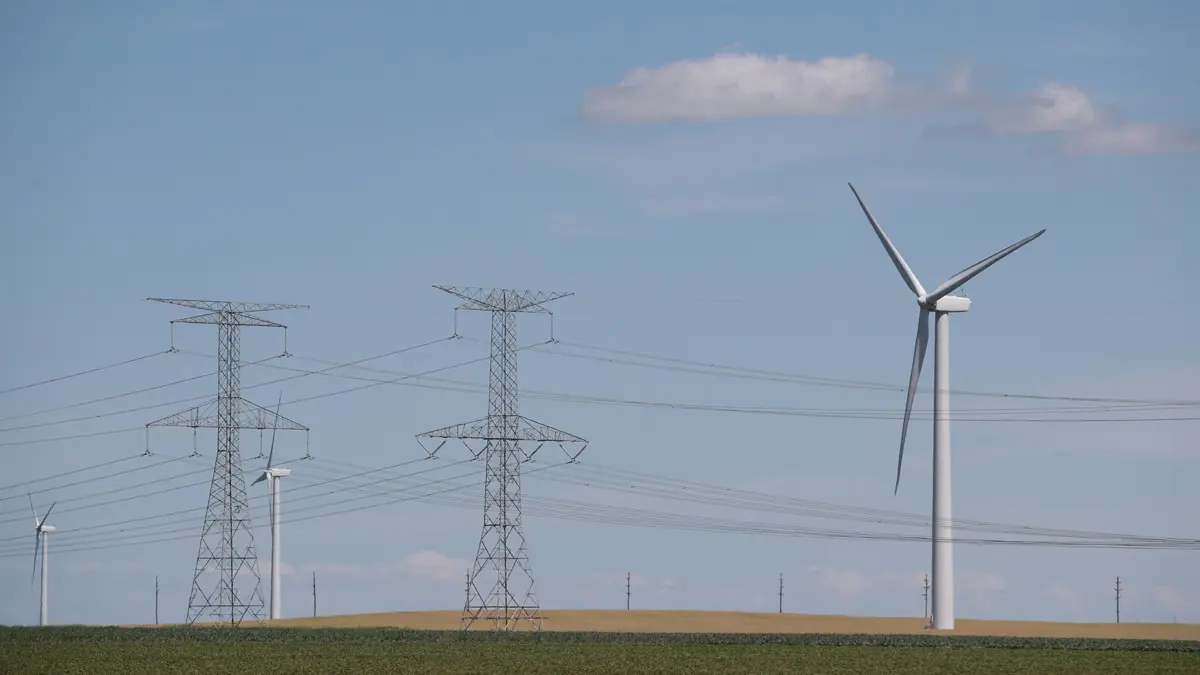
The rapid, unprecedented expansion of artificial intelligence (AI) and hyperscale cloud computing has triggered an explosive surge in power demand, placing intense pressure on North American power grids. Data center developers are seeking gigawatts of electricity years before traditional transmission lines can be permitted, financed, and constructed. This structural mismatch between the lightning-fast velocity of digital infrastructure development and the glacial pace of high-voltage transmission planning is creating an unprecedented bottleneck for grid planners, utilities, and regulators.
Compounding this crisis, the U.S. Department of Energy (DOE) recently opted against designating three proposed National Interest Electric Transmission Corridors (NIETCs) that had advanced to Phase 3 of federal review. This decision came on the heels of the DOE’s draft 2026 National Transmission Needs Study, which explicitly identified accelerating electricity demand from data centers, domestic manufacturing, and industrial electrification as major drivers of future transmission expansion.
The resulting paradox leaves utilities and regulators caught between two high-stakes risks: building transmission too early and sticking customers with the bill for stranded assets, or waiting until load commitments are absolute and allowing the grid to become a permanent bottleneck that chokes economic growth. Drawing lessons from proactive initiatives like Texas’s Competitive Renewable Energy Zones (CREZ) program, industry experts argue that the solution lies not in choosing between building early and waiting, but in adopting a staged approach—planning proactive development zones while locking in capital investments only when projects pass rigorous evidentiary gates.
Detailed Chronology & Regulatory Landscape
The Collision of Two Timelines
The core friction point in modern energy infrastructure is a profound temporal misalignment. High-voltage transmission lines typically require anywhere from five to ten years—and frequently longer—to clear federal, state, and local permitting hurdles, acquire rights-of-way, and complete construction. Conversely, data center developers and large industrial loads can request massive multi-megawatt or gigawatt interconnections and stand up computing facilities in a matter of months or a few years.
This mismatch puts immense strain on regional transmission organizations (RTOs) and independent system operators (ISOs). When data center developers demand gigawatts of power on compressed timelines, grid operators are forced to scramble, risking severe reliability strains or forcing local ratepayers to shoulder the extraordinary costs of ad-hoc, project-by-project upgrades.
The DOE’s NIETC Decisions and the Federal Policy Rift
The federal government’s approach to this crisis faces mounting scrutiny following the DOE’s determination regarding National Interest Electric Transmission Corridors. A NIETC designation does not inherently grant approval for a specific transmission project; rather, it unlocks critical federal financing tools and, under specific circumstances, triggers Federal Energy Regulatory Commission (FERC) backstop permitting authority to expedite interstate lines.
Despite publishing its draft 2026 National Transmission Needs Study—which underscored a pressing national need for expansive transmission capacity—the DOE ultimately concluded that insufficient statutory and evidentiary bases existed to finalize the designation of three major corridors that had advanced to Phase 3:
- The Tribal Energy Access Corridor
- The Southwestern Grid Connector Corridor
- The Lake Erie-Canada Corridor
The decision drew sharp pushback from federal stakeholders. Former DOE Secretary Jennifer Granholm publicly questioned the timing and logic of the reversals via social media, highlighting the contradiction between warning of an impending energy capacity emergency and declining to streamline the pathways required to deliver that power.
"You can’t declare an energy emergency, demand that America pump out more electricity, and then purposefully make it harder to deliver that power where it’s needed," Granholm wrote.
However, industry analysts defend the technical nuance of the decision. Neil Osnato, founder of Persistence Analytics Group, noted that the Needs Study addresses a macro-level systemic deficiency, whereas the NIETC process is bound by strict statutory evidentiary hurdles.
"The Needs Study identifies a national transmission problem," Osnato explained. "The NIETC process asks a different question: whether specific geographic corridors satisfy the statutory and evidentiary basis for federal designation."
Osnato emphasizes that this episode highlights a glaring systemic weakness: the United States possesses robust tools to diagnose transmission deficits, but lacks coordinated, agile mechanisms to translate those diagnoses into timely interstate infrastructure projects.
Supporting Context & Metrics: The ERCOT Pipeline and Texas Precedents
The Scale of the Interconnection Queue
The sheer magnitude of the data center load rush is best illustrated by the situation in Texas. As of mid-2026, the Electric Reliability Council of Texas (ERCOT) was tracking an astronomical 474.7 GW of large-load interconnection requests. Of that total, an overwhelming 420.8 GW—roughly 90.2%—is directly associated with data center development.
While these figures represent immense prospective demand, they do not equate to locked-in, shovel-ready load. The vast queue spans varying stages of maturity, ranging from speculative inquiries to projects backed by serious capital.
The unprecedented scale of this pipeline has alarmed state officials, prompting fears that speculative projects could distort transmission planning and saddle everyday residential and commercial ratepayers with unjust grid-expansion costs.
- June 2026: Texas Governor Greg Abbott formally directed the Public Utility Commission of Texas (PUCT) and ERCOT to scrutinize data center interconnections to insulate Texas consumers from undue development and financial risks.
- August 2026: Governor Abbott ordered a comprehensive, statewide audit of all data center projects currently progressing through the ERCOT interconnection queue to filter out speculative ventures and prioritize genuinely viable facilities.
Lessons from the Texas CREZ Model
Despite current regulatory growing pains, Texas offers a historically successful blueprint for proactive infrastructure planning: the Competitive Renewable Energy Zones (CREZ) program.
Launched nearly two decades ago, CREZ was intentionally engineered to transport massive amounts of wind generation from resource-rich West Texas to major population and load centers along the Interstate 35 corridor. Crucially, the transmission infrastructure was planned and built ahead of the full generation buildout.
Today, that forward-thinking strategy is paying unexpected dividends. Major data center developers and high-performance computing campuses are naturally gravitating toward regions anchored by CREZ-enabled infrastructure because the heavy-duty power lines are already in place. A prime example is Galaxy Digital’s Helios campus in Dickens County, a multi-gigawatt data center platform built in an area whose robust transmission capacity predated the AI boom.
According to a July 2026 report by the Energy Systems Integration Group (ESIG) Large Loads Task Force—authored by Brattle principal Johannes Pfeifenberger, Warren Lasher, and ESIG’s James Okullo—the CREZ model validates the necessity of moving away from reactive, project-by-project upgrades. The report champions proactive, scenario-based planning frameworks similar to Texas’s CREZ and the Illinois Renewable Energy Access Plan (REAP).
Expert Insights & Strategic Frameworks
While the Texas CREZ model offers a compelling precedent, experts caution that applying it directly to data center expansion requires significant adaptation.
"CREZ showed the value of identifying development zones, planning transmission at scale, and avoiding a sequence of one-off upgrades that become slower and more expensive over time," Osnato noted. "That logic absolutely applies to clustered data center growth."
However, a fundamental structural difference separates renewable energy buildouts from digital infrastructure. CREZ was anchored by predictable, geographically concentrated generation assets. Conversely, data center demand is heavily conditional, resting on fluid variables such as complex customer power contracts, fluctuating financing arrangements, environmental permitting, site readiness, and rapid shifts in computer chip thermal architectures.
Building multi-billion-dollar transmission corridors for every speculative gigawatt announced in a press release risks creating massive amounts of stranded capital. Conversely, waiting for absolute finalization guarantees that the grid will remain a permanent roadblock to technological advancement.
The Three-Gate Evidentiary Approach
To navigate this treacherous middle ground, Osnato advocates for a staged, disciplined capital commitment model: build ahead, but never ahead of evidence.
Rather than treating transmission investment as a binary choice between building early or waiting indefinitely, utilities and grid operators should implement a tiered framework structured around three core questions:
- What is represented? (Evaluating the surface-level demand and initial interconnection requests).
- What is independently supported today? (Verifying tangible financial backing, real estate control, and technical readiness).
- What change would invalidate that conclusion? (Stress-testing the resilience of the load forecast against market volatility).
Under this staged paradigm, utilities can secure rights-of-way, establish designated development zones, and design scalable transmission architectures early on, while deliberately deferring irreversible capital expenditures until the underlying load clears defined evidentiary gates.
Future Outlook: Navigating the Intersection of AI and Energy
As the artificial intelligence arms race accelerates—spurring massive corporate investments in specialized chipsets, liquid cooling technologies, and 800-volt data center architectures—the energy demands of digital infrastructure will only intensify.
The traditional regulatory and planning framework, built for an era of incremental, predictable demand growth, is no longer fit for purpose. The friction surrounding the DOE’s NIETC decisions and the administrative strain inside the ERCOT queue illustrate that the United States must reform how it conceptualizes, permits, and finances inter-state and intra-state power delivery.
Ultimately, the path forward requires a synthesis of proactive vision and rigorous financial discipline. By adopting the spatial planning principles of the Texas CREZ model while instituting strict, gate-based evidence thresholds for capital deployment, U.S. grid planners can prevent the grid from becoming the ultimate bottleneck to the AI revolution—without sacrificing the financial protection of everyday utility ratepayers.