









Executive Overview
For years, football enthusiasts across Vietnam seeking a free, accessible broadcast of the English Premier League, Serie A, La Liga, and international tournaments knew precisely where to look. "Xoi Lac TV" and its extensive sister network—comprising domains such as 90PhutTV, VeboTV, ThapcamTV, BanhkhucTV, CakeoTV, and the Cakhia network—formed the undisputed bedrock of illicit sports streaming in Southeast Asia.
What began as a grassroots endeavor to provide football coverage with colorful, localized commentary evolved into a multi-million-dollar criminal enterprise. By leveraging ubiquitous, high-traffic illegal streams, the operation captured millions of eyeballs, sustaining itself through lucrative partnerships with offshore gambling platforms.
However, the curtain has fallen on what may be the largest digital copyright infringement and underground gambling ring in Vietnam’s history. In a sweeping escalation of law enforcement activity, police in Hung Yen province have officially concluded their sprawling investigation, formally recommending that prosecutors bring charges against a staggering 74 individuals.
While the operation made its name through unauthorized sports broadcasting, the real danger for the defendants lies in Vietnam’s stringent laws regarding illegal gambling. With copyright infringement capped at relatively minor prison sentences under the Vietnamese Penal Code, the widespread promotion of unauthorized betting platforms threatens to land key masterminds and staffers behind bars for up to a decade.
Beyond its domestic legal repercussions, the Xoi Lac TV crackdown carries heavy international significance. It sits at the volatile intersection of global sports diplomacy, corporate financial losses running into the tens of millions, and high-stakes trade pressure from the United States and the United Kingdom. As Vietnam maneuvers to stave off potential American trade sanctions under Section 301, the prosecution of the Xoi Lac network has transformed from a domestic policing victory into a vital geopolitical bargaining chip.
Detailed Chronology: From Grassroots Streams to a 74-Defendant Indictment
The life cycle of the Xoi Lac TV empire is a textbook study in the scaling of digital piracy. It demonstrates how a clever technological workaround can rapidly morph into a sophisticated enterprise capable of evading domestic blocks while generating massive commercial returns.
The Genesis (2018–2020)
The operation trace its roots back to late 2018, according to investigative findings released by outlets such as Dan Tri and VnExpress. Driven by a soaring domestic demand for live football coverage—which has historically been locked behind expensive pay-TV subscriptions—Hanoi-based technology entrepreneur Pham Nguyen Dung provided the initial capital. To build the platform, Dung partnered with programmer Nguyen Cong Dinh.
Dinh engineered the infrastructure, writing the code that allowed the platforms to dynamically switch domains whenever local Internet Service Providers (ISPs) or telecommunications regulators enforced blocking orders. From the beginning, the division of labor was clear: Dung financed the servers and logistics, Dinh managed the technical architecture, and the two split the profits generated from the traffic.
Expansion and the "Commentator" Economy
As the platform grew, it evolved from a simple video-scraping aggregator into a distinct media brand. The Xoi Lac network recognized that the secret to user retention wasn’t just the video feed—which was frequently ripped directly from legitimate rightsholders like Vietnam’s pay-TV service K+—but the localized, highly engaging commentary.

Investigators revealed that the operation hired more than 30 professional Vietnamese commentators. These individuals were compensated on a per-match basis, earning between 200,000 and 500,000 Vietnamese Dong ($8 to $20 USD) per game. Operating under colorful online pseudonyms, these commentators became household names among Vietnamese football fans.
Dinh himself adopted the moniker "Batman," utilizing his platform not only to direct the technical side of the network but also to cast himself as a prominent on-air personality. Investigators later calculated that Dinh personally pocketed upwards of 12 billion dong (approximately $470,000 USD) from his involvement in the enterprise.
The Raids and the Closing of the Investigation
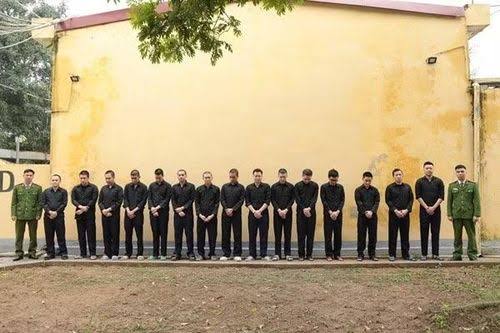
The empire’s rapid expansion ultimately attracted the full attention of Vietnam’s cybercrime police. Following months of digital surveillance and financial tracking, authorities executed coordinated raids in February, initially arresting 30 individuals.
Rather than treating the bust as an isolated incident, the Ministry of Public Security expanded the scope of the inquiry. By March, charges were officially laid against key figures. Finally, last week, police in Hung Yen province formally closed their exhaustive investigation, submitting a comprehensive file requesting that state prosecutors charge a massive total of 74 individuals.
Supporting Context & Metrics: The Scale of the Enterprise
The numbers associated with the Xoi Lac TV syndicate highlight the industrial scale of modern digital piracy, revealing an operation that functioned less like a group of casual file-sharers and more like a fully fledged digital corporation.
Financial Footprint and Gambling Inflows
While the streaming platforms did not charge users a subscription fee, their monetization model was devastatingly effective. Every match broadcast across the network’s myriad sites was plastered with high-visibility banners and promotional links for offshore and underground betting brands, including 8XBET, LU88, Man88, and HBET.
According to police financial audits, between April 2025 and January 2026 alone, these betting advertisements injected more than 130 billion dong (roughly $5 million USD) into the pockets of the network’s operators. This staggering influx of cash transformed what started as a tech hobby into a high-yield criminal cartel.
The Scope of Infringement
The technical scope of the piracy network was vast. Investigators documented that the syndicate illegally streamed 1,529 football matches without authorization, directly trampling upon the exclusive licensing rights held by major international organizations—most notably the English Premier League—and their domestic broadcast partners.
Financial Damages to Rightsholders
The legitimate financial ecosystem suffered profound losses as a result of the syndicate’s activities:

- K+ (Vietnam Pay-TV Service): Preliminary internal estimates place the local broadcaster’s losses at an astronomical $83 million USD, driven by subscriber churn and lost advertising revenue.
- The English Premier League: As the ultimate supplier of the content being pirated, the Premier League—which licenses its broadcast rights in Vietnam to K+—estimates its direct damages to exceed $4.6 million USD.
These figures represent only preliminary estimates compiled by the rightsholders and are expected to be rigorously scrutinized and formally re-evaluated during the eventual courtroom proceedings.
Official Statements and Legal Realities: Copyright vs. Gambling
When the news of the 74-defendant recommendation broke, legal analysts across Vietnam immediately focused on the specific charges selected by investigators and the strategic divergence between copyright enforcement and gambling laws in the country.
Breakdown of the Charges
The 74 suspects face a complex web of allegations, including copyright infringement, organizing gambling, direct gambling, and the distribution of obscene material. Out of the 74, a core group of 51 individuals—prominently featuring masterminds Pham Nguyen Dung and Nguyen Cong Dinh ("Batman")—have been recommended for prosecution on the twin charges of copyright infringement and organizing gambling.
The Legal Trap: Why Gambling Charges Carry the Real Weight
For foreign rightsholders accustomed to Western legal jurisdictions—where copyright infringement of this magnitude can lead to decades in prison—the Vietnamese Penal Code presents a surprising hurdle.
Under Vietnamese law, copyright infringement is strictly capped at a maximum of three years in prison, regardless of how many millions of dollars in profit the operation generated or how severe the economic damage to the rightsholder was.
Conversely, organizing gambling as a professional, large-scale operation carries prison sentences of up to ten years. Because the Xoi Lac network’s primary revenue stream relied entirely on promoting illegal betting platforms, prosecutors are leaning heavily on the gambling charges. It is these counts, rather than the piracy violations themselves, that provide the legal teeth necessary to secure severe, long-term custodial sentences for the ringleaders.
Procedural Status
In Vietnam’s judicial framework, the police closing an investigation with a formal recommendation to prosecute marks the transition from the investigative phase to the prosecutorial stage. The state prosecution service now holds a statutory window of up to 30 days to review the file, decide whether to issue formal indictments, return the dossier to investigators for supplementary inquiries, or drop specific charges.
International Dimensions: London’s Gratitude and Washington’s Pressure
The dismantling of Xoi Lac TV cannot be viewed purely through a domestic lens. It is occurring against a backdrop of intense international scrutiny regarding Vietnam’s intellectual property enforcement record.
Praise from the United Kingdom
In May, the diplomatic impact of the raids became public when Vietnam’s Ministry of Public Security announced that the British Embassy in Hanoi had dispatched an official letter of gratitude. The communication praised Vietnamese law enforcement for their decisive action in protecting global copyright holders, particularly given the immense popularity of the English Premier League among British sports properties.
The United States Trade Representative (USTR) and Section 301
While London offered praise, Washington maintained a much more skeptical posture. In late April, the U.S. Trade Representative delivered a seismic blow to Hanoi’s international trade reputation by designating Vietnam as a "Priority Foreign Country" over online piracy concerns—marking the first time any nation had received this hostile label in thirteen years.
Shortly after the designation, the USTR initiated a formal Section 301 investigation into Vietnam’s intellectual property enforcement practices, placing the threat of sweeping economic tariffs firmly on the table. The USTR argued that despite nominal efforts, rampant digital piracy in Vietnam continued to cripple the competitive position of U.S. innovators and creators.
Vietnam’s Legal Counter-Offensive
Caught in the crosshairs of potential American economic sanctions, Hanoi has rapidly weaponized its recent cybercrime crackdowns as a diplomatic and legal defense.
In its formal July response to the USTR investigation, the Vietnamese government cited a flurry of high-profile enforcement actions—including the takedowns of the Rophim and Y2Mate streaming and downloading portals, the high-profile HiAnime arrests (announced on July 2, the exact day of Vietnam’s Washington rebuttal), and the ongoing dismantling of the Xoi Lac network. Vietnam has used these actions to argue that it is actively cleaning up its digital ecosystem and should be removed from the "Priority Foreign Country" blacklist.
Whether the sudden escalation to 74 indicted defendants in the Xoi Lac case was directly influenced by pressure from Washington remains an open question among observers. However, the timing aligns neatly with Hanoi’s broader campaign to demonstrate compliance to western trade partners.
Future Outlook
As the Xoi Lac TV case heads toward the prosecutors’ desk, the broader implications for digital media in Vietnam are profound.
Domestically, the indictment of 74 individuals sends a chilling message to the network of programmers, streamers, and commentators who previously operated under the assumption that digital anonymity and rapidly shifting domain names offered permanent immunity.
Yet, the digital underground has proven resilient. Even as law enforcement agencies parade defendants through state media and boast of dismantling the primary infrastructure, a quick online search for "Xoi Lac" and its legacy brands continues to return a revolving door of copycat sites run by anonymous successors eager to capture the lucrative void left behind by Dinh and Dung.
Globally, the case serves as a litmus test for Vietnam’s willingness to align its domestic legal enforcement with international trade expectations. Whether the impending prosecutions will be enough to satisfy the USTR and avert Section 301 tariffs remains to be seen. For now, all eyes are on the prosecutors’ office in Hung Yen province as they decide the fate of Vietnam’s most notorious sports streaming syndicate.