









Executive Overview
In a decisive effort to protect consumer privacy and reclaim control over its smart TV ecosystem, home appliance giant LG Electronics USA has announced plans to purge all software applications that secretly transform smart televisions into always-on residential proxy nodes. The sweeping policy enforcement targets third-party application developers who embed underlying Software Development Kits (SDKs) into free games, utility programs, and screensavers, allowing unknown third parties to route internet traffic through residential connections.
The announcement follows groundbreaking telemetry research from cybersecurity intelligence firm Spur, which exposed that more than 42 percent of applications sampled from LG’s webOS app store contained residential proxy SDKs. A similar vulnerability profile was identified across competitors, with over a quarter of examined applications on Samsung’s Tizen operating system carrying identical proxy components.
By leveraging smart TVs—devices that remain permanently connected to power and local networks—proxy network operators built vast, decentralized networks capable of masking cyber activity, scraping web data, and potentially exposing home networks to unauthorized traffic. LG’s intervention marks a critical juncture in Internet of Things (IoT) governance, highlighting how the pursuit of app monetization has introduced sophisticated supply-chain security risks into consumer living rooms.
+-----------------------------------------------------------------------+
|                 SMART TV PROXY SDK PREVALENCE                         |
+-----------------------------------------------------------------------+
|  LG webOS Apps Audit        [████████████████████░░░░░░░░░░]  >42%    |
|  Samsung Tizen OS Apps      [███████████░░░░░░░░░░░░░░░░░░░]  >25%    |
+-----------------------------------------------------------------------+
Detailed Chronology
The sequence of events leading to LG’s platform-wide cleanup illustrates the swift escalation from academic security research to corporate intervention:
[ Early July ] ──► Security firm Spur releases research detailing proxy SDK prevalence in Smart TV apps.
                         │
[ July 2 ]     ──► KrebsOnSecurity publishes detailed analysis linking proxy networks to botnet infrastructure.
                         │
[ Mid-July ]   ──► LG Executive Leadership issues formal warning: Non-compliant apps face suspension.
                         │
[ July 22 ] ──► Bright Data issues public defense highlighting opt-in models and PwC compliance audits.- Early July: Cybersecurity firm Spur releases a comprehensive investigation examining the integration of residential proxy SDKs within smart TV application stores. The findings indicate that app stores operating on both LG’s webOS and Samsung’s Tizen OS are heavily saturated with bandwidth-sharing libraries.
- July 2: Investigative news outlet KrebsOnSecurity highlights Spur’s findings, drawing public and regulatory attention to the operational mechanics of proxy marketplaces. The report underscores how commercial proxy services capitalize on unmonitored consumer hardware.
- Mid-July: In response to inquiries regarding the security risks posed by these embedded SDKs, John Taylor, Senior Vice President of LG Electronics USA, issues an official company statement. Taylor confirms that LG has initiated a proactive review of all webOS applications, establishing a mandatory directive for developers to remove residential proxy functionality or face immediate platform suspension.
- July 22: Bright Data, identified as the primary residential proxy provider operating within these smart TV ecosystems, issues an updated statement defending its business practices. Bright Data asserts that its peer-to-peer network relies on informed user consent, rigid client vetting, and third-party security audits.
- Parallel Developments: Concurrently, LG faces scrutiny on another front after technology outlet Gamers Nexus reveals that driver installation packages for high-end LG LCD monitors automatically push promotional McAfee security software to Windows systems via Windows Update without explicit user prompts, raising broader questions about software delivery practices across LG’s hardware units.
Supporting Context & Metrics
Understanding Residential Proxy Networks
Residential proxy networks operate by routing internet traffic through consumer devices connected to residential Internet Service Providers (ISPs). Unlike commercial data center IP addresses, which are easily flagged and blocked by automated security systems, residential IP addresses appear to web servers as legitimate consumer traffic.
Commercial entities and threat actors utilize residential proxies for various activities:
- Web Scraping & Price Aggregation: Extracting mass data from e-commerce sites without triggering anti-bot protections.
- Ad Verification: Ensuring localized digital ad campaigns render correctly across global markets.
- Bypassing Geo-restrictions: Accessing media libraries or region-locked web services.
- Malicious Cyber Operations: Obfuscating credential stuffing attacks, vulnerability scanning, and command-and-control (C2) communications behind innocent residential IPs.
+-------------------------------------------------------------------------------+
|                       RESIDENTIAL PROXY TRAFFIC FLOW                          |
+-------------------------------------------------------------------------------+
|                                                                               |
|  [ Proxy Customer ] ──► [ Proxy Network (Bright Data) ]                       |
|                                     │                                         |
|                                     ▼                                         |
|  [ Target Server ] ◄─── [ User's Smart TV (webOS) ] ◄─── [ Home Router ]     |
|   (Sees Consumer IP)                                                          |
+-------------------------------------------------------------------------------+
The Monetization Trap in Smart TV App Ecosystems
For independent developers, monetizing smart TV applications presents distinct operational challenges. Unlike smartphones, smart TV apps rarely support frictionless in-app purchases, and traditional banner advertisements frequently ruin the user interface on large displays.
Residential proxy providers exploit this gap by offering developers alternative monetization packages:
- SDK Integration: Developers embed a third-party proxy library into their app code during build time.
- Bandwidth Payouts: The proxy provider pays the developer based on the volume of bandwidth consumed by paying network clients or per active daily user.
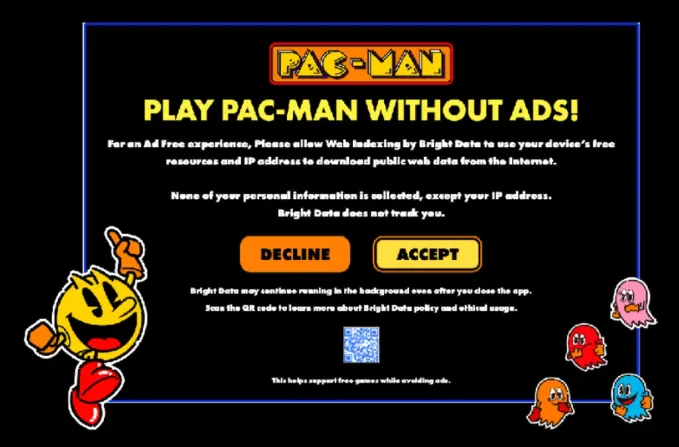
- User Trade-Off: End users are offered an "ad-free" experience or free access to simple software—such as Pac-Man clones, ambient screensavers, or file management utilities—in exchange for sharing their internet bandwidth.
Statistical Analysis & Network Vulnerabilities
Spur’s telemetry revealed significant prevalence rates across major smart TV operating systems:
| Platform / Operating System | Estimated Proxy SDK Prevalence | Primary Identified SDK Provider | Common Application Categories |
|---|---|---|---|
| LG Electronics (webOS) | > 42% of sampled store apps | Bright Data | Casual Games, Screensavers, File Utilities |
| Samsung (Tizen OS) | > 25% of sampled store apps | Bright Data | System Utilities, Simple Games, Weather Apps |
Beyond simple bandwidth consumption, researchers emphasize that turning smart TVs into proxy nodes creates distinct security risks:
- Network Pivoting & Local Discovery: While proxy providers claim to restrict traffic to outgoing web requests, vulnerabilities or misconfigurations in proxy software can allow external actors to map internal subnets, targeting unpatched IoT devices, network-attached storage (NAS) units, and personal computers (a vector actively exploited by modern botnets such as Kimwolf).
- Legal and ISP Ramifications: Traffic routed through a user’s television carries that user’s public IP address. If a proxy client conducts illegal activities—such as distributing copyright-infringing materials, performing cyber attacks, or transmitting illegal media—the residential subscriber may face ISP service termination or legal scrutiny.
- Resource Exhaustion: Continuous background proxy activity can degrade network quality, induce high latency during streaming or gaming, and place unnecessary hardware strain on the television’s processing components.
Official Statements
LG Electronics USA
LG Electronics USA took a unequivocal stance regarding the presence of bandwidth-sharing SDKs within its ecosystem. John Taylor, Senior Vice President, emphasized that the company does not view smart TVs as proxy delivery systems:
"A residential proxy network is not an intended use for LG smart TVs, and LG Electronics is working with developers to remove the residential proxy option from their apps on the webOS platform. If this option is not removed, these apps will be suspended."
Taylor reiterated LG’s dedication to tightening app store governance:

"As part of our ongoing efforts to enhance platform quality and the user experience, LG will continue to strengthen our evaluation process for developer-submitted apps, including those that incorporate residential proxy SDKs. Our review of those apps is well underway now."
+-----------------------------------------------------------------------+
|                    SUMMARY OF LG'S POLICY DIRECTIVE                   |
+-----------------------------------------------------------------------+
|  1. Mandatory removal of residential proxy SDKs from webOS apps.       |
|  2. Immediate app suspension for non-compliant developers.            |
|  3. Enhancement of app submission vetting protocols.                  |
+-----------------------------------------------------------------------+
Bright Data
Bright Data, identified as the dominant proxy service provider operating across webOS and Tizen OS apps, strongly defended the compliance and technical legitimacy of its architecture:
"Every peer opts in through a dedicated screen and receives value in return; every customer is vetted, and our practices have now undergone a second independent audit by PwC. We remain committed to an open, transparent internet where legitimate businesses, researchers, and institutions can responsibly access data that lives in the public domain."
The provider noted that its enterprise model relies on strict Know-Your-Customer (KYC) compliance checks to prevent criminal abuse, alongside technological guardrails meant to prevent customers from communicating with other devices situated on the host device’s local area network (LAN).
Security Industry Counterpoint
Security researchers contend that enterprise compliance mechanisms fail to address the core issue: the breakdown of informed consent in shared household environments. Trevor Sutter of security firm Spur highlighted the fundamental flaws in relying on television-based consent prompts:
"A one-time consent prompt buried in a TV app is not a substitute for meaningful transparency, ongoing control, and platform oversight. The risk is amplified when consent comes from individuals within the household who use the device but shouldn’t give consent, such as minors."
+-----------------------------------------------------------------------+
|                     THE CONSENT DILEMMA ON IOT                        |
+-----------------------------------------------------------------------+
|  Corporate Defense (Bright Data)  │ Critical Reality (Spur Research)  |
|  ───────────────────────────────  │ ────────────────────────────────  |
|  • Dedicated opt-in prompt        │ • Buried terms on large screens   |
|  • Value exchange (free app)      │ • Non-account holders (minors)    |
|  • PwC-audited framework          │   frequently click "Agree"        |
|  • Strict enterprise KYC          │ • Lack of persistent status indicators|
+-----------------------------------------------------------------------+
Future Outlook
LG’s decision to ban proxy SDKs from webOS represents a major shift toward stricter app store curation within the smart home industry. For years, mobile operating systems like iOS and Android have struggled with background proxy monetization; however, the expansion of these practices into consumer hardware like televisions exposes systemic weaknesses in how non-traditional computing platforms evaluate software risk.
App Store Governance & SDK Inspections
As smart TV platforms transition from simple display interfaces to complex software ecosystems, platform operators must upgrade their vetting procedures. Automated static code analysis during app submissions will increasingly focus on identifying secondary monetization libraries, network socket listeners, and bundled third-party SDKs. Merely scanning for traditional malware is no longer sufficient; platforms must evaluate whether an app’s network behaviors match its stated functional purpose.
   TRADITIONAL APP VETTING                      MODERN COMPREHENSIVE VETTING
+---------------------------+                +---------------------------------+
|  • Malware Signature Scan |                |  • Deep SDK Behavior Analysis   |
|  • Visual UI Check        |   ────────►    |  • Network Socket Inspection    |
|  • Basic Crash Testing    |                |  • Persistent Bandwidth Auditing |
+---------------------------+                |  • Secondary Monetization Review|
                                             +---------------------------------+
The Emerging Regulatory Landscape
Regulatory bodies worldwide—including the Federal Trade Commission (FTC) in the United States and European cybersecurity regulators enforcing the Cyber Resilience Act—are taking a closer look at undisclosed telemetry, bandwidth hijacking, and dark patterns in IoT devices.
Device manufacturers that fail to manage third-party software risks face growing operational and legal exposure:
- Consent Frameworks: Regulatory standard-setters are increasingly scrutinizing "one-and-done" consent prompts displayed on shared household appliances. Future compliance standards may require persistent indicators showing when network interfaces are serving external traffic.
- Supply Chain Transparency: Manufacturers will be expected to maintain complete Software Bill of Materials (SBOM) tracking for all software distributed through their first-party stores, holding developers accountable for integrated third-party libraries.
Broader Implications for Device Manufacturers
The simultaneous controversy regarding LG’s monitor driver updating pipeline—which pushed bundled McAfee antivirus tools to personal computers via Windows Update—points to a broader, industry-wide challenge: hardware manufacturers face continuous pressure to generate recurring, high-margin software revenue long after a physical unit is sold.
When hardware monetization strategies prioritize short-term profit over transparent software design, user trust declines rapidly. LG’s prompt action to remove proxy SDKs from webOS shows an encouraging awareness of these risks. However, maintaining long-term security across the IoT ecosystem will require continuous vigilance, robust developer auditing, and a refusal to sacrifice consumer network security for passive monetization.