







Executive Overview
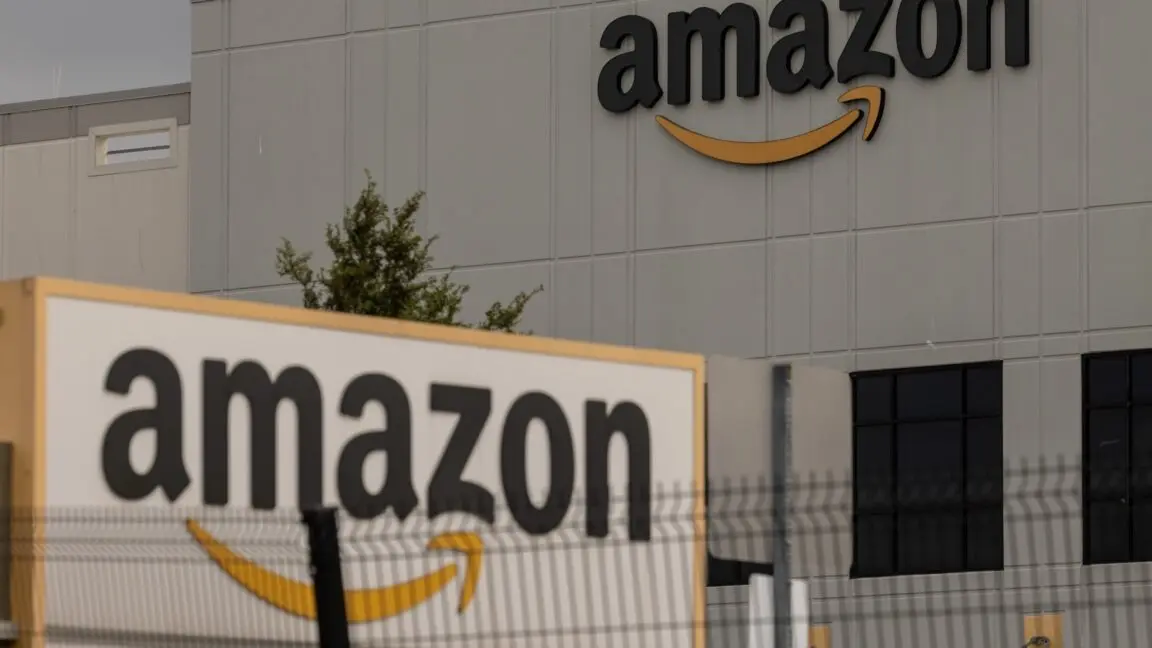
In an explosive class-action lawsuit filed in the United States District Court for the Eastern District of New York, four former warehouse workers have leveled severe accusations against retail titan Amazon. The plaintiffs—Willamina Barclay, Kristina Green, Jennifer Hatch, and Dazaria Parks—allege that the e-commerce giant routinely violated federal and state civil rights laws by denying basic, medically necessary accommodations to pregnant employees.
According to the legal complaint, Amazon systematically subjected pregnant workers to an unforgiving corporate infrastructure that failed to provide fundamental modifications such as regular bathroom breaks, permission to sit while working, and relief from heavy lifting. Worse still, the lawsuit claims that when these women took necessary time off to manage the physical toll of their pregnancies or visit medical professionals, they were penalized under Amazon’s punitive attendance policies—ultimately resulting in termination.
The litigation arrives at a precarious time for Amazon, building upon mounting regulatory pressure and prior state-level investigations into the company’s labor practices. Crucially, this class-action complaint is one of the first major federal actions bolstered by the Pregnant Workers Fairness Act (PWFA) of 2022, a milestone federal statute designed to bridge historical gaps in workplace protections for pregnant and postpartum workers. With backing from the Equal Employment Opportunity Commission (EEOC) and representation from the worker advocacy group A Better Balance, the lawsuit seeks sweeping nationwide relief, back pay, reinstatement, and punitive damages, setting the stage for what could be a watershed legal battle over corporate labor conditions in the automated warehousing sector.
Detailed Chronology: The Plaintiffs’ Ordeal
The complaint outlines a disturbing pattern of administrative obstruction and physical distress experienced by the four plaintiffs across various Amazon facilities in New York between April 2025 and July 2026. Despite presenting clear medical documentation, the workers claim they were forced to navigate a hostile bureaucracy that prioritized fulfillment metrics over human health.
Willamina Barclay and Kristina Green: The Rochester Facility
Willamina Barclay and Kristina Green were employed at an Amazon warehouse in Rochester, New York. Barclay initially worked as a "picker"—a high-mobility role requiring rapid movement across vast fulfillment floors. Recognizing the physical strain of the job during her pregnancy, Barclay requested and was granted a transfer to a "packer" role. However, the relief was illusory; the lawsuit notes that Barclay was still forced to stand for long stretches, perform repetitive squatting motions, and lift heavy packages.
Even after Barclay submitted exhaustive medical paperwork from her healthcare provider, Amazon denied several of her core requests. While management permitted her four extra 15-minute breaks per day, they explicitly refused to let her take breaks to sit "as needed" or provide her with a chair at her workstation, exacerbating her back strain.
The situation culminated in tragedy when Barclay suffered an episode of severe vomiting that forced her to call out of work. Though she provided a same-day doctor’s note to justify her absence, Amazon’s automated attendance system deducted the hours from her bank of unpaid time off (UPTO). Shortly thereafter, citing a negative UPTO balance accumulated due to medically mandated absences, Amazon terminated her employment.
Jennifer Hatch: The Lancaster Fulfillment Center
Jennifer Hatch worked at a fulfillment center in Lancaster, New York, processing customer returns. Because of her advanced maternal age, her physician classified her pregnancy as high-risk. Hatch also suffered from pre-existing asthma, a condition dangerously aggravated by prolonged standing and strenuous physical tasks in poorly ventilated warehouse environments.
Seeking to protect her health, Hatch requested modest accommodations: a 30-pound lifting restriction, a 15-minute sitting break every four hours, and a capped eight-hour shift. According to the lawsuit, Amazon rejected every single request out of hand, repeatedly demanding redundant follow-up information.
"Site-level managers ordered her to lift heavy boxes and refused her short breaks when she felt lightheaded," the complaint details.
Legal filings emphasize that Hatch was fully qualified to perform her duties while seated or to be reassigned to lighter return-processing pathways, yet site managers routinely dismissed her pleas, leading to episodes of severe abdominal pain and lightheadedness on the warehouse floor.
Dazaria Parks: The Rochester Delivery Station
Dazaria Parks served as a delivery associate at an Amazon delivery station in Rochester. Like her co-plaintiffs, Parks faced routine administrative indifference when she requested pregnancy-related scheduling and physical modifications. When she attempted to take time off to address acute medical needs or visit the emergency room, those absences were categorized as unexcused or deducted from her limited pool of unpaid time, eventually placing her job on the chopping block.
Supporting Context & Metrics: The Legal Framework and EEOC Findings
To understand the broader implications of this lawsuit, one must examine the shifting legal terrain governing pregnant workers in the United States, alongside mounting regulatory scrutiny directed at Amazon’s corporate culture.
The Impact of the Pregnant Workers Fairness Act (PWFA)
For decades, pregnant workers seeking workplace accommodations faced an uphill legal battle. Under the historical interpretation of Title VII and the Pregnancy Discrimination Act, workers often had to prove that non-pregnant employees with similar workplace limitations were receiving accommodations—a notoriously difficult legal threshold to clear.
All of that changed with the passage of the Pregnant Workers Fairness Act (PWFA), which took effect in June 2023. The PWFA mandates that covered employers provide "reasonable accommodations" to qualified employees affected by pregnancy, childbirth, or related medical conditions, unless the accommodation imposes an "undue hardship" on the business operations. Crucially, the law prohibits employers from forcing a worker to accept a specific accommodation, requiring leave, or retaliating against workers who request modifications.
EEOC Enforcement and the Right to Sue
The federal agency charged with enforcing the PWFA is the Equal Employment Opportunity Commission (EEOC). In April 2024, the EEOC issued strict implementation guidelines clarifying that certain basic accommodation requests are so universally required during an uncomplicated pregnancy that demanding extensive medical paperwork for them is inherently unreasonable. These include:
- Allowing workers to carry and drink water nearby.
- Permitting additional restroom breaks.
- Providing breaks to eat and drink.
- Allowing workers to sit while performing their duties.
In Jennifer Hatch’s case, the EEOC evaluated her claims and found them entirely credible. In February 2026, the agency issued a formal reasonable cause finding, determining that Amazon had violated the PWFA by discriminating against a nationwide class of female warehouse associates based on pregnancy. The EEOC concluded that Amazon systematically failed to accommodate their limitations and, in many instances, forced them onto leave unlawfully. Following failed conciliation efforts, the EEOC issued Notices of Right to Sue to both Hatch and Barclay, paving the way for the current federal class action.
A Pattern of Scrutiny
This lawsuit does not exist in a vacuum. In October 2025, the State of New Jersey filed a high-profile lawsuit against Amazon, alleging a widespread pattern of pregnancy and disability discrimination across its logistics network. Despite reporting staggering financial figures—including net sales of $200.6 billion and a net income of $62.6 billion in the second quarter of 2026 alone—Amazon faces continuous scrutiny regarding the human cost of its hyper-optimized fulfillment networks.

Official Statements and Corporate Defense
Faced with mounting legal and public relations pressure, Amazon has strongly contested the allegations, framing the lawsuit as an inaccurate portrayal of its robust accommodation protocols.
Amazon’s Response
In an official statement provided to technology publication Ars Technica, company representatives maintained that the class-action complaint contains "inaccuracies and omit[s] important details," arguing that it fails to reflect "the reality of our extensive accommodations process."
"While we’re not able to discuss individual employee details, we have conducted thorough internal reviews of each case referenced," Amazon stated. The company emphasized that it strives to maintain a supportive work environment, pointing out that it processes tens of thousands of pregnancy accommodations annually.
According to internal company metrics cited in their defense, more than 99.9 percent of pregnancy-related accommodation requests were approved over the past year, encompassing measures such as additional breaks, modified duties, and seated roles. Furthermore, Amazon highlighted its parental leave policies, which include up to 20 weeks of fully paid leave for eligible birthing parents, complete with pre-partum leave and a structured "ramp-back" return-to-work program.
The Plaintiffs’ Counter-Argument
Attorneys and advocates representing the plaintiffs—led by the nonprofit advocacy group A Better Balance—counter that Amazon’s high "approval rate" is a statistical illusion masking deep systemic failures at the local warehouse level.
While corporate headquarters may theoretically approve leave or modified roles on paper, the plaintiffs argue that frontline managers and automated human resources algorithms routinely undermine these policies. By enforcing rigid, metrics-driven productivity quotas and utilizing punitive attendance systems that penalize workers for emergency medical absences, local management effectively nullifies the accommodations promised by corporate policy.
Future Outlook and Industry Implications
As this class-action lawsuit moves through the United States District Court for the Eastern District of New York, its ramifications will likely extend far beyond Amazon’s sprawling logistics empire.
- Precedent for the PWFA: As one of the first major class-action suits leveraging the 2022 Pregnant Workers Fairness Act alongside an explicit EEOC reasonable-cause finding, the case will test the legal teeth of the federal statute. A ruling in favor of the plaintiffs could establish binding legal precedents regarding what constitutes an "undue hardship" for large-scale employers and curb the overuse of automated attendance penalties.
- Scrutiny of Automated Management: The litigation highlights the inherent friction between algorithmic workplace management—where worker performance is tracked down to the second—and human biological realities. If successful, the lawsuit may force tech-driven logistics companies to redesign their productivity tracking systems to account for employee health and statutory accommodations without triggering automated disciplinary algorithms.
- Remedies Sought: The four named plaintiffs are seeking comprehensive relief, including the certification of a nationwide class of affected workers, reinstatement to their former positions, back pay, compensation for lost benefits, and substantial punitive damages.
For Amazon, the stakes are exceptionally high. Beyond the financial liabilities associated with a nationwide class action, the company faces a persistent reputational crisis regarding worker welfare. As the legal proceedings unfold, labor advocates, regulators, and corporate boardrooms alike will be watching closely to see whether the judiciary forces a fundamental reckoning in how America’s largest private employers treat pregnant workers.