








Executive Overview
In an unprecedented escalation of the geopolitical tech conflict, the United States government has officially named six prominent Chinese artificial intelligence firms accused of executing industrial-scale "distillation" attacks against American frontier models. In a joint advisory released by the National Security Agency (NSA), the Cybersecurity and Infrastructure Security Agency (CISA), and the Federal Bureau of Investigation (FBI), Washington alleges that these Chinese entities have systematically extracted the foundational capabilities of leading US models—including variants of OpenAI’s GPT series, Anthropic’s Claude, Google’s Gemini, and xAI’s Grok.
According to US intelligence, the targeted campaign has likely shaved billions of dollars off Chinese research and development costs while vastly shortening Beijing’s timeline to achieve frontier AI parity. To counter this, US national security agencies have issued a controversial directive: American AI developers must drastically enhance user verification protocols and implement covert defensive measures. Specifically, the government recommends that tech platforms silently downgrade suspected malicious accounts, routing them to inferior or degraded models without warning.
While the strategy aims to poison the data pipeline for unauthorized cloners, cybersecurity experts and industry insiders warn that the implementation could degrade user experience, risk friendly fire against legitimate international researchers, and further fracture the global AI ecosystem just days before high-stakes diplomatic talks between Washington and Beijing.
Detailed Chronology of the Escalation
The release of the joint NSA-CISA-FBI advisory marks the culmination of months of mounting tensions between Silicon Valley developers and Chinese AI labs.
Late 2024–2025: The Genesis of Industrial Distillation
The shadow war over model architectures began quietly in late 2024, as major US AI companies noticed abnormal usage spikes and patterns. By mid-2025, American tech giants began openly accusing their Chinese counterparts of intellectual property appropriation.
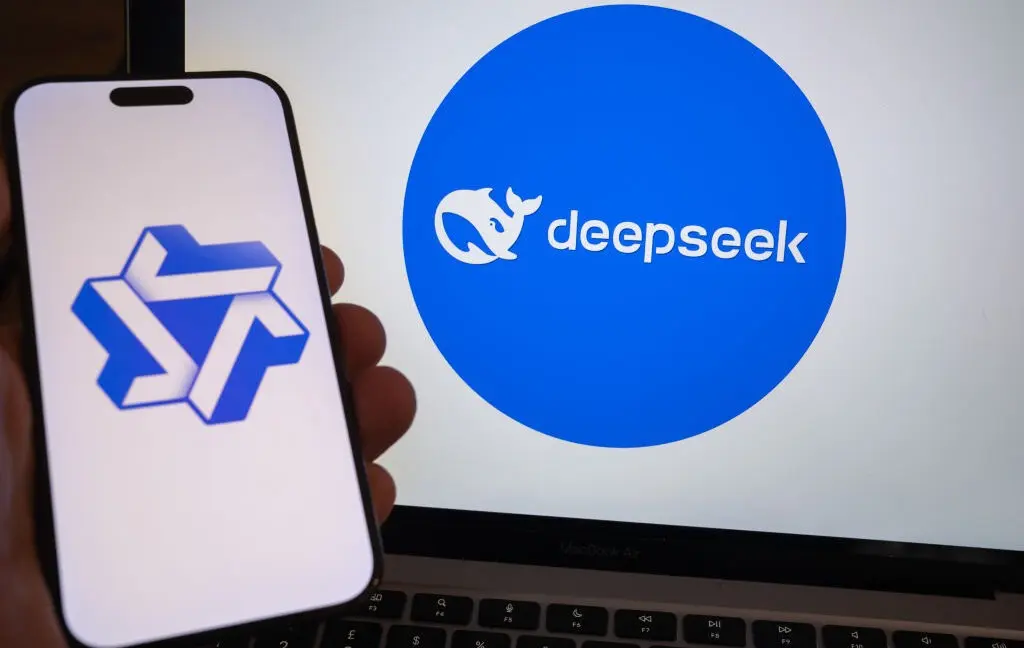
OpenAI publicly alleged that DeepSeek utilized proprietary data improperly to train its own models. Soon after, Google reported that automated threat actors had hammered its Gemini infrastructure with over 100,000 targeted prompts aimed at reverse-engineering its reasoning frameworks. The friction reached a boiling point when Anthropic accused Alibaba of orchestrating what it characterized as the largest-ever cloning campaign against Claude, allegedly defying geopolitical warnings from Washington.
April 2026: The First Governmental Shots
Recognizing the commercial and national security implications of these intellectual property leaks, the US government signaled a coming crackdown in April 2026. Agencies warned Beijing that unauthorized industrial-scale extraction of US frontier capabilities would no longer be tolerated, drawing immediate rebukes from Chinese officials who dismissed the allegations as politically motivated slander.
September 2026: The Joint Advisory and Technical Directives
The joint statement released on Tuesday represents the Trump administration’s most detailed and aggressive indictment of Chinese AI development strategies to date. The advisory explicitly names six companies—DeepSeek, Moonshot AI, Alibaba, MiniMax, StepFun, and Z.AI—asserting that they acted with implicit or explicit Chinese government awareness.
Rather than treating these incidents as isolated cyber intrusions, the government categorized them as systemic, coordinated operations designed to form the core of China’s national AI strategy. Alongside the naming of the firms, the advisory outlined aggressive technical mitigations, setting the stage for a contentious rollout across American cloud and API providers.
Technical Mechanics: How the Distillation Attacks Work
To understand why US intelligence agencies are advising such drastic counter-measures, it is necessary to examine the sophisticated mechanics behind modern AI distillation attacks. Model distillation involves training a smaller, more efficient "student" model on the outputs, reasoning steps, or probabilities generated by a massive, highly capable "teacher" model.
1. API Exploitation via Synthetic Swarms
US agencies report that Chinese firms bypass geographical restrictions and standard rate limits by bulk-buying fake or enterprise-grade accounts through a "gray market of proxies." Operating across thousands of domains, these networks deploy swarms of fraudulent accounts that execute highly coordinated queries. These queries span thousands to millions of variations on identical topics, running continuously for days or months to extract comprehensive datasets.
2. Prompt Injection and Chain-of-Thought Extraction
Beyond simple input-output matching, attackers utilize advanced prompt injection techniques to jailbreak safety and operational guardrails. According to the advisory, firms like DeepSeek have crafted explicit prompts designed to force models to reveal their hidden "chain-of-thought" (CoT) reasoning. By compelling models to articulate their internal logic step by step before delivering a response, the attackers capture high-value reasoning traces that normally remain internal to the frontier model.
3. Granular Targeting by Firm
The intelligence report breaks down specific objectives across the accused companies:
- DeepSeek: Accused of extensive malicious distillation across Claude, Gemini, GPT, and Grok to minimize compute and research expenses. Targets included agentic functions, assistant workflows, writing optimization, and deep chain-of-thought reasoning.
- Moonshot AI: Noted for dynamically cycling through various leading US models to distill fine-tuning methodologies, reinforcement learning loops, advanced software engineering, and mathematical capabilities.
- Alibaba, MiniMax, StepFun, and Z.AI: Identified as focusing heavily on targeted cloning operations against specific architectures belonging to Anthropic and OpenAI.
Mitigation Strategies and Their Collateral Damage
The core recommendation of the CISA-NSA-FBI advisory—that AI firms should secretly switch suspected users to less-capable models—has sparked intense debate among cybersecurity professionals and privacy advocates.
The Defensive Playbook
To disrupt automated distillation, US agencies recommend that AI providers:
- Monitor Anomalous Ratios: Flag accounts displaying suspicious subscription-to-usage ratios, or new accounts that immediately hit maximum API usage limits.
- Enhance Identity Verification: Strengthen KYC (Know Your Customer) protocols and track enterprise subscription users more closely, though this raises immediate data privacy concerns.
- Poison the Output (Defensive Degradation): Subtly alter responses to malicious accounts by presenting correct information wrapped in flawed reasoning, introducing stylistic inconsistencies, or artificially reducing reasoning depth.
- Silent Downgrades: Reroute suspected bad actors to older, dumber, or heavily throttled models without providing notice, thereby rendering the harvested synthetic datasets garbage.
Operational Challenges and Risks to Legitimate Users
Implementing silent downgrades is fraught with engineering and user-experience pitfalls. Chinese AI developers are not passive targets; they deploy automated quality assurance systems capable of detecting output degradation within 24 hours. When discrepancies arise, these systems can differentiate ordinary cloud service glitches from defensive data poisoning.
More alarmingly, the collateral damage to legitimate users could be severe. If automated policing systems misfire, innocent researchers, enterprise developers, or international users could find themselves silently switched to inferior models or subjected to withheld capabilities.
Industry precedent highlights the danger of automated routing adjustments. As seen during previous rollouts—such as OpenAI’s controversial automated routing adjustments that defaulted to less capable variants unless users explicitly prompted them to "think harder"—users notice and heavily criticize unexpected degradations in model intelligence.

Consequently, while the government insists that keeping users in the dark is vital to protecting US intellectual property, firms face the difficult challenge of balancing national security mandates against customer trust and platform reliability.
Official Statements and Geopolitical Fallout
The international response to the US advisory has underscored the deep technological divide between Washington and Beijing.
The Chinese Response
The Chinese government has vehemently denied the allegations, characterizing them as baseless political maneuvering.
- Mao Ning, Chinese Ministry of Foreign Affairs Spokesperson: Stated during a press briefing that US agencies should focus on fostering international AI cooperation rather than issuing "groundless accusations." She defended China’s rapid advancements in artificial intelligence as the natural outcome of "high-level scientific and technological self-reliance."
- Liu Chang, Chinese Embassy Spokesperson: Previously condemned the administration’s actions as a "smear campaign rooted in prejudice," urging US authorities to respect objective facts and cease discrediting China’s technological achievements.
- State Media Counter-Claims: Official state organs, including The People’s Daily, highlighted that numerous American startups and researchers actively utilize Chinese models due to their cost-effectiveness and high performance, warning that China will take all necessary measures to protect its lawful economic interests.
This diplomatic friction coincides with aggressive domestic policy shifts in China. The Ministry of Industry and Information Technology recently announced an ambitious five-year roadmap aimed at quadrupling the country’s intelligent computing capacity by 2030, signaling that Beijing remains committed to expanding its AI infrastructure regardless of Western restrictions.
The Domestic US Dilemma
American AI firms have remained largely tight-lipped regarding the operational feasibility of the government’s recommendations. While industry leaders agree that protecting proprietary models is essential to maintaining America’s economic and technological lead, the burden of policing global API traffic places heavy financial and administrative responsibilities squarely on private corporations.
Furthermore, the timing of the advisory—released just ahead of a scheduled diplomatic summit between US President Donald Trump and Chinese President Xi Jinping—ensures that artificial intelligence supremacy will occupy a central slot on the geopolitical negotiation agenda.
Future Outlook: The Fragmented AI Horizon
As the artificial intelligence industry matures, the utopian vision of a globally open, collaborative AI research ecosystem is rapidly giving way to a balkanized landscape defined by security protocols, defensive data poisoning, and strict national borders.
The joint intelligence advisory makes it clear that the US government views frontier AI models as critical national security assets comparable to advanced defense technology or semiconductor manufacturing equipment. Moving forward, the effectiveness of the government’s strategy will depend heavily on whether US tech firms can successfully engineer automated defenses that starve foreign competitors of high-value distillation data without alienating their legitimate global user base.
Ultimately, the ongoing struggle over model weights and reasoning traces guarantees that artificial intelligence will remain a primary vector of geopolitical competition for the foreseeable future. Whether cooperative information-sharing between allied governments and private tech labs can successfully secure the perimeter remains one of the defining tech-policy questions of the decade.