







Executive Overview
For the past several years, the narrative surrounding the artificial intelligence boom has been dominated by a single, unrelenting bottleneck: procurement. Chief Technology Officers, enterprise architects, and data center operators have poured billions of dollars into securing advanced graphics processing units (GPUs) and accelerating the buildout of specialized facilities to house them. The immediate race has been about sheer availability—getting hardware into racks as fast as supply chains will allow to train increasingly massive foundational models and power resource-intensive inference workloads.
Yet, as the hyper-growth phase of enterprise AI matures, a parallel, equally critical strategic question is beginning to loom over IT boardrooms: How long will the GPUs being deployed today actually last, and what happens when they reach the end of their useful life?
This inquiry sits at the intersection of long-term capacity planning, financial amortization, and the escalating crisis of data center electronic waste (e-waste). However, answering it is far more complex than simply looking at a manufacturer’s spec sheet. In the context of enterprise infrastructure, "lifespan" is a bifurcated metric. It can refer to the physical lifespan of the silicon—how long the hardware will actually function without failing—or the economic lifespan, which dictates how long it makes financial sense to keep running a chip before the staggering efficiency gains of newer generations render it obsolete.
As hardware innovation cycles accelerate under the pressure of intense global competition, organizations must fundamentally rethink how they procure, manage, and divest high-performance computing hardware. This article examines the delicate balance between physical durability and economic relevance, explores the burgeoning secondary market for retired chips, and evaluates how alternative consumption models like GPU-as-a-Service (GPUaaS) are reshaping the data center landscape.
Detailed Chronology: The Accelerating Pace of Silicon Innovation
To understand why data center operators are grappling with hardware lifecycle management, one must first look at the relentless pace of innovation dictated by major hardware manufacturers, most notably Nvidia. The timeline of GPU architecture evolution illustrates an unprecedented compression of generational lifespans.
[2022: Hopper Architecture Introduced]
       │
       ▼ (2.5x performance leap / ~2-4 year economic window)
[2024: Blackwell Architecture Deployed]
       │
       ▼ (Up to 10x inference cost reduction)
[Future: Next-Gen Neocloud & Specialized Accelerators]
The Hopper Era (2022)
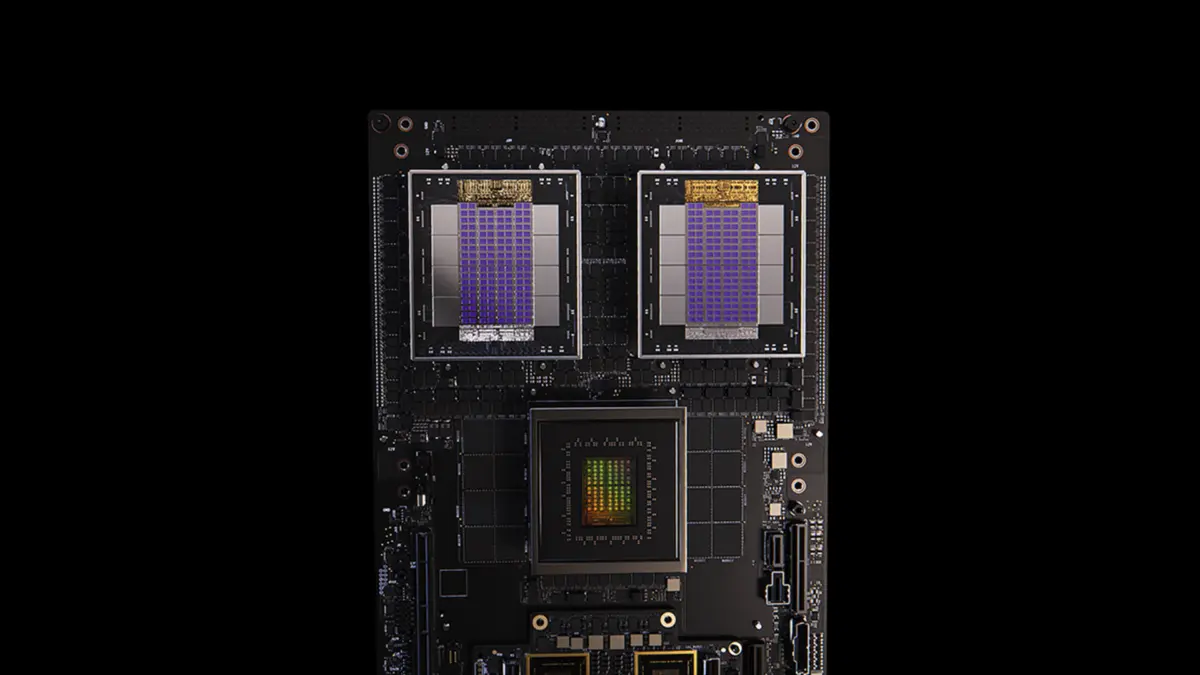
When Nvidia introduced its Hopper GPU architecture in 2022, it was hailed as a watershed moment for generative AI, offering unprecedented training and inference speeds that unlocked new capabilities for large language models (LLMs). Organizations rushed to acquire Hopper-based clusters, viewing them as long-term strategic assets. These chips became the backbone of the first major wave of enterprise AI deployments, commanding high price points and multi-month procurement waitlists.
The Blackwell Leap (2024)
Just two years later, the launch of the Blackwell architecture fundamentally disrupted the calculus of enterprise hardware planning. Blackwell chips introduced staggering performance leaps, arriving on the market roughly 2.5 times more powerful than their Hopper predecessors while slashing AI inference costs by up to a factor of ten. Remarkably, despite these massive generational performance gains, the initial pricing for Blackwell chips remained in a comparable bracket to high-end Hopper systems upon release.
This rapid leap compressed the traditional IT hardware lifecycle. In previous eras of enterprise computing, servers and CPUs often enjoyed productive enterprise lifecycles of five to seven years. In the AI accelerator market, however, the economic value of a chip can plummet relative to newer generations in a fraction of that time. Consequently, organizations that invested heavily in Hopper infrastructure find themselves performing complex cost-benefit analyses: do they continue sweating their existing, fully functional assets, or do they absorb the capital expenditure required to upgrade to Blackwell and subsequent architectures in order to remain competitive?
Supporting Context & Metrics: Physical Reliability vs. Economic Reality
When evaluating hardware endurance, IT leaders must separate the physical durability of silicon from its financial viability.
Physical Lifespan: The Mechanics of Silicon Endurance
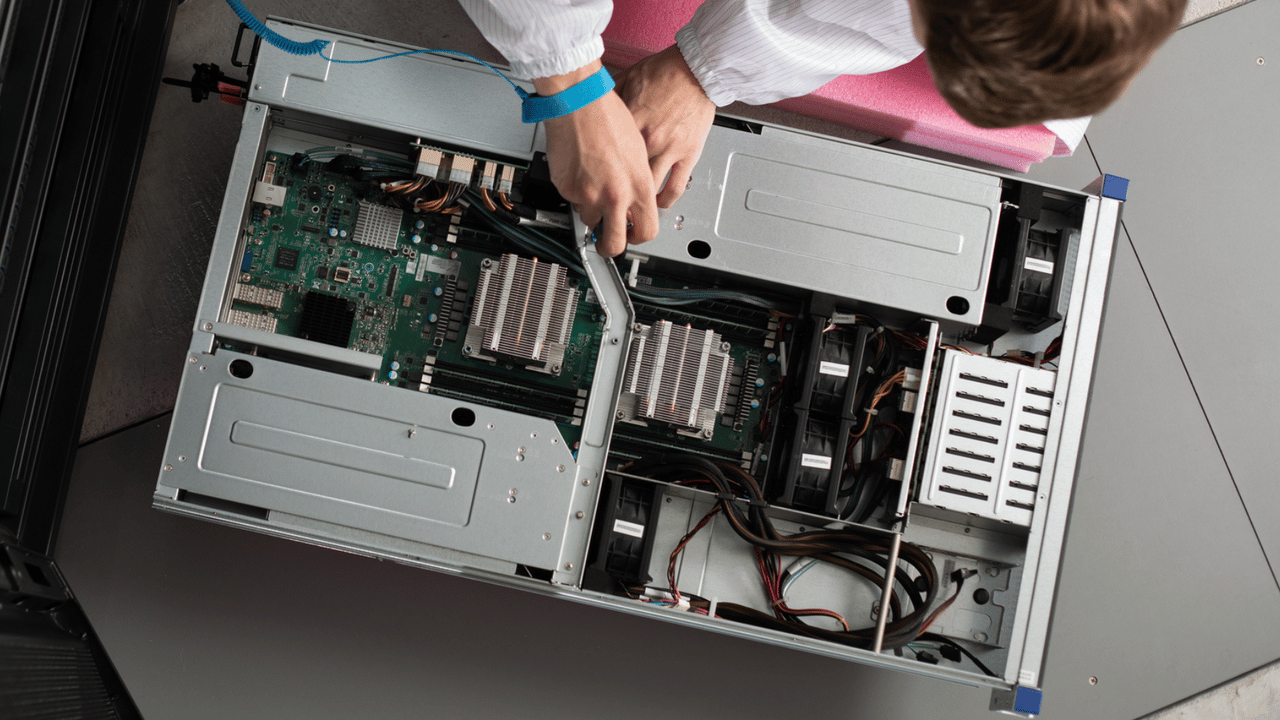
Defined purely by physical functionality, the vast majority of data center GPUs will operate reliably for five years, and potentially much longer. Unlike mechanical systems—such as traditional hard disk drives with spinning platters or cooling fans with bearings—advanced GPUs do not "wear out" through physical friction or mechanical degradation during normal operation.
At the card level, modern data center GPUs feature no moving parts. Furthermore, hyperscale and enterprise facilities typically rely on passive cooling architectures, leaving system-level fans housed within the wider server chassis rather than on the accelerator card itself.
However, physical failures still occur, driven primarily by external and board-level vulnerabilities:
- Thermal Stress: Repeated thermal cycling—the expansion and contraction of materials as chips shift between idle states and maximum compute loads—can eventually stress microscopic solder joints and interconnects.
- Power Quality: Micro-surges, voltage fluctuations, and unclean power supplies within aging facilities can degrade sensitive onboard voltage regulator modules (VRMs).
- Environmental Factors: Inadequate humidity control or particulate contamination can lead to localized corrosion or micro-shorting on high-density circuit boards.
In practice, however, when paired with robust liquid or advanced air cooling, pristine power delivery, and continuous data observability, these physical vulnerabilities rarely manifest before software-driven obsolescence takes over. In many cases, standard three-year OEM or ODM warranty and support windows serve as the practical ceiling for hardware retention, even if the silicon remains fully operational.
Economic Lifespan: The ROI Calculus
While a GPU may hum along happily for half a decade or more, its economic lifespan is dictated by a strict return-on-investment (ROI) formula. Organizations must constantly evaluate whether the revenue or operational efficiencies generated by an older chip outweigh the hidden costs of running it.
The economic lifespan calculation integrates several critical variables:
- Price/Performance Ratios: How many queries per second or tokens per dollar does the legacy hardware deliver compared to current-market alternatives?
- Performance per Watt: With data center power consumption under intense regulatory and financial scrutiny, the electricity cost of running older, less efficient silicon can quickly outpace the capital cost of newer, energy-optimized chips.
- Support Timelines and Software Compatibility: As software frameworks, CUDA libraries, and AI model architectures evolve, they increasingly optimize for newer hardware instructions and tensor cores, leaving older architectures behind.
Based on these economic pressures, the average enterprise lifespan for high-performance AI GPUs currently hovers between two and four years. When a new generation of chips can reduce inference costs by an order of magnitude while occupying the same rack space and drawing comparable power, retaining legacy hardware ceases to be a conservative financial strategy and becomes an operational handicap.
The End-of-Life Dilemma: Combating E-Waste and Capitalizing on Secondary Markets
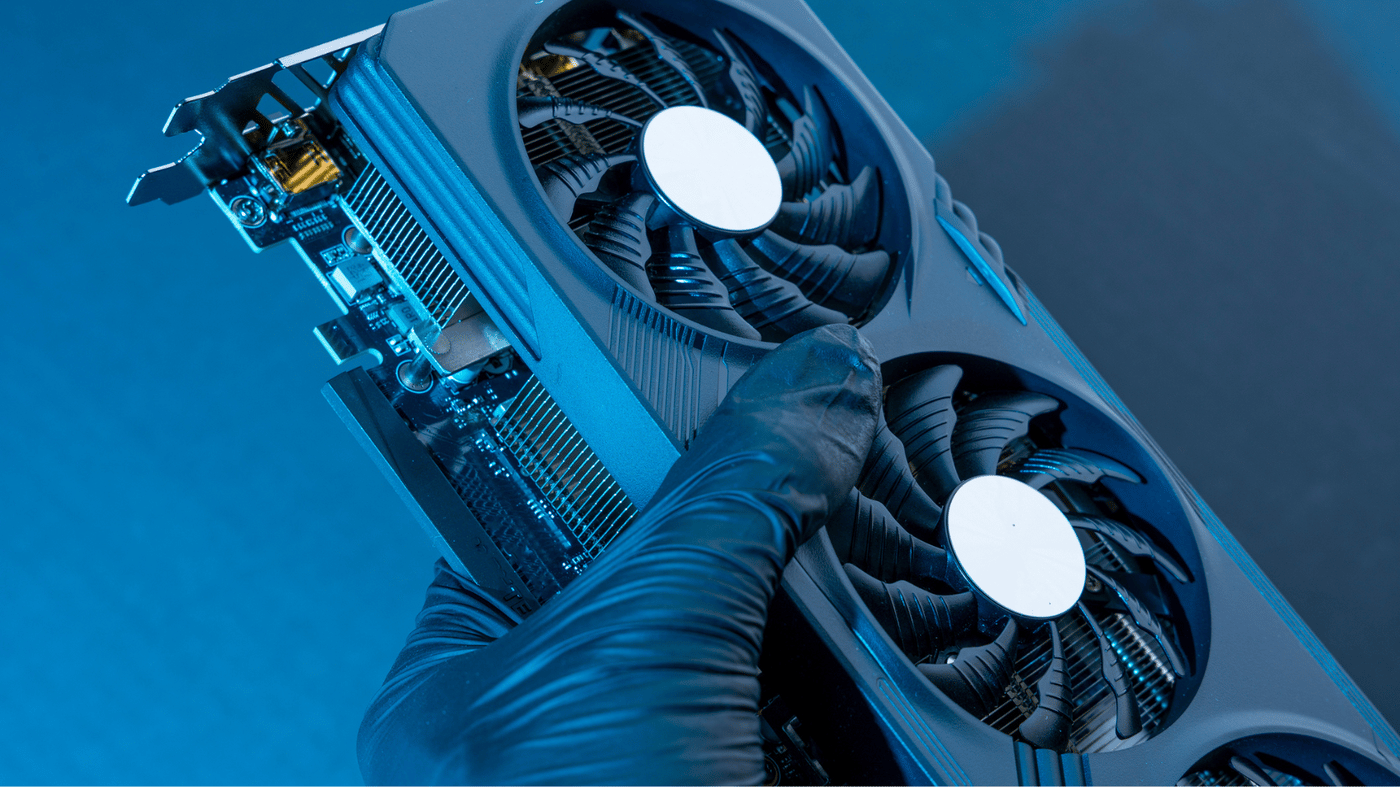
When a fleet of GPUs reaches the end of its economic usefulness for a primary hyperscale or tier-one enterprise tenant, data center operators face a critical crossroads. Discarding these devices is a lose-lose proposition: it destroys potential residual capital and exacerbates the technology sector’s growing e-waste crisis.
Because the vast majority of decommissioned GPUs remain physically sound, progressive organizations are turning to robust secondary markets. Refurbished and secondary-tier GPUs are in high demand among smaller research institutions, regional enterprises, and secondary cloud providers who do not require bleeding-edge Blackwell-class performance but can extract significant value from previous-generation hardware.
Decommissioned GPU Fleet
       │
       ├──► Option A: Scrapping (Destroys Capital, Generates E-Waste) ❌
       │
       └──► Option B: Secondary Market Resale (Recovers 10-20% Value, Funds Upgrades) ✅
Reselling retired hardware typically recovers 10% to 20% of the original equipment cost. While a fraction of the initial investment, this capital recovery serves a dual purpose: it defrays the cost of proper, environmentally compliant asset disposition and injects fresh capital into the organization’s next-generation hardware upgrade fund.
Strategic Alternatives: Owning vs. Renting Infrastructure via GPUaaS
The brutal velocity of the silicon lifecycle has prompted many organizations to question the traditional "capex-heavy" model of purchasing and owning data center infrastructure outright. For enterprises that are uncomfortable with a two-to-four-year hardware refresh cycle, GPU-as-a-Service (GPUaaS) and the rise of specialized neocloud providers offer a compelling strategic alternative.
By renting compute capacity rather than buying physical servers, businesses can dynamically scale their AI workloads up or down without locking capital into equipment destined for rapid obsolescence. GPUaaS shifts the burden of hardware lifecycle management, maintenance, and eventual e-waste disposal onto the cloud or neocloud provider. For companies outside the hyperscale ecosystem—where AI initiatives may be seasonal, experimental, or rapidly evolving—renting provides the agility needed to match compute power with business demand without the balance-sheet anxiety of physical depreciation.
Future Outlook
As the semiconductor industry pushes toward smaller node sizes, optical interconnects, and increasingly specialized accelerators, the tension between physical durability and economic obsolescence will only intensify. Manufacturers will continue to compress release cadences, and the performance deltas between consecutive generations of hardware will remain stark.
For data center operators, the winners of the next decade will not simply be those who can procure the most silicon today, but those who master the art of the lifecycle. By combining rigorous observability, proactive thermal and power management, agile secondary market resale strategies, and hybrid ownership models like GPUaaS, enterprises can build resilient, sustainable, and economically viable AI infrastructures that endure long after the initial hype has faded.