









Executive Overview
What began years ago as a novel legal mechanism has steadily matured into a streamlined, high-stakes annual ritual for French broadcasting giant Canal+. As preparation ramps up for the 2026/2027 football season, the Paris Judicial Court has issued a coordinated and unprecedentedly broad batch of site-blocking orders. Signed on July 17 by Vice-President Irène Benac, the 14 new judicial decisions represent a massive tightening of the net around unauthorized sports streams.
Rather than merely targeting local Internet Service Providers (ISPs), these sweeping orders encompass a sprawling cross-section of the internet’s underlying infrastructure. Canal+ has successfully compelled telecom operators, primary public and private DNS resolvers, major Content Delivery Networks (CDNs), virtual private network (VPN) services, and preeminent search engine operators to coordinate in cutting off access to pirate domains.
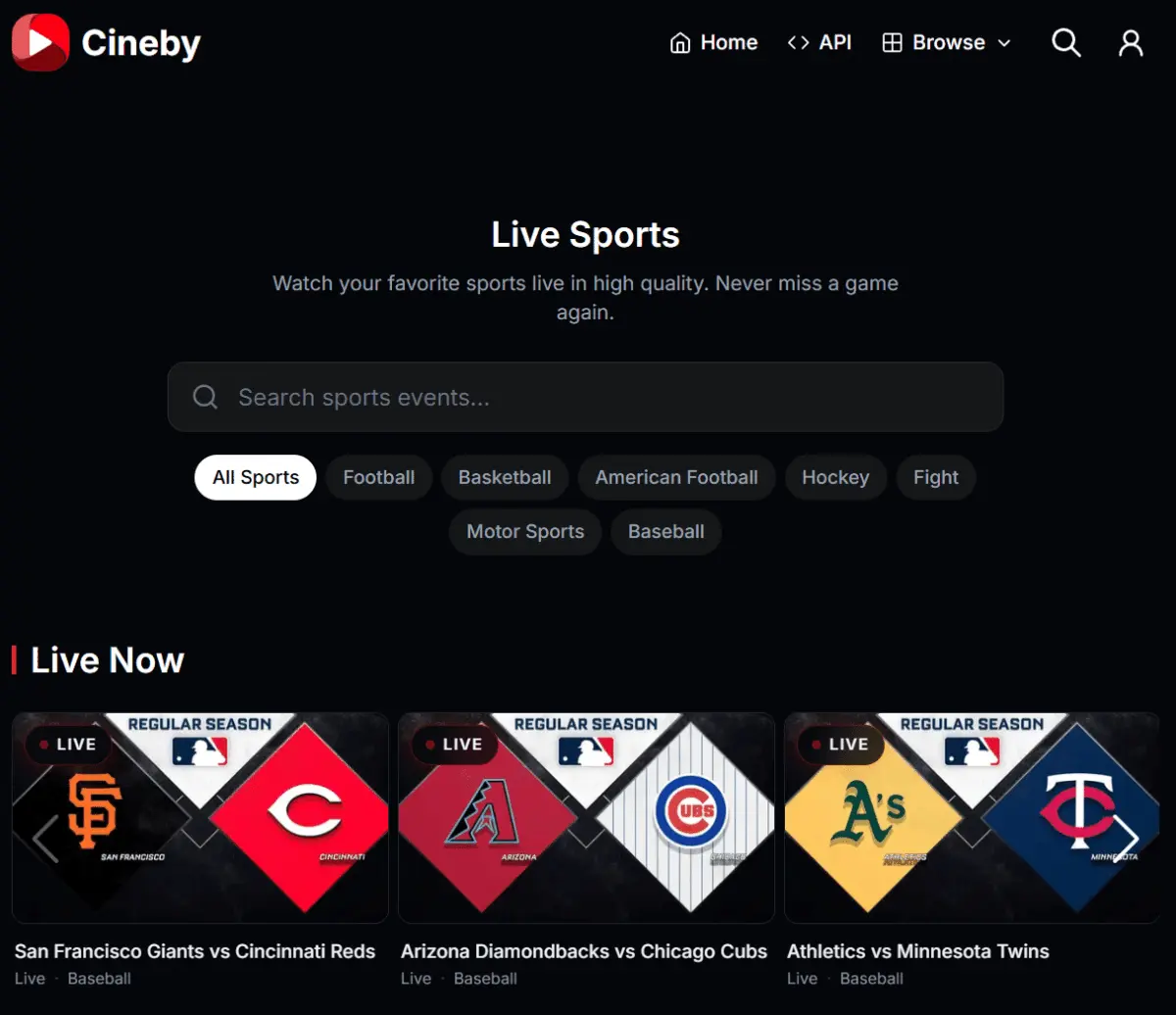
The scale of the judicial mandate is staggering: 47 distinct domain names have been designated for blocking under the Premier League mandate, while an additional 26 domains are targeted for the UEFA Champions League. High-profile illicit streaming portals—such as Totalsportek, LiveTV, and Kevinsport—alongside various localized IPTV gateways, find themselves effectively blacklisted across French cyberspace.
This aggressive legal strategy highlights an industry-wide consensus among major rightsholders: combating digital piracy requires attacking every single layer of the distribution stack. By targeting not only the end-user access points managed by ISPs, but also the intermediate layers where traffic is routed, resolved, and indexed, Canal+ aims to eradicate the loopholes that have historically allowed rogue operators to evade traditional blocking mechanisms. Yet, even as these orders set a new benchmark for intellectual property enforcement in Europe, they arrive at a historical crossroads, hovering on the precipice of sweeping legislative reforms that promise to automate the entire process in real-time.
Detailed Chronology & Legal Maneuvering
The timeline leading up to the July 17, 2026 rulings reveals a meticulously planned offensive. For years, rightsholders engaged in a game of whack-a-mole, pursuing fragmented injunctions that targeted single entities or isolated domain configurations. However, the batch signed by Vice-President Benac demonstrates a deliberate shift toward holistic, synchronized enforcement. Divided precisely down the middle—seven orders targeting the English Premier League (EPL) and seven addressing the Champions League (UCL)—the rulings form a cohesive web designed to shut down every known avenue of bypass utilized by tech-savvy consumers.
The Intermediary Sweep: ISPs, DNS, and CDNs
The foundational layer of the court’s mandate targets France’s tier-one telecommunications providers, including Orange, Free, SFR, and Bouygues Telecom, alongside numerous overseas operators (such as SPM, Telco OI, UTS Caraïbe, and Zeop). These entities are legally bound to block subscriber access to the listed domains within a strict three-to-five-day window.
Recognizing that users frequently bypass ISP-level DNS blocks simply by switching to alternative resolvers, Canal+ simultaneously targeted critical routing infrastructure. The rulings compel major public DNS providers—including Google Public DNS, Cloudflare DNS, Quad9, and the European-backed DNS4EU initiative managed by Whalebone—to refuse name resolution requests for the blacklisted domains. Notably, both Quad9 and DNS4EU opted not to present a defense in court, resulting in default judgments against them.
Cloudflare, occupying a uniquely complex position as both a public DNS provider, a dominant Content Delivery Network (CDN), and a reverse proxy, was hit with dedicated orders. The infrastructure giant is legally required to block the targeted domains across all its operational layers, utilizing whatever technical methodologies it deems most effective.
The VPN Battlefield
Perhaps the most fiercely contested battleground of this legal campaign involves Virtual Private Network (VPN) providers. In past seasons, Canal+ pursued up to five distinct VPN services; in this round, the broadcaster narrowed its focus to three: Proton VPN, CyberGhost, and ExpressVPN, dropping NordVPN and Surfshark from the docket without official explanation.

The VPN providers mounted a robust, multifaceted defense. CyberGhost and ExpressVPN initially petitioned the court to stay the proceedings pending a preliminary ruling from the Court of Justice of the European Union (CJEU) regarding the Anne Frank Stichting case. Decided shortly before the Paris ruling, that landmark case ultimately shielded VPNs from generalized liability in certain copyright disputes. However, the Paris Judicial Court dismissed the motion to stay, drawing a sharp distinction between the lawful publication at issue in the Anne Frank matter and the wholesale commercial distribution of unauthorized pirate streams.
Furthermore, the VPN operators argued that Article L. 333-10 of the French Sports Code fundamentally conflicted with the EU E-Commerce Directive and should consequently be set aside. The court rejected this argument, emphasizing the horizontal nature of the dispute. Because the litigation sits between private commercial entities, the principle of "horizontal direct effect" prevents national courts from disapplying domestic law on the grounds of an alleged conflict with an EU directive.
In its written opinion, the court offered a compelling defense of intermediary accountability. Even if a VPN service acts passively and maintains a neutral technical posture, the court reasoned, it nevertheless functions as an indispensable conduit for the transmission of infringing data. The “mere act of serving as a bridge enabling access to the infringing sites fulfills the transmission function,” the ruling notes, cementing the legal theory that neutral infrastructure providers can be compelled to act when their services are co-opted to distribute illicit material.
Search Engine De-Indexing
Complementing the network-layer blocks, the July 17 orders explicitly target discovery mechanisms. Google Search and Microsoft Bing were mandated to execute a comprehensive de-indexing (déréférencement) of all 73 targeted domains across their French search portals. By ensuring that these sites vanish from algorithmic search results, the rightsholders aim to drastically reduce organic discovery by casual viewers who might otherwise stumble upon unauthorized streams via routine web searches.
Supporting Context & Metrics
To fully appreciate the scope of Canal+’s July 2026 legal offensive, it is necessary to examine the specific targets, technical parameters, and logistical timelines governing these judicial edicts.
Summary of Targeted Infrastructure and Legal References
| Category | Targeted Services | Legal Scope & Action | EPL Docket (RG) | UCL Docket (RG) |
|---|---|---|---|---|
| ISPs & Telecoms | Orange, Free, SFR, Bouygues, plus overseas operators (SPM, Telco OI, UTS Caraïbe, Zeop, etc.) | Complete domain/subdomain blocking for subscribers throughout France and overseas territories. | 26/08401 | 26/08386 |
| DNS, CDN & Proxy | Cloudflare | Multi-layered blocking spanning DNS resolution, CDN caching, and reverse proxy services. | 26/08356 | 26/08361 |
| Public DNS | Google Public DNS | Discontinuation of domain name resolution for French-based IP addresses. | 26/08379 | 26/08380 |
| Public DNS | Quad9 & Whalebone (DNS4EU) | Resolution blocks enforced via default judgments due to lack of defense presentation. | 26/08377 | 26/08378 |
| VPN Services | Proton VPN | Provisional access blocking order; issued via default judgment. | 26/08364 | 26/08366 |
| VPN Services | CyberGhost & ExpressVPN | Full access blocking mandate following contested adversarial proceedings. | 26/08368 | 26/08371 |
| Search Engines | Google Search & Microsoft Bing | Comprehensive removal and de-indexing of listed domains from French search results. | 26/08382 | 26/08383 |
Temporal Parameters and Scope
The geographical reach of these administrative and judicial mandates is national, encompassing mainland France as well as overseas departments and territories. The enforcement mechanisms are time-bound to align with the sporting calendar:
- Premier League Mandates: Active from August 22, 2026, through May 30, 2027.
-
Champions League Mandates: Active through June 5, 2027.
Crucially, these orders are not static lists frozen in time. Under the oversight of ARCOM (Autorité de régulation de la communication audiovisuelle et numérique), France’s unified audiovisual and digital communications regulator, the blocking lists can be updated dynamically throughout the season. When pirate operators engage in "domain shadowing" or spin up mirror URLs to evade existing blocks, ARCOM can authorize the expansion of the injunctions without requiring rightsholders to initiate entirely new court proceedings from scratch.
Official Statements & Industry Reactions
While public press releases from the litigants have remained sparse, the legal briefs and judicial opinions provide profound insight into the philosophical and legal arguments underpinning the confrontation.

Legal representatives for Canal+ have consistently maintained that the multi-layered blocking strategy is an economic imperative. Premium sports broadcasting rights represent multi-billion-euro investments. Broadcasters argue that unchecked, high-definition streaming piracy directly erodes subscriber bases, devalues exclusive media rights, and ultimately starves the sports ecosystems—from elite clubs down to grassroots organizations—of vital revenue streams.
Conversely, the defense mounted by technology and privacy intermediaries articulated deep concerns over the expansion of intermediary liability. Representatives for the targeted VPN providers—particularly CyberGhost and ExpressVPN—argued during court hearings that holding encryption and privacy tools liable for the illicit actions of end-users sets a dangerous precedent. They contended that forcing privacy-centric infrastructure providers to monitor, filter, or block traffic undermines the foundational security and confidentiality architecture of the modern internet.
Google, in its submissions contesting the DNS and search orders, challenged the procedural foundation of the plaintiff’s case. Tech giants questioned whether Canal+ had conclusively proven exclusive, enforceable rights across every single contested channel and demanded exhaustive empirical proof of repeated, systemic infringements for every individual domain name put before the court. Although these arguments were ultimately rejected by Vice-President Benac, they signal a persistent tension between intellectual property enforcement and the operational principles governing global digital platforms.
Future Outlook: The Dawn of Automated Real-Time Blocking
The timing of the July 17 judicial orders carries immense irony and foresight. Handed down just days before the French Parliament formally adopted a groundbreaking new sports law, these court orders represent the pinnacle of the manual judicial blocking regime.
The newly approved legislation fundamentally rewrites the playbook for anti-piracy enforcement in France. Under the forthcoming framework, the cumbersome manual process—wherein ARCOM human agents must painstakingly verify individual domains prior to issuing a blocking request—is set to be replaced by an automated, real-time blocking architecture.
When this new system becomes fully operational later this year, it will empower rightsholders and regulators to dynamically add new pirate targets on the fly, directly in the middle of live football broadcasts. While ARCOM will retain an oversight and review mechanism, its interventions will shift from a priori verification to a posteriori auditing.
For Canal+ and other major sports rightsholders, this transition promises unprecedented agility, closing the lag time between the launch of an unauthorized stream and its systemic network blockage. However, it also raises critical questions regarding due process, transparency, and the potential for over-blocking in automated environments.
As France transitions into this era of algorithmic enforcement, the July 17 orders serve as both a monument to the maturity of current legal mechanisms and a transitional bridge toward a fully automated digital enforcement landscape. For pirate operators, the margins for evasion are narrowing rapidly; for civil liberties advocates and infrastructure providers, the battle over the boundaries of internet censorship is entering its most intense chapter yet.