





By Shane Snider
Senior News Writer, Data Center Knowledge
Published: September 2, 2026
Executive Overview
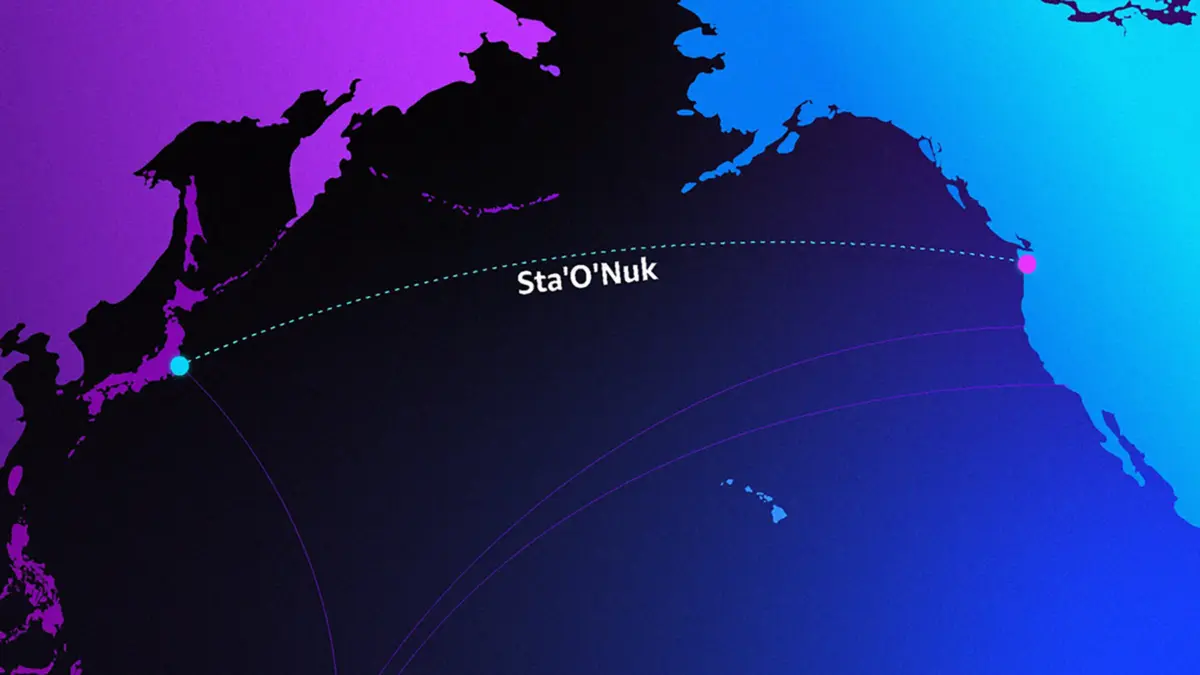
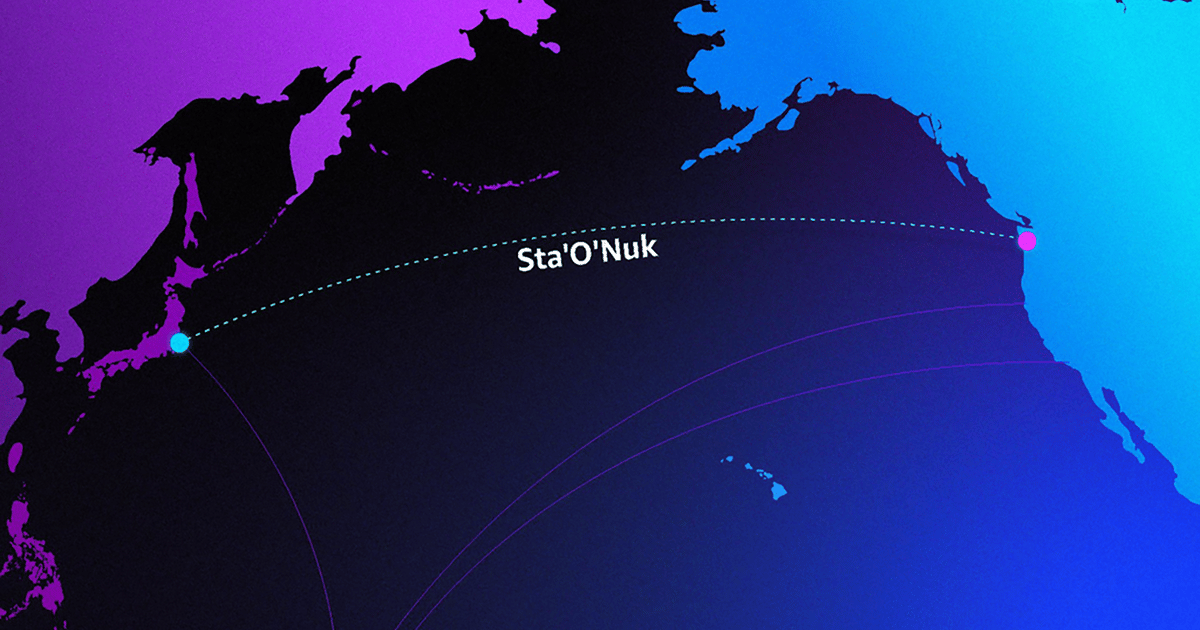
As the global race for artificial intelligence supremacy accelerates, the digital infrastructure underpinning modern computing is undergoing a massive, structural transformation. Hyperscale cloud providers are no longer just building massive data center campuses on land; they are fundamentally reshaping the physical network pipelines that traverse oceans. In a landmark move highlighting this evolution, Amazon Web Services (AWS) has announced plans to construct Sta’O’Nuk—a state-of-the-art, 420 Terabits-per-second (Tbps) subsea cable connecting Japan directly to Washington State.
Slated to enter service in 2029, the Sta’O’Nuk project represents a critical expansion of trans-Pacific network capacity. Equipped with 20 fiber pairs and engineered to handle ultra-high-bandwidth workloads like distributed large language model (LLM) training, global financial transactions, edge computing, and real-time video streaming, this multi-million-dollar undertaking addresses a looming bottleneck in the AI revolution.
Crucially, the project is not just about an undersea link; it involves a comprehensive upgrade to terrestrial networks. AWS is pairing the subsea cable with a brand-new, Indigenous-owned cable landing station in Ocean Shores, Washington—the first of its kind in the state in over 25 years. By integrating this landing station with high-capacity backhaul routes running down the Interstate 5 corridor toward Seattle and Hillsboro, Oregon, AWS is directly connecting international subsea traffic into the Pacific Northwest’s thriving data center ecosystems.
This article explores the mechanics of the Sta’O’Nuk project, the broader pressures AI is placing on global network capacity, the strategic significance of the Washington landing site, and how hyperscalers are securing physical infrastructure to future-proof the next generation of cloud and AI services.
Detailed Chronology: The Evolution of the Sta’O’Nuk Project
The genesis of the Sta’O’Nuk cable reflects a multi-year planning effort driven by the exponential growth of generative AI and cloud computing workloads. While public announcement of the project was made public in September 2026, preliminary route surveys, regulatory filings, and partnership developments have been underway behind the scenes for years.
- Late 20th Century (1999): The last major subsea communication cables—Pacific Crossing-1 (PC-1) in Harbour Pointe and Alaska United East—landed in Washington State. For a quarter-century, trans-Pacific traffic hitting the U.S. mainland was funneled almost exclusively through established coastal corridors in California and Oregon, leaving Washington off the primary trans-Pacific cable map.
- Early 2020s: As the cloud computing boom matured, hyperscalers like AWS began consuming unprecedented amounts of subsea cable bandwidth. Simultaneously, planning began for a diversification of U.S. landing points to mitigate geopolitical, environmental, and operational bottlenecks.
- Mid-2020s (The AI Boom): The rapid commercialization of large language models and distributed AI training clusters created an urgent need for massive, terabit-scale data transport between Asia-Pacific compute regions and North America. Existing networks faced potential capacity strains.
- September 2, 2026: AWS officially unveils the Sta’O’Nuk subsea cable project. Partnering with Toptana Technologies (owned by the Quinault Indian Nation) and strategic program manager Assured Communications, AWS details plans for the 420 Tbps cable, the Ocean Shores landing facility, and terrestrial backhaul integration.
- 2026–2029 (Current Phase & Construction): Engineering, manufacturing of the 20-fiber-pair cable, deep-sea route clearing, and the construction of the Ocean Shores landing station take place. This phase includes securing vulnerable coastal areas through horizontal directional drilling and armoring sections at depths of up to 1,500 meters.
- 2029 (Target RFS Date): The Sta’O’Nuk subsea cable is scheduled for Ready-for-Service (RFS) status, officially bringing a new high-speed digital highway online between Japan and the Pacific Northwest.
Supporting Context & Metrics
To fully understand the gravity of the AWS Sta’O’Nuk initiative, one must examine the metrics governing modern subsea communications and the specific challenges posed by artificial intelligence workloads.
The Scale of Hyperscale Subsea Demand
According to industry experts, hyperscalers dominated the subsea cable market long before the current AI boom, but generative AI has supercharged demand.
- 420 Tbps Capacity: The Sta’O’Nuk cable’s staggering throughput is designed to move vast oceans of data instantaneously. To put this in perspective, large AI models require continuous, terabit-scale data transport between distributed training clusters scattered across international boundaries.
- 20 Fiber Pairs: By incorporating 20 fiber pairs, the system ensures immense multiplexing capabilities, allowing AWS to scale dedicated virtual networks for cloud tenants, financial networks, and machine learning pipelines without running into immediate bandwidth caps.
- 20 Million Kilometers: AWS’s broader global network infrastructure already spans more than 20 million kilometers of fiber worldwide, showcasing the sheer scale of physical infrastructure the company directly controls and operates.
Vulnerabilities in the Deep Blue
Physical security remains a primary engineering hurdle for subsea cables. AWS estimates that approximately 200 subsea cable cuts occur worldwide each year, predominantly caused by commercial fishing activities and dragging ship anchors.
To safeguard the multi-million-dollar investment, Sta’O’Nuk will feature:
- Advanced Armor & Burial: Deep-sea burial and heavy armoring in vulnerable zones, reaching depths of up to 1,500 meters.
- Horizontal Directional Drilling (HDD): Specialized construction techniques near the Ocean Shores landing site to protect the cable as it transitions from the ocean floor to terrestrial vaults.
- Multi-Layer Encryption: A robust security framework utilizing quantum-safe optical encryption at Layer 1, MACsec at Layer 2, and TLS, SSL, or QUIC protocols at Layer 4, ensuring data integrity against modern interception vectors.
Official Statements and Industry Insights
Key stakeholders and industry analysts have weighed in on the profound implications of the Sta’O’Nuk project for the broader telecommunications and data center landscapes.
"Even before the rise of AI investments, hyperscalers were among the primary consumers of subsea cables and capacity. The surge in AI demand should further drive demand for both terrestrial and submarine networks."
— Jimmy Yu, Vice President, Dell’Oro Group
Yu emphasized that AWS’s strategic selection of Washington State underscores a broader trend: connecting subsea infrastructure directly to major inland data center hubs to improve latency, enhance route diversity, and maximize network resilience.
"Large AI models can require terabit-scale data transport between distributed training clusters and inference locations. As hyperscalers spread computing across regions, network backhaul and interconnect capacity could become a constraint alongside power availability."
— Ron Westfall, Vice President and Practice Lead for Networking and Infrastructure, HyperFrame Research
Westfall highlighted that while grid power dictates where operators construct massive AI facilities, the underlying network dictates how efficiently those facilities communicate with customers and other global computing resources.
Furthermore, the involvement of the Quinault Indian Nation through Toptana Technologies marks a historic milestone for Indigenous-owned telecommunications infrastructure. The Ocean Shores landing station is designed to initially support up to four subsea cable systems—with physical vault expansion capabilities of up to 16 systems—positioning the facility as a major international gateway for decades to come.
Future Outlook: The Network as a Pillar of AI Infrastructure
The announcement of the Sta’O’Nuk cable serves as a bellwether for the future of digital infrastructure. As the industry moves past the initial wave of server deployments and rack-level liquid cooling innovations, attention is rapidly shifting to the macro-level pipelines that connect these distributed digital factories.
- Decentralized AI Workloads: Training cutting-edge AI models increasingly requires compute power spread across multiple global regions. Low-latency, high-bandwidth interconnects like Sta’O’Nuk will prevent data bottlenecks, enabling seamless model synchronization between Asian R&D hubs and North American cloud regions.
- Geographic Diversification: By establishing a brand-new landing corridor in Washington State, AWS reduces its reliance on congested California and Oregon coastal landing points. This geographic diversity protects global traffic against regional natural disasters, seismic events, or localized infrastructure outages.
- The Expansion of Open Landings: The Toptana-operated landing station in Ocean Shores is built with modular scalability in mind. By providing space for up to 16 cable vaults, the facility paves the way for subsequent subsea cable projects, effectively transforming a dormant coastal region into a bustling nexus of international connectivity.
Ultimately, AWS’s investment proves that the AI buildout is a holistic challenge. Power generation, transmission grids, hyperscale data centers, terrestrial fiber backbones, and trans-oceanic subsea cables must all scale in tandem. With Sta’O’Nuk, Amazon is ensuring that the physical links carrying the world’s most advanced computational workloads are as robust, secure, and future-proof as the silicon chips powering them.