







Executive Overview
Germany’s aggressive anti-piracy landscape is navigating a delicate balancing act. For years, copyright holders and major Internet Service Providers (ISPs) have leaned heavily on the Clearing Body for Copyright on the Internet (CUII) to orchestrate systematic, nationwide blocks against egregious rogue websites. However, as the legal apparatus matures—shifting from a purely administrative framework to a model requiring formal judicial oversight—investigators, courts, and rightsholders are grappling with a core quantitative and qualitative dilemma: Just how much illegal content must a website host before it is classified as structurally infringing?
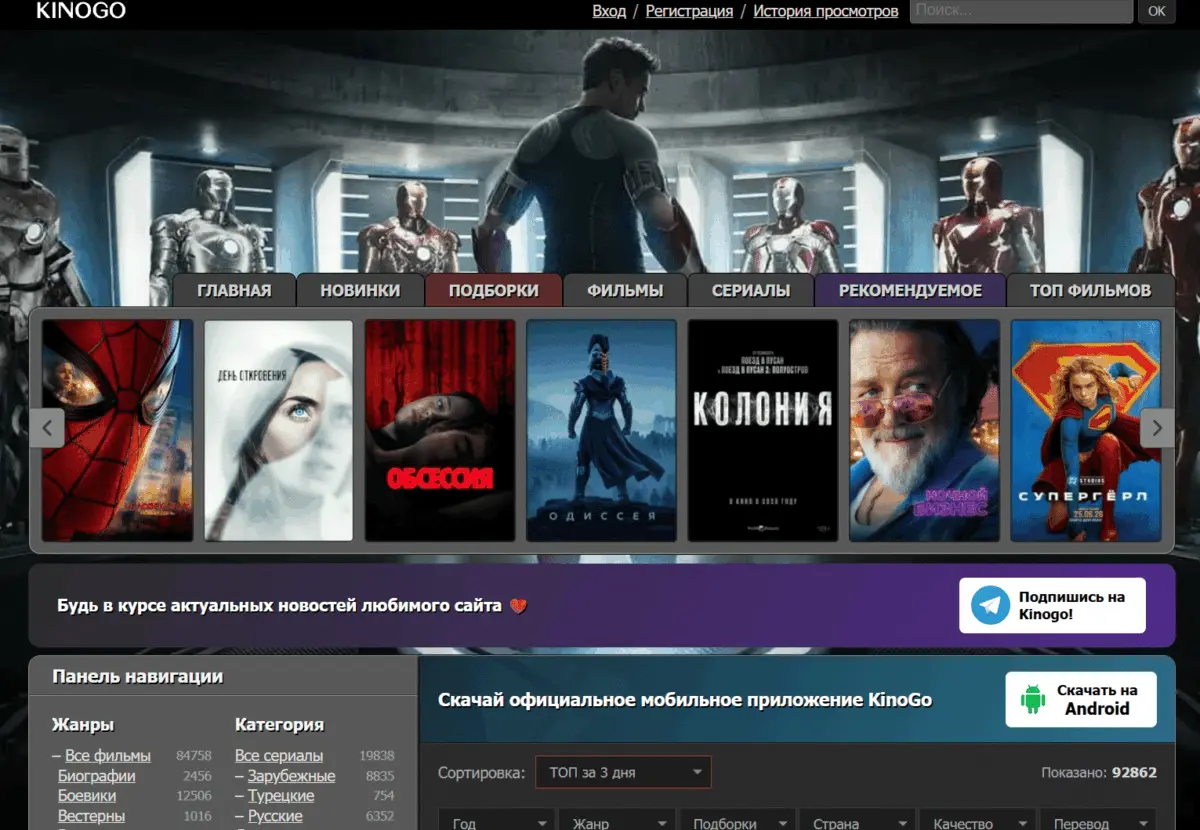
Recent blocking orders issued through the Cologne Regional Court targeting popular domains like KinoGo and Streamed have brought this debate to the fore. Investigators evaluating a random sample of these platforms’ content libraries at a 95.5% confidence level have uncovered instances where the share of infringing material dips as low as 82.4%. This figure brushes dangerously close to an informal benchmark of 81.5%, a threshold that surfaced in earlier default judgments as the tipping point where illegal content definitively outweighs legal offerings.
While rightsholders celebrate the steady narrowing of the net around digital piracy, the revelation of these percentages opens a Pandora’s box of strategic exploitation. Could rogue site operators evade structural infringement classifications simply by padding their archives with public domain movies or AI-generated legal filler? This comprehensive investigation examines the evolution of Germany’s site-blocking mechanism, breaks down the statistics behind the latest court-mandated blacklists, and features direct clarifications from CUII regarding whether percentages truly dictate the future of digital enforcement.
Detailed Chronology: From Administrative Scheme to Judicial Scrutiny
To understand the current tension surrounding percentage thresholds, one must examine how Germany’s site-blocking ecosystem has transformed since its inception.
1. The 2021 Genesis: CUII and Administrative Consensus
In March 2021, major German ISPs and rightsholders united to establish CUII as a streamlined mechanism to combat online piracy without bogging down the traditional court system. Designed as an administrative clearinghouse, CUII’s internal committee was empowered to issue blocking recommendations against clear-cut, structurally infringing pirate sites. Once the committee drafted a recommendation, the Federal Network Agency reviewed and signed off on it, prompting participating ISPs to voluntarily implement domain-name system (DNS) and IP blocks.
While efficient, this setup drew persistent criticism from digital rights advocates and legal scholars due to its lack of direct judicial oversight and transparency. Critics argued that blocking decisions made behind closed doors by industry stakeholders lacked the constitutional checks and balances required in a democratic legal system.

2. The Mid-2025 Structural Shift
Recognizing the legal vulnerabilities of a purely administrative model, stakeholders fundamentally overhauled the CUII code of conduct in mid-2025. Under the revised framework, administrative rubber-stamping was replaced by mandatory judicial involvement.
Today, every new site-blocking action must initiate with a rightsholder filing a formal lawsuit against a single, representative ISP in a German court—frequently the Cologne Regional Court. Once that specific court confirms the legitimacy of the block and issues a ruling, the remaining ISPs across the nation fall in line. Although CUII no longer holds the ultimate authority to issue binding administrative orders, it continues to serve as an informational hub, communicating court-sanctioned recommendations to all participating network operators.
3. Recent 2026 Target Acquisitions
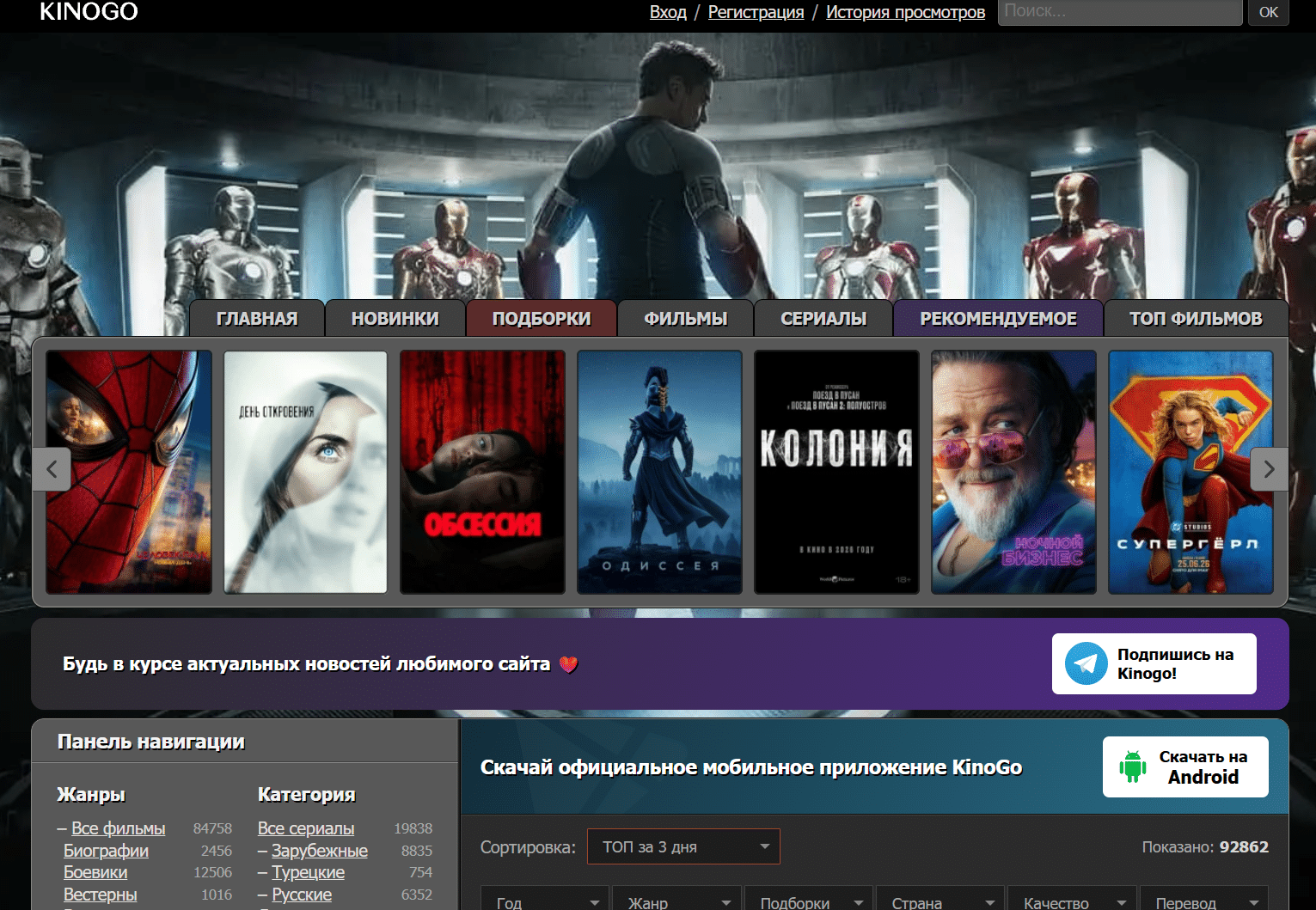
Recent weeks underscore this new judicial reality. Operating on orders handed down by the Cologne Regional Court, transparency portals and CUII documentation reveal that prominent domains including streamed.pk, streamed.st, and kinogo.ec have been formally blocked across Germany. Concurrently, other notorious platforms—such as LIVETV.SX, SPORTPLUS, and Romsns.com—have been swept into the clearinghouse’s widening net, often accompanied by security warnings flagging malware risks associated with unverified download hubs.
Supporting Context & Metrics: The Structural Infringement Check
At the heart of every CUII-backed blockade lies the legal concept of the "structurally copyright infringing website." Proving this status requires rigorous empirical data. Because direct access to the private litigation documents is often restricted, independent transparency portals—most notably CUIIListe—and redacted court summaries provide a window into the methodology used by rightsholders.
The Investigator’s Sampling Methodology
When a rightsholder targets a domain, a private investigator is typically commissioned to pull a randomized sample of the site’s total content library. This sample is analyzed to calculate the precise percentage of infringing material at a rigorous 95.5% confidence level.
The resulting data points establish a statistical floor and ceiling that define the site’s legal character. Recent case files highlight a wide spectrum of piracy saturation across different platforms:

| Site Name | Ruling / Action Date | Estimated Infringing Share |
|---|---|---|
| KinoGO | July 2026 | 82.4% to 94.6% |
| LIVETV.SX | April 2026 | 85.28% to 96.72% |
| SPORTPLUS | February 2026 | 88.8% to 100% |
| MegaKino | February 2024 | 89.8% to 100% |
| Kinoger | November 2025 | 91.4% to 99.0% |
| Anna’s Archive | September 2025 | 91.6% to 94.8% |
| NSWPedia | January 2026 | 94.4% to 99.8% |
| s.to | February 2021 | 94.84% to 100% |
| LibGen | May 2024 | 96.07% to 98.23% |
| Streamed | July 2026 | 96.16% to 100% |
| cine.to | June 2022 | 96.28% to 100% |
Unpacking the 81.5% "Line"
The statistical floor achieved by KinoGO (82.4%) brings German enforcement dangerously close to a critical threshold discovered in earlier documentation.
In a March 2025 order targeting platforms like HDFILME, STREAMCLOUD, and FILMPALAST, CUII explicitly articulated the tipping point where illegal content dominates a platform:
"The illegal content on the websites far outweighs the legal content. This is the case in any event when at least 81.5% of the website’s content is illegal."
This specific figure traces its origins to a January 2025 default judgment issued by the Cologne Regional Court against the download portal NOX—a case left entirely uncontested by the site’s operators. While KinoGO’s floor of 82.4% remains above this 81.5% line, the narrow margin has sparked intense debate within legal and technical circles. When a site’s infringement rate hovers near the threshold, the hypothetical risk emerges that legitimate content could rival or outweigh unauthorized media if metrics shift even slightly.
Despite this statistical proximity, KinoGO remains a prime target for rightsholders. Boasting over 50 million monthly visits—primarily originating from Eastern European audiences in Belarus and Ukraine—the platform has operated as a major thorn in the side of international copyright holders for years.
Official Statements: Debunking the Quantitative Limit
The proximity of recent rulings to the 81.5% benchmark prompted TorrentFreak to put a direct question to the clearinghouse: Can the 81.5% figure be treated as a fixed quantitative limit or benchmark across all future copyright litigation in Germany?
CUII’s Clarification
Responding to inquiries, CUII definitively rejected the notion that site-blocking decisions hinge on a rigid mathematical formula.
- Proportionality Over Percentages: CUII emphasized that the core legal test stems from the underlying proportionality jurisprudence established by the Federal Court of Justice (Bundesgerichtshof). Under this doctrine, a site block is considered legally proportionate when unauthorized material so comprehensively dominates the platform that any remaining legal content is rendered entirely negligible.
- Business Model Evaluation: According to the clearinghouse, the decisive legal question is not a statistical percentage, but rather whether a domain operates an infringement-based business model that violates German copyright law.
- The "Legal Filler" Countermeasure: Addressing the theoretical concern that clever operators might pad their digital archives with public domain films or AI-generated filler content to manipulate sampling intervals, CUII asserted that such tactics would fail. Because courts and investigators evaluate the holistic character and primary economic purpose of a platform, superficial padding would not alter a site’s underlying structural classification.
Future Outlook: The Ongoing Arms Race of Digital Enforcement
As Germany’s site-blocking framework enters its second decade, the transition toward mandatory judicial review combined with sophisticated statistical sampling has created an increasingly hostile environment for copyright infringers.
The clarification from CUII provides vital legal certainty: enforcement agencies will not be bogged down by a rigid, exploitable percentage cap. Instead, the judiciary will continue to evaluate platforms through a comprehensive lens, assessing the totality of a site’s operations, revenue models, and intent.
Nevertheless, the cat-and-mouse game between enforcement bodies and pirate operators is far from over. As algorithms become more adept at identifying systemic copyright abuse, site operators will undoubtedly experiment with new methods to obfuscate their activities, diversify their hosting infrastructure, and challenge the proportionality of broad ISP blockades in European courts. For now, however, the message from Cologne and the broader German legal establishment is unmistakable: platforms built primarily on piracy will find fewer places to hide, regardless of how much legal window dressing they attempt to apply.