









By Chris Kerr
Senior Editor, News, GameDeveloper.com
August 28, 2026 — 4 Min Read
Executive Overview
The monumental, industry-shifting success of Larian Studios’ Baldur’s Gate 3 proved that digital adaptations of Dungeons & Dragons (D&D) can capture the chaotic, unpredictable magic of tabletop role-playing games (TTRPGs). By embracing player-driven absurdity and deep tactical freedom, the title set a towering benchmark for the fantasy role-playing genre. Now, D&D brand owner Wizards of the Coast is setting its sights on the next major test of the intellectual property’s adaptability: Warlock.
Set within the sprawling, perilous lore of the multiverse, Warlock is an upcoming single-player action-adventure title currently in development at Invoke Studios. Slated for a 2027 release, the project faces a unique and daunting challenge. Unlike its turn-based predecessor, Warlock consciously sidesteps traditional RPG tropes, omitting even the mention of standard role-playing mechanics in favor of a fast-paced, systemic action framework.
To bridge the gap between tabletop philosophy and single-player action, Invoke Studios has leaned heavily on the expertise of its founder, Vice President of Creative, and veteran Dungeon Master Jeff Hattem. Rather than attempting to replicate the infinite scope of a live TTRPG table—an impossible feat for a scripted video game—Invoke has chosen to anchor its entire design philosophy around a singular, defining pillar of the D&D experience: absolute player agency, channeled specifically through a deeply interconnected magic system.
Detailed Chronology & Development Evolution
The journey toward Warlock began quietly in 2022, a period when Invoke Studios was a tight-knit collective of roughly 50 developers. Recognizing the immense weight of the D&D license and the high expectations set by the broader gaming community, Hattem and his leadership team initiated development by stripping away superficial expectations.
Defining the Core in the Early Days
"To preserve the heart, you have to know what the heart is," Hattem reflects, looking back on the studio’s initial brainstorming sessions. "Early on, we asked: ‘What is D&D about? Is it about monsters? Is it about dungeons? Is it about a found party?’ We quickly realized we were just listing off stuff."
Through rigorous internal discourse, the team arrived at a singular, undeniable truth: D&D is not defined by its physical components, but by player freedom. In a tabletop session, players can spend hours arguing in a tavern, completely derailing a meticulously planned narrative arc in favor of emergent chaos. However, as a single-player, narrative-driven action-adventure game, Warlock could not afford to prioritize boundless, story-shredding choices without collapsing under its own weight.
Scaling the Team and Embracing Iteration
To execute their vision, Invoke Studios underwent a measured, strategic expansion, scaling its workforce from 50 to 180 employees over the course of four years. According to Hattem, this controlled growth was essential for establishing a clear, organizational structure while preserving creative flexibility.
Hattem embraces a management style rooted in broad directional steering rather than micro-management. "As a creative director, I’m not telling the team where to land. I give them a vision and say, ‘this is where we’re steering the boat,’ so we have a vague sense of the destination we want to get to," he explains. Setting a nebulous course during initial stages, he argues, is vital for allowing teams to confront and process inevitable design failures early.
Drawing on over 25 years of industry experience, Hattem maintains a pragmatic view of game development pipelines:
"It always surprises me how many times we get it wrong the first try. It’s never right on the first try. You always fuck it up somehow, and then you’ve got to iterate. I see [the end product] in my head as a creative director, but then when I see that [early version] it’s like, ‘Okay, this is the shit version that we’re going to work on. It’s going to get better, and we’ve just got to keep iterating.’ It’s always the same."
Supporting Context & Mechanics: Engineering Emergent Magic
With boundless narrative branching off the table, Invoke Studios needed a mechanical substitute to deliver the same sensation of unbridled player ingenuity. Their solution? A deeply systemic magic system designed to let players stretch the fabric of the game’s reality.
Designing Around Systems, Not Constraints
"We chose to build player agency around magic. It would have been a trap to try and do everything […] so we focused on the magic and then started really thinking about the systems and how everything was connected," Hattem notes.
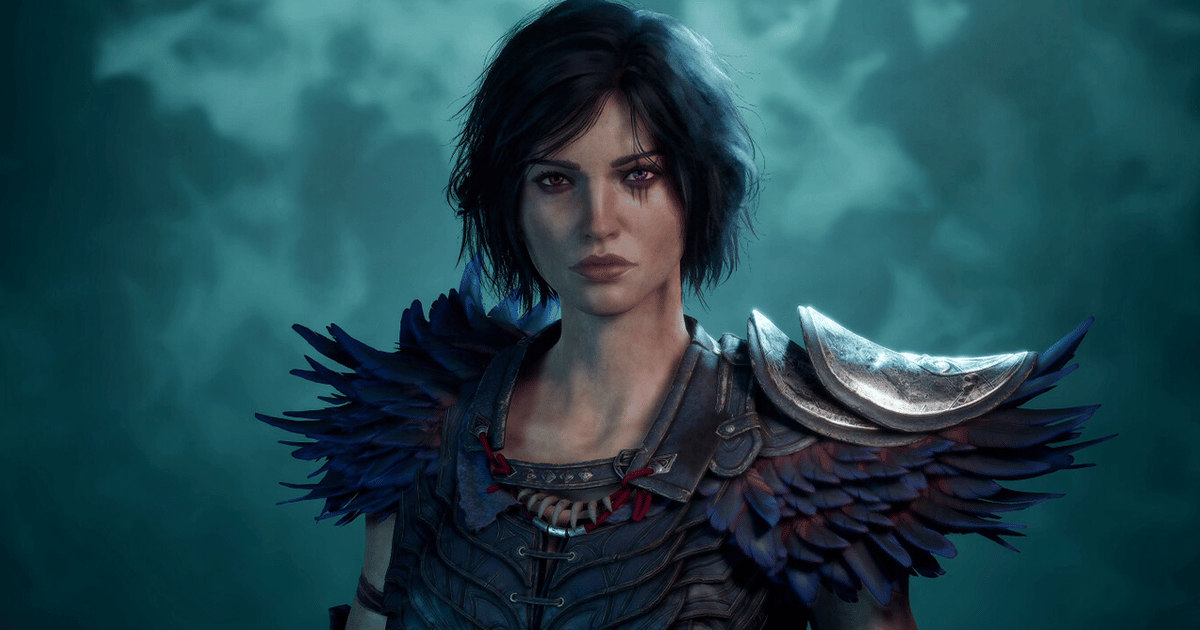
Rather than scripting every possible interaction, Invoke built a dynamic environment where spells interact organically with terrain, weather systems, and enemy behaviors. If a player casts a spell that alters the temperature or creates physical matter, the game world reacts dynamically, forcing the development team to adapt to unexpected player behaviors.
Turning Bugs into Features via Playtesting
To ensure the magic system matches the boundless imagination of veteran D&D players, Warlock has undergone intense, continuous playtesting. A core tenet of Invoke’s quality assurance philosophy is that whenever a playtester uses magic to break the game, it is initially flagged as a bug—not to be patched out, but to be embraced as a feature.
This philosophy is exemplified by a specific utility spell that summons eldritch tentacles capable of grasping objects and manifesting makeshift platforms. Early in the development cycle, a creative playtester equipped with additional spell slots began daisy-chaining the spell, scaling vertical surfaces and reaching geographical areas the level designers never intended anyone to access.
Instead of nerfing the spell or placing invisible walls around the environment, Invoke chose to reward this entrepreneurial flair. The team retrofitted those unintended high-altitude zones into secret treasure troves, ensuring that lateral, rule-breaking thinking yields tangible rewards for the player.
Official Statements & Narrative Philosophy
Navigating the expansive lore of Dungeons & Dragons without overwhelming the player base required a delicate narrative touch. In managing Warlock’s story beats, Hattem drew directly from his personal experiences sitting behind the Dungeon Master’s screen.
Avoiding the Trap of Railroading and Overexposure
Hattem admits to falling into a common trap shared by many inexperienced DMs: railroading players through information overload. "I’ve learned to avoid spending time overexposing players to the world-building," he states candidly. "We are about the [D&D] brand and the lore. I can really geek out over it, and I love all the little details—I’m like, ‘Oh, this is cool, we’re in the Domains of Dread, and the Dark Lord has escaped, and the world is getting ripped apart!’"
While such high-fantasy stakes excite lifelong tabletop enthusiasts, Hattem recognized that forcing this exposition down a player’s throat via heavy-handed cinematics or unyielding companion banter creates friction rather than immersion.
The Opt-In Storytelling Model
To solve this, Invoke has adopted an opt-in narrative model. Instead of halting gameplay to deliver lore dumps, the studio is embedding world-building into optional environmental interactions, readable texts, and voluntary conversations.
"Having stuff that you can read or conversations you can optionally get into to learn more about the world—that is better than forcing them into cinematics or bombarding them with banter from companion characters," Hattem explains. This restrained approach allows the atmosphere of dread and discovery to unfold organically, mirroring the most rewarding moments of a well-run tabletop campaign.
Future Outlook: The Road to 2027
As Warlock charges toward its projected 2027 launch window, Invoke Studios occupies a fascinating intersection in the modern games industry. The title must carve out its own distinct identity in the shadow of Baldur’s Gate 3 while proving that D&D can thrive outside the rigid confines of traditional role-playing systems.
By grounding its development in player agency, systemic magical interactions, and organic world-building, Invoke Studios is attempting something remarkably ambitious. If the studio can successfully translate the chaotic, rule-breaking spirit of a tavern argument or a clever spell combination into a polished single-player action-adventure framework, Warlock may well establish a vital new template for how tabletop intellectual properties are brought to digital life.
About the Author
Chris Kerr is an award-winning reporter and Senior Editor of News at GameDeveloper.com, boasting over a decade of experience covering the global video game industry. His reporting has been featured in notable print and digital publications, including Edge, Stuff, Wireframe, International Business Times, and PocketGamer.biz. Throughout his career, Chris has covered major international industry events including GDC, PAX Australia, Gamescom, Paris Games Week, and Develop Brighton.